

Commercial buildings rely on electrical systems for lighting, computers, security, communications, refrigeration, lifts, machinery and everyday workplace equipment. When those systems are not maintained properly, small faults can become harder and more expensive to manage.
Commercial electrical maintenance is about understanding the condition of the electrical system and addressing developing problems before they interfere with normal operations. The exact maintenance needs will vary between an office, warehouse, retail property or larger commercial facility, so a useful maintenance plan should be based on how the site is actually used.
Core systems that need regular attention
A commercial maintenance program may include switchboards, distribution boards, circuit protection, lighting, power outlets, fixed equipment, emergency systems and accessible electrical connections.
Facility managers should also pay attention to repeated faults. A light that constantly fails, a breaker that regularly trips or an outlet that becomes unreliable may indicate a wider electrical issue rather than a one-off problem.
The goal is not to replace equipment simply because it is old. Maintenance should identify what is operating normally, what needs closer monitoring and what requires repair or further investigation.
Why maintenance needs differ between commercial sites
Different workplaces place different demands on electrical infrastructure.
An office may rely heavily on lighting, data equipment, air conditioning and workstation power. A warehouse may use high-bay lighting, loading equipment, machinery, battery charging systems and larger electrical loads.
Retail premises may also have refrigeration, displays, point-of-sale systems and extended operating hours.
For this reason, commercial electrical system maintenance should be tailored to the building, equipment and operating conditions rather than following the same checklist for every property.
Distribution Boards, Switchboards and Circuit Protection
Switchboards and distribution boards are central to the electrical system because they control and distribute power throughout the property.
Problems in these areas can affect multiple circuits, so they deserve careful attention during planned maintenance.
Facility managers do not need to diagnose switchboard problems themselves. However, recognising warning signs can help them know when a qualified electrician should inspect the system.
Signs of wear, overheating or recurring faults
Repeated breaker trips, unusual smells, visible heat marks, damaged covers or signs of corrosion should not be ignored.
Loose or poorly labelled circuits can also make maintenance and fault finding more difficult. Clear identification is particularly useful in larger buildings where different areas may need to be isolated separately.
If a protective device keeps operating, the cause should be investigated rather than repeatedly resetting it without knowing why.
Maintenance records can also help identify patterns. If the same circuit has caused problems several times, that history is useful information for the electrician carrying out the next inspection.
When a commercial electrical service upgrade may be needed
Commercial properties change over time. Businesses add equipment, reconfigure workspaces, expand tenancy areas or increase the amount of power required by daily operations.
Older electrical infrastructure may not always suit those changes.
A commercial electrical service upgrade may be worth investigating when new equipment is being installed, electrical demand has increased or the existing switchboard no longer suits the way the building operates.
This does not automatically mean a complete replacement is necessary. A qualified electrician should assess the existing system, planned load and required protection before recommending the appropriate scope.
A dedicated switchboard or electrical upgrade service page would be a useful internal link from this section for readers who need more detailed information.
Lighting, Emergency Systems and Everyday Electrical Equipment
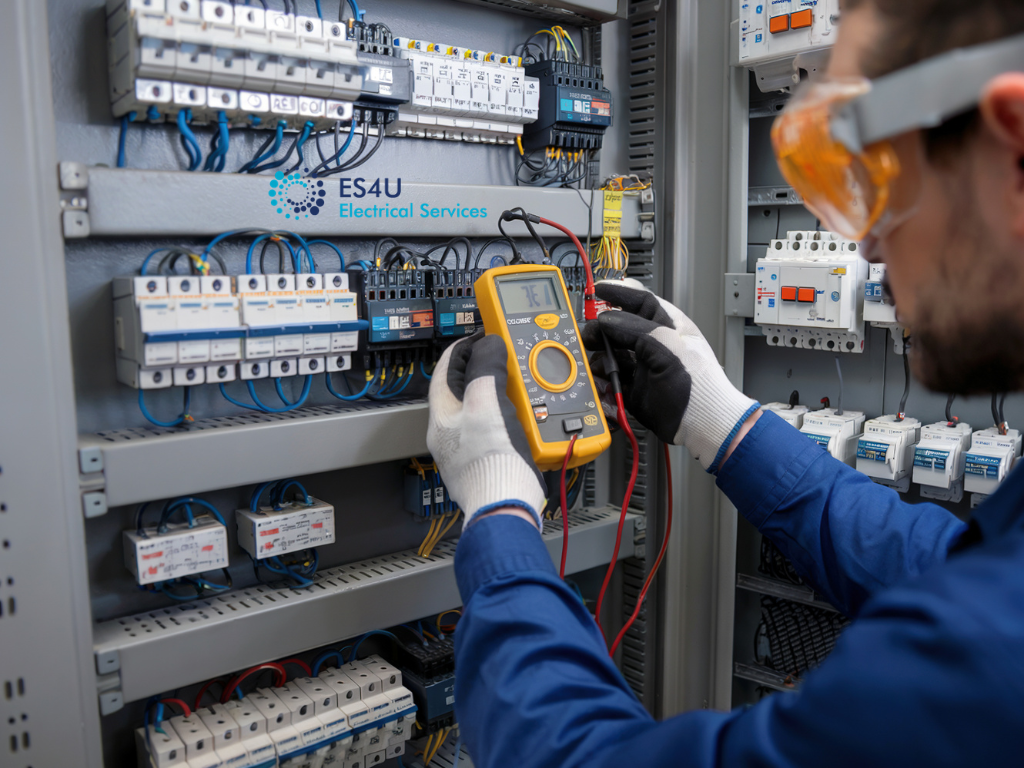
Lighting and general power are often the most visible parts of a commercial electrical system.
Because employees use them every day, problems can sometimes become normalised. Flickering lights, damaged outlets or frequently failed fittings may be tolerated for longer than they should be.
Preventive maintenance helps identify these recurring issues and determine whether they relate to individual components or a larger electrical problem.
Checking lighting, outlets and fixed electrical equipment
Facility managers should report lighting that flickers, fails repeatedly or behaves inconsistently.
Damaged switches, loose outlets and broken covers should also be investigated, especially in areas with frequent staff or customer use.
Fixed electrical equipment may also require attention where connections show visible damage or where equipment repeatedly loses power.
In commercial environments, reliability matters as much as appearance. Lighting or power problems can affect staff productivity, customer areas and the operation of essential equipment.
Reviewing emergency lighting and safety-related systems
Emergency and exit lighting should not be forgotten when planning broader electrical maintenance.
These systems have a different purpose from normal workplace lighting. They are intended to support safe movement when normal lighting is unavailable, so they should be considered separately within the overall maintenance program.
Facility managers should keep relevant testing and maintenance records organised and ensure any faults are referred to an appropriately qualified service provider.
Where a building has more complex safety systems, responsibilities should also be clearly assigned so that electrical maintenance does not leave gaps between different contractors.
Electrical Maintenance for Warehouses and High-Use Commercial Sites
Warehouses and high-use facilities often place heavier demands on electrical infrastructure than standard office environments.
Large lighting systems, machinery, loading areas, automated equipment and long operating hours can all affect maintenance priorities.
For these sites, planning maintenance around operations is especially important.
What to check in warehouses and distribution facilities
Warehouse electrical maintenance may involve high-bay lighting, distribution equipment, machinery connections, power outlets, charging areas and electrical systems supporting loading or storage operations.
Physical damage is another consideration. Forklifts, pallets, trolleys and other equipment can operate close to electrical infrastructure, so damaged outlets, conduits or fittings should be reported quickly.
Maintenance should also account for the working environment. Dust, vibration, heat or moisture may influence which areas require closer inspection.
Warehouse electrical maintenance sydney services should therefore be based on the site’s equipment and operating conditions rather than a generic inspection routine.
Planning maintenance around daily operations
Electrical maintenance can interrupt parts of a commercial site if circuits or equipment need to be isolated.
Good planning helps reduce unnecessary disruption.
Facility managers should provide the electrician with information about operating hours, critical equipment, restricted areas and times when certain systems can be safely taken offline.
For busy warehouses, work may need to be divided into stages so that essential areas remain operational.
This is particularly useful when maintenance is being combined with repair work, new equipment connections or a wider commercial electrical project.
Choosing the Right Commercial Electrical Service

Facility managers often need to compare contractors for routine maintenance, repairs, upgrades and larger electrical projects.
Price is important, but it should not be the only comparison point.
The right provider should understand the type of building, the equipment being maintained and the operational impact of electrical work.
What to look for in a facility electrician
A facility electrician should be able to explain what they are inspecting, what problems they have identified and why particular work is recommended.
Relevant commercial experience is important because maintaining an occupied office or warehouse can require different planning from smaller residential electrical work.
Facility managers should also confirm appropriate licensing, insurance and the contractor’s ability to provide clear records of completed work.
When discussing maintenance with a provider such as ES4U, it is useful to explain the building type, operating hours, known faults and any planned upgrades before requesting a scope of work.
This allows the contractor to recommend commercial electrical solutions that relate to the actual site rather than quoting an unnecessarily broad maintenance package.
Matching the service to the size of the job
Not every electrical problem needs to become a major project.
A small number of faulty outlets may require targeted repairs. Recurring switchboard issues may need more detailed investigation. A tenancy expansion or equipment installation could require a structured commercial electrical project.
Larger facilities may also benefit from ongoing maintenance arrangements when there are multiple systems that need to be reviewed over time.
Before approving work, facility managers should ask for a clear distinction between immediate repairs, recommended maintenance and optional future improvements.
This makes competing quotes easier to compare and reduces uncertainty about what is actually included.
Keeping Maintenance Records and Planning Future Work
Electrical maintenance becomes more useful when the information from each visit is recorded and reviewed.
Without good records, recurring problems can look like unrelated faults. With a clear history, facility managers can see which systems have required repeated attention and which areas may need future investment.
Maintenance documentation can therefore support both operational decisions and budgeting.
What useful maintenance records should include
Records should make it easy to understand what area was inspected, what work was completed and whether any follow-up was recommended.
If a fault has been repaired, the record should be clear enough for the maintenance team to identify the location and issue later.
Photos, contractor reports and equipment references can also be useful where available.
The aim is to create a practical maintenance history rather than paperwork that is filed away and never reviewed.
Using maintenance findings to plan upgrades
Not every maintenance recommendation needs immediate action.
Some issues may require prompt repair, while others can be monitored or included in future budgets.
For example, an electrician may identify ageing equipment that is still operating but should be reviewed before a planned building upgrade. This gives the facility manager time to consider costs and coordinate work with other projects.
A planned approach can also help businesses combine related work rather than carrying out several disconnected electrical jobs.
Where a commercial electrical service upgrade is expected, previous maintenance information can help define the project scope.
When Should You Contact a Commercial Electrician?

Routine maintenance should be planned, but some electrical problems should not wait until the next scheduled visit.
Facility managers should know which warning signs require professional attention and when a broader maintenance review may be worthwhile.
The safest approach is to avoid guessing about electrical faults and arrange qualified assessment when the cause is unclear.
Warning signs that should not wait for the next scheduled check
Recurring circuit trips, burning smells, visible heat damage, damaged outlets or unreliable electrical equipment should be reported promptly.
Unusual noises from electrical equipment, repeated lighting failures or obvious switchboard damage can also justify an inspection.
If there is immediate concern about electrical safety, access to the affected area or equipment should be managed appropriately until qualified assistance is available.
Staff should not attempt electrical repairs unless they are appropriately authorised and qualified to perform the work.
When to arrange commercial electrical services sydney
Commercial electrical services sydney may be useful when a building is experiencing recurring faults, preparing for a tenancy change, installing new equipment or planning an electrical upgrade.
A facility manager may also arrange an assessment when maintenance records are incomplete or when the current condition of the building’s electrical infrastructure is unclear.
Before approving work, ask the electrician to explain the issue, recommended scope and priority of each item. A clear proposal should help distinguish urgent repairs from planned maintenance and longer-term upgrades.
That makes the final decision easier and gives the business a practical starting point for future commercial electrical maintenance.
For readers ready to move forward, the clearest next step is to arrange a site assessment and request a defined scope based on the building’s electrical systems, operating requirements and known issues.
