

Choosing between buying, renting, financing, or arranging a commercial fridge lease can feel confusing at first, especially when your business needs reliable cold storage but also needs to manage cash flow carefully. For many Australian cafés, restaurants, bakeries, takeaway shops, grocers, caterers, and food retailers, refrigeration is not optional. It affects food quality, stock safety, service speed, and day-to-day operations.
A commercial fridge lease can help a business access the refrigeration equipment it needs without paying the full purchase price upfront. Instead of using a large amount of capital at once, the business usually pays regular amounts over an agreed term. This can be helpful for new businesses setting up a kitchen, growing food businesses upgrading equipment, or operators replacing an unreliable fridge while keeping cash available for other costs.
What a commercial fridge lease usually means
A commercial fridge lease usually means you use the equipment for your business while making regular payments under a lease or finance-style agreement. The exact structure can vary depending on the supplier or finance provider, so it is important to read the terms carefully before signing.
Some agreements are designed mainly for use of the equipment over a set period. Others may provide a path to ownership, depending on the contract. This is why businesses often compare leasing with options such as rent to buy commercial fridge arrangements, commercial refrigerator financing, and outright purchase.
The most important point is that not all agreements are the same. Before choosing any option, check what happens at the end of the term, who is responsible for maintenance, whether delivery and installation are included, and whether there are fees for early cancellation, upgrades, or equipment return.
Why businesses compare leasing, renting, financing, and buying
Businesses usually compare these options because refrigeration needs can change quickly. A café may need a larger underbench fridge after expanding its menu. A restaurant may need an upright fridge before a busy season. A catering business may need extra refrigeration only for events. A takeaway shop may need a display fridge to improve product presentation.
Buying can suit businesses that want full ownership and plan to use the same equipment for many years. Leasing or financing can suit businesses that want to spread the cost over time. Renting can suit short-term needs, temporary trading, pop-ups, emergency breakdowns, or seasonal stock increases.
This is why the best choice depends on your business stage, budget, space, stock volume, and how long you expect to use the fridge.
Commercial Fridge Lease vs Buying: Main Differences
The main difference between leasing and buying is how the cost and ownership are handled. Buying means the business pays for the fridge upfront or through its own funding, then owns the equipment. Leasing means the business usually pays over time under an agreement, with ownership depending on the contract terms.
Both options can work well, but they suit different situations. A well-established restaurant with stable storage needs may prefer buying. A new café with fit-out costs, staff costs, and opening expenses may prefer leasing or financing to reduce the upfront pressure.
Upfront cost and ongoing payment structure
Buying a commercial fridge usually requires a larger upfront payment. This may be simple if the business has enough available cash, but it can reduce funds available for other needs such as stock, marketing, staff, fit-out work, or kitchen upgrades.
A commercial fridge lease may reduce the initial cash burden because the cost is spread across regular payments. This can make planning easier, especially for businesses that prefer predictable monthly costs. However, the total amount paid over time may be different from the purchase price, so businesses should compare the full cost, not just the monthly payment.
For some small businesses, tax treatment may also influence the decision. Australian small business asset write-off rules and tax deductions can change, and eligibility depends on your circumstances, so always confirm with your accountant or tax adviser before making a decision.
Ownership, flexibility, and equipment upgrades
Buying gives the business ownership from the start. This can be useful if the fridge is expected to stay in place for a long time and the business wants full control over the asset. However, ownership also means the business is responsible for the equipment over its working life, including repairs, servicing, and eventual replacement.
Leasing can provide more flexibility, depending on the agreement. Some businesses prefer this because refrigeration technology, energy requirements, menu demands, and kitchen layouts can change over time. If your business is still growing, a lease commercial fridge option may give you more room to adjust than buying equipment that may become too small or unsuitable later.
However, flexibility depends on the contract. Always check whether the agreement allows upgrades, early changes, replacement units, or end-of-term options.
When Renting a Commercial Refrigerator Makes Sense
Renting is different from leasing or financing because it is often used for shorter or more flexible needs. A commercial fridge on rent may suit a business that does not want a long-term commitment or only needs refrigeration for a specific period.
This can be useful for food businesses dealing with sudden demand, short-term trading opportunities, equipment failure, renovations, or events. It can also be helpful when a business wants to test whether a certain type of fridge suits its workflow before making a longer-term decision.
Short-term trading, events, and emergency needs
A commercial refrigerator for rent may be practical if you are running a temporary food stall, catering an event, setting up a pop-up shop, or waiting for permanent equipment to arrive. It may also help if your existing fridge breaks down and you need temporary cold storage while repairs are arranged.
For example, a caterer may need extra fridge space during a large weekend event. A bakery may need temporary chilled display storage during a seasonal promotion. A restaurant may need backup refrigeration while a cool room is being serviced.
In these cases, renting can be more practical than buying a new fridge that may not be needed after the short-term demand ends.
Temporary stock increases and seasonal demand
Many Australian food businesses experience seasonal changes. Demand can increase around holidays, events, summer trading periods, school holidays, local festivals, or end-of-year bookings. During these times, existing refrigeration may not be enough.
A rent commercial refrigerator option can help manage short-term stock increases without permanently changing the kitchen layout. This can be especially useful for businesses that only need extra chilled storage for a few weeks or months.
Before renting, check the available size, temperature range, delivery options, power requirements, cleaning expectations, and who to contact if the unit stops working.
How Rent to Buy and Financing Options Work
Rent-to-buy and financing options sit between renting and buying. They may suit businesses that want to access equipment now but prefer to spread the cost over time. These options can be useful, but they need careful review because the payment structure, ownership terms, and total cost can vary.
Do not choose a rent-to-buy or finance option based only on the lowest weekly or monthly payment. A lower payment may come with a longer term, higher total cost, or different end-of-term conditions.
Rent to buy commercial fridge options
A rent to buy commercial fridge arrangement may allow a business to use the fridge while making regular payments, with a possible path to ownership. This can be appealing for businesses that expect to use the equipment long term but do not want to pay the full price upfront.
However, the details matter. Ask whether ownership is automatic at the end of the term, whether a final payment is required, whether the equipment can be returned, and what happens if the business wants to upgrade before the agreement ends.
Also check who is responsible for maintenance and whether the agreement includes breakdown support. A fridge is a working business asset, so downtime can affect stock, service, and customer experience.
Commercial refrigerator financing considerations
Commercial refrigerator financing may suit businesses that want to purchase equipment while spreading payments across a finance term. This can be useful for larger refrigeration purchases, such as display fridges, upright storage fridges, freezers, or cool room equipment.
Before choosing commercial refrigerator financing, consider the repayment amount, interest or fees, term length, approval process, ownership structure, and total cost over the full agreement. You should also speak with your accountant about tax treatment, depreciation, deductions, GST, and cash flow planning.
Financing may be helpful, but it should still match the real needs of the business. The right finance option cannot fix the wrong fridge choice, so equipment suitability should come first.
How to Choose the Right Commercial Fridge for Your Business
Choosing the right fridge is just as important as choosing the right payment option. A poorly matched fridge can create workflow problems, stock issues, temperature concerns, and unnecessary running costs.
Start with what your business stores, how often staff access the fridge, where the unit will be placed, and how much stock needs to be held during peak periods. Then compare product types based on your actual workflow, not just price.
Match the fridge to your product, space, and workflow
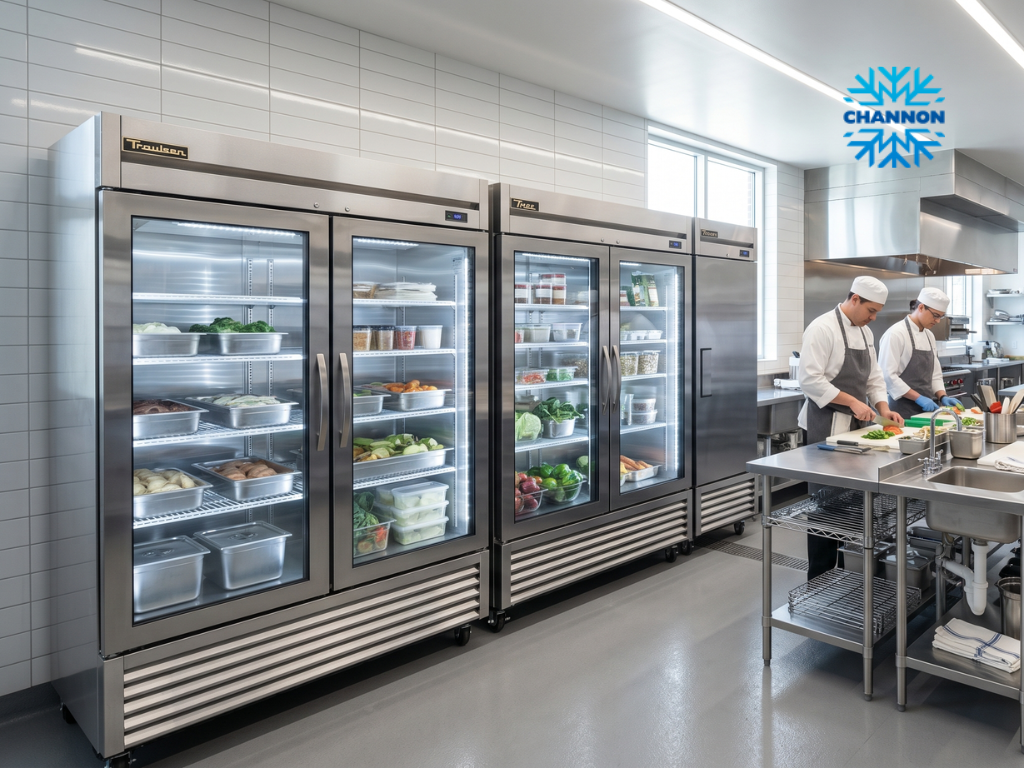
Different businesses need different refrigeration setups. A café may need an underbench fridge close to the coffee station or food prep area. A restaurant may need an upright storage fridge for back-of-house ingredients. A takeaway shop may need a display fridge for drinks, salads, desserts, or grab-and-go meals. A bakery may need chilled display equipment that keeps products visible while maintaining suitable temperature control.
For back-of-house storage, an upright storage fridge may suit kitchens that need organised space for ingredients and prepared items. For smaller food preparation areas, an underbench fridge can help staff access chilled stock without walking across the kitchen. For customer-facing areas, display fridges are often used to present drinks, desserts, salads, sandwiches, and grab-and-go meals in a clean and visible way.
Prep fridges can also be useful for sandwich, salad, or pizza stations where ingredients need to stay close to the work area. Freezers are better for frozen goods, while cool rooms may be more suitable for businesses with larger stock volumes. Bar fridges can support drinks service in cafés, restaurants, pubs, and function spaces.
When comparing a commercial fridge lease, make sure the agreement covers the type of fridge your business actually needs. Do not choose a unit only because it is available or affordable if it does not suit your layout or stock volume.
Check temperature needs, ventilation, and service access
Temperature control is especially important for food businesses. In Australia, potentially hazardous food must be kept under temperature control to help reduce food safety risks. Food Standards Australia New Zealand describes potentially hazardous food as food that must be kept at certain temperatures to minimise the growth of harmful microorganisms or prevent toxin formation.
This means your fridge must be suitable for the type of food you store. Meat, dairy, seafood, prepared meals, salads, desserts, and other chilled products may all need reliable cold storage.
Also consider ventilation and access. Commercial fridges need enough space around them to operate properly. If a unit is placed in a tight area with poor airflow, it may work harder than it should. This can affect performance and may increase wear on the equipment.
Before choosing a fridge, measure the space carefully and check door swing, aisle clearance, power access, loading access, and cleaning access. These practical details can make daily use easier and help you avoid selecting equipment that looks suitable online but does not fit properly in your business.
What to Check Before You Lease Commercial Fridge Equipment
Before you lease commercial fridge equipment, take time to compare both the product and the agreement. The fridge needs to suit your business, but the supplier and contract also matter.
A clear agreement should help you understand what you are paying for, how long the term runs, what support is included, and what your responsibilities are. If anything is unclear, ask before signing.
Contract terms, maintenance, delivery, and breakdown support
When comparing a commercial fridge lease, review what is included in the regular payment and what may cost extra. Delivery, installation, servicing, breakdown support, replacement options, upgrades, and end-of-term conditions should all be clear before you agree to proceed.
It is also important to understand what happens if the fridge stops working during the lease term. Ask whether maintenance is included, who arranges repairs, how quickly support is usually provided, and whether a temporary replacement unit may be available if the fridge cannot be fixed quickly. These details matter because refrigeration downtime can affect stock, service, and business operations.
You should also check whether the fridge is new, used, or refurbished, and whether there are any cleaning, return, or early cancellation conditions. A cheaper agreement may not be better if it excludes important support or leaves your business exposed during a breakdown.
Supplier experience and product suitability
It is also helpful to choose a supplier that understands commercial kitchens and food service environments. A supplier should be able to help you compare product types, space requirements, temperature needs, and practical installation details.
For businesses in Sydney or Western Sydney comparing refrigeration options, Channon can be a useful supplier to contact when you need guidance on commercial refrigeration equipment, including whether buying, renting, leasing, or financing may suit your business needs.
The goal is not just to get a fridge. The goal is to choose equipment that supports your food storage, service flow, customer experience, and budget.
When to Contact a Commercial Refrigeration Supplier
It is worth contacting a supplier before your refrigeration problem becomes urgent. If your fridge is already failing, too small, or unsuitable for your layout, waiting too long can lead to stock loss, rushed decisions, or expensive temporary fixes.
A supplier can help you compare a commercial fridge on rent, a commercial refrigerator for rent, finance options, lease options, and purchase choices based on your actual needs.
When your current fridge is unreliable or too small
You should consider contacting a supplier if your current fridge is showing signs of trouble. Warning signs may include inconsistent temperature, unusual noise, condensation, damaged seals, poor cooling, repeated servicing, or not enough storage space during busy periods.
You may also need advice if your business has changed. For example, you may have added catering, expanded your menu, increased delivery orders, started selling chilled products, or moved into a larger kitchen. In these situations, your old fridge may no longer match your stock volume or workflow.
Getting advice early can help you avoid choosing equipment in a hurry.
When you need help comparing lease, rent, finance, and purchase options
Contacting a supplier is also useful when you are unsure which payment option suits your business. A new business may want to protect cash flow. A growing restaurant may want long-term equipment. A seasonal operator may only need a rent commercial refrigerator option for a short period. A larger food business may prefer commercial refrigerator financing for a more permanent setup.
Before making a final decision, prepare your main details so the supplier can give better guidance. This may include your available space, product type, stock volume, preferred payment method, delivery location, budget range, and how soon the equipment is needed.
This makes the conversation more useful and helps the supplier recommend a practical option instead of a generic fridge.
A commercial fridge lease can be a smart option for the right business, but it should always be compared carefully with renting, financing, rent-to-buy, and buying outright. The best choice is the one that supports your food safety needs, daily workflow, budget, and long-term plans.
