

Reducing material waste in a joinery project is rarely the result of one product choice. It usually comes from a series of smaller decisions made before fabrication begins, including panel dimensions, grain direction, sheet layouts, matching requirements, substrates and the quantity of material ordered.
This is where sustainable veneer can be useful. Decorative timber veneer is produced by slicing or peeling timber into thin leaves that can then be joined and bonded to substrates such as MDF, particleboard or plywood. This allows the appearance and natural character of timber to be used across a larger surface area than many equivalent solid-timber applications. WoodSolutions describes decorative veneer as an economical way of using timber resources while still achieving the appearance of a particular species.
However, using veneer does not automatically make a joinery project sustainable. A poorly planned project can still generate unnecessary offcuts, replacement panels and surplus material.
The more useful question is therefore not simply whether veneer is sustainable, but how designers, joiners and wood veneer suppliers can work together to use the material more efficiently.
Think beyond the decorative surface
The visible veneer is only one part of a finished joinery panel.
A typical decorative veneered panel combines thin wood veneers with a substrate. Depending on the application and product, that substrate might be MDF, particleboard or plywood. WoodSolutions notes that decorative veneer is commonly bonded to these types of sheet materials using specialised pressing processes.
That means material efficiency should be considered across the whole panel rather than only the face veneer.
For example, a reception counter may use decorative veneer on the visible front and ends while less visually important internal components use a different finish. A large wall installation may require carefully selected veneer across the public-facing elevation but not the same level of visual matching behind cabinetry or in concealed areas.
Making those distinctions early can help prevent premium decorative material from being specified where it provides little practical or visual benefit.
Sustainable veneers are therefore most useful when they form part of a considered material plan rather than being applied uniformly to every surface simply for consistency.
Decide which surfaces genuinely need premium veneer
Commercial joinery often includes a mixture of highly visible and secondary surfaces.
A client-facing reception desk, boardroom wall or hospitality counter may justify careful species selection and grain matching because those surfaces contribute directly to the design.
Inside cupboards, behind equipment or on concealed components, the same requirements may not be necessary.
This does not mean compromising the quality of the finished joinery. It means matching the material specification to the importance of each surface.
For designers, one practical approach is to identify the key elevations first and decide where real wood grain needs to remain visually continuous. The joiner can then plan how available sheets or layons can be used across those areas before allocating material to smaller components.
This type of planning can help reduce waste without changing the intended appearance of the finished space.
Resolve Panel Sizes Before Ordering Material
One of the simplest opportunities to reduce material waste is to consider panel dimensions before the final joinery drawings are locked in.
Cabinet doors, drawer fronts, wall panels and shelving are often designed as individual elements, but they eventually have to be cut from larger sheets.
If several components are only slightly larger than the most efficient cutting layout allows, the fabricator may need additional sheets even though much of each sheet becomes an offcut.
Where the design allows some flexibility, coordinating repeated component sizes with available panel dimensions can improve material yield.
This is particularly useful on commercial projects involving many repeated doors, cupboard fronts or wall modules.
It does not mean redesigning an entire interior around a sheet size. Instead, the design team and joiner can identify small dimensional adjustments that have little visual effect but may make fabrication more efficient.
When discussing wood veneer supplies, ask for the actual available sheet or panel dimensions rather than assuming all products come in the same format.
Finalise cut-outs and junctions early
Late changes can create waste even when the original cutting plan was efficient.
An outlet added to a wall panel, a relocated access door or a changed cabinet dimension may mean that a previously fabricated veneered component can no longer be used.
This becomes more significant when the panel has been grain matched to neighbouring pieces.
A replacement may need not only another piece of material but also a veneer with suitable colour and grain characteristics.
Before fabrication begins, coordinate power points, access panels, handles, door openings, shelving positions and other details that affect the finished panel.
The objective is not to eliminate every project change. That is rarely realistic. It is to resolve predictable details before valuable material has already been cut, pressed and finished.
Use Grain Matching Where It Adds Real Design Value
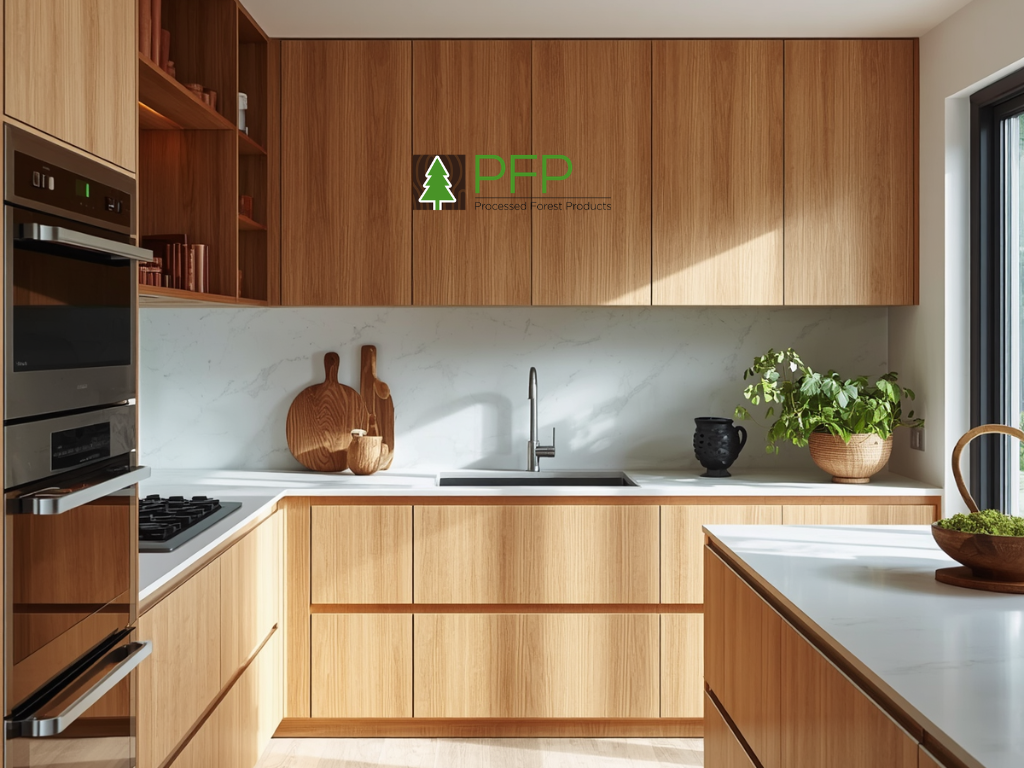
Decide where continuous grain matters most
Natural grain is one of the main reasons designers choose wood veneers, but demanding perfect continuity everywhere can increase material requirements.
Adjacent veneer leaves often have related patterns because they are cut sequentially from the same timber. These leaves can be arranged using matching techniques to create particular visual effects. WoodSolutions describes this process as veneer matching and notes that careful procurement may be necessary when several boards need to visually relate to one another.
On a reception wall, that degree of control may be worthwhile.
Inside storage cabinetry, the same requirement may add complexity without providing a meaningful design benefit.
A better approach is to identify the project’s feature surfaces and reserve more controlled matching for those areas.
Secondary panels can often tolerate more natural variation, depending on the overall design.
This gives the fabricator greater flexibility when allocating material and can reduce the number of otherwise usable pieces rejected only because their grain does not perfectly continue another panel.
Plan the wood veneer design as a complete elevation
A clear wood veneer design should consider the whole elevation rather than treating every panel independently.
For example, if a feature wall contains six vertical panels, decide whether the grain should run vertically across each panel, whether the sheets need a deliberate sequence and where joints will fall.
The same applies to long reception counters or banks of cabinet doors.
WoodSolutions notes that buying several boards in the same veneer species from one supplier does not necessarily guarantee that the boards will match end to end. Where that visual relationship matters, procurement should be planned accordingly.
This is an important point for reducing waste.
If expectations about matching are only raised after ordinary veneered boards have been purchased, otherwise usable panels may be rejected because the grain does not align with the designer’s intended pattern.
Discussing the elevation before ordering gives the supplier and fabricator a better chance to allocate the appropriate material from the beginning.
Match the Product to the Importance of the Surface
Real wood veneers are particularly useful where natural grain, colour and figure are part of the design intent.
WoodSolutions explains that decorative veneer can provide access to the visual qualities of timber species that may otherwise be impractical or expensive to use as solid timber, while also offering greater stability in some applications.
That makes veneer well suited to elements such as cabinetry fronts, feature walls, reception areas, doors and custom furniture.
However, not every component needs the same decorative grade or treatment.
If the design team identifies the key visual surfaces early, wood veneer supplies can be allocated more deliberately.
Premium leaves can be reserved for prominent elevations, while pieces with acceptable natural variation may suit smaller panels or less visually sensitive areas.
This approach respects the fact that real timber naturally varies rather than treating variation as waste.
Understand what a veneer laminate product actually contains
The term veneer laminate can be used differently across product ranges, so it is worth checking the actual construction rather than relying on the name alone.
Some products may combine real timber veneer with a backing or engineered panel system, while other decorative laminates imitate timber without using a real wood veneer face.
Those materials should not automatically be treated as interchangeable.
Real timber provides genuine grain and natural variation. Other decorative surfaces may offer different levels of consistency, maintenance requirements, fabrication options or resistance to wear.
The right choice depends on the application.
A feature boardroom wall may prioritise genuine timber appearance, while a heavily used secondary surface may have different requirements.
When comparing materials, ask the supplier what the face material is, what substrate or backing is used, how edges are handled and whether the product can be repaired, refinished or replaced in a way that suits the project.
That information is more useful than choosing solely from the product name.
Choose sustainable veneers Using Evidence, Not Labels
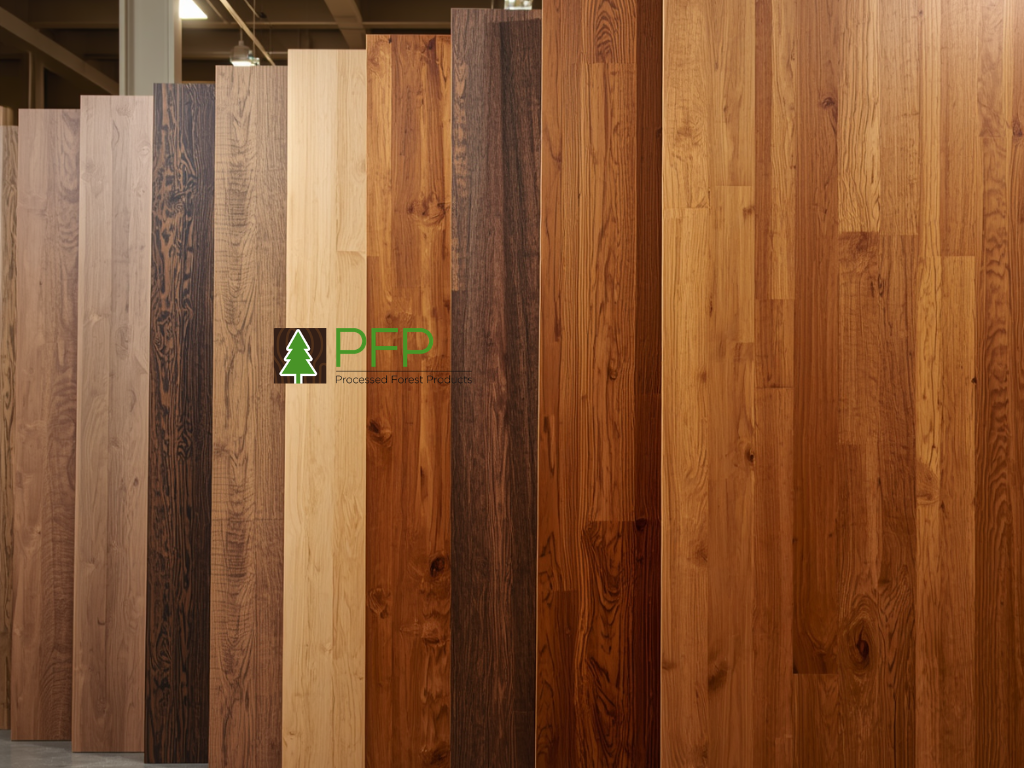
Check certification at product level
Terms such as sustainable, environmentally friendly and responsibly sourced can be useful descriptions, but they should not replace actual product information.
If a project specifically requires fsc certified veneer, confirm that the selected product and the relevant supply chain can support that requirement.
FSC Chain of Custody certification sets requirements covering the sourcing, processing, labelling and sale of forest-based products represented as FSC certified.
Responsible Wood provides another recognised Australian certification pathway. Its AS 4707 Chain of Custody framework tracks certified forest and tree-based products through stages such as ownership, transport and manufacturing.
This matters because a supplier may carry certified products without every item in its range necessarily having the same certification status.
Ask about the exact species and product you are considering.
If certification forms part of a tender, sustainability target or client requirement, also confirm what documentation can be supplied with the order.
As of August 2026, FSC is also revising several of its international Chain of Custody standards, so project teams working with formal certification requirements should check the current applicable documentation rather than relying on an older specification template.
Compare wood veneer suppliers on practical support
Price per sheet is only one part of choosing a supplier.
For a project focused on reducing waste, it can be more useful to understand how the supplier supports material planning.
Ask about available sheet sizes, species availability, veneer matching, layons, bonded panels, samples and whether material from the same flitch or production run can be coordinated where visual consistency matters.
Also find out whether the supplier provides raw veneer, pressed panels or other forms of processing.
This affects where waste is generated and who is responsible for planning around it.
A supplier that can explain how its products are constructed and what limitations apply can help the joiner make more informed decisions before cutting begins.
When comparing sustainable veneers, transparent information about certification, product construction, natural variation and availability is a stronger trust signal than a broad sustainability claim with no supporting detail.
Reduce Waste During Fabrication and Ordering
Ordering exactly the calculated surface area is rarely practical for decorative veneer work.
Natural variation, trimming, matching, grain direction and fabrication requirements mean some additional material may be necessary.
At the same time, ordering a large surplus without considering the cutting plan can leave expensive material unused.
There is no single spare-material percentage that suits every project.
A straightforward run of cabinet fronts may behave differently from a highly matched feature wall containing complex junctions.
The more useful approach is for the designer, joiner and supplier to discuss the required visual consistency and fabrication layout before agreeing on quantities.
If matching is important, it may be sensible to secure adequate compatible material at the beginning rather than trying to find visually similar replacement veneer later.
This is particularly relevant with natural wood because colour and grain will vary between logs and veneer bundles.
Give useful offcuts another purpose
Not every offcut is waste.
Larger pieces may be suitable for drawer fronts, shelving components, small doors, edge details, samples or later repair pieces, depending on their dimensions and construction.
A joiner can often identify these opportunities before fabrication by nesting smaller parts around the larger feature components.
It can also be useful to retain selected matching material for future repairs, especially in commercial interiors where damaged panels may eventually need replacement.
The important distinction is between storing useful material intentionally and simply accumulating leftovers with no planned use.
If reducing waste is a project priority, discuss offcut handling with the fabricator.
Ask whether reusable pieces are normally retained, whether small components can be incorporated into the cutting plan and whether suitable spare material should be labelled for the client after completion.
Material efficiency is often improved through these ordinary fabrication decisions rather than through one dramatic change in product specification.
Contact a Veneer Supplier Before the Design Is Locked In
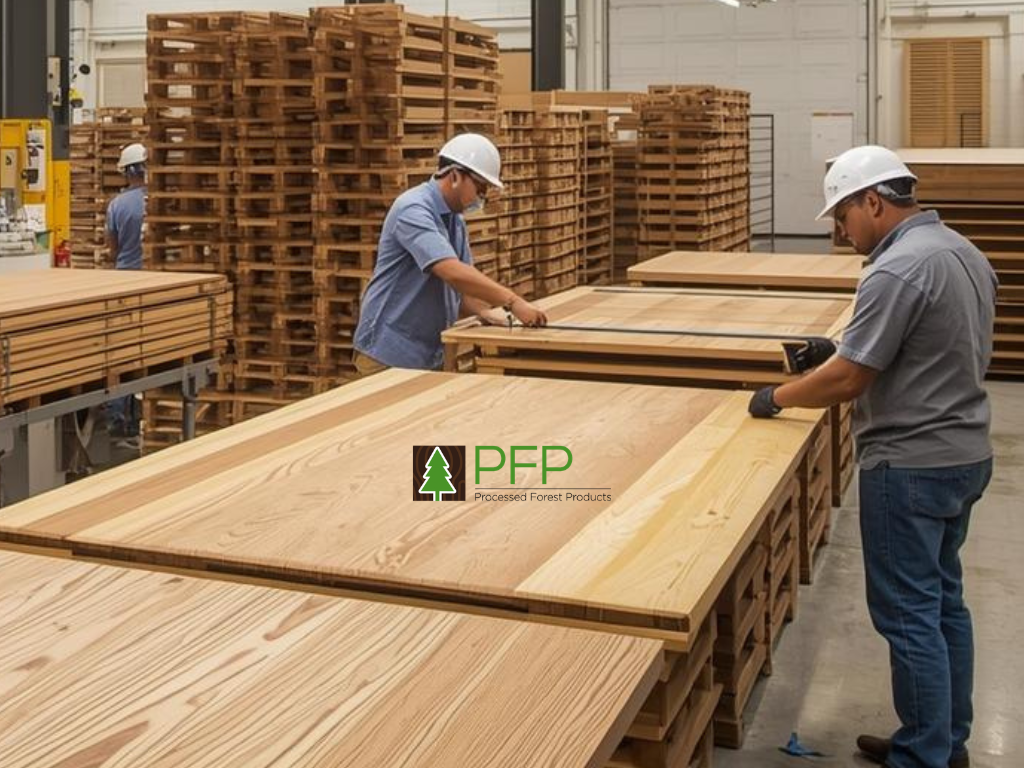
Early advice can prevent unnecessary material changes
The best time to speak with wood veneer suppliers is usually before panel sizes, species and matching requirements become difficult to change.
Early supplier input is especially useful when the project includes large feature walls, uncommon timber species, continuous grain, unusual sheet dimensions, certified materials or significant quantities.
A supplier can explain what sizes are readily available, whether a chosen veneer is regularly stocked, what matching options exist and whether the required certification is available for that specific product.
This can help the design team avoid specifying a layout that requires excessive trimming or a species that is difficult to source consistently in the quantity needed.
For projects in Sydney or elsewhere in NSW, local access to samples and communication with the joiner may also be useful when several approvals are required before fabrication.
Location should not replace product capability as a selection criterion, but practical coordination can matter on detailed commercial joinery projects.
Provide enough information to receive useful recommendations
A supplier cannot optimise a project from a request that only asks for a price per sheet.
Explain what is being built.
Provide approximate panel dimensions, quantities, elevations where available, the preferred veneer species and the proposed substrate.
Describe which areas need careful matching and which areas allow natural variation.
If the project requires fsc certified veneer or another certification pathway, mention that from the beginning.
Also explain the expected fabrication and delivery schedule.
This gives the supplier an opportunity to identify material constraints while the design can still respond to them.
Reducing joinery waste is ultimately a coordination exercise.
Sustainable veneer can make efficient use of decorative timber because thin veneer leaves allow the appearance of natural wood to be applied across engineered panels rather than requiring every component to be made from solid timber.
But the greatest benefit comes when that material is specified carefully.
Plan sheet sizes before fabrication. Decide where grain matching genuinely matters. Use premium decorative material where people will see and appreciate it. Check certification against the actual product being purchased. Order enough material to manage natural variation without creating unnecessary surplus, and consider how useful offcuts can be incorporated into smaller components or retained for repairs.
Most importantly, involve the supplier and joiner before every detail is fixed.
A well-planned project can reduce avoidable waste while still delivering the natural appearance and design character that make wood veneers valuable in the first place.
