

Custom plastic machine guards may look simple once installed, but getting from an exposed machine to a correctly shaped guard involves much more than cutting a clear plastic sheet to size. The fabricator needs to understand the dimensions, mounting points, access requirements, operating conditions and the way the finished component will interact with the machine.
For businesses looking for Plastic Fabrication Western Sydney services, this planning stage is particularly important when replacing an old guard, modifying existing equipment or fabricating a new enclosure around machinery. The material must be suitable for the intended environment, while the shape, fixing method and access arrangement need to support the machine’s safe operation.
SafeWork NSW currently advises that machine guarding should prevent access to dangerous areas, be securely mounted and be appropriate to the access needed for operation, maintenance and cleaning. Where access is not required, permanently fixed guarding may be appropriate. Where access is required, an interlocked physical barrier may be necessary depending on the risk and circumstances.
This means fabrication should follow the safety requirement rather than determine it. The workplace, plant designer and other relevant competent people need to establish what hazards must be controlled, while the plastic fabricator turns those requirements into a component that can be manufactured accurately.
Identify the hazard before drawing the guard
The first question should not be, “What shape of plastic do we need?” It should be, “What does the guard need to prevent people from reaching?”
Machinery can introduce hazards from rotating components, cutting tools, rollers, belts, gears, moving workpieces and parts that could break or be ejected. SafeWork NSW identifies guarding as one way of physically separating people from machine hazards and requires guarding to be constructed and mounted so it remains effective during operation.
That assessment affects almost every later fabrication decision.
A simple fixed viewing panel may be suitable where nobody needs routine access to the dangerous area. A machine that needs frequent setting, loading, adjustment or cleaning may require a very different arrangement.
A guard may also need to allow the operator to observe the process without providing unnecessary access to moving components.
Before requesting Design and Fabrication work, it is therefore useful to document what the machine does, where the danger area begins, which parts require access and how workers normally operate or maintain the equipment.
If an existing guard is being replaced, do not assume that copying the damaged part automatically confirms that the old design is suitable. Any change to machinery or guarding should be reviewed against the current operating conditions and risk controls.
Measure the machine, not just the missing panel
Accurate measurements are essential, but simply measuring the width and height of an opening may not be enough.
The fabricator may also need the position of mounting holes, frame dimensions, clearances around moving parts, hinges, handles, brackets and any neighbouring components that could interfere with the guard.
For example, a guard may fit perfectly when the machine is stationary but prevent a door from opening fully or interfere with a maintenance panel once installed.
Photographs can help explain the context, particularly when combined with dimensioned sketches or CAD drawings. Photos should show the full machine as well as close-up views of mounting areas and existing frames.
For complicated replacement parts, an accurate template or existing guard may also help establish the required profile.
The more complete the information supplied at the beginning, the easier it is for the fabricator to identify missing dimensions before material has been cut.
Choose the Plastic Around the Actual Operating Conditions
Clear plastics are useful for machinery guards because they can allow workers to see equipment without leaving dangerous moving parts exposed. However, acrylic and polycarbonate should not automatically be treated as interchangeable.
Polycarbonate is commonly used for machine guarding where impact resistance is an important consideration. Australian plastic suppliers specifically list polycarbonate for machine guards and other protective applications where toughness and visibility are required.
Acrylic provides excellent optical clarity and can also be fabricated into covers, screens and viewing components. Certain acrylic products are marketed for machine-guard applications, although the suitability of any particular grade still depends on the hazard, likely impact and operating environment.
This is why Acrylic fabrication should start with the application rather than simply choosing acrylic because the existing panel happens to be clear.
If the guard could be struck by material or is intended to help contain components that might be ejected, impact performance becomes particularly important. SafeWork NSW states that guarding should, so far as reasonably practicable, contain moving parts that could break, disintegrate or be ejected.
The person responsible for the machinery should therefore establish the performance needed before the fabricator recommends a material and thickness.
Consider cleaning, heat, chemicals and visibility
Impact is not the only issue.
Some machine guards are cleaned several times a day. Others are exposed to oils, coolants, chemicals, dust, heat or repeated abrasion.
These conditions can affect how a plastic performs and how quickly the viewing surface becomes marked.
For example, some polycarbonate products are available with abrasion-resistant coatings for applications where guards are regularly cleaned or rubbed.
The fabricator should therefore know more than the required dimensions.
Explain whether the guard is indoors or exposed to sunlight, what cleaning products are used, whether oils or chemicals may contact the panel and whether workers need a clear view through it throughout the machine’s operation.
Thickness should also be determined from the application rather than copied from an unrelated project.
A thicker sheet may provide different rigidity or impact performance, but it may also affect bending, machining, hardware and the overall weight of the guard.
Material selection is most useful when these factors are considered together.
Turn Measurements Into a Fabrication-Ready Design
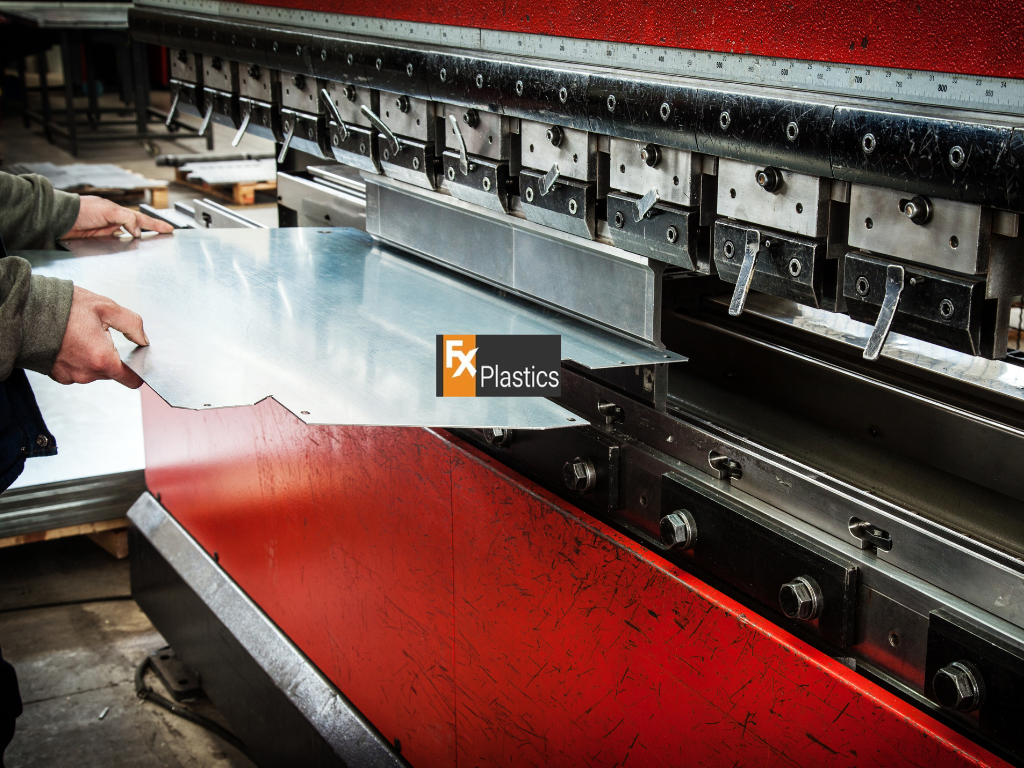
Plan holes, bends, doors and mounting points before cutting
Once the safety requirement and material have been identified, the next stage is turning the concept into something that can actually be fabricated.
A machine guard may need much more than a rectangular profile.
It could require mounting holes, slots, folded sections, access openings, hinges, handles, fixing brackets or shaped cut-outs around machine components.
These details should be shown clearly on the drawings where possible.
Hole positions deserve particular attention. A small measurement error can leave a replacement guard that looks correct but cannot be mounted to the existing frame.
Bend locations also need to take the material thickness and fabrication method into account.
If the guard includes opening sections, the movement of those parts needs to be considered before fabrication. A hinged section must have enough clearance to open without colliding with the machine, wall or neighbouring guard.
Where a safety interlock forms part of the guarding arrangement, its design and operation should be resolved by the appropriate machine-safety professionals rather than improvised during plastic fabrication. SafeWork NSW specifically notes that interlocked physical barriers may be required when access to the danger area is necessary during operation, maintenance or cleaning.
Use drawings to make expectations clear
For straightforward replacement panels, a dimensioned sketch may be sufficient.
For more complicated components, 2D or 3D CAD drawings can make the fabrication requirements much clearer.
This can be especially useful when several guards need to be reproduced across identical machines.
Once the design is confirmed digitally, the same geometry can be used for repeat CNC processing, subject to the material and fabrication setup.
FX Plastics currently describes its Design and Fabrication capability as including concept development, 2D and 3D CAD modelling and construction drawings, alongside plastic fabrication processes.
This type of capability can be useful when the customer has measurements and a functional requirement but still needs those details converted into fabrication-ready information.
However, CAD capability should not be confused with responsibility for the workplace’s overall machine-safety assessment. If the guard changes how plant operates or modifies existing machinery, Safe Work Australia notes that additional design or manufacturing duties can arise for parties modifying plant.
The safer approach is to establish the guarding requirement first, then use fabrication drawings to document how that requirement will be manufactured.
Select CNC Cutting Services to Suit the Material and Geometry
CNC equipment uses digital instructions to reproduce shapes and dimensions consistently.
For custom guards, cnc cutting services can be useful for producing profiles, mounting holes, slots, rounded corners and repeated components.
This is particularly valuable when several identical machines need matching guards or when replacement parts may be required later.
However, “CNC cutting” does not describe one single process.
A fabricator may use saw cutting, routing, machining or laser cutting depending on the material, thickness and geometry.
When comparing CNC Cutting Services Western Sydney providers, ask which process they recommend for the actual plastic being used rather than requesting a specific machine simply because it sounds more precise.
The best process is the one that produces the required shape and finish without creating unnecessary problems for the material.
Know where CNC saw cutting and CNC laser cutting fit
CNC saw cutting can be useful for accurately sizing sheet materials and creating straight panel components.
CNC routing and machining may be more appropriate where a guard needs profiles, slots, holes or detailed mechanical features.
CNC laser cutting is another option for plastics that are suitable for laser processing, particularly where detailed shapes and clean cut geometry are required.
Acrylic is commonly laser cut. That does not mean every plastic should be processed using the same method.
For example, the appropriate processing method for polycarbonate should be confirmed with the fabricator rather than assuming that CNC laser cutting is automatically suitable simply because the component is clear.
FX Plastics currently lists CNC saw cutting, CNC routing and machining, and CNC laser cutting among its fabrication services.
For a customer, the important question is therefore not “Do you have a laser?” but “Which process is appropriate for this material, thickness and part?”
That conversation can prevent the cutting method from being chosen before the material requirements are properly understood.
Finish, Form and Test-Fit the Guard
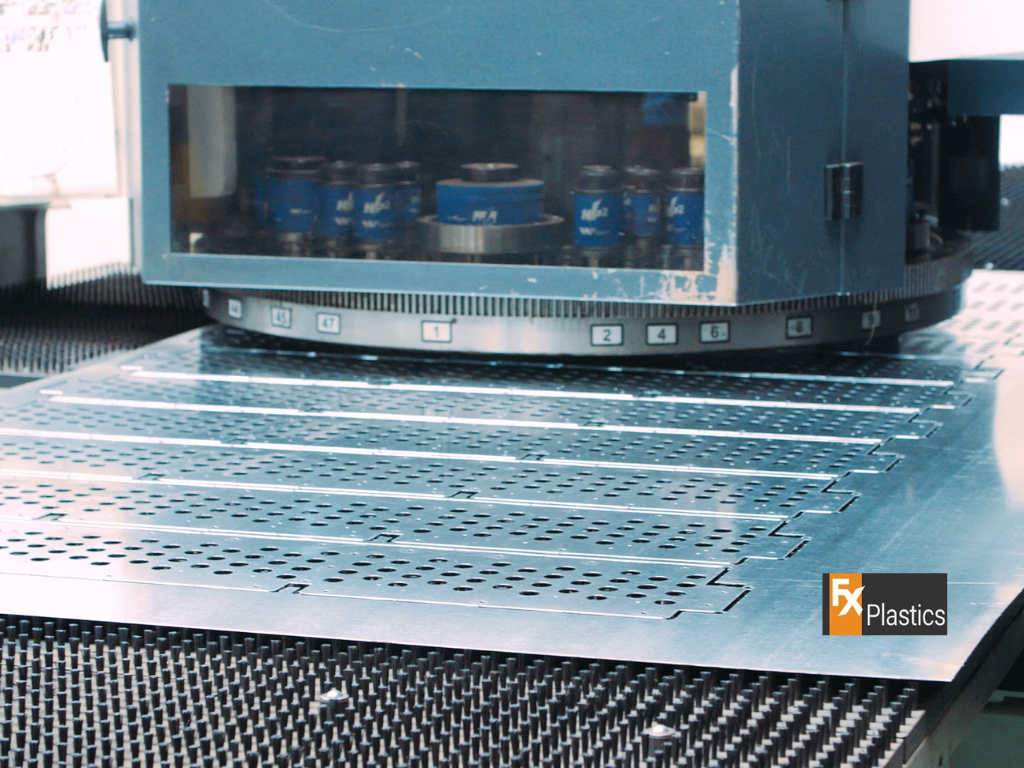
Bending and edge finishing can be part of the fabrication
Many machine guards are three-dimensional rather than flat sheets.
A panel may wrap around a machine, return around a frame or form part of an enclosure.
Depending on the material and design, fabrication can include bending, forming, machining, polishing and assembly.
The bend locations need to be considered during the drawing stage because the final dimensions depend on how the material is formed.
The finished edges also matter.
A worker may routinely clean or handle the guard, so rough or sharp exposed edges would be undesirable. Safe Work Australia’s plant-design guidance specifically notes that guarding should not introduce new hazards such as rough edges, sharp corners or pinch points.
The mounting system also needs to hold the guard securely enough for its intended service.
SafeWork NSW requires machine guarding to be well constructed and securely mounted to resist impact or shock from operation.
This is another reason the fabricator needs to understand the finished application rather than treating the job as ordinary sheet cutting.
Test fitting is valuable for unusual or older machinery
Not every machine has a complete set of current drawings.
Older industrial equipment may have been modified over time, and mounting points may no longer match the original documentation.
In these situations, a prototype, template or test fit can help confirm the geometry before a final guard or larger production run is completed.
This is particularly useful for a guard with multiple bends or unusual mounting positions.
A first article can also be valuable when several identical parts are required. Once the first component has been checked against the machine, any necessary adjustments can be made before producing the remaining quantity.
Fit, however, is only one part of acceptance.
The business responsible for the machine should also confirm that the completed guarding arrangement provides the required protection and does not create unexpected access points or interfere with safety systems.
SafeWork NSW advises that machinery should not be used with guards removed or interlocks not working and that guards should not be bypassed.
For custom guarding, final review should therefore consider both physical fit and safety function.
Compare Plastic Fabrication Western Sydney Providers by Capability
Two fabrication quotes can appear similar while covering very different scopes.
One may cover only the supply and cutting of a flat sheet.
Another may include material selection, CAD preparation, routing, bending, polishing, assembly or test fitting.
Before comparing prices, establish what each quote actually includes.
This is especially important for machine guards because a low sheet-cutting price may not include the fabrication work needed to turn the sheet into an installable component.
Sydney businesses comparing Plastic Fabricators Sydney services should also ask whether the provider regularly works with the required material and whether it can handle both one-off items and repeat production where needed.
For Western Sydney projects, local access can be useful when an existing guard needs to be inspected, templates need to be exchanged or a first component needs to be checked before a larger run.
FX Plastics is one provider that can be considered for this type of work. Its current public information lists Acrylic fabrication, Design and Fabrication, CNC routing and machining, CNC saw cutting and CNC laser cutting among its services.
That does not mean every process is appropriate for every machine guard. The useful discussion is still about the specific material, design and operating conditions.
Make sure the quote describes the finished job
Before accepting a fabrication quote, check whether you and the supplier are describing the same outcome.
If you need a finished guard, a quotation for cut sheet alone is not equivalent.
Clarify whether material supply is included, whether the fabricator is working from your finished drawing or preparing one, and whether bending, drilling, routing, polishing, assembly or hardware installation is part of the price.
If delivery or site fitting is required, confirm that separately.
For repeat production, also ask how the approved drawing or CNC file will be identified so future orders can be matched to the correct revision.
This can be important when a machine is modified later. Ordering from an old drawing could reproduce a component that no longer suits the equipment.
Clear scope and revision control are simple trust signals when comparing fabrication providers.
They make it easier to evaluate price based on what will actually be supplied rather than relying on vague descriptions such as “custom machine guard”.
Contact the Fabricator Before the Guard Design Is Locked In
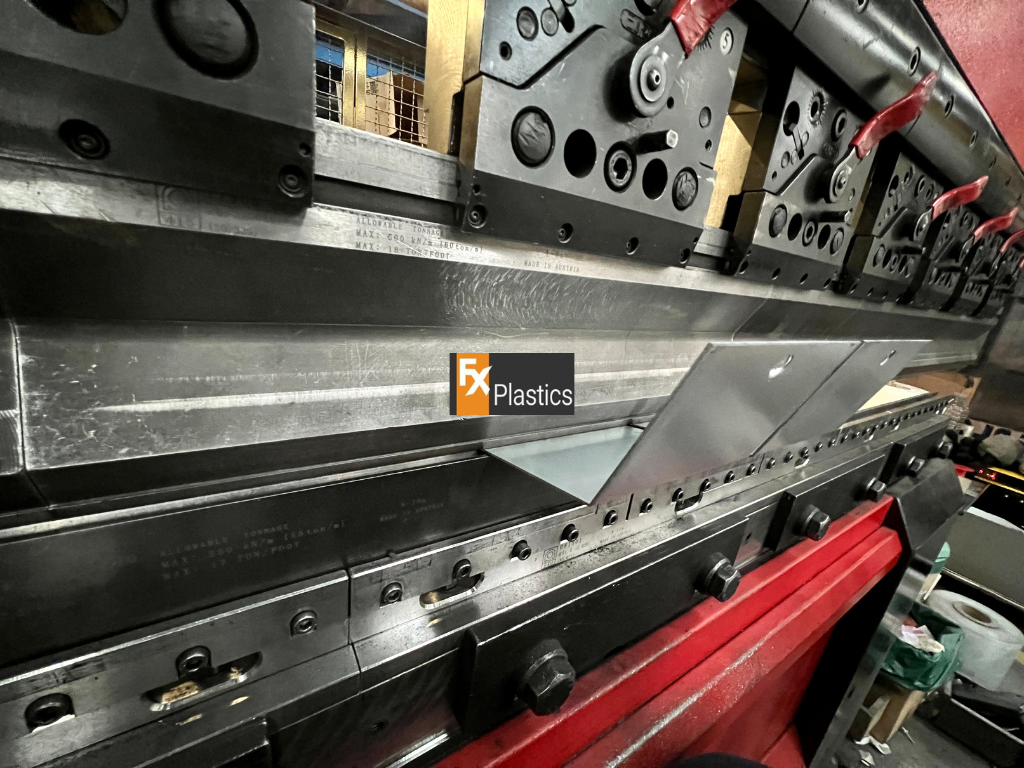
Early fabrication input can prevent avoidable redesign
A fabricator can often identify practical manufacturing issues before material is ordered.
A bend may be too close to a hole.
A proposed sheet thickness may affect the way a component can be formed.
A profile that looks simple in a drawing may require a different cutting method from the one originally assumed.
For that reason, it can be useful to involve the fabrication company once the machine-safety requirements have been established but before every manufacturing detail is fixed.
If you are requesting CNC Cutting Services Western Sydney, explain the intended material and application rather than sending only a cutting file.
For machine guarding, the context matters.
A fabricator who knows that the component is a safety guard can ask more relevant questions about mounting, visibility, access and the operating environment.
This does not transfer the workplace’s safety duties to the cutting provider, but it helps ensure that the physical component reflects the approved design.
Give the fabricator enough information to quote properly
A good enquiry should explain what is being made and why.
Provide the machine type, photographs, approximate dimensions and any existing drawings.
Identify the mounting points and show where bends, hinges, handles, slots or cut-outs are required.
If the material has already been specified through the machine-safety assessment, state the material and thickness. If it has not, explain the operating conditions so suitable options can be discussed.
Also provide the quantity.
A one-off replacement guard may be approached differently from twenty identical panels for a production line.
If future replacements are likely, ask whether the final drawing or part reference can be retained for repeat orders.
The same principle applies to any Design and Fabrication project: the more accurately the requirement is explained, the easier it is to compare quotations and identify unresolved questions before production.
Custom machine guards are therefore best understood as a combination of safety planning and accurate fabrication.
The machine hazard and required control should be established first. From there, the project can move through material selection, accurate measurement, CAD documentation, CNC processing, forming, finishing and final fit.
For businesses seeking Plastic Fabrication Western Sydney services, choosing a provider should not come down to cutting price alone. Material knowledge, fabrication capability, drawing support, communication and the ability to explain what is included in the finished job are all useful considerations.
Most importantly, the fabricated guard should support the machine’s approved safety arrangement rather than becoming a substitute for proper risk assessment.
When those responsibilities are kept clear, the fabricator can focus on what it does best: turning an agreed design into an accurately made component that fits the machine and its intended working environment.
