

Sustainable veneer should be chosen by looking beyond colour and grain alone. Timber source, certification, chain of custody, substrate, adhesives, finish and the intended application can all influence whether a product is appropriate for a project.
This is particularly important when a project has environmental targets or requires evidence of responsible timber sourcing. A species should not automatically be described as sustainable simply because it is natural timber. Buyers should look for supporting information that explains where the material comes from and how it has moved through the supply chain.
At the same time, appearance still matters. Species, cut, matching and finish determine how the veneer will look across cabinetry, furniture and architectural surfaces.
Sustainable veneer selection should begin with understanding where and how the material will be used.
A veneer chosen for residential cabinetry may need different characteristics from one specified for a commercial wall panel or heavily used piece of furniture.
How sustainable veneer selection changes by project type
Sustainable veneer can be used across cabinetry, furniture, doors, wall panels and architectural joinery, but the supporting panel and finish should suit the application.
Kitchen cabinetry, for example, needs a surface that can be maintained and cleaned appropriately. Decorative wall panels may place greater emphasis on grain continuity and visual impact.
Furniture can introduce additional considerations such as exposed edges, curves and repeated handling.
The intended use should therefore be established before narrowing the selection by species or colour.
Why sustainable veneer should suit the actual use
Sustainable veneer should not be selected purely because a sample looks attractive.
The finished product also needs to suit the expected level of wear, cleaning requirements and surrounding conditions.
A heavily used commercial interior may require a different finish from feature cabinetry in a lower-traffic room.
This is why it is useful to discuss both appearance and performance with the supplier or fabricator before the material is specified.
Verify the Source of Sustainable Veneer
Sustainable veneer claims are stronger when buyers can see supporting information about where the timber originated and how it was sourced.
Broad terms such as environmentally friendly, green or sustainable do not provide enough information on their own.
How sustainable veneer sourcing can be verified
Sustainable veneer buyers can ask what sourcing documentation is available and whether the timber is covered by a recognised forest certification system.
FSC and PEFC are widely recognised certification frameworks used to support responsible forest management and chain-of-custody processes.
Chain of custody is important because it relates to how certified forest products are tracked through stages of processing and supply.
Where sourcing is important to the project, request documentation that relates to the actual product rather than relying only on a general statement about the supplier.
Why sustainable veneer is not defined by species alone
Sustainable veneer cannot be judged simply from the timber species name.
An american oak veneer, wenge veneer, burl veneer or anegre timber product may have very different sourcing histories depending on where the timber came from and how it was supplied.
This means one species should not automatically be described as more sustainable than another without supporting evidence.
Species selection can still be based on colour, grain and design suitability, but responsible sourcing should be considered separately.
Check Certification for Sustainable Veneer
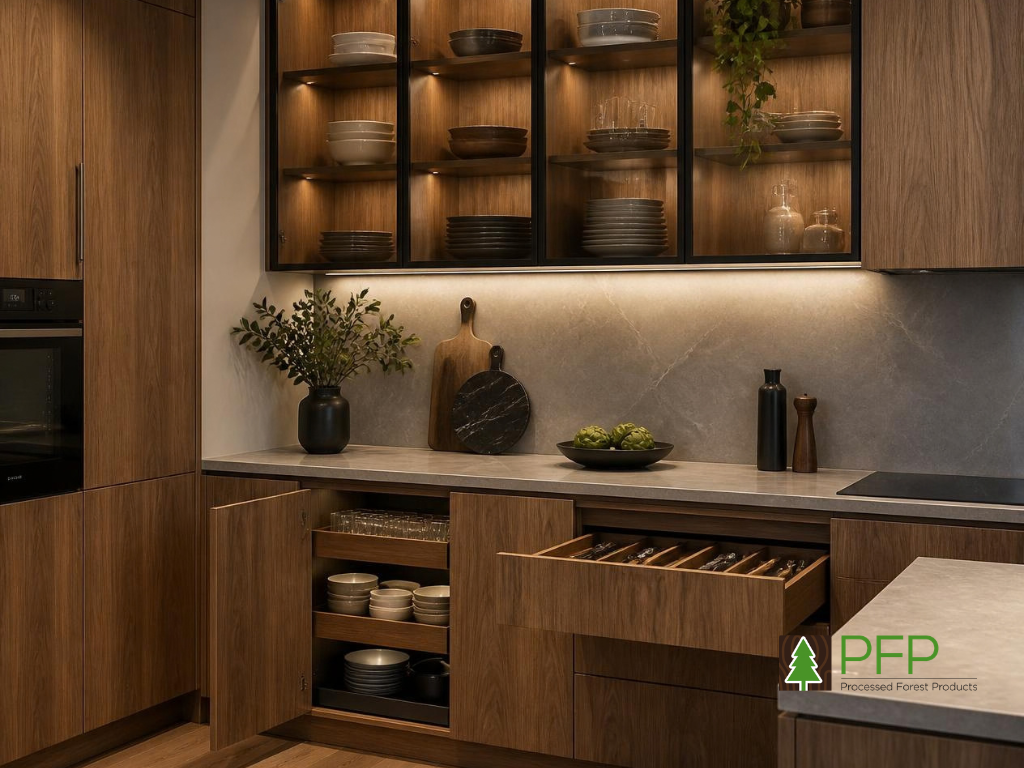
Choosing sustainable veneer involves more than colour and grain, with sourcing, certification, substrate and finish all worth reviewing.Sustainable veneer specifications may include certification where a project has responsible timber requirements.
The important part is understanding exactly what the certification covers.
What fsc certified veneer can tell buyers
FSC certified veneer can provide a recognised way of demonstrating that the material is connected to an FSC-certified supply chain, provided the claim and documentation apply to the product being supplied.
For projects with formal environmental requirements, certification can provide useful evidence rather than relying on marketing language.
The Green Building Council of Australia recognises forest certification schemes accredited by FSC International or PEFC within its responsible timber framework.
This makes certification particularly relevant where timber sourcing forms part of a broader building sustainability strategy.
How sustainable veneer certification claims should be checked
American oak veneer can suit lighter interiors with visible natural grain and a warm timber appearance.Sustainable veneer buyers should confirm that certification documentation relates to the product and supplier involved in the project.
It is useful to ask whether the material is certified, what claim applies and whether chain-of-custody information can be supplied.
A company’s general involvement with certified timber does not necessarily mean every veneer it sells carries the same certification.
Clarifying this before specification can help avoid confusion later, particularly on commercial or Green Star-related projects.
Compare Species When Choosing Sustainable Veneer
Sustainable veneer still needs to deliver the visual result the project requires.
Colour, figure, grain pattern and natural variation can differ substantially between species.
How sustainable veneer species influence the finished design
Sustainable veneer can range from light, restrained grain patterns to much darker and more expressive surfaces.
American oak veneer is often associated with a lighter appearance and clearly visible grain.
Wenge veneer typically creates a much darker visual effect, while burl veneer can introduce highly figured and irregular patterns.
Anegre timber can offer another decorative option with its own tone and grain characteristics.
The best selection depends on the design rather than which species is currently most fashionable.
How sustainable veneer choices differ by visual character
Sustainable veneer should be assessed across a realistic sample area wherever possible.
A small veneer sample may look very different once repeated across full-height cabinetry or a large feature wall.
Highly figured materials such as burl veneer can become a strong focal point, while straighter-grained species may create a quieter result across a large surface.
It is also useful to discuss natural variation.
Real timber veneer can vary between logs and batches, so buyers should understand how much consistency is required before production begins.
Look Beyond the Face of Sustainable Veneer
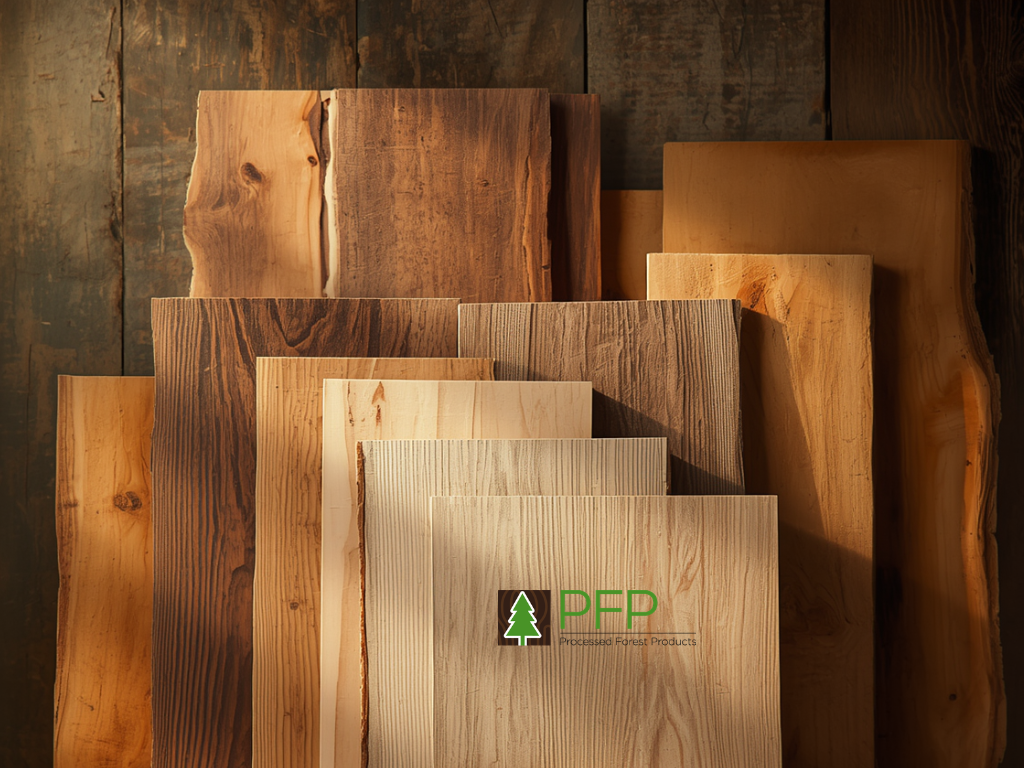
Sustainable veneer is only the visible surface of a veneered panel.
The substrate and manufacturing process are also part of the finished product.
Why sustainable veneer is more than the decorative face
Sustainable veneer is commonly pressed onto substrates such as MDF, particleboard or plywood.
The Timber Veneer Association of Australia identifies these as common substrates and recommends selecting the substrate according to the intended use of the finished panel.
This means two products using the same veneer face may not necessarily have the same construction or suitability.
Ask what substrate is being used and whether it is appropriate for the location and application.
How sustainable veneers should be assessed as a complete product
Sustainable veneers should be considered together with their substrate, adhesive system, edging and manufacturing process.
The veneer bond also matters because decorative veneer needs to remain securely attached to the panel throughout its service life.
Australian standards cover aspects of decorative overlaid wood panels, substrates and veneer bond performance.
For architects, designers and joiners, understanding the complete panel construction can provide a much clearer basis for specification than looking at the veneer face alone.
Review Finishes Before Approving Sustainable Veneer
Sustainable veneer appearance can change significantly once a finish is applied.
Raw timber samples therefore do not always show exactly how the finished cabinetry or panel will look.
How sustainable veneer finishes affect the final appearance
Sustainable veneer can be finished in different ways depending on the required appearance and performance.
The chosen coating can influence sheen, colour depth, texture, moisture resistance and how the surface changes with use.
Some veneers may also be stained, limed, textured or supplied prefinished.
These treatments can significantly alter the natural appearance of the timber.
For that reason, the finish should be considered as part of the original specification rather than being left until the end of production.
Why sustainable veneer samples should be reviewed finished
Sustainable veneer samples are most useful when they show the material as it is expected to appear in the completed project.
The Timber Veneer Association of Australia recommends that indicative finished samples be supplied before manufacturing.
This gives designers and clients an opportunity to review colour, grain and sheen together.
A finished sample can also help avoid situations where the selected raw veneer develops a noticeably different tone after coating.
Compare Sustainable Veneer Before Specifying
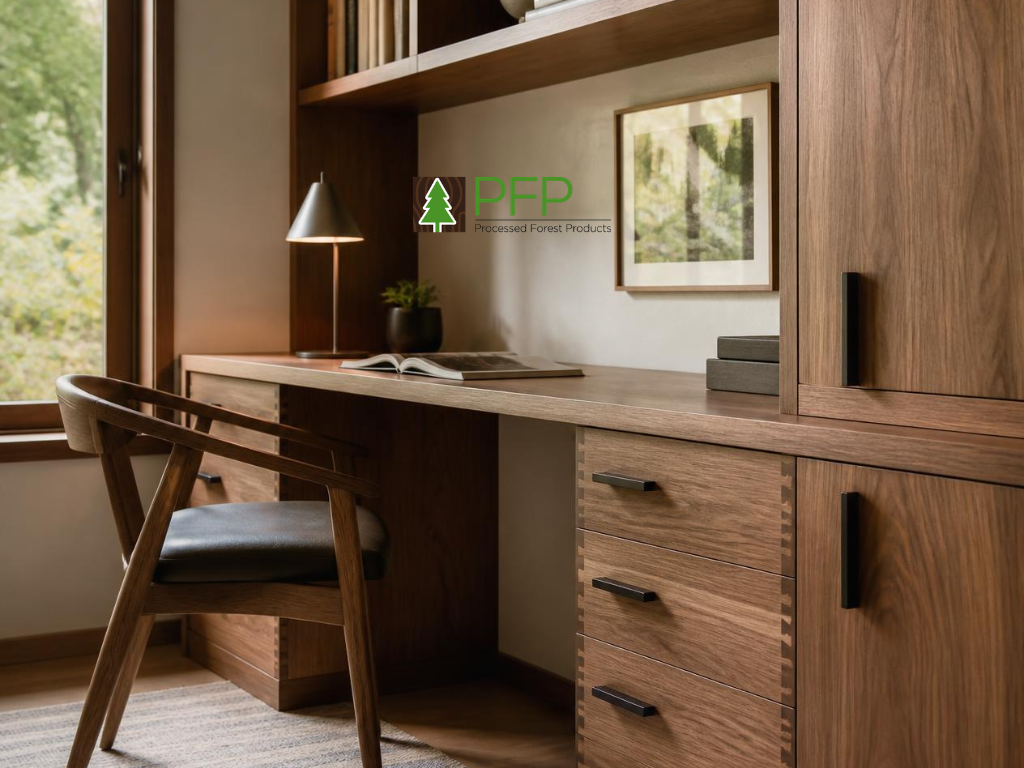
Sustainable veneer should be compared using a combination of design, sourcing and technical information.
The strongest specification is one that clearly identifies what is required rather than relying on a broad product description.
What to ask before choosing sustainable veneer
Before selecting sustainable veneer, ask about species, timber source, available certification, cut, matching method, substrate and finish.
It can also be useful to confirm whether the veneer comes from a particular batch or log where consistency is important.
For natural veneer, discuss expected colour and grain variation.
If certification forms part of the project brief, request the relevant documentation before the material is approved.
Finished samples can then help confirm that the visual result still meets the design intent.
How sustainable veneer supports thoughtful wood veneer design
Sustainable veneer can support thoughtful wood veneer design when environmental requirements and visual decisions are considered together.
A successful specification does not focus only on obtaining an FSC certified veneer or choosing a particular timber species. It also considers how the material will be matched, pressed, edged, finished and used.
For buyers, designers and joiners comparing products in Sydney or elsewhere in Australia, Forest Products can be considered when discussing timber veneer choices and the documentation or product information available for a particular project.
The most useful approach is to ask specific questions before ordering.
Sustainable veneer should represent more than an attractive timber surface. Buyers should understand where the material comes from, what certification applies, how the panel is constructed and whether the finish suits the intended application.
Species such as american oak veneer, wenge veneer, burl veneer and anegre timber can create very different design outcomes, but appearance is only one part of the decision.
By reviewing sourcing, certification, substrate, manufacturing and finish alongside the visual characteristics of the timber, buyers can make a more informed sustainable veneer selection without relying on vague environmental claims.
