

A product rarely moves directly from one supplier to one customer. Raw materials may come from several locations, components may be produced by different manufacturers, and finished goods can move through warehouses, distributors and retailers before reaching the buyer.
That is why supply chain traceability matters.
Supply chain traceability is the ability to follow products, materials, components or batches through different stages of a supply chain. The information collected along the way can help a business understand where something came from, what happened to it and where it went next.
For Australian businesses, this can support better product management, supplier visibility, quality processes and more organised product information. Traceability is particularly important in sectors where businesses need to identify batches, manage recalls, substantiate product information or respond to changing market requirements.
Australia already has established traceability systems across agricultural supply chains. The Australian Government describes these systems as the regulations and industry arrangements that allow agricultural commodities and products to be tracked along entire supply chains.
Traceability is also becoming increasingly digital. Technologies such as 2D barcodes, product databases, digital product passports and, in some applications, blockchain are changing how product information can be collected, connected and shared.
Understanding the basics can therefore help businesses make better decisions before choosing a traceability system or service.
What Is supply chain traceability and How Does It Work?
Following products from origin to destination
At its simplest, supply chain traceability creates a record of a product’s journey.
Imagine an Australian clothing business that buys fibre from one supplier, fabric from another manufacturer and trims from several additional suppliers. Garments may then be assembled overseas, shipped to Australia, stored in a local warehouse and distributed to retailers or customers.
Without organised records, tracing one finished product back through that chain can become difficult.
A traceability process connects important events in that journey. Depending on the product and industry, the business might record:
- where a material originated
- which supplier provided it
- when it was purchased or produced
- which batch or lot it belonged to
- where manufacturing occurred
- when it entered or left a warehouse
- which finished products used the material
- where those products were distributed.
The level of detail needed will vary considerably. A small local manufacturer will not necessarily need the same system as a national food distributor or an exporter managing complex international suppliers.
The useful starting point is therefore not technology. It is deciding what needs to be traceable and why.
What information can be recorded along the way?
A traceability record can contain much more than a product name.
Businesses may need to connect supplier information with product identifiers, batch numbers, manufacturing records and supporting documents.
Typical information can include:
- supplier and manufacturer details
- product SKUs or identifiers
- batch and lot numbers
- serial numbers
- raw material sources
- manufacturing or processing dates
- production locations
- warehouse movements
- purchase and shipment records
- certifications or supporting documents
- expiry or best-before dates where relevant
- product destination information.
Identifiers are particularly important because they provide a consistent way to distinguish one product or batch from another.
For example, GS1 Australia notes that modern 2D barcodes can carry information including expiry dates, batch or lot numbers and serial numbers. That information can support more precise identification during traceability and recall processes.
The important point is not to collect every possible piece of information. Businesses should collect information that serves a clear operational, regulatory, customer or market purpose.
Why Traceability Matters for Australian Businesses
Better visibility when something goes wrong
Traceability becomes especially valuable when a business needs an answer quickly.
Suppose a manufacturer discovers that one batch of material may have a quality problem. Without reliable records, the business may struggle to determine which finished products contain that material or which customers received those products.
With organised batch and product records, the investigation can be much more focused.
A business can potentially work backwards from the affected finished product to its materials and suppliers, or forwards from an affected batch to the products and destinations connected to it.
This is why traceability plays an important role in industries such as food and agriculture.
The Australian Government’s national approach to agricultural traceability is designed around the ability to track and trace commodities and products through entire supply chains.
GS1 Australia similarly explains that batch and serial information contained in 2D barcodes can help businesses isolate affected stock rather than treating every unit of a product as affected.
Good traceability does not prevent every product problem. What it can do is give a business better information when investigating one.
Supporting sourcing, accountability and business confidence
Traceability is not only useful during recalls.
It can also help businesses understand the organisations, materials and processes behind their products.
For example, a business may want to answer questions such as:
Where did this material come from?
Who manufactured this component?
Which supplier documents support this claim?
Which batch was used in this finished product?
Can we retrieve the relevant records if a customer or business partner requests them?
These questions become harder to answer when supplier information sits in emails, spreadsheets, paper files and disconnected systems.
There is also an Australian governance consideration for some organisations. Under Australia’s Modern Slavery Act, certain large businesses are required to report on how they assess and address modern slavery risks in their operations and supply chains.
Traceability by itself does not demonstrate compliance with modern slavery obligations, nor does it prove that a supply chain is ethical. However, better organised supplier and sourcing information can form part of the broader information businesses use when understanding their supply chains.
That distinction is important. A traceability system should help make relevant information easier to find and assess, rather than automatically turning incomplete data into proof.
Where global batch traceability Fits Into Modern Supply Chains
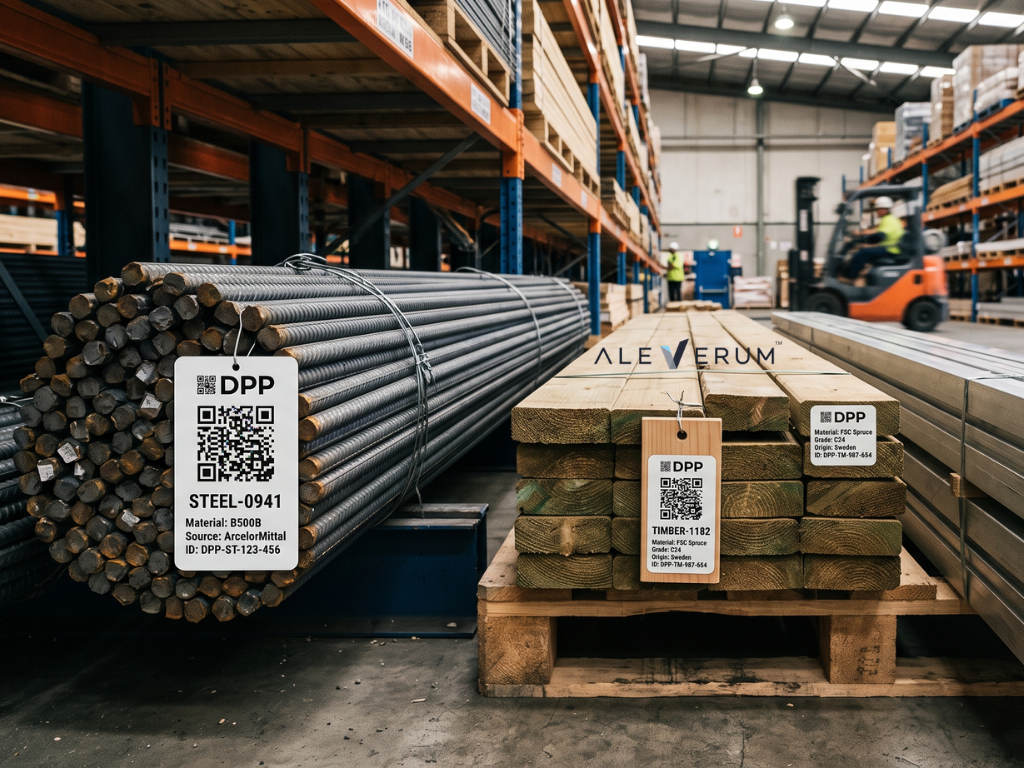
Connecting batches across suppliers and locations
Batch traceability becomes more complicated as a supply chain expands.
A manufacturer may receive several batches of the same raw material. Each batch might then be divided between production runs, combined with other components and turned into several finished products.
Those finished products can then move through different warehouses, distributors and markets.
global batch traceability aims to preserve useful connections between those batches as goods move between organisations and locations.
Consider a simple example.
An Australian importer receives three batches of a component from an overseas manufacturer. Only one batch later develops a confirmed problem.
If the importer can identify:
- the affected supplier batch,
- the Australian shipments containing it,
- the finished products that used it, and
- the customers or distribution locations that received those products,
the investigation can be much more targeted.
Without those links, the business may know that a component caused a problem but have difficulty identifying exactly where it was used.
This is why batch identifiers need to remain connected to meaningful product records throughout the process.
Why consistent product and batch data matters
Traceability can break down even when businesses are collecting plenty of information.
The problem is often inconsistency.
One supplier might describe a product using its own internal product code. Another uses a customer SKU. A warehouse uses a different inventory number. A spreadsheet may shorten supplier names or store dates in a different format.
Individually, each record may make sense. Connecting all of them can be difficult.
Before investing in advanced technology, businesses should therefore look at basic data consistency.
Useful questions include:
- Does every important product have a reliable identifier?
- Are batch and lot numbers recorded consistently?
- Can supplier records be connected with product records?
- Are manufacturing and shipment dates stored in a usable format?
- Can documents be associated with the correct product or batch?
- Does the same identifier mean the same thing across different systems?
Fixing these foundations can often be more important than adding another platform.
A traceability solution is only as useful as the information being entered and maintained.
How traceability in food Shows the Practical Value of Better Records
Tracking products for food safety and quality management
traceability in food provides one of the clearest examples of why product records matter.
Food products can move through growers, processors, manufacturers, transport providers, distribution centres and retailers. Information such as batch numbers, production dates and expiry dates can therefore become important when identifying a product.
In Australia, agricultural traceability is supported through government regulation and industry arrangements across supply chains. The national approach is intended to strengthen Australia’s ability to track agricultural products and respond to issues involving areas such as food safety, biosecurity and market access.
Technology can also make product identification more useful.
For example, GS1 Australia explains that 2D barcodes used in primary industries can contain information such as batch or lot codes, serial numbers and expiry information. In an affected-product situation, that information can help isolate specific stock.
For a food business, that may mean being able to distinguish one production batch from another rather than relying only on a general product name.
However, barcodes are only one part of traceability. The organisation still needs reliable records behind the identifier.
Lessons other industries can take from food traceability
The basic principles used in food traceability apply far beyond food.
A textile business may need to connect a finished garment with its fabric.
A manufacturer may need to link a component with a particular supplier batch.
A furniture business may want to connect a finished item with material and supplier documentation.
An electronics company may need to distinguish individual serialised products.
The underlying process remains similar:
Identify the item.
Record the important event.
Connect it to the relevant product, material or batch.
Preserve the information so it can be retrieved later.
This is more useful than collecting documents without a clear structure.
For example, storing a supplier certificate in a folder provides some information. Connecting that certificate with the specific material, supplier, date and product it relates to makes the information much easier to understand and verify.
Businesses considering traceability should therefore think about relationships between information, not simply how much information they can store.
How Digital Technology Is Changing Product Traceability
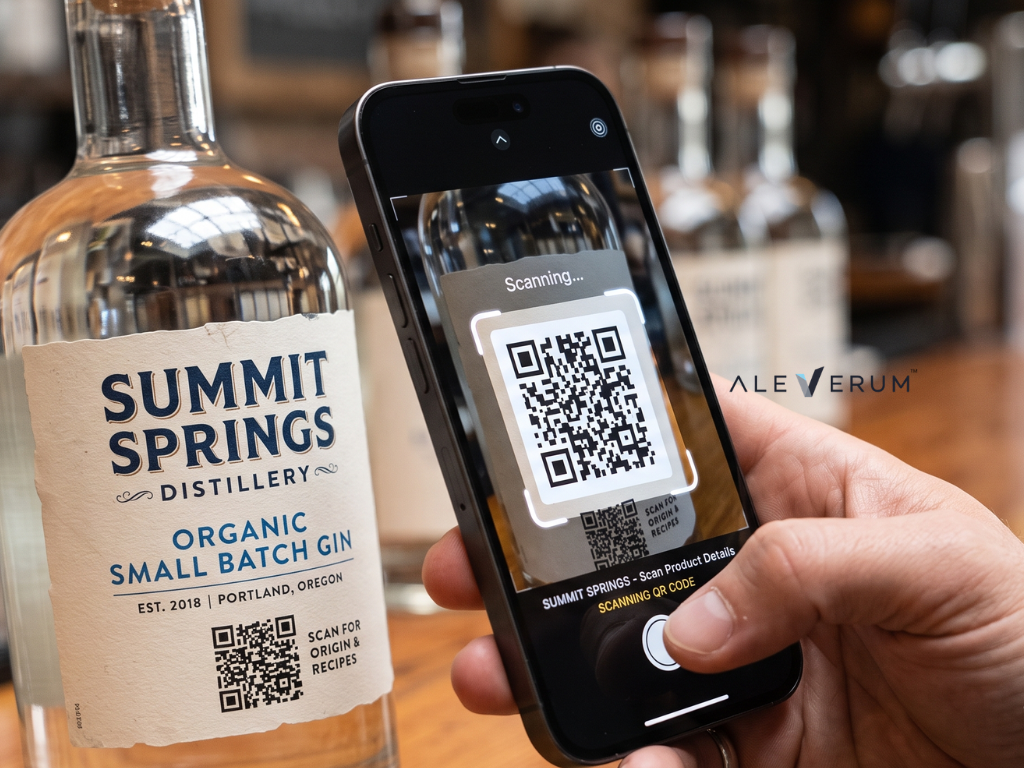
blockchain for traceability and trusted digital information
Digital traceability can range from a relatively simple product database to sophisticated systems connecting information across many organisations.
One technology frequently discussed is blockchain.
The idea behind using blockchain for traceability is that selected events or records can be written into a system designed to make later alteration difficult and to provide a verifiable history of those records.
That can be useful in certain situations, particularly where multiple parties need confidence that a recorded event has not been silently changed.
However, blockchain should not be treated as a requirement for good traceability.
It cannot make inaccurate information accurate simply because that information has been recorded on a blockchain.
If a supplier enters an incorrect material origin, for example, preserving the record does not independently prove that the origin claim was correct.
Businesses should therefore separate two questions:
Is the record protected against inappropriate alteration?
Is the underlying information itself reliable?
Achieving trusted digital information may involve identifiers, document verification, controlled access, audit records and clear responsibility for who provided particular information. Blockchain can be one possible component, but it is not automatically the right solution for every supply chain.
The right architecture depends on the business problem being solved.
Where a digital product passport may fit
A digital product passport takes traceability in a slightly different direction.
Instead of focusing only on internal tracking, a digital product passport can provide structured digital information associated with a particular product.
This is becoming particularly relevant for Australian businesses supplying products into Europe.
The European Commission states that Digital Product Passport requirements apply to economic operators placing covered products on the EU market, including imported products when the relevant product-specific legislation requires a DPP.
The EU Digital Product Passport Registry became operational in July 2026. Economic operators must register relevant passports in the Registry in accordance with the legislation applying to the product.
This does not mean every Australian product currently requires a passport. Requirements depend on the applicable EU product rules and their implementation timetable.
For businesses affected by those requirements, a digital product passport platform may help organise product data and make required information accessible through a structured digital process.
The distinction between a passport and general traceability is useful.
Traceability asks:
“Where did this product, material or batch come from and where has it been?”
A product passport asks:
“What structured information should be associated with this particular product and made available to authorised users or other relevant audiences?”
The two concepts can overlap, but they should not automatically be treated as the same system.
How to Choose the Right Traceability Product or Service
Start with the information your business actually needs
Choosing a traceability solution should begin with your business requirements, not a list of technology features.
Before contacting providers, map a representative product through your supply chain.
Start with its raw materials or components and follow it through manufacturing, storage and distribution.
At each stage, ask:
- What information do we already collect?
- Who creates that information?
- Where is it currently stored?
- Which identifiers connect the records?
- Which information do customers or partners request?
- Which records would we need during a product investigation?
- Are there market-specific requirements we need to support?
- Which suppliers would need to participate?
- Which existing systems contain important product data?
This exercise often exposes gaps quickly.
For example, a company may have excellent finished-product records but little information connecting a finished item to its source materials.
Another business may collect supplier documents but have no structured way to associate them with particular batches.
Knowing the actual problem makes supplier comparisons much easier.
Compare practical capabilities, not just technology labels
Once requirements are clear, compare traceability products based on what they allow people to do.
Useful areas to investigate include:
Product identification: Can the system distinguish products, models, batches or individual serialised items at the level your business requires?
Supplier participation: How will suppliers provide information, and what happens when they do not use the same systems as you?
Batch relationships: Can materials and components be linked to production batches and finished goods?
Documents: Can supporting records be connected with the right product, supplier, material or batch?
Data history: Can users understand where information came from and whether important records have changed?
Access: Can different users see only the information appropriate to their roles?
Existing workflows: Will employees need to enter the same data repeatedly, or can the solution work with existing processes and systems?
Product information sharing: If a digital product passport is required, can the solution manage the relevant structured information and appropriate access?
Export requirements: Can the provider explain how its system relates to the specific markets and product categories relevant to your business without making blanket compliance claims?
This is also the point where a business may compare specialist providers such as Aleverum with other digital product information or traceability solutions. Rather than choosing based on broad claims about blockchain, AI or compliance, ask the provider to demonstrate how its product would handle your actual products, suppliers, batches, documents and information requirements.
A useful buying conversation should focus on your workflow and evidence requirements rather than simply showing a long feature list.
When Should You Contact a Supply Chain Traceability Provider?

Signs your current process may no longer be enough
Spreadsheets are not automatically a problem.
For a small business with a simple supply chain, well-managed spreadsheets and organised documents may provide enough visibility.
The need for a more structured service usually appears as complexity increases.
It may be worth speaking with a provider when:
- identifying the origin of materials takes too long
- product records are spread across several systems
- supplier documentation is difficult to connect with specific products
- different teams maintain conflicting records
- batch information cannot easily be followed into finished goods
- customers regularly request product or sourcing information
- the business is preparing for new market requirements
- more suppliers or manufacturing locations are being added
- product information needs to be shared with different audiences
- staff repeatedly rebuild the same reports manually.
The question is not whether digital technology sounds useful.
The question is whether your existing process still gives you reliable answers when you need them.
What to prepare before speaking with a provider
A little preparation can make supplier discussions far more productive.
Choose one or two representative products and gather the information that currently exists for them.
Bring examples of:
- supplier records
- material or component lists
- product identifiers
- batch numbers
- manufacturing information
- warehouse records
- certificates and supporting documents
- customer information requests
- existing software or databases
- reporting requirements
- known information gaps.
Then ask the provider to explain how those records would move through its system.
Useful questions include:
- How would you identify our products and batches?
- How would our suppliers contribute information?
- What happens if a supplier provides incomplete data?
- Can we see who supplied particular information?
- How are documents linked to materials and products?
- How would we investigate an affected batch?
- Which information can be shared externally?
- How do you handle permissions for commercially sensitive information?
- How does the system work with our existing data?
- If Digital Product Passport requirements affect us, which parts of the process does your platform actually support?
Be cautious when a provider promises that one technology automatically creates compliance, sustainability or trustworthy data. Those outcomes depend on the quality of the underlying information, the relevant regulations and how the business operates the system.
The best traceability approach is one that matches the products, supply chain and information requirements of the organisation using it.
For Australian businesses, this is becoming increasingly important as product information moves from disconnected records towards more structured digital systems. Agricultural traceability already demonstrates the operational value of being able to follow products through supply chains, while developments such as 2D barcodes and Digital Product Passports are expanding the ways product information can be identified and accessed.
If your organisation can already answer where a product came from, which materials and batches were involved, who supplied the relevant information and where the product went next, you have a strong foundation.
If those answers require searching through multiple spreadsheets, inboxes and folders, mapping your current information flow is a practical first step before comparing traceability providers.
