

A chainsaw works hard whenever you cut firewood, clear fallen branches or maintain a larger property. Regular care helps keep the saw ready for those jobs and makes changes in performance easier to notice.
Good maintenance does not need to be complicated. The main tasks involve checking the chain, guide bar, lubrication system and general condition of the saw. Petrol and battery models also have their own service needs.
Your exact maintenance schedule will depend on the model and how often you use it. Husqvarna, for example, recommends regular checks of chain tension, sharpening, lubrication, guide bar condition and operating controls. Some maintenance can be completed by the owner, while other work may need an authorised dealer.
Australian conditions can also affect how often you inspect your equipment. Dust, dry material and frequent cutting can make cleaning and routine checks especially important.
The following guide explains the main areas to watch and when professional help may be the better option.
Check the saw before every cutting job
Start with a quick visual inspection before you use the chainsaw.
Look at the chain, guide bar, handles and visible fasteners. Check for damage or anything that looks different from the previous use.
Next, make sure the chain has suitable tension. Husqvarna advises checking chain tension regularly because a chain that is too loose or too tight can affect performance and safety. Battery models should have the battery removed before chain adjustment.
Also check that the chain receives enough oil. Look around the guide bar and cutting equipment for heavy sawdust build-up.
If the saw suddenly produces unusual vibration or sounds different, stop and investigate before continuing. Do not assume a change in performance will correct itself.
Your owner’s manual should remain the main reference for the model-specific checks.
Match maintenance to how often you use the saw
A chainsaw used a few times each year has different demands from one used regularly for firewood.
Think about how often you operate the saw and how hard it works.
Regular hardwood cutting may put more wear on the chain than occasional light pruning. Dusty environments can also lead to more frequent cleaning around air inlets and filters.
Husqvarna publishes different daily, weekly and monthly maintenance tasks for petrol models. Battery chainsaws also have checks before use, plus periodic guide bar and battery connection inspections.
You do not need to memorise every interval. Keep the manual available and use it as your service reference.
A simple habit works well. Inspect the saw before cutting, clean it after work and deal with changes early.
Keep the Chain Sharp and Correctly Tensioned
A sharp chain should cut without requiring excessive pressure.
If you find yourself forcing the chainsaw through timber, the chain may need sharpening. Husqvarna also notes that a sharp chain produces larger wood chips, while a dull chain can reduce cutting efficiency.
Pay attention to how the saw behaves during each job.
Slow cutting is one warning sign. Uneven cutting or a saw that begins pulling to one side can also point to chain or guide bar issues.
Sharpening may restore a chain that is simply dull. However, sharpening cannot repair every problem.
Inspect the links and cutters for obvious damage. A chain that no longer holds correct tension or has excessive wear may need replacement instead of further sharpening.
If you sharpen the chain yourself, use the correct file and guide for that chain. Husqvarna recommends securing the saw and using protective gloves during sharpening.
Check chain tension before starting work
Chain tension changes as the saw is used.
A chain that hangs too loosely below the guide bar needs attention. However, overtightening also creates problems.
The chain should sit correctly on the bar while still moving as required by the manufacturer’s adjustment procedure. Husqvarna recommends checking tension frequently, particularly while a new chain is running in.
Do not copy a tension setting from another machine.
Chainsaws use different bars, chains and adjustment systems. Follow the procedure for your particular model.
Turn the saw off before adjustment. Let it cool when required and make the machine safe according to the manual.
For a battery saw, remove the battery before working around the cutting equipment.
Correct tension is one of the simplest maintenance checks, but it has a major effect on how the cutting system operates.
Look After the Guide Bar and Chain Lubrication System
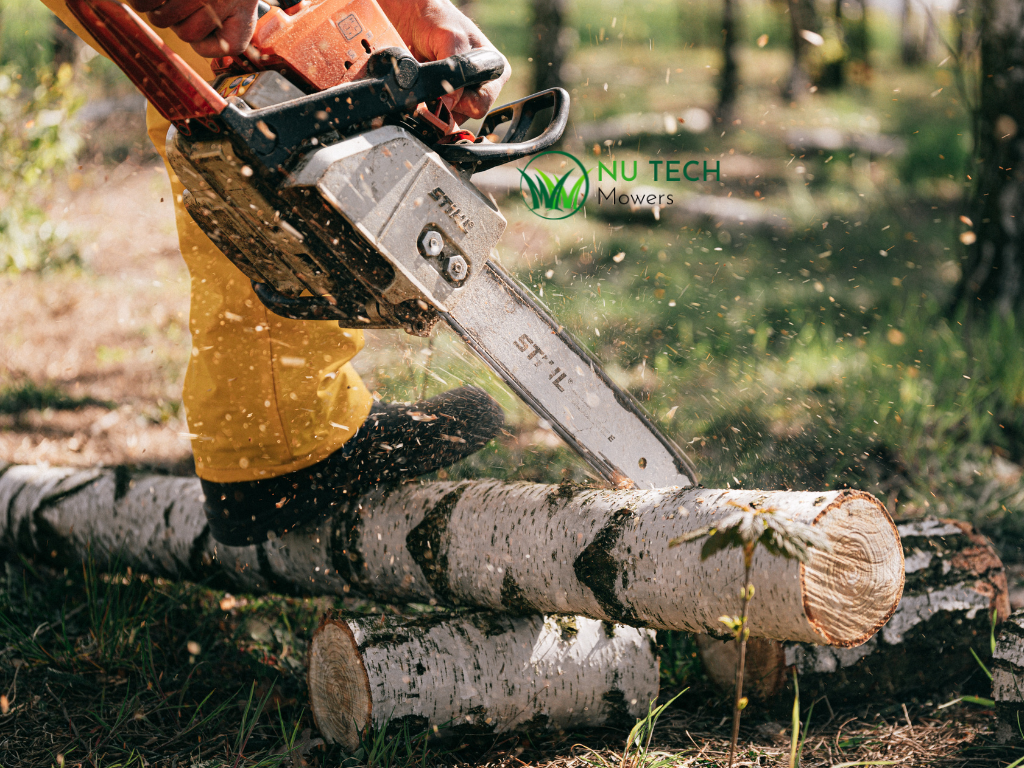
Inspect the guide bar for wear and damage
The guide bar supports the chain throughout the cut, so it also needs regular attention.
Start by cleaning the bar groove and checking the general condition of the rails.
Look for uneven wear, damage or burrs around the edges. Husqvarna recommends checking guide bar wear during routine maintenance and keeping the bar groove and lubrication hole clean.
The chain should travel correctly around the bar.
If the saw begins cutting unevenly, do not assume the chain is always the only cause. Guide bar wear can also contribute to cutting problems.
Some manufacturers recommend turning the guide bar periodically to encourage more even wear. Check your model manual before doing this. Husqvarna includes regular guide bar turning in its maintenance guidance for applicable chainsaws.
If you notice significant wear or damage, replacement may be more practical than trying to continue using the bar.
Make sure the chain receives suitable lubrication
The chain and bar need adequate lubrication while the saw runs.
Check the chain oil level before a longer cutting session. Also inspect the lubrication areas when cleaning the saw.
Blocked oil passages can reduce the amount of oil reaching the cutting equipment. Husqvarna advises keeping the guide bar lubrication hole clear and checking that the chain and guide bar receive sufficient oil.
Poor lubrication can also appear as reduced cutting performance. Husqvarna lists inadequate bar and chain lubrication among the areas to check when a chainsaw loses power while cutting.
Use the chain oil recommended for your equipment.
Avoid guessing at substitutes simply because another lubricant is available in the shed. The correct product helps you follow the manufacturer’s operating requirements.
If oil levels keep falling unusually quickly, or the chain appears dry despite a full tank, arrange an inspection.
Keep Petrol Battery and Airflow Systems in Good Condition
Petrol chainsaws have extra maintenance needs because of the engine and fuel system.
The exact fuel requirements vary by model. Always check the manufacturer’s instructions before mixing or adding fuel.
Airflow also matters.
Sawdust and dust can collect around air inlets and filters. Husqvarna includes regular air filter cleaning in its petrol chainsaw maintenance schedule and recommends replacing a filter when it is damaged or cannot be cleaned properly.
Spark plugs and other engine components may also need periodic attention.
Do not replace parts simply because the saw becomes difficult to start. Several issues can produce similar symptoms.
First, check the normal maintenance items listed for your model. If the problem continues, professional diagnosis can save you from replacing parts unnecessarily.
Long periods without use also deserve planning.
Follow your manual’s fuel and storage instructions rather than leaving the saw stored without preparation.
Protect batteries and chargers on cordless models
Battery chainsaws avoid many petrol-engine maintenance tasks, but the battery system still needs care.
Inspect the battery and connections for visible damage before use.
Keep the battery, saw and charger within the storage and operating conditions specified by the manufacturer. Do not use a damaged battery or charger.
Husqvarna recommends checking connections between the battery, product and charger as part of regular battery chainsaw maintenance.
Compatibility also matters when you buy replacement equipment.
Do not assume a battery will suit a saw simply because it looks similar. Check the product information for your exact model.
If a battery suddenly provides much less useful runtime, overheats or shows physical damage, stop using it and seek suitable product advice.
Avoid opening or modifying battery packs yourself.
Clean Store and Transport Your Chainsaw Properly
Remove sawdust dirt and debris after use
Chainsaw work produces plenty of sawdust.
Some of that material collects around the guide bar, clutch cover and cooling areas.
Allow the saw to stop and make it safe before cleaning. Follow the shutdown procedure in the owner’s manual.
Husqvarna recommends removing sawdust and unwanted material from beneath the clutch cover. Its maintenance guidance also includes cleaning the guide bar groove and air intake areas.
Use suitable cleaning tools for the job.
A brush can help remove loose material from accessible areas. Avoid aggressive cleaning around delicate parts unless the manufacturer recommends it.
A leaf blower can be useful for clearing the wider work area after cutting. It can move loose leaves and sawdust away from paths or work zones. However, keep chainsaw cleaning itself controlled so you do not force dirt deeper into sensitive components.
The same approach works when maintaining other outdoor tools such as a trimmer or headge trimmer. Clean them after use and follow the instructions for their specific cutting systems.
Use a chainsaw bag or suitable storage solution
Good storage keeps your equipment organised between jobs.
A chainsaw bag can be a practical option for carrying the saw and keeping related items together. However, the bag does not replace correct preparation.
Make sure the saw is switched off and suitable for transport first.
Protect the cutting equipment with an appropriate bar cover. Follow the manufacturer’s requirements for petrol or battery storage.
Keep chain oil, sharpening tools and other accessories organised so they do not damage the machine.
For longer storage, choose a dry and secure location.
Avoid leaving the chainsaw exposed to rain or direct weather.
If children or other people can access the storage area, keep the equipment secured and unavailable for unauthorised use.
Think of a chainsaw bag as part of an organised storage setup rather than the only safety measure.
Choose the Right Maintenance Products and Safety Equipment
Chains, bars and sharpening equipment are not one-size-fits-all products.
Before buying a replacement chain, find the make and model of your saw. Check the required chain specifications and guide bar details.
The same principle applies to sharpening files.
Using a file that does not match the chain can make accurate sharpening difficult. Husqvarna provides model and chain-specific filing equipment for this reason.
When comparing products through Nu tech Mower or another outdoor power equipment provider, take the model information with you.
Explain what you need rather than choosing a part only because it looks similar.
This approach can also help when buying lubricants, guide bars or storage accessories.
If the chainsaw needs repeated replacement parts, compare the cost of further repairs with the age and general condition of the saw.
Sometimes servicing remains sensible. In other cases, replacing an older machine may provide a more practical option.
Choose suitable protective equipment for the work
Chainsaw maintenance and operation both require attention to safety.
Australian workplace guidance identifies eye and hearing protection among the PPE relevant to chainsaw and tree work. Forestry guidance also includes protective footwear, gloves and chainsaw leg protection for operators.
For eye protection, choose suitable protective glasses or other approved protection for the task.
Hearing protection also matters when noise levels require it. An earmuff or another suitable hearing protector should fit correctly and suit the work environment.
HI Vis Gear has a different purpose.
It can improve visibility on worksites or properties where vehicles, machinery or other workers are operating nearby. SafeWork NSW forestry guidance includes high-visibility clothing for chainsaw operators in that work environment.
Do not assume high visibility clothing replaces chainsaw-specific protection.
The correct PPE depends on the task and risk.
If you move between a chainsaw, trimmer, headge trimmer and other equipment, review the safety requirements for each tool rather than relying on one generic setup.
When Should You Contact a Chainsaw Specialist
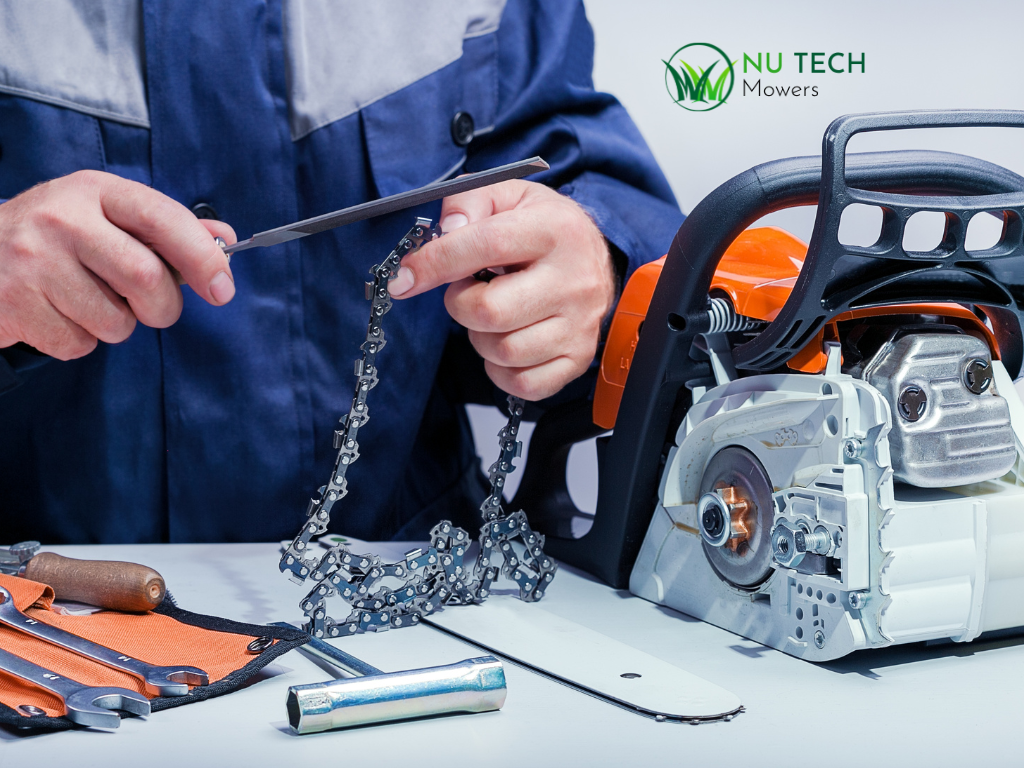
Get professional help when basic maintenance does not fix the issue
Routine care can solve many simple performance problems, but some issues need professional attention.
Seek advice if the chainsaw continues to lose power after normal maintenance.
The same applies to repeated starting problems, poor chain lubrication or unusual vibration.
Visible damage around the cutting system should also be taken seriously.
Do not continue operating a saw simply because it still starts.
Husqvarna notes that some chainsaw maintenance can be handled by owners, while other tasks should go to an authorised dealer.
Electrical problems on battery models also deserve caution.
Avoid opening batteries, chargers or internal electrical systems if the manufacturer does not provide a user-service procedure.
A technician can assess whether the problem involves routine wear, a replaceable component or a larger fault.
Prepare useful information before requesting servicing
A little preparation can make a service discussion more useful.
First, find the make and model of the chainsaw.
Then describe the problem clearly. Explain whether the saw is difficult to start, loses power, cuts unevenly or fails to lubricate the chain correctly.
Mention when the problem began.
Also tell the technician about recent maintenance. For example, say whether you recently fitted a new chain, sharpened the existing chain or cleaned the air filter.
Avoid guessing which part has failed if you are unsure.
The symptoms give the service provider a better starting point.
If you contact Nu tech Mower or another chainsaw specialist, ask what the inspection will cover. You can also ask whether repair, replacement parts or a new saw is the more practical option.
Reliable chainsaw performance starts with simple habits.
Check the chain before cutting. Keep the guide bar clean and lubricated. Maintain petrol or battery systems correctly. Store the saw properly and use suitable protective equipment.
Most importantly, stop when something does not seem right.
Regular care will not prevent every fault, but it can help you spot problems earlier and make better decisions about servicing and replacement.
