

Open AI Integrated Solutions can help Australian businesses connect artificial intelligence with their existing software and daily operations. However, choosing the right provider requires more than finding a company that offers AI tools. Businesses need technical experience, reliable integrations, suitable security controls and ongoing support.
Many organisations already use customer management systems, accounting software, cloud platforms and business websites. These applications support different tasks, but they do not always work together.
For example, employees may receive customer enquiries through email and manually enter the details into a CRM. An AI integration could help organise the information and prepare records for review.
The right provider should explain how this process would work. They should also identify any limitations, costs and security requirements.
Before making a decision, consider your existing systems and the problems you want to solve. A suitable provider should recommend technology based on those needs rather than promoting AI for every task.
Why Businesses Need the Right AI Integration Partner
Introducing AI into a business involves more than installing software.
An integration may need to connect several applications, process information and follow existing approval procedures.
For example, a service business might want AI to review incoming enquiries and identify the type of assistance each customer needs.
The system may then prepare information for the sales team.
However, the business must decide who checks the results and which application stores the customer records.
A suitable provider should understand these requirements before developing the workflow.
They should also explain which tasks need artificial intelligence and which can use standard automation.
Some processes only require a simple connection between existing applications.
Adding AI to those tasks could create unnecessary costs and complexity.
An experienced integration partner should help identify the most practical solution for the business.
What to Expect From Open AI Integrated Solutions
Open AI Integrated Solutions generally refers to business applications that connect OpenAI-powered technology with existing systems and workflows.
OpenAI is the official spelling of the technology company’s name. The broader phrase in this article refers to integration solutions rather than an official OpenAI product or service category.
These solutions may support document processing, customer enquiries, information retrieval and administrative tasks.
For example, an AI application could extract relevant details from incoming documents and prepare them for a business system.
Another workflow might create draft responses based on approved information.
However, businesses should not assume that AI-generated information will always be correct.
A provider should explain how the system handles errors, missing information and unusual requests.
They should also clarify where employees remain responsible for reviewing results.
The goal is to create a reliable business process rather than introduce another disconnected application.
Checking a Provider’s Technical Skills and Experience
Technical experience is an important consideration when comparing AI integration providers.
A company may understand AI tools but lack experience with the software your business already uses.
Open AI Integrated Solutions should work with your existing applications wherever practical.
This makes it important to evaluate both AI knowledge and broader technology capabilities.
How IT Consulting Supports Better AI Decisions
IT Consulting can help businesses understand their existing systems before introducing AI.
A technology assessment may examine current applications, information handling, security arrangements and workflow problems.
For example, a company may use separate systems for customer enquiries, invoicing and project management.
Before recommending an AI solution, the provider should identify how information moves between these applications.
They should also determine whether the existing software offers suitable automation features.
In some cases, connecting two applications may solve the problem without requiring AI.
Other situations may benefit from AI-assisted information processing.
A provider should explain these differences in plain English.
Businesses can also ask how the proposed solution will affect employees and existing procedures.
Good IT Consulting focuses on practical requirements, not simply the number of technologies available.
This helps business owners compare proposals and make informed decisions.
Questions to Ask About APIs and Existing Software
An application programming interface, or API, allows different software systems to exchange information through defined connections.
Many business applications provide APIs for selected functions.
However, the available features depend on the software provider and the organisation’s subscription or access permissions.
Before choosing an integration company, ask which applications it can connect.
The provider should explain how information will move between systems.
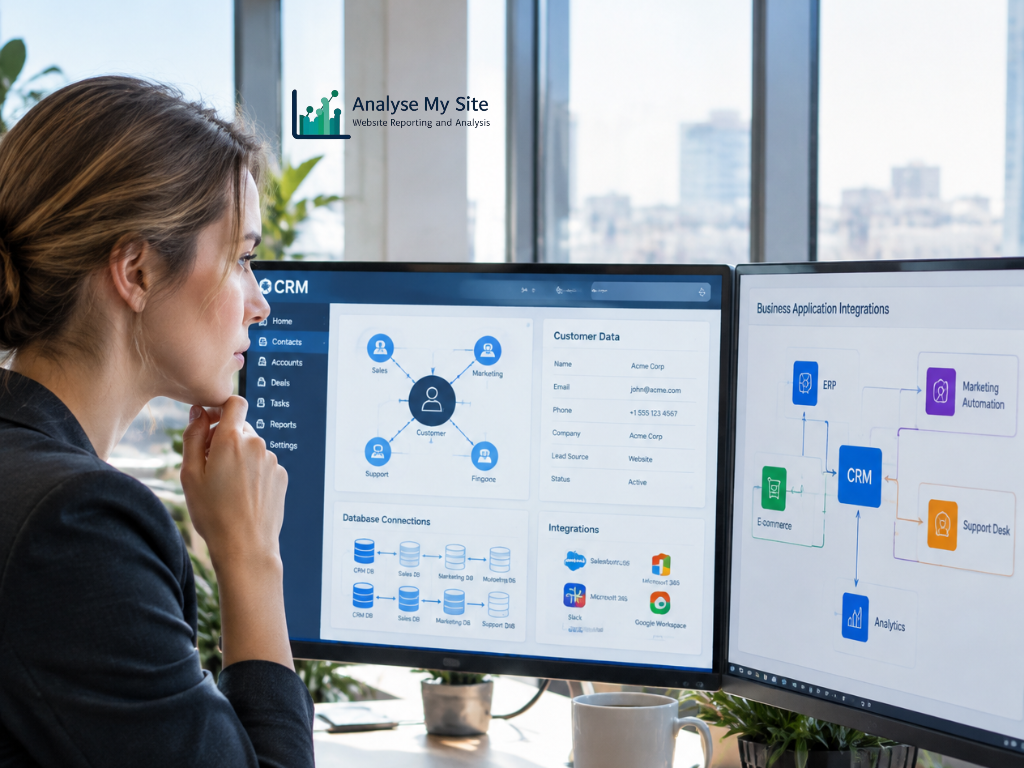
For example, an integration might retrieve customer enquiry details and prepare a CRM record.
The CRM could then assign the enquiry using predefined business rules.
Businesses should also understand what happens if the connection fails.
Will the system notify an employee? Can the team identify which information did not transfer?
These questions matter because automated processes can fail when applications become unavailable or change their interfaces.
A suitable provider should document the integration and explain how employees can manage problems.
Clear technical explanations make it easier to compare providers and understand the proposed solution.
Reviewing Cloud, Data Protection and Business Continuity

Cloud infrastructure and data management can affect how an AI integration operates.
Some businesses use cloud-based applications, while others maintain internal servers or specialised systems.
Open AI Integrated Solutions may involve connecting these environments with external AI services.
Before selecting a provider, businesses should understand where information moves and how the systems will remain available.
How Cloud Solutions Affect AI Integration
Cloud Solutions allow businesses to access software, computing resources and stored information through hosted services.
Many CRM platforms, document systems and business applications already use cloud infrastructure.
An AI integration may connect with these applications through supported APIs.
However, using an external AI service does not automatically mean every business record must move to a new cloud platform.
The provider should explain which information the workflow requires and where it will be processed.
Businesses should also consider access controls and ongoing usage charges.
For example, a document processing integration may involve fees for the AI service and the cloud platform hosting the application.
These expenses should form part of the project quotation.
Performance and reliability also matter.
A provider should explain what happens when a connected service becomes unavailable.
For Australian businesses, data location may also be relevant to privacy, contractual or industry requirements.
The right cloud arrangement depends on the organisation’s systems and the information involved.
Why Backup Solutions and Recovery Planning Matter
AI integrations often depend on business records stored in existing applications.
Protecting these records remains important even when the AI service does not store them permanently.
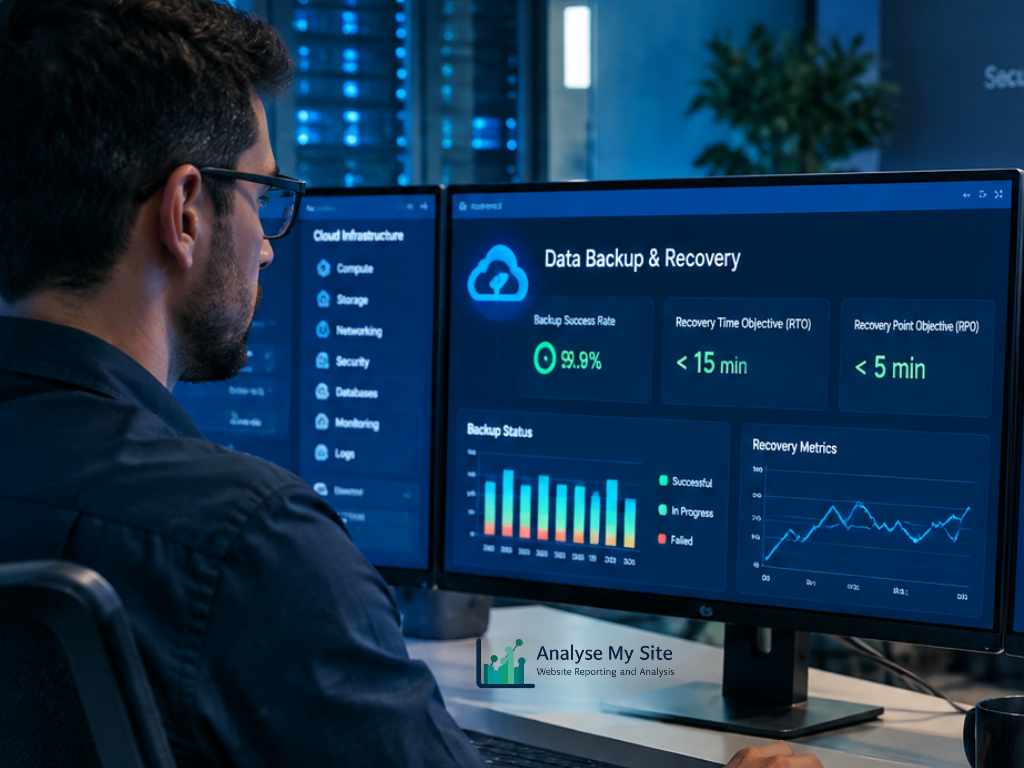
Backup Solutions help businesses retain recoverable copies of important information.
However, backup and disaster recovery are not the same.
A backup provides a copy of data. Disaster recovery involves restoring the systems and operations needed after a disruption.
For example, a company may have copies of its customer records but still need a recovery plan for its CRM and connected applications.
Businesses should ask providers which systems require backups and who manages them.
They should also understand how the organisation can restore records after accidental changes or data loss.
An AI integration may create or update information in another application.
For this reason, businesses should decide how to identify and correct unwanted changes.
A reliable provider should consider these issues during implementation rather than after an incident occurs.
Business continuity planning helps protect everyday operations as AI becomes part of regular workflows.
Understanding AI Integration Across Business Applications
AI integration can support different parts of a business.
However, not every application needs artificial intelligence.
Open AI Integrated Solutions should address specific requirements across customer communication, websites and internal software.
Businesses should also understand the difference between AI features and other technologies that may support their operations.
Connecting AI With Websites, Customer Tools and VoIP
Business websites often provide the first point of contact for customers.
Contact forms, booking systems and customer portals can collect information that employees need to process.
Suitable Web Solutions may help connect these enquiries with internal business applications.
For example, a website form could send customer details directly to a CRM.
If the enquiry includes an open-ended message, AI might help identify its main subject.
An employee could then review the result before responding.
Voice Over IP, often called VoIP, is another business communication technology.
VoIP allows telephone communication through internet-based networks.
Some communication platforms support integrations with CRM systems and other applications.
Where supported, businesses may explore features such as call summaries, transcription or follow-up task creation.
However, these functions depend on the chosen platform and its available integrations.
Businesses must also consider privacy, consent and recording requirements before processing customer calls.
A provider should explain which communication features are available and how customer information will be protected.
The aim is to improve information handling without adding unnecessary systems.
Where Augmented Reality Fits Into E-Commerce
Augmented Reality in E-Commerce allows customers to view digital content alongside their physical surroundings.
For example, a retailer may offer product visualisation so customers can better understand an item’s appearance or size.
This technology can support certain online shopping experiences.
However, augmented reality and OpenAI-powered integration are different technologies.
An augmented reality feature does not automatically require generative AI.
Similarly, adding an AI assistant to an online store does not mean the business needs augmented reality.
Some retailers may benefit from both technologies, but each should serve a clear purpose.
For example, an online store could use an AI assistant to help customers find product information.
A separate augmented reality feature might help shoppers visualise selected products.
Businesses should assess the cost, technical requirements and customer benefits of each feature.
A provider offering wider digital services may be able to coordinate these systems.
However, businesses should confirm the provider’s actual experience before commissioning specialised development.
The best approach is to introduce features that support real customer needs.
Evaluating Security, Privacy and System Ownership
Security should be a priority when choosing an AI integration provider.
Open AI Integrated Solutions may involve customer information, internal documents and connected business accounts.
Businesses need to understand how the proposed system will access and process this information.
They should also retain appropriate control over important digital assets.
Protecting Customer Information During AI Processing
AI applications may handle personal information or confidential business records.
Before choosing a provider, ask what information the system needs.
You should also understand where the information goes and which organisations can access it.
For example, a document processing workflow may send selected content to an external AI service.
The provider should explain how that service processes information and what retention settings apply.
Businesses should also review access permissions.
An integration designed to organise customer enquiries should not automatically receive access to unrelated financial systems.
Giving applications only the access they need can reduce unnecessary risks.
The Office of the Australian Information Commissioner provides guidance on privacy and commercially available AI products.
Australian businesses should consider their applicable privacy obligations before processing personal information through AI.
They should also examine how employees will review AI-generated outputs.
The Australian Cyber Security Centre provides guidance on using AI securely in business.
Its advice highlights the importance of checking AI outputs, protecting sensitive information and limiting unnecessary access.
A responsible provider should discuss these safeguards before connecting AI to live business systems.
Who Controls Your Data, Integrations and Domain Name?
System ownership is another important consideration.
Businesses should understand who controls their software accounts, application connections and stored information.
For example, a provider may create an integration using accounts or credentials that the business does not directly manage.
This can cause problems if the organisation later changes providers.
Before approving a project, clarify who owns the custom code and technical documentation.
The agreement should also explain how the business can access or export its information.
Domain Name Registration is relevant when AI integrations connect with business websites or customer portals.
Your domain is an important digital asset.
The business should retain suitable control over domain registration, renewals and related account access.
However, domain registration is not an AI capability.
It forms part of the wider digital infrastructure that supports websites and online services.
Businesses should also ask how integrations will continue working if they change hosting, software platforms or development providers.
Clear ownership arrangements help reduce future operational problems.
They also make ongoing maintenance and technical support easier to manage.
Comparing Costs, Implementation and Ongoing Support
Cost is an important factor when comparing AI providers.
However, the lowest initial quotation may not provide the most suitable solution.
Open AI Integrated Solutions can involve several types of expenses, depending on the project.
Businesses should understand both the initial development work and the ongoing cost of operating the system.
Understanding AI Integration Costs and Project Scope
An AI integration project may begin with a review of the business’s existing systems.
The provider may then prepare a proposed workflow and identify the applications involved.
Development costs can vary according to the number of integrations and the complexity of the process.
For example, connecting a website enquiry form with a CRM may require less work than developing a custom document processing system.
Some projects also involve cloud hosting, software subscriptions or API usage charges.
Businesses should ask providers to explain these costs separately.
Testing and employee training may also form part of implementation.
A quotation should identify the work included and any services that require additional payment.
For example, does the proposal cover only the integration, or does it also include improvements to the existing applications?
Businesses should also confirm who will maintain the system after launch.
A clear project scope helps prevent misunderstandings and makes quotations easier to compare.
It also allows business owners to assess whether the proposed investment addresses a worthwhile operational problem.
What Support Should a Provider Offer After Launch?
AI integration requires ongoing attention.
Connected applications may change their APIs, update security settings or introduce new features.
These changes can affect existing workflows.
Businesses should therefore understand what technical support the provider offers.
For example, who investigates an integration failure? How will employees report incorrect results?
The provider should explain whether support includes monitoring, troubleshooting and software updates.
You should also ask how the organisation will receive technical documentation.
Clear documentation helps employees understand how the system operates.
It can also assist another developer if the business changes providers.
Support arrangements should reflect the importance of the workflow.
A system that prepares internal draft summaries may require different support from one that handles important customer records.
Businesses should review the total ongoing costs before approving implementation.
Reliable maintenance is part of keeping AI useful after the initial development work finishes.
Making the Final Choice With Confidence
Choosing an AI provider should begin with your business requirements.
Open AI Integrated Solutions can support useful improvements, but the technology must fit your existing operations.
The right provider should understand your systems, explain the proposed solution and identify its limitations.
A careful comparison can help you avoid unnecessary costs and technical problems.
How to Compare Open AI Integrated Solutions Providers
Start by reviewing each provider’s understanding of your business.
A suitable company should ask about your current applications, workflow problems and expected outcomes.
It should also explain whether artificial intelligence is necessary for the proposed process.
Technical experience matters, but so does communication.
Business owners should understand what the provider plans to build and how employees will use it.
Ask how the company approaches testing, security and ongoing support.
You should also confirm ownership arrangements and future maintenance responsibilities.
Relevant experience with your existing software is often more useful than a long list of unrelated technology services.
For businesses considering AI integration through their website, reviewing the current website may be a sensible starting point.
Analyse My Site offers website analysis covering technical performance, SEO, content quality, AI search readiness and customer enquiry pathways.
This type of assessment can help identify website issues before a business invests in new integrations or digital development.
However, website analysis is different from a full assessment of internal software, AI architecture or cybersecurity.
Businesses should choose the appropriate specialist for each requirement.
This distinction helps ensure that the provider’s capabilities match the work involved.
Planning a Practical First AI Integration Project
A successful first project should address a specific business problem.
For example, a company may want to organise customer enquiries more consistently.
Before selecting technology, review the existing workflow.
Identify where information arrives, who processes it and which systems store the records.
Next, decide what improvement the business wants to achieve.
This could involve reducing duplicate data entry or improving the completeness of enquiry information.
The provider should then explain how the proposed integration will work.
Businesses should test the workflow with representative information before relying on it for everyday operations.
Testing should include missing details, unexpected requests and system failures.
Employees must also understand when they need to review the results.
After implementation, compare the workflow with the original process.
Consider accuracy, processing effort, ongoing costs and employee feedback.
These results can help determine whether the organisation should expand its use of AI.
Australian businesses do not need to automate every activity at once.
A manageable project can provide useful information about the technology and the organisation’s readiness for further development.
If your proposed integration involves website enquiries or customer-facing systems, begin by reviewing how those systems currently perform.
An initial website analysis through Analyse My Site can help identify issues involving website functionality, usability and enquiry pathways.
For broader AI integration, compare providers with relevant technical, security and software development experience.
The best choice is not necessarily the company offering the most AI features.
It is the provider that understands your requirements, recommends suitable technology and helps you maintain a reliable business process.
By evaluating technical capabilities, data protection, project costs and ongoing support, businesses can make more informed decisions about AI integration.
A practical approach begins with a clear business problem and builds from there.
