

AR eCommerce allows customers to explore products using augmented reality before making a purchase. For Australian online retailers, this technology can provide a more interactive shopping experience by helping customers visualise products in their surroundings or examine them from different angles.
Unlike traditional product photographs, augmented reality can show digital product models through a compatible smartphone or tablet.
For example, a furniture retailer may allow shoppers to preview how a chair looks in their living room. An accessories retailer might offer a virtual try-on feature for selected products.
These experiences can help customers understand product appearance, size and suitability.
However, adding AR does not automatically increase sales or reduce product returns.
Its value depends on the products you sell, your customers’ needs and the quality of the shopping experience.
Before investing in AR technology, retailers should understand the available features, technical requirements and ongoing responsibilities.
How AR eCommerce Changes the Online Shopping Experience
Traditional online shopping relies heavily on photographs, videos and written product descriptions.
These remain important because they provide customers with essential information about what they are buying.
AR introduces another way to explore selected products.
For example, a shopper considering a coffee table could use a phone camera to view a digital model within their room.
The customer may be able to move or rotate the model to explore how it fits into the available space.
Some AR features also help shoppers examine products from different angles.
However, not every interactive 3D viewer uses augmented reality.
A 3D viewer may allow customers to rotate a product on their screen without placing it in their physical surroundings.
Understanding this distinction helps retailers choose the right technology.
The goal is to provide information that helps customers make informed purchasing decisions.
What Australian Retailers Should Know Before Adding AR
Australian retailers should begin by considering whether their products benefit from augmented reality.
Products involving size, placement, appearance or visual compatibility may be suitable.
Furniture, homewares and selected accessories are examples worth assessing.
However, businesses should not assume every product requires an AR feature.
For some products, clear photographs, accurate measurements and detailed descriptions may provide enough information.
Mobile compatibility is another important consideration.
Customers use different devices, operating systems and browsers.
An AR experience may work well on one device but offer limited functionality on another.
Retailers should also consider website loading performance and accessibility.
AR should complement the existing shopping experience rather than make product information difficult to access.
A clear business objective helps determine whether the technology is worth introducing.
Choosing the Right AR Features for Your Products
Different products require different digital shopping experiences.
An AR eCommerce strategy should begin with understanding what customers need to see before purchasing.
Some products benefit from virtual placement in a room. Others are better suited to interactive 3D models or virtual try-on tools.
Choosing the appropriate feature can help retailers avoid unnecessary development work.
Virtual Try-On, 3D Product Views and In-Room Previews
Virtual try-on technology allows customers to preview how selected products may appear when worn or used.
For example, some retailers use virtual try-on features for eyewear or cosmetics.
These experiences may use a device camera and software that positions a digital representation over the customer’s image.
However, their accuracy depends on the technology, lighting and product information.
Interactive 3D product viewers serve a different purpose.
They allow shoppers to rotate a product, examine its shape and view details that may be difficult to capture in a single photograph.
In-room AR previews place digital models within a customer’s surroundings.
This approach can be useful for furniture, lighting and selected home products.
For example, a customer may want to see whether a cabinet suits a particular room layout.
Each technology addresses a different shopping question.
Retailers should choose features based on customer needs rather than adopting AR because it is available.
Which Products Benefit From Augmented Reality in E-Commerce?
Augmented reality in e-commerce is particularly relevant when customers need to understand how a product looks or fits.
Furniture retailers may benefit from accurate digital models that represent product dimensions.
Home décor stores may use AR to help customers compare products with their existing interiors.
Selected fashion and beauty businesses may consider virtual try-on tools where the technology supports their products.
However, accurate representation is important.
If a digital model does not match the physical product, customers may develop unrealistic expectations.
For example, a furniture model with incorrect measurements could make a product appear suitable for a space when it is not.
Retailers should also consider whether the feature answers a meaningful customer question.
A product with limited visual complexity may not require an interactive model.
Before investing, review customer enquiries, product information gaps and the reasons shoppers may hesitate before purchasing.
This can help identify products where AR offers practical value.
Preparing Your Website for AR Shopping Features

Adding augmented reality involves more than uploading a new product image.
An AR eCommerce implementation may require suitable software, accurate 3D models and changes to existing product pages.
The technical requirements depend on your eCommerce platform and the experience you want customers to use.
Before purchasing software or commissioning development, review your website’s current capabilities.
How to Add AR eCommerce Features to Existing Product Pages
The first step is to identify a product that could benefit from AR.
For example, an online furniture retailer might select a popular chair with clearly documented dimensions.
The business can then determine what type of digital product model is required.
Next, review the store’s existing platform.
Some eCommerce platforms support 3D product media through compatible themes or applications.
Others may require additional software or custom development.
Shopify, for example, supports product media that includes 3D models and augmented reality.
However, its available features depend on factors such as theme compatibility and the product files used.
Retailers should consult Shopify’s product media documentation before selecting an implementation method.
Once the appropriate technology is chosen, the business needs a suitable 3D product asset.
The model should accurately represent the real product.
It should then be added to the relevant product page using the supported integration method.
Before publishing, test the feature on compatible devices.
Customers should be able to understand how to activate the AR experience and return to the normal product page.
Starting with one product or a small selection allows businesses to identify problems before a wider rollout.
Checking 3D Models, Mobile Compatibility and Website Speed
3D model quality directly affects the shopping experience.
Models should represent the product’s shape, materials and dimensions as accurately as practical.
For example, a digital chair should not appear substantially larger or smaller than the actual product.
Retailers should also inspect textures, reflective surfaces and important product details.
File formats matter as well.
Shopify supports GLB and USDZ product model files, subject to its published requirements.
Other platforms may use different formats or processing methods.
Businesses should confirm compatibility before commissioning a large collection of models.
Website performance also deserves attention.
Complex models can require more data to download and process.
If a product page becomes slow or difficult to use, the AR feature may create frustration.
Retailers should optimise assets using methods supported by their platform.
They should also test the experience on mobile connections and different supported devices.
Traditional photographs and product descriptions should remain available.
These provide useful alternatives for customers who cannot or prefer not to use AR.
Connecting AR Shopping With Other Store Technologies
Augmented reality can form part of a wider online shopping experience.
However, AR eCommerce does not require artificial intelligence or automated customer service systems to function.
Retailers should consider these technologies separately and introduce them only when they address a clear need.
Some businesses may benefit from connecting product visualisation with their existing catalogue or customer support tools.
Where AI eCommerce Integration Adds Practical Value
AI ecommerce integration involves connecting artificial intelligence with online store systems or workflows.
For example, AI may help customers find relevant products based on questions they ask.
It may also assist customer service teams by preparing responses using approved product information.
These functions differ from AR.
An AR feature helps customers visualise products.
An AI integration may help them find, compare or understand those products.
The two technologies can complement each other when designed appropriately.
For example, a shopper might ask whether a particular table is suitable for a small dining area.
An AI assistant could retrieve available product measurements and descriptions.
The shopper could then use AR to preview the table’s appearance in their room.
However, the assistant should not invent dimensions or claim that a product will fit without reliable information.
Businesses should also review privacy, software permissions and the accuracy of AI-generated responses.
An effective integration should support the customer rather than add unnecessary complexity.
Can AI Agents Support an AR Shopping Experience?
AI agents are software systems designed to complete defined tasks using available tools, information and instructions.
In eCommerce, an agent might assist with product enquiries, retrieve approved information or prepare customer support actions.
However, AI agents are not necessary for basic augmented reality shopping.
A retailer can offer AR product previews without introducing an AI agent.
Businesses considering advanced AI features may encounter different ai agents frameworks.
These frameworks provide development tools for managing agent behaviour, software connections and task execution.
They are technical implementation choices rather than mandatory components of AR.
Australian businesses researching ai agents australia should compare providers based on relevant experience, security practices and ongoing support.
For example, a retailer may need an AI integration that works with its existing product catalogue.
A suitable provider should explain how the system retrieves product information, handles errors and limits access to customer data.
Human review may also be necessary for sensitive or important actions.
Retailers should focus on the actual business requirement before choosing an AI framework or development approach.
Understanding Costs, Privacy and Ongoing Maintenance
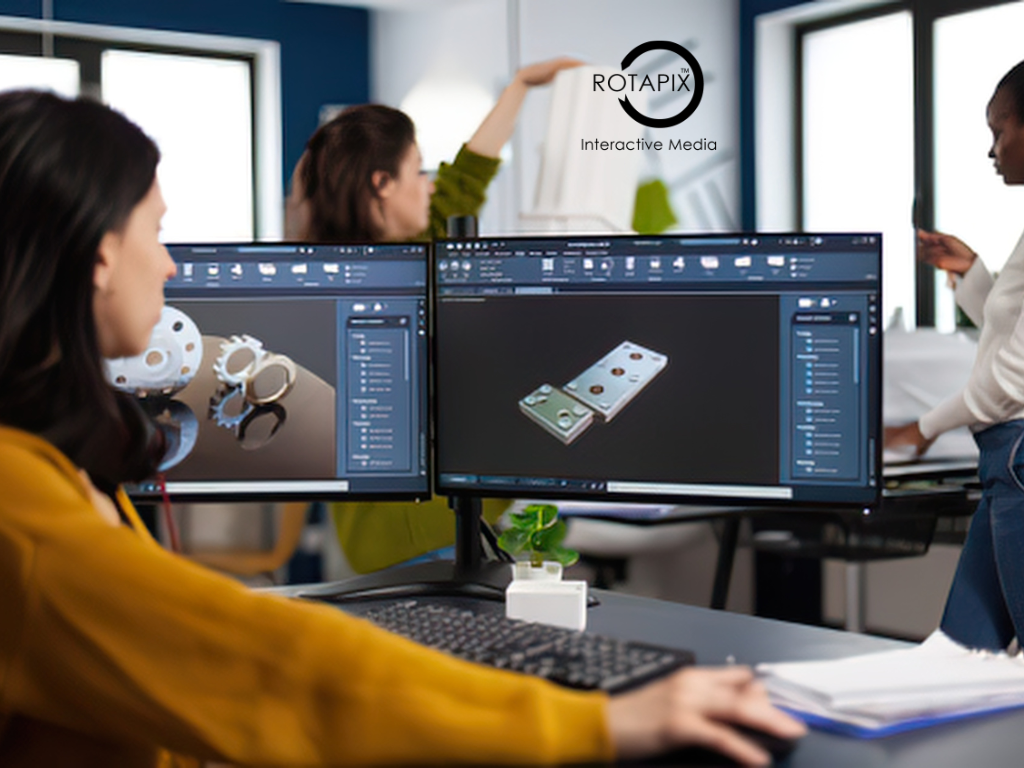
AR eCommerce Integration and 3D Product DevelopmentAdding AR to an online store involves both initial development and ongoing management.
An AR eCommerce project may require 3D product assets, software integration, website testing and future updates.
The cost depends on the complexity of the experience and the number of products involved.
Privacy and maintenance should also form part of the planning process.
What Determines the Cost of Adding AR to an Online Store?
One of the main expenses can be creating suitable 3D product models.
A retailer with a small number of simple products may have different requirements from a store with hundreds of product variations.
Complex shapes, textures and materials may require additional modelling work.
Software is another consideration.
Some platforms provide existing 3D media capabilities.
Other solutions involve application subscriptions, external services or custom development.
Retailers should understand what each option includes.
For example, a ready-made application may support basic product previews but offer limited customisation.
A custom implementation may provide more control, although it can also introduce additional development and maintenance responsibilities.
Testing should also be included in the project scope.
The feature needs to work on supported devices and within the existing shopping experience.
Ongoing expenses may include software fees, compatibility updates and changes to product models.
Before approving a project, ask providers to explain their deliverables and recurring costs.
The most suitable approach is not necessarily the most complex one.
It is the option that addresses customer needs within a realistic business budget.
Protecting Customer Privacy and Managing AR Content
Some AR experiences require access to a customer’s device camera.
For example, an in-room preview may use the camera to display a digital product within the surrounding environment.
A virtual try-on feature may involve customer images or other information.
However, data handling differs between applications.
Some features perform processing on the device. Others may use external services.
Retailers should determine how their chosen technology works.
If the application collects or processes personal information, the business needs to review its relevant privacy responsibilities.
Customers should understand why permissions are requested.
Businesses should also check whether information is stored, transferred or shared with third-party providers.
AR content requires ongoing maintenance.
When product dimensions, colours or designs change, the digital models may need updating.
Outdated models could misrepresent products.
Retailers should establish who maintains the assets and how updates are approved.
These arrangements help keep the shopping experience accurate and useful.
Helping Customers Find and Use AR Product Features
An interactive product preview is most useful when shoppers can easily find and understand it.
AR eCommerce features should work alongside clear product descriptions, accessible navigation and reliable product information.
Search visibility also matters.
However, AR alone does not guarantee better search rankings or increased visibility in AI-powered search experiences.
Product Page SEO and Generative Engine Optimization
Product page SEO begins with accurate and useful information.
Customers should be able to understand what a product is, how it works and whether it meets their requirements.
For example, a furniture product page should provide relevant measurements, materials, colours and other important details.
An AR preview can support that information, but it should not replace it.
Clear product titles, descriptive images and useful content also help search engines understand the page.
Retailers may use Product structured data to provide eligible search engines with additional product information.
Google’s product structured data guidance explains how product details can support eligible search experiences.
For applicable implementations, Google’s merchant listing documentation also describes how a product’s 3D model may be referenced through structured data.
However, structured data does not guarantee a particular search appearance.
Generative engine optimization is a term sometimes used to describe efforts to make content useful and understandable in AI-assisted search experiences.
For retailers, the practical priority remains accurate product information that customers can access and understand.
Product details should be consistent across the website and other relevant sales channels.
Businesses should not assume that adding AR or using a particular GEO technique guarantees inclusion in AI-generated answers.
Useful content, clear descriptions and sound technical implementation remain important.
Designing an AI Workflow Around Customer Enquiries
An ai workflow can support customer enquiries by moving information between approved systems.
For example, an online store might receive questions about product dimensions, availability or delivery.
A workflow could route those enquiries to the appropriate employee or retrieve relevant product information.
AI may also assist with preparing draft answers.
However, the business should establish safeguards to reduce inaccurate responses.
For example, an AI tool should not invent product measurements or promise delivery dates that the retailer cannot confirm.
Customer-facing automation should rely on approved information where possible.
It should also provide an appropriate way for customers to contact a person.
An AR feature may answer some visual questions, while customer support handles other concerns.
Combining these experiences can make shopping more convenient when the technology is implemented carefully.
However, businesses should not introduce AI automation unless it solves an identifiable problem.
A simple customer enquiry form and clear product information may be sufficient for some retailers.
Launching AR Shopping Features With Confidence
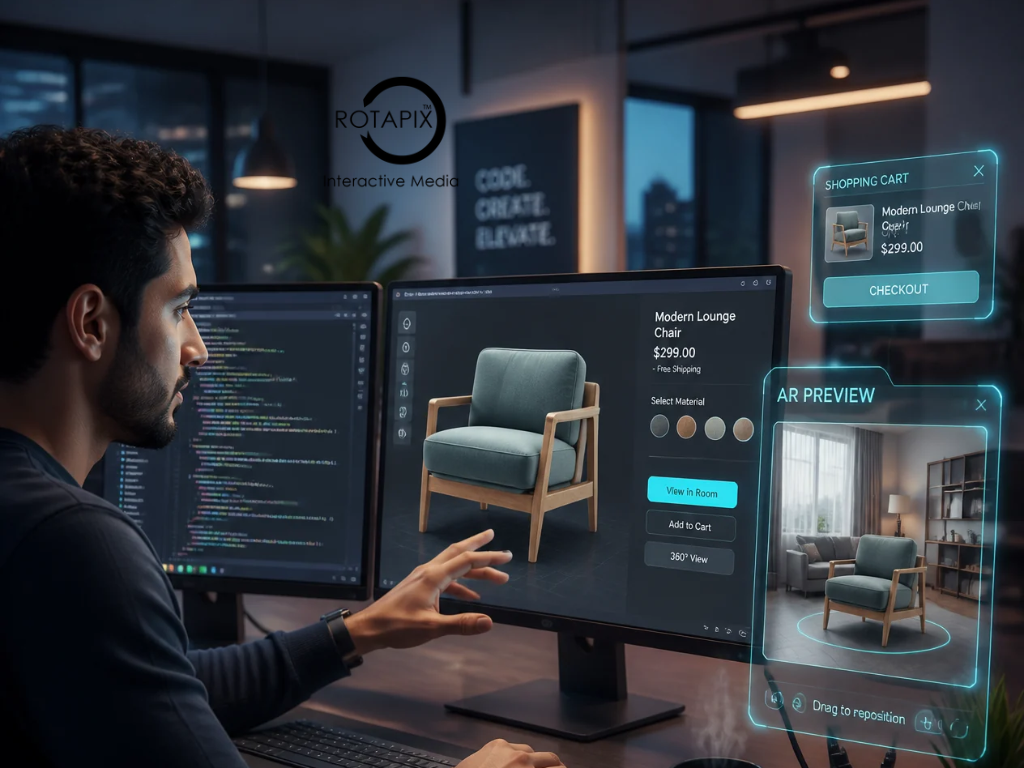
A successful implementation requires more than making a product appear in augmented reality.
AR eCommerce should help customers make informed decisions while remaining practical for the business to maintain.
Before launching across an entire catalogue, retailers should test the experience and gather feedback.
This approach can help identify technical issues and determine whether customers find the feature useful.
How to Test AR eCommerce Before a Wider Rollout
Start with a small selection of suitable products.
Choose items where augmented reality may help customers understand size, appearance or placement.
Ensure the digital models accurately represent the physical products.
Then test the feature across supported mobile devices and browsers.
For example, a furniture retailer should confirm that customers can open an in-room preview and position the model correctly.
The standard product page should also remain easy to use.
Customers need access to photographs, measurements, pricing and purchasing information.
Retailers should test loading performance and identify situations where the AR feature does not work.
A clear fallback experience can prevent unnecessary frustration.
Customer feedback can provide useful insights.
For example, shoppers may find the preview helpful but struggle to locate the button that opens it.
These observations can guide improvements before the business expands the feature.
The goal is to create a reliable shopping experience rather than launch the largest possible collection of AR models immediately.
Choosing a Development Partner and Measuring Results
The right development approach depends on the retailer’s existing platform, product range and technical requirements.
Before choosing a provider, explain what customers should be able to do.
For example, do you need in-room product placement, interactive 3D models or a virtual try-on experience?
Ask how the provider will create or source digital product assets.
You should also understand how the feature connects with your existing online store.
Testing, maintenance and ongoing support deserve attention.
A useful proposal should explain the work involved and identify any recurring costs.
Retailers considering broader website improvements may also need support with platform integration, mobile performance and product page design.
Rotapix lists Augmented Reality in E-Commerce among its Web and AI Solutions, alongside website development and related integration services.
Businesses can review these offerings when comparing providers and confirm the scope of any proposed AR project directly.
After launch, retailers should assess whether customers use the feature and whether it improves their shopping experience.
Useful measures may include AR feature engagement, product page behaviour, customer feedback and relevant purchasing outcomes.
Businesses may also review return patterns where reliable information is available.
However, changes in sales or returns can result from several factors.
An increase should not automatically be attributed to augmented reality.
The most useful evaluation considers whether AR helps customers understand products and supports the retailer’s wider business goals.
Before investing in an extensive rollout, review your existing online store, identify suitable products and discuss implementation requirements with a provider experienced in relevant eCommerce technology.
A carefully planned AR feature can provide customers with another way to explore products while keeping the overall shopping experience clear, accessible and practical.
