

For many small businesses, advertising online begins with a simple question: how can we reach more customers without committing to a large marketing budget?
Free online advertising can provide a useful starting point. Australian businesses can create profiles, publish directory listings, share helpful content and make their contact information easier to find without paying for every impression or click.
However, free does not mean effortless. A poorly written listing with outdated details is unlikely to create much value. A useful listing needs accurate information, a clear description, relevant categories and an easy way for potential customers to take the next step.
Free promotional methods also work best as part of a broader online presence. They can support a website, local search profile and social media activity, but they should not be treated as guaranteed replacements for search optimisation or paid advertising.
The difference between free visibility and paid promotion
Free online advertising usually refers to promotional opportunities that do not require a business to pay for placement, clicks or impressions. Examples include free directory listings, organic social media posts, local community pages, business profiles and useful website content.
Paid online advertising works differently. A business pays a platform, publisher or advertising provider to display ads online, reach a selected audience or appear prominently for certain searches. Common forms include paid search advertisements, sponsored social posts, display advertising and promoted directory positions.
The main difference is not simply cost. Paid campaigns can usually be controlled through budgets, targeting settings and campaign dates. Free advertising generally takes more time to establish and offers less control over how many people will see the listing.
For this reason, businesses should avoid treating free and paid advertising as opposing choices. A free listing may help establish a basic presence, while paid promotion may later be used to reach a more specific audience or generate enquiries during an important sales period.
Where business directories and local listings fit
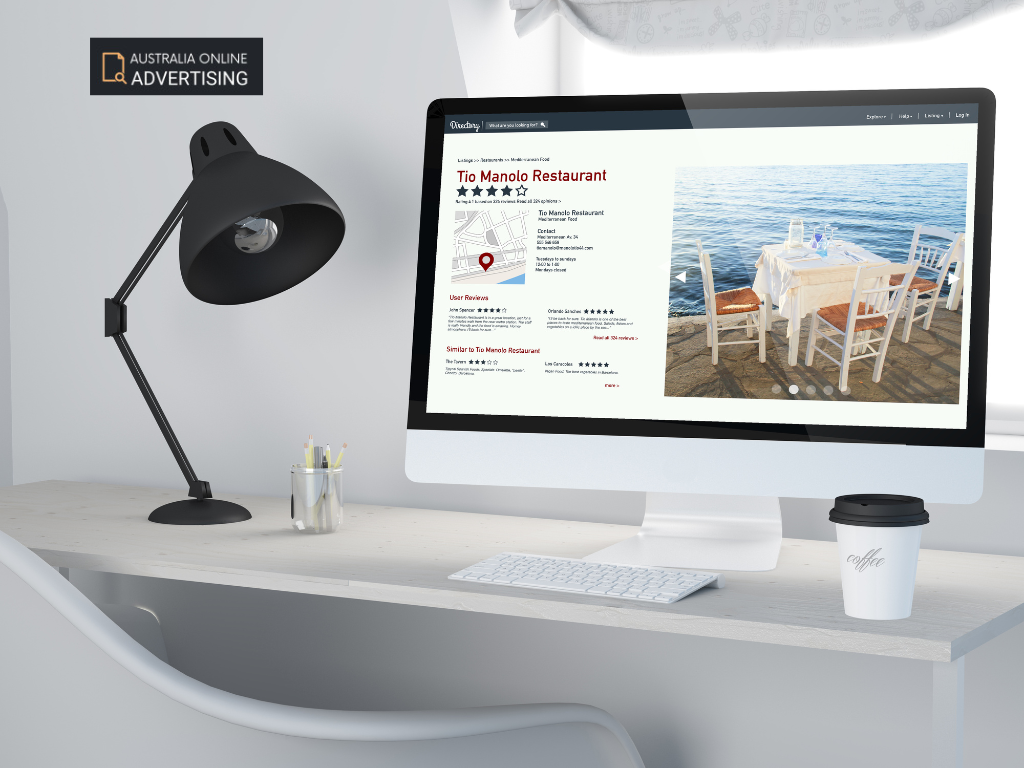
A free business directory Australia listing places a business within a searchable collection of companies, services or products. Visitors may browse by industry, service type, location or business name.
An online directory can also provide another place where potential customers can confirm important details. A listing may include the business name, phone number, website, service area, description, opening hours and images.
Directories are not search engines, although many have their own internal search tools. Their main value is helping users discover and compare businesses within a category or location.
A free online directory may also send referral traffic to a business website. The value of that traffic depends on whether the directory attracts relevant users and whether the listing clearly explains what the business offers.
Businesses should not assume that submitting the same description to hundreds of websites will automatically improve search performance. Quality, accuracy and relevance are more important than simply creating a large number of listings.
Building a Strong Foundation Before Advertising Online
Before advertising online, confirm that your business information is correct and consistent. The business name, contact number, email address, website and physical address or service area should match the information shown on your main website.
Consistency matters because customers may become uncertain when different platforms display conflicting details. An old phone number or incorrect opening time can also cause a genuine enquiry to be lost.
Use the business name that customers recognise rather than adding unnecessary services or locations to the name field. Service information should be explained within the description and category selections.
Businesses operating across Sydney, Western Sydney or other Australian regions should describe their service areas accurately. Avoid claiming national coverage when the business only serves selected suburbs, cities or states.
It is also important to review old listings. If the company has moved, changed ownership, updated its branding or introduced new services, the existing directory information may need to be corrected.
Preparing your website and enquiry process
A directory listing often directs people to a website, so the website should be ready to receive them. Visitors should be able to understand what the business offers, where it operates and how to make contact without searching through several pages.
The landing page should match the promise made in the listing. For example, a listing promoting commercial cleaning should link to a relevant service page rather than an unrelated homepage section.
Check that the website works properly on mobile devices. Many people viewing ads online or searching through a Local business directory will be using a phone. Contact buttons, enquiry forms and phone links should be easy to use on a small screen.
The enquiry process should also be practical. If a potential customer submits a form, someone should know who is responsible for responding. Free advertising may generate interest, but the opportunity can be lost when enquiries are ignored or answered too slowly.
Using Free Australian Business Directories Effectively
Choosing directories that are relevant and trustworthy
Not every free online directory provides the same value. Before creating a listing, review the website from a customer’s point of view.
Check whether the directory contains genuine Australian businesses, uses sensible categories and provides useful search options. The pages should be readable, active and reasonably maintained.
A directory filled with incomplete profiles, copied descriptions or unrelated links may offer little benefit. It can also make it harder for potential customers to trust the businesses listed there.
Read the listing conditions carefully. Confirm whether the listing is genuinely free, whether it expires, whether paid renewal is automatic and whether the business can update or remove its information later.
Some free advertising sites in Australia offer optional paid upgrades. This is not necessarily a problem, but the difference between the free and paid features should be clear. A business should understand exactly what it receives before purchasing an upgrade.
Directory listings can form one part of local visibility because customers often use a combination of search engines, maps, directories and company websites when researching a service. Local search results may also contain business profiles and directory pages, making accurate information important across multiple sources.
Writing a useful and accurate business listing
A business listing should quickly explain what the company does, who it serves and where it operates. The opening sentence is especially important because some directories shorten descriptions in search results.
Avoid filling the description with repeated keywords. A sentence such as “We provide plumbing services for homes and businesses across Western Sydney” is more useful than repeating the same plumbing phrase several times.
Explain the main services in plain English. Where relevant, mention the types of customers served, such as homeowners, property managers, retailers, medical practices or industrial facilities.
Include practical details that may help someone decide whether to make contact. These could include service areas, appointment requirements, delivery options or the types of projects accepted.
Only include claims that the business can support. Statements about being the cheapest, fastest, largest or highest-rated should be avoided unless there is reliable evidence.
The listing should end with a clear next step. Depending on the business, this might be requesting a quote, visiting the website, calling to discuss a service or submitting an enquiry.
Strengthening Local Visibility Beyond Directory Listings
Free local advertising online can extend beyond business directories. A complete local search profile can help customers find business information through search and map results.
These profiles may display opening hours, contact details, images, services, customer reviews and business updates. Google has continued adding features that allow some Australian businesses to highlight timely offers or events directly within their profiles.
Businesses should keep these details current and respond professionally to genuine customer feedback. Reviews should never be purchased, fabricated or exchanged for misleading incentives.
Local community groups and industry networks may also provide appropriate places to share business information. However, businesses should read the group rules before posting. Repeated promotional posts can be removed or viewed as spam.
The strongest local promotion usually provides something useful. A business might answer a common question, explain a local issue or share practical advice before mentioning its service.
Creating helpful content for real customer questions
Useful content can create ongoing visibility without requiring a payment each time someone reads it. This may include service guides, frequently asked questions, comparisons, maintenance advice and explanations of common problems.
A useful topic should respond to a real customer need. An electrician might explain warning signs of an overloaded circuit, while a removalist could explain how to prepare for moving day.
The article should answer the question properly rather than using a short introduction followed by a sales pitch. Helpful content gives readers enough information to understand the issue and decide what to do next.
Businesses can then link relevant directory listings and social posts to the article. This creates a more connected online presence and gives potential customers a reason to visit the website.
When writing for search visibility, use the terms customers naturally use, but avoid forcing the same phrase into every heading. Clear explanations, accurate information and useful structure matter more than repetition.
Choosing the Right Online Advertising Service

Comparing free listings, upgrades and paid options
When comparing online advertising companies, begin by identifying the outcome you need. A business seeking a basic online reference may only require a free listing. A company promoting a time-sensitive offer may need a paid placement or campaign.
Review what is included in each option. A free listing may contain a business description and website link, while a paid upgrade may add images, priority placement, extra categories or longer publication periods.
Do not assume that prominent placement guarantees customers. Ask how the listing is displayed, where visitors come from and whether any traffic or performance information is available.
Check whether the provider reviews submissions before publication. Moderation can help reduce duplicate, misleading or low-quality listings.
The terms should also explain how long the listing remains active, whether the business can edit it and what happens when a paid period ends. Any automatic renewal process should be clearly disclosed.
Internet advertising services should be assessed by transparency and relevance rather than broad promises. A provider should be able to explain the service without guaranteeing rankings, traffic or sales.
Checking transparency, terms and ongoing value
Before submitting payment or detailed business information, check whether the advertising provider has clear contact details, terms and privacy information.
Read what the platform says about publication times, content requirements and rejected listings. Understanding the rules before submitting can reduce delays.
Consider whether the platform suits the business category. A general directory may provide broad visibility, while an industry-specific platform may attract fewer but more relevant visitors.
Businesses should also review the listing after publication. Check that links work, images display properly and the description has not been cut off in a way that changes its meaning.
An advertising service should be treated as an ongoing marketing channel rather than a one-time administrative task. Review performance periodically and update the listing when services, locations or contact details change.
Measuring Results and Improving Your Listings
Free advertising does not remove the need to measure results. Even simple tracking can help a business understand whether a directory or listing is sending useful visitors.
Website analytics may show referral visits from online directory pages. Businesses can also ask new customers how they found the company or add a source question to an enquiry form.
Track meaningful outcomes rather than focusing only on views. Useful measures include website visits, phone calls, completed forms, quote requests and purchases.
A listing with many views but no enquiries may need a clearer description, stronger service information or a better call to action. It may also be reaching the wrong audience.
Allow enough time to gather useful information, particularly for services with longer buying cycles. A commercial service provider may receive fewer enquiries than a local retailer, but each enquiry may represent a larger opportunity.
Updating weak or outdated business information
Online listings should be reviewed regularly. Changes to operating hours, contact details, service areas and website addresses should be updated as soon as possible.
The description may also need improvement. If customers repeatedly ask questions that the listing does not answer, add the missing information where appropriate.
Replace poor-quality images with clear, current photographs. Images should accurately represent the business, products, premises or services rather than relying on unrelated stock photography.
Remove outdated offers and claims. A listing promoting an expired discount can frustrate customers and reduce trust.
It is also useful to compare listings across platforms. Duplicate profiles, inconsistent business names and old addresses should be corrected where possible.
When to Contact Australia Online Advertising

Getting help with listing options and publication requirements
Australia Online Advertising may be contacted when a business needs clarification about free listing options, paid upgrades, content requirements or publication periods.
Before submitting a listing, prepare an accurate business description, website address, contact details, preferred category and suitable images. Having this information ready can make the submission process easier.
Businesses should also ask questions when they do not understand the difference between listing types. For example, a free listing and a guest post may have different content, publication and expiry requirements.
A directory provider can explain how its platform works, but businesses should maintain realistic expectations. A listing can provide additional exposure and another route to the company website, but it cannot guarantee search rankings or enquiries.
Deciding when a broader advertising approach is needed
A free business listing may be enough when the immediate goal is to establish a basic presence or provide another place where customers can confirm company information.
A broader strategy may be appropriate when the business needs faster reach, wants to promote a specific service or operates in a highly competitive market. This could include paid search, social advertising, content marketing or website optimisation.
Australia’s broader advertising market continues to be shaped by digital channels, retail media, streaming and performance-focused campaigns. This means businesses have more options, but it also makes clear objectives and careful measurement increasingly important.
The right approach depends on the audience, budget, location and type of service. Begin with accurate free listings, measure what they contribute and invest in additional advertising only when the purpose and expected outcome are clear.
Free online advertising works best when it helps real customers understand the business. Accurate listings, useful descriptions, relevant platforms and a clear enquiry process can create a stronger foundation for long-term online visibility.
