

Bathroom aids can make everyday routines easier for someone whose mobility, balance or strength has changed, but choosing the right product involves more than finding something labelled for older people or people with disability.
The first question should be what the person actually finds difficult. One person may simply want a softer toilet seat, while another may struggle to lower themselves onto the toilet, stand again, maintain balance in the shower or transfer safely between mobility equipment and bathroom fixtures.
This difference matters because a soft toilet seat cushion, grab rail and shower chair solve very different problems. Current NDIS guidance describes assistive technology as equipment that can help people do everyday activities more easily, safely and independently, with shower chairs given as one example.
The following features can help Australian families, carers and individuals compare bathroom medical equipment more carefully before buying.
Identify what makes the bathroom difficult to use
Start by watching or thinking through the full bathroom routine rather than beginning with a particular product.
Does the person find a standard toilet seat uncomfortable? Is lowering onto the toilet difficult? Do they need something to hold while standing? Can they remain standing safely throughout a shower? Do they need help from another person when transferring?
These questions help separate comfort problems from mobility and balance problems.
For example, a soft toilet seat cushion may add a more comfortable surface to a standard toilet. Australian Health Care currently lists a padded toilet seat cushion designed to attach to standard toilet seating, with a water-resistant surface intended for wipe-down cleaning.
However, additional cushioning does not provide the same function as a raised toilet seat, arm support or over-toilet frame. A person who mainly struggles to sit down or stand up may therefore need to compare different types of equipment instead of assuming that a toilet seat pillow will address the underlying difficulty.
Consider the whole bathroom, not one product
A bathroom aid also needs to work within the available space.
Measure the toilet area, shower entry and any narrow spaces between fixtures. Think about where doors open, whether a mobility aid needs to enter the room and whether a carer requires enough room to provide assistance.
Height is particularly important around the toilet. Adding a cushion or riser changes the sitting position. That may be useful for one person but unsuitable for someone else, depending on their height, strength, balance and transfer method.
The same principle applies to shower seating and hand supports. Equipment that technically fits into the room may still make movement awkward if it blocks a normal transfer path.
The aim is to create a bathroom setup that works as a complete system rather than collecting individual aids that interfere with one another.
Check Toilet Fit, Seat Height and Stability
If the main issue is discomfort from a firm toilet seat, a cushioned toilet seat may be worth considering.
Before purchasing, check the shape and dimensions of the toilet and compare them with the supplier’s product information. Terms such as toilet seat pillow, cushion toilet seat and soft toilet seat are often used to describe similar comfort-focused products, but this does not mean every product has the same dimensions, attachment method or thickness.
A cushion should sit securely rather than shifting noticeably during normal use. Cleaning is also important because the product will be used in a humid environment and may require frequent wiping.
Australian Health Care’s current padded toilet cushion listing describes a water-resistant surface, attachment mechanisms and compatibility with most standard toilet seats. Those are useful examples of the types of details to look for when comparing products, although buyers should still confirm compatibility with their own toilet rather than assuming a universal fit.
Comfort should therefore be considered alongside fit, hygiene and stability.
Know when more height or support may be needed
A soft cushion and a raised toilet seat are not interchangeable.
A toilet riser deliberately increases seat height. Australian Health Care currently lists a soft toilet seat riser that adds 10 cm of height and attaches using adjustable brackets and a front lip. The product is intended for people who have difficulty sitting down or standing from a standard toilet.
Other products add arm supports or a larger frame around the toilet. For example, an over-toilet frame can provide armrests and adjustable height rather than simply altering the surface of the seat.
When comparing these options, focus on the movement the person finds difficult.
If sitting itself is uncomfortable, cushioning may be relevant. If the difficulty is lowering or rising, height may matter more. If balance during the transfer is the main concern, properly selected arm supports, rails or a frame may deserve greater attention.
This prevents a common buying mistake: choosing the product that looks most comfortable instead of the one that addresses the actual mobility problem.
Look for Support Where Balance Matters Most
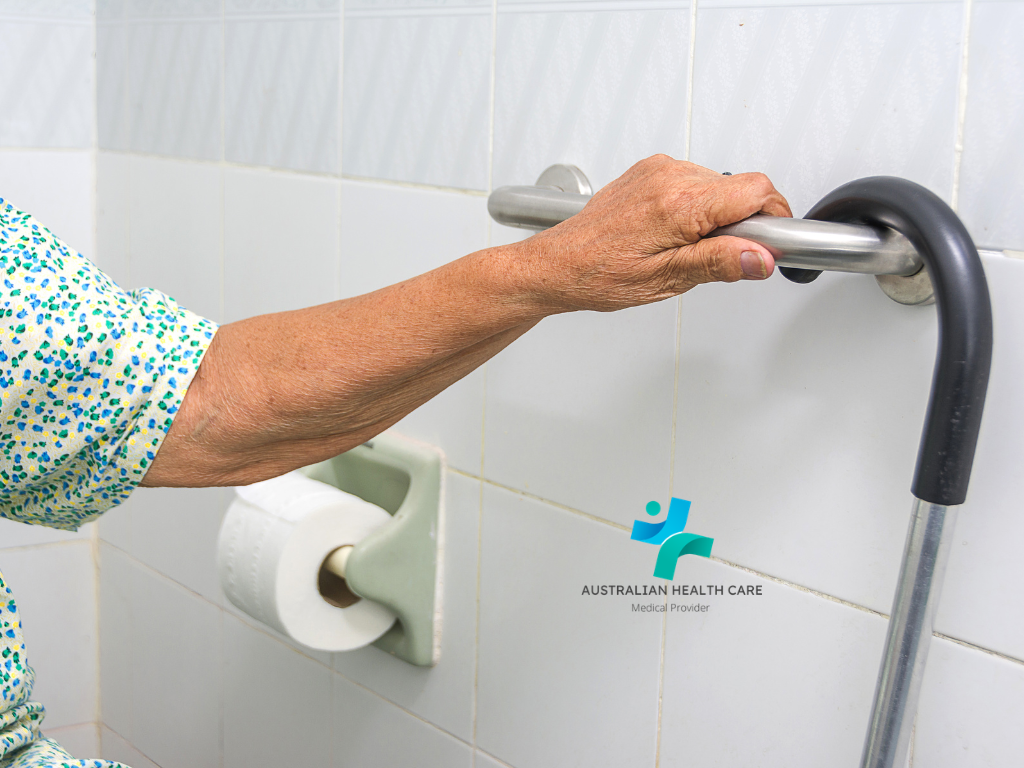
Choose grab rails for the actual movement being supported
Grab rails can provide something stable to hold while moving around certain parts of the bathroom, but their usefulness depends on where and how they are used.
Think about the movement first. Someone may need support when stepping into a shower, moving from standing to sitting, rising from the toilet or turning within a confined space.
Fixed rails and temporary suction-style products should not automatically be treated as equivalent. Installation method, wall surface, positioning and the person’s ability to grip the rail all influence suitability.
NDIS guidance identifies grab rails as one type of home adaptation that an occupational therapist may recommend. It also notes that assistive technology and home modifications are different, so a fixed bathroom change may need to be approached differently from equipment simply placed in the room.
If you are searching online for a handicap safety grab bar supplier, look beyond product availability. Check what the supplier says about installation, intended use and compatible surfaces, and seek appropriate professional or trade advice where installation is important to safety.
Consider seating for showering and personal care
Standing for an entire shower can be difficult for someone with reduced strength, poor endurance or mobility limitations.
A shower chair, stool or bench-style seat may provide an alternative, but again, the correct design depends on the individual.
Look at seat height, overall width, available shower space, feet or castors, armrests and whether the person will transfer independently or with help. Some products combine shower and toileting functions, while others are simple stationary seats.
For shoppers comparing medical bench seats or shower bench-style products, dimensions deserve particular attention. A wide seat may offer more space but may not fit comfortably into a compact shower.
The NDIS currently lists shower chairs and handrails among examples of low-cost bathing and toileting assistive technology in appropriate circumstances, while more complex bathing and toileting equipment can fall into a higher-risk category.
That is a useful reminder that similar-looking products can involve very different levels of support.
Prioritise Materials That Suit a Wet, High-Use Space
Bathroom equipment needs to cope with moisture and regular cleaning.
For a soft toilet seat cushion, check whether the outer surface can be wiped down easily and follow the manufacturer’s cleaning instructions. Avoid assuming that any disinfectant or strong household cleaner is suitable, because materials can respond differently to chemicals.
Seams, openings, brackets and removable parts can also affect how easily an item can be maintained.
The same applies to shower chairs and toilet frames. Smooth surfaces and removable components may simplify cleaning, while complicated joints and difficult-to-reach areas may require more attention.
Australian Health Care’s current over-toilet frame listing, for example, describes a smooth polypropylene surface and detachable components intended to support cleaning and transport.
The right product should fit the person’s hygiene routine as well as their mobility needs.
Check how the product stays secure during use
Stability features vary considerably across bathroom products.
A toilet cushion may use attachments to hold it in position. A toilet riser may use brackets and a front lip. A freestanding frame may depend on correctly adjusted legs and suitable feet. Shower chairs may use rubber ferrules, wheels, brakes or a combination of support features depending on the design.
Do not assume that the presence of a non-slip surface or attachment automatically makes a product suitable for every user.
Check how the equipment is meant to be installed and adjusted. If there is movement, damage or an unclear fitting method, resolve it before routine use.
The person’s own movement matters as well. Equipment that feels stable when sitting still may behave differently during a sideways transfer or when someone places considerable weight through an armrest while standing.
This is why buying decisions should consider the real movement involved, not only the product in isolation.
Match the Product to the Level of Mobility Support Needed
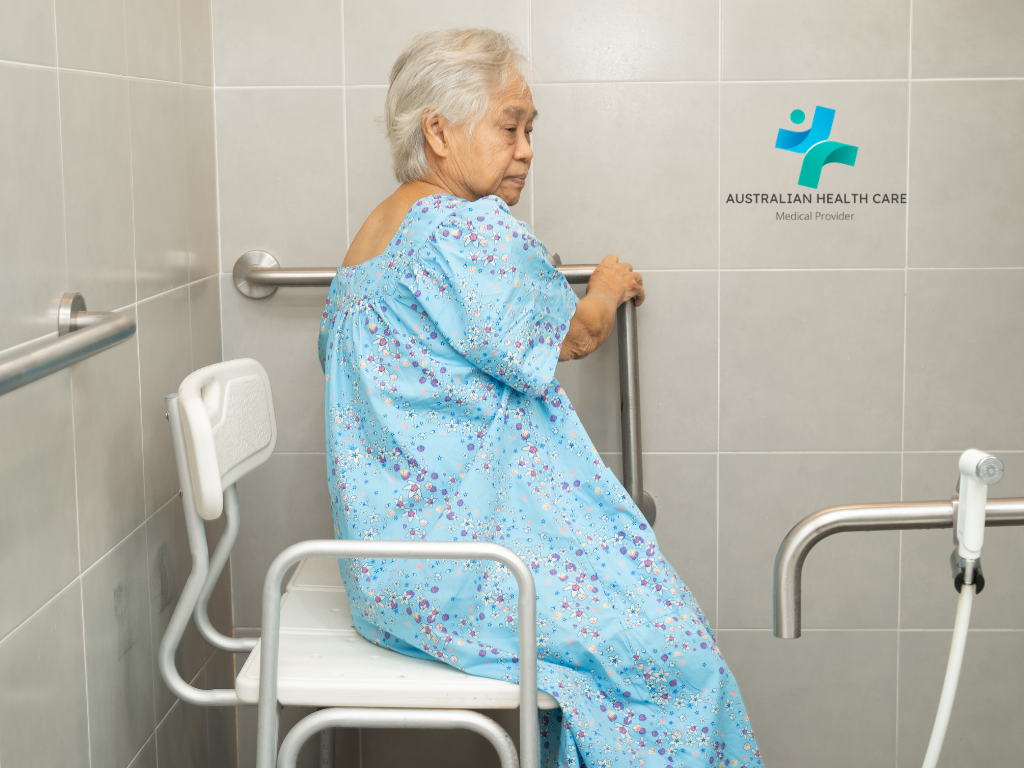
Compare comfort aids with more supportive equipment
There is no single bathroom aid that is right for everyone with limited mobility.
A soft toilet seat is mainly a comfort-focused option. A raised toilet seat changes the sitting height. An over-toilet frame adds structural support around the toilet. A grab rail provides a handhold at a particular location. A shower chair or medical bench seat provides seating during washing.
Before buying, identify the smallest level of equipment that appropriately addresses the person’s needs without overlooking genuine safety concerns.
For someone who simply dislikes a hard seat, a cushion may be enough. For someone who repeatedly struggles to stand, a different solution may be required. A person who cannot safely remain standing in the shower has a different need again.
Looking at the problem in this way also makes supplier comparisons easier because you can compare products within the correct category rather than comparing unrelated bathroom aids on price.
Get advice before choosing complex equipment
Professional advice becomes more important when a person has significant balance problems, a history of falls, complicated transfers, changing mobility or multiple pieces of assistive equipment.
Current NDIS guidance recommends getting advice before purchasing assistive technology to help ensure the item is appropriate and safe to use. Assistive technology advisers can include occupational therapists, physiotherapists and other suitably qualified professionals depending on the equipment involved.
The NDIS also identifies complex bathing and toileting devices as higher-risk assistive technology.
This does not mean every toilet cushion or shower stool requires a formal assessment. It means the level of advice should reflect the level of risk and complexity.
If you are uncertain whether someone needs simple cushioning, added height, transfer support or more complex bathroom equipment, professional assessment can help avoid buying an item that does not solve the problem.
Compare Suppliers Using Product Information, Not Claims
A useful supplier should give you enough information to compare products properly.
For bathroom medical equipment, look for actual dimensions, adjustment ranges where applicable, intended use, materials, installation or attachment instructions, weight guidance where relevant and cleaning information.
Clear product information becomes especially important when ordering online because you cannot physically test the equipment before purchasing.
If two products appear similar but one supplier provides much clearer specifications, that information can help you make a more informed comparison.
Avoid choosing solely from phrases such as “ultimate comfort” or “maximum safety”. Those descriptions do not tell you whether the item fits your toilet, bathroom or mobility routine.
Practical specifications are much more useful.
Compare the range before committing to one solution
Australian Health Care is one supplier that currently lists multiple bathroom support options, including a padded toilet seat cushion, soft and adjustable toilet risers, grab rails, over-toilet frames and shower or commode seating.
Looking across several categories can be useful because it allows you to compare different approaches to the same everyday problem.
For example, if getting up from the toilet is difficult, you may initially look at a cushion but discover that a raised seat or supported frame better matches the movement involved. Likewise, if showering is the main concern, a toilet product may not address the actual difficulty.
When comparing Australian Health Care or another medical equipment supplier, use the product specifications to narrow down suitable options. If an important measurement or fitting detail is unclear, contact the supplier before ordering rather than guessing.
Know When to Contact the Supplier or a Health Professional

Ask the company when practical product details are unclear
Contact the supplier when your question is about the product itself.
Useful questions include whether a cushion fits a particular toilet shape, how a riser attaches, whether replacement components are available, how an item should be cleaned or what dimensions apply when the website does not make them clear.
If you are comparing a cushioned toilet seat with a raised seat or over-toilet frame, ask the supplier to explain the practical differences in the products rather than simply asking which one is “best”.
Australian Health Care can be contacted when you need clarification about the bathroom products it currently sells, including its toilet seating, risers, grab rails and other bathroom equipment. The supplier can explain product information, but individual clinical suitability may still need to be discussed with an appropriate health professional.
Having measurements ready before contacting a supplier can also make the conversation more useful.
Seek professional advice when safety or transfers are involved
A supplier can explain what a product does. An occupational therapist or another suitable assistive technology professional can assess how equipment fits a person’s individual abilities, environment and daily routine.
Consider seeking professional advice when the person has difficulty transferring, significant balance problems, changing mobility, complex disability needs or several pieces of equipment that need to work together.
Current NDIS guidance recommends advice when selecting assistive technology and specifically notes that qualified advisers can help people choose appropriate equipment and use it safely.
Bathroom aids are most useful when they solve the correct problem. For one person that may mean the added comfort of a soft toilet seat cushion. For another, it may mean a higher toilet position, a correctly placed grab rail or suitable shower seating.
Start with the person’s real movement and comfort needs, measure the bathroom carefully, compare meaningful product specifications and ask for advice when the decision involves more than a straightforward purchase. That approach gives you a much better basis for choosing equipment that fits both the person and the bathroom.
