

Commercial refrigerator financing can help Australian hospitality and foodservice businesses obtain essential refrigeration equipment without paying the full purchase price upfront. However, before entering a finance, rental or leasing agreement, it is important to understand what happens if the equipment develops a fault, needs servicing or stops maintaining the required temperature.
For cafés, restaurants, bakeries, butchers and commercial kitchens, a refrigerator breakdown can affect more than the equipment itself. Temperature-sensitive stock may be at risk, food preparation can be disrupted and unexpected repair expenses can create additional financial pressure.
Although financing arrangements can make equipment costs more manageable, they do not automatically include maintenance, repairs or replacement equipment. Responsibilities depend on the agreement, the applicable warranty and any legal protections that apply.
Understanding these conditions before signing can help businesses compare financing options and prepare for potential equipment problems.
Why Commercial Refrigerator Financing Should Include Repair Planning
When comparing commercial refrigerator financing options, businesses often focus on the deposit, regular repayments and the length of the agreement.
These are important considerations, but they provide only part of the financial picture.
A refrigerator may operate for many hours each day, maintaining the temperatures needed for food storage, preparation or display. If the equipment develops a fault, the business needs to know who is responsible for arranging repairs and covering the associated costs.
For example, one agreement may require the business to arrange routine maintenance at its own expense. Another may include certain servicing arrangements, subject to specific conditions.
A manufacturer’s warranty may cover qualifying equipment defects, but it may not cover every callout, maintenance task or repair.
The finance provider and the equipment supplier may also be separate businesses, each with different responsibilities.
This is why repair planning should form part of the initial comparison.
Before committing to an agreement, businesses should understand who owns the equipment, who is responsible for servicing it and how warranty claims are handled.
They should also establish whether repayments continue during repairs and what options are available if the refrigerator cannot be restored promptly.
A clear understanding of these arrangements can reduce confusion if an equipment problem occurs.
What Happens When a Financed Commercial Fridge Breaks Down?
When a commercial refrigerator stops working correctly, the immediate priority is protecting food safety.
Businesses should check the actual temperature of affected food using appropriate measuring equipment and assess whether the products remain safe under applicable food safety requirements.
In NSW, potentially hazardous food generally needs to be kept at 5°C or below, unless another permitted temperature-control arrangement applies.
If the refrigerator cannot maintain the required conditions, affected stock may need to be moved to suitable alternative refrigeration.
The business should then follow the fault-reporting procedure specified in its agreement.
Depending on the arrangement, the appropriate contact may be the equipment supplier, rental provider, finance company or nominated service contractor.
It is important not to assume that the organisation collecting repayments is also responsible for approving repairs.
Businesses should identify whether warranty approval is required before arranging technical work.
They should also establish whether the provider requires an authorised technician and whether any callout or labour expenses may be charged.
Where equipment cannot be repaired promptly, temporary storage or replacement equipment may be necessary.
However, access to temporary refrigeration is not automatically included in every finance agreement.
The business should check whether such support is provided and under what conditions.
Payment obligations during a breakdown also depend on the contract and any applicable legal rights.
Understanding these procedures before a problem occurs can make the response more organised.
Understanding Warranty Coverage Before Signing an Agreement
A warranty can provide important protection when commercial refrigeration equipment for sale develops a qualifying fault.
However, a warranty is not the same as an equipment finance agreement.
For businesses considering commercial refrigerator financing, it is useful to examine these documents separately and understand how they work together.
What Does a Commercial Refrigerator Warranty Actually Cover?
Commercial refrigerator warranties vary according to the manufacturer, product and supplier.
Some provide coverage for particular defects in materials or manufacturing. Others may specify different coverage conditions for refrigeration components, electrical controls, labour or replacement parts.
The coverage period may also vary between products.
Businesses should therefore request the exact warranty documentation for the refrigerator they intend to obtain.
One important consideration is whether the warranty includes on-site repairs.
A manufacturer may provide different arrangements depending on the equipment type, location and nature of the fault.
The business should also establish whether callout charges, travel expenses and labour are included.
Routine maintenance is another area that requires clarification.
Cleaning, regular inspections, replacement of consumable components and damage resulting from improper use may be treated differently from defects covered by a voluntary warranty.
The manufacturer’s instructions may also specify installation and maintenance requirements.
For example, ventilation clearance or particular operating conditions may be necessary for the refrigerator to function as intended.
Businesses should understand these requirements before equipment is installed.
A written warranty provides a clearer reference than a general verbal assurance that repairs will be covered.
How Commercial Refrigerator Financing Affects Warranty Claims
Commercial refrigerator financing can involve several organisations.
The supplier may provide the refrigerator, a finance company may manage payments and a manufacturer may administer the product warranty.
A separate refrigeration technician may carry out approved repairs.
Because these responsibilities can be divided, businesses should establish the correct claims procedure.
A fault might need to be reported to the supplier even when the refrigerator is financed through another company.
Alternatively, the finance or rental agreement may nominate a particular service provider.
Ownership arrangements can also influence whether the business is authorised to approve repairs or replace components without consent.
It is important to follow the agreed procedure, particularly where unapproved modifications or technical work could affect the warranty.
In Australia, voluntary warranties should also be distinguished from statutory consumer guarantees.
Under the Australian Consumer Law, some business purchases qualify for consumer guarantees. These can apply to eligible goods costing less than $100,000 including GST, subject to exclusions, or where another qualifying condition is met.
However, not every commercial equipment transaction is covered. Goods acquired for certain excluded purposes, including particular production or manufacturing uses, may fall outside those protections.
Where consumer guarantees apply, a voluntary warranty cannot remove those statutory rights.
Financial products themselves are subject to different legal rules.
Businesses should therefore consider the equipment transaction, warranty and financing contract separately when assessing their rights and responsibilities.
Comparing Repair Responsibilities When Buying, Leasing or Renting
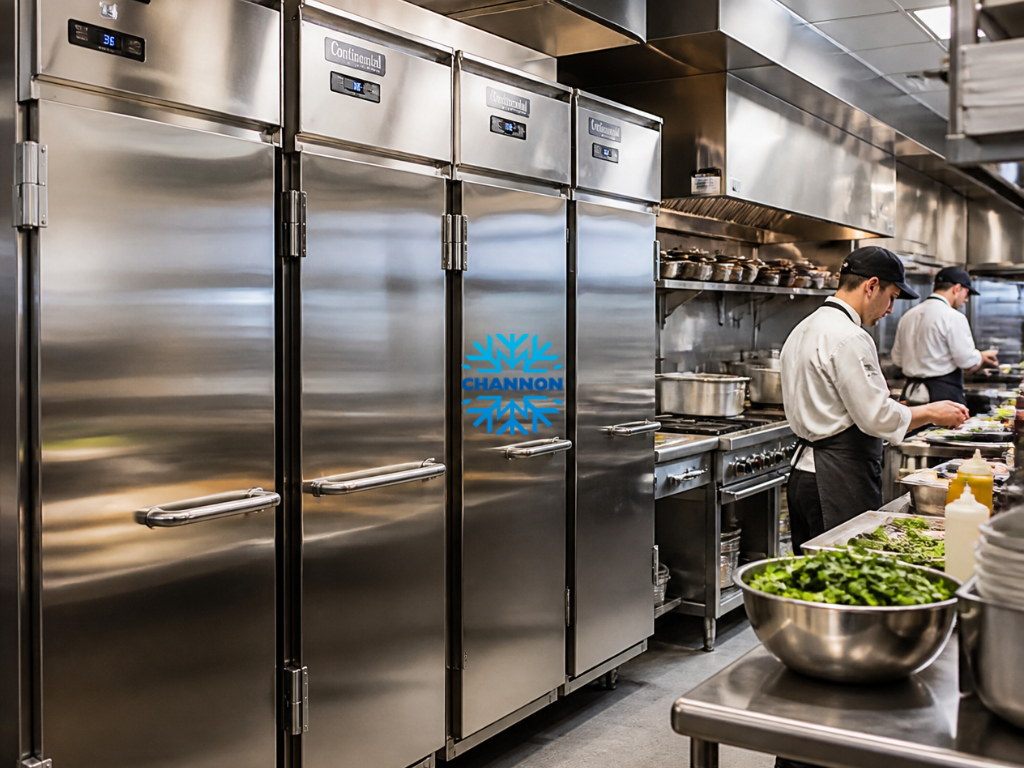
Buying, leasing and renting can provide different ways to obtain commercial refrigeration equipment.
However, each arrangement may allocate maintenance and repair responsibilities differently.
When evaluating commercial refrigerator financing, businesses should compare the full written conditions rather than assuming a particular payment structure includes servicing.
Who Pays for Repairs Under a Commercial Fridge Lease?
A commercial fridge lease allows a business to use refrigeration equipment under an agreed payment arrangement.
The provider may retain ownership throughout the term, although the precise ownership and end-of-term conditions depend on the contract.
Some lease agreements include certain maintenance services.
Others require the business using the equipment to arrange and pay for routine servicing.
The contract may also distinguish ordinary maintenance from repairs caused by equipment defects.
For example, the agreement might require the business to keep ventilation openings clear and follow the manufacturer’s operating instructions.
A qualifying fault in a covered refrigeration component may be handled through the manufacturer’s warranty or another specified support arrangement.
However, accidental damage, unauthorised modifications or maintenance failures may be addressed differently.
These are examples of possible contractual distinctions, not assumptions about every lease.
Before signing, businesses should check how the agreement treats labour, replacement parts, technician callouts and ongoing inspections.
They should also determine whether repairs require advance approval.
Some contracts may specify approved technicians or require written consent before modifications.
The agreement should be reviewed for situations involving repeated faults or prolonged equipment unavailability.
Understanding these conditions helps businesses compare more than the regular lease payment.
Does Commercial Refrigerator Rental Include Servicing?
Commercial refrigerator rental may appeal to businesses that prefer to use equipment without purchasing it outright.
However, rental does not automatically mean servicing is included.
Some rental arrangements provide equipment use under a regular payment schedule, while maintenance responsibilities are addressed separately.
Other arrangements may include specified support services.
The difference should be established before the agreement begins.
Businesses should check whether routine inspections, breakdown attendance and replacement components are covered.
It is also worth confirming whether emergency servicing is included or charged separately.
Some providers may require faults to be reported through a particular service channel.
If a business arranges its own repair without following the agreement, it may encounter problems with reimbursement or warranty administration.
When considering a commercial fridge on rent, review the conditions concerning equipment damage, cleaning requirements and return obligations.
The contract may also explain whether temporary replacement equipment is available during an extended repair.
These arrangements vary and should not be assumed.
Comparing the total rental cost alongside servicing responsibilities provides a clearer picture of the financial commitment.
What to Check in Rent-to-Buy and Equipment Finance Agreements
Some businesses prefer arrangements that offer the possibility of owning refrigeration equipment after making regular payments.
Others may finance several pieces of kitchen equipment through one package.
Commercial refrigerator financing can accommodate different business circumstances, but ownership and repair responsibilities should be examined carefully.
How a Rent to Buy Commercial Fridge Agreement Handles Repairs
A rent-to-buy commercial fridge arrangement may provide a pathway to ownership over an agreed period.
However, the name of the arrangement does not explain every contractual condition.
Some agreements may provide for ownership after specified payments or the exercise of a purchase option.
Others may include a final amount or additional conditions before ownership transfers.
Businesses should confirm these details in writing.
Repair responsibilities also need attention.
The agreement may require the business to maintain the refrigerator in suitable condition throughout the payment period.
It may specify who approves repairs and how qualifying warranty claims are processed.
Ownership transfer can also affect responsibility for future servicing.
For example, maintenance arrangements that apply during a rental period may not automatically continue once the equipment becomes the business’s property.
The contract should make these distinctions clear.
Businesses should also consider what happens if a significant fault occurs near the end of the agreement.
Questions about repairs, replacement, remaining payments and ownership should be resolved before signing.
A rent-to-buy arrangement should be assessed according to its actual terms rather than assumptions about the final payment.
Comparing Catering Equipment Finance With Refrigerator Rental
Catering equipment finance may involve several pieces of equipment rather than a single commercial refrigerator.
A business establishing a new kitchen might need refrigerators, freezers, cooking appliances and other essential equipment.
Financing these products together may simplify the payment arrangement.
However, bundling equipment does not necessarily create one shared warranty.
Different products may be supplied by different manufacturers and carry separate coverage conditions.
Each appliance may also require different servicing arrangements.
If one refrigerator develops a fault, the business needs to know whether it can be repaired or replaced independently of the wider package.
The agreement may contain conditions concerning changes to financed equipment, particularly when ownership remains with a finance provider.
For this reason, businesses should review the equipment schedule as well as the main finance contract.
The schedule should accurately identify the products being financed.
It is also important to compare the overall payment commitment, including relevant fees and any end-of-term obligations.
A bundled package may be convenient, but convenience alone does not establish whether it offers the lowest total cost.
The suitable arrangement depends on the business’s equipment requirements and contractual responsibilities.
Preventative Maintenance and Unexpected Repair Expenses

Commercial refrigeration equipment requires appropriate care to maintain reliable temperature control.
Maintenance may also help identify developing problems before they cause more significant disruption.
For businesses using commercial refrigerator financing, maintenance responsibilities should be understood alongside the warranty and payment conditions.
Which Maintenance Tasks Help Protect Commercial Refrigeration?
Commercial refrigerators operate under different conditions depending on their design and intended use.
A refrigerator in a busy restaurant kitchen may experience different door-opening patterns and surrounding temperatures from a unit used primarily for refrigerated storage.
Regular operational checks can help identify signs that the equipment is not performing as expected.
Temperature monitoring is particularly important for businesses storing potentially hazardous food.
Door seals should also be checked for visible damage or problems that could prevent proper closing.
Ventilation openings should remain unobstructed in accordance with manufacturer instructions.
Relevant refrigeration systems may also require condenser cleaning or other technical maintenance.
However, maintenance procedures and intervals vary between equipment models.
Businesses should follow the manufacturer’s instructions and the requirements of any applicable service agreement.
Work involving refrigerant circuits or specialised electrical components should be left to appropriately licensed or qualified professionals.
Keeping records of inspections and servicing may be useful when discussing equipment performance or warranty claims.
Where warranty conditions include maintenance obligations, the business should understand what evidence the provider may require.
Maintenance cannot guarantee that equipment will never fail, but it remains an important part of responsible refrigeration management.
What Repair Costs Might Be Excluded From Warranty Coverage?
A commercial refrigerator warranty may contain exclusions or limitations.
These vary according to the manufacturer and agreement, so businesses should review the actual wording rather than rely on general assumptions.
Routine servicing may not be covered by a warranty intended to address manufacturing defects.
Accidental damage, inappropriate use or unauthorised modifications may also be treated differently from qualifying product faults.
In some circumstances, callout charges or labour costs may be payable even when certain replacement components are covered.
A warranty may also contain specific arrangements for equipment located outside nominated service areas.
Installation conditions can influence warranty assessment.
For example, operating equipment without required ventilation clearance could create problems if it contributes to a fault.
However, not every malfunction indicates incorrect use or inadequate maintenance.
Fault diagnosis should be based on the equipment’s condition and the relevant technical evidence.
Where Australian Consumer Law guarantees apply, a voluntary warranty exclusion cannot automatically eliminate those statutory rights.
Businesses should therefore distinguish contractual warranty coverage from any legal remedies available under the circumstances.
The practical approach is to request warranty documentation early, understand the exclusions and clarify responsibilities before purchasing or financing equipment.
Managing Breakdowns, Replacement Equipment and Larger Systems
An equipment breakdown can affect both business operations and financial planning.
Even when repairs are covered, the refrigerator may remain unavailable while the fault is diagnosed or replacement components are obtained.
Commercial refrigerator financing arrangements should therefore be assessed for their breakdown procedures as well as their normal repayment conditions.
What Happens if a Commercial Refrigerator Cannot Be Repaired Quickly?
If a commercial refrigerator cannot maintain the required food storage temperature, the business should act promptly to manage the affected stock.
For potentially hazardous food, appropriate temperature control is essential.
In NSW, the Food Authority generally requires cold potentially hazardous food to be maintained at 5°C or below, unless another permitted arrangement applies.
Businesses should assess food temperatures and relevant time records before deciding whether products can be retained, moved or must be discarded.
Food should not be assumed safe simply because it still feels cold.
Once food safety is addressed, the business should follow its equipment fault-reporting procedure.
The relevant provider may need to approve diagnostic work or arrange a nominated technician.
If the fault requires an extended repair, the business may need alternative refrigeration.
Some agreements may provide access to temporary equipment, but others may not.
Businesses should establish whether temporary replacement equipment is available, how it is arranged and whether extra charges apply.
The contract may also address what happens when a refrigerator cannot be repaired economically.
Depending on the circumstances, options may include repair, replacement or another contractual or legally required remedy.
However, a warranty does not automatically cover every operational loss arising from a breakdown.
Food spoilage, interrupted trading and other losses may be subject to separate contractual terms, insurance arrangements or applicable legal rights.
It is also important to clarify whether regular finance payments continue while the refrigerator is unavailable.
These questions are best addressed before equipment failure creates an urgent business problem.
How Repairs and Warranty Differ for Commercial Modular Cool Rooms
Commercial modular cool rooms can involve more components and installation considerations than standalone refrigerators.
A cool room may contain insulated wall and ceiling panels, doors, refrigeration equipment, electrical controls and temperature-monitoring systems.
These components may come from different manufacturers or suppliers.
As a result, warranty coverage can be divided between separate parts of the installation.
For example, the refrigeration system may have different coverage from the insulated panels or door hardware.
Installation-related faults may also involve different responsibilities from manufacturing defects.
Businesses should request clear documentation explaining the components supplied and the organisations responsible for service and warranty support.
When financing a cool room, it is important to establish whether the agreement covers the complete installation or only specified equipment.
The agreement may treat fixed infrastructure, installation labour and refrigeration components differently.
Maintenance requirements should also be considered.
A cool room can require suitable attention to doors, seals, temperature controls and refrigeration components.
Businesses should confirm who is responsible for diagnosing faults that involve more than one part of the system.
Commercial modular cool rooms should not automatically be treated as equivalent to standard refrigerator rental arrangements.
A larger installation may require project-specific finance, warranty and maintenance conditions.
Understanding these differences helps businesses assess both operational suitability and long-term responsibilities.
Choosing Commercial Refrigerator Financing With Confidence

Selecting a finance arrangement for commercial refrigeration requires more than comparing repayment amounts.
The equipment must suit the business, and the agreement should clearly explain ownership, maintenance, repair and warranty responsibilities.
When comparing commercial refrigerator financing options, businesses should consider the full period of use, not only the initial cost.
Questions to Ask Before Finalising Commercial Refrigerator Financing
Before entering an agreement, confirm which organisation supplies the refrigerator and which organisation provides the financing.
These may be different businesses with separate responsibilities.
It is also important to establish who owns the equipment during the agreement and whether ownership can transfer at the end.
The business should request written warranty information for the exact refrigerator model.
This should help clarify covered faults, exclusions, servicing procedures and the relevant contact for claims.
Maintenance requirements should be reviewed separately.
If regular servicing is not included, the business should understand what it will need to arrange and pay for.
Fault reporting is another important consideration.
The agreement should identify whether repairs require approval and whether particular technicians must be used.
Businesses should also ask about support when a refrigerator is unavailable.
Temporary equipment, replacement arrangements and continued payment obligations should not be assumed.
The total contract cost should be reviewed alongside these operational considerations.
For some businesses, a lower monthly payment may be attractive.
However, the overall value depends on the agreement’s duration, fees, repair responsibilities and end-of-term conditions.
Where financial or legal obligations are unclear, an accountant, finance broker or appropriately qualified legal adviser may be able to provide advice specific to the business.
A well-informed decision begins with understanding the written agreement before accepting the equipment.
Discussing Refrigeration Finance and Servicing With Channon
For hospitality and foodservice businesses considering new refrigeration equipment, Channon provides commercial refrigeration and catering equipment solutions in Sydney.
Its published Rental & Finance information describes equipment funding options through finance partners, including arrangements for individual products and broader catering equipment packages.
These arrangements can offer different payment structures and end-of-term options, depending on the selected provider and agreement.
Channon also publishes information about preventative maintenance and refrigeration servicing.
Its maintenance offerings include scheduled equipment checks and other service arrangements, with the available coverage depending on the selected programme.
However, the availability of servicing does not mean that every financed refrigerator includes maintenance or repairs within its regular payments.
Businesses should confirm the exact support arrangements for the equipment and finance option they are considering.
Channon’s commercial refrigeration range provides options for different hospitality and foodservice requirements.
When making an enquiry, businesses can explain the type of refrigeration equipment needed, available installation space, required operating temperatures and intended use.
They can also ask about relevant warranty documentation, repair reporting procedures and maintenance options.
If considering a rental or finance arrangement, it is worth clarifying which responsibilities belong to the finance partner and which relate to the equipment supplier or service provider.
Customers can contact Channon to discuss available commercial refrigeration equipment and ask about the financing and servicing arrangements relevant to their requirements.
Commercial refrigerator financing can provide a practical way to obtain essential equipment, but the repayment schedule is only one part of the decision.
Warranty coverage, servicing responsibilities, repair approvals and breakdown procedures can all affect the experience of using the equipment.
By examining these details before signing an agreement, businesses can compare options with greater confidence and better understand their ongoing commitments.
The most suitable arrangement is one that provides appropriate refrigeration equipment, manageable financial obligations and clear responsibilities when maintenance or repairs are required.
