

A car log book service follows the maintenance schedule prepared for a particular make, model, engine and production year. Instead of applying the same checklist to every vehicle, the workshop uses the manufacturer’s service information to identify which inspections, adjustments and replacements are due.
The exact work can change from one interval to the next. A routine visit may cover engine oil, a filter and scheduled inspections, while a later service may include additional fluids, filters or components. This is why two services for the same vehicle can involve different work and costs.
Understanding what should be included helps you compare quotations, maintain useful service records and approve additional repairs with greater confidence.
What is a log book and where can you find it?
A vehicle log book contains or refers to the manufacturer’s scheduled maintenance requirements. Traditionally, this information appeared in a printed booklet stored with the owner’s manual. Newer vehicles may use electronic records, an online owner portal or a service system accessed by an appropriately equipped workshop.
People searching “what is a log book” are often trying to understand whether it is simply a service history. It can serve as a record, but its main purpose is also to show what maintenance is due at particular time or kilometre intervals.
The schedule may specify inspections, fluid changes, filter replacements, adjustments and other procedures. It may also include separate requirements for vehicles driven in demanding conditions.
If you cannot find the printed book, check the owner information provided with the vehicle or contact the manufacturer or a suitable workshop. Avoid relying on a generic online schedule without confirming that it applies to the exact vehicle.
What is car log book information used for?
The phrase “what is car log book” generally refers to two connected forms of information: the maintenance schedule and the completed service record.
The schedule tells the workshop what should be checked or replaced at each interval. The completed record shows when the work occurred, the odometer reading and the workshop that performed it.
A logbook car service should therefore be based on more than the vehicle’s age alone. The workshop may need the registration number, vehicle identification number, model, engine type and current odometer reading to identify the correct requirements.
Service history can also help a future technician understand what has already been completed. This is particularly useful when the vehicle changes owners or moves between workshops.
For drivers, the logbook for cars provides a practical maintenance timeline. It does not guarantee that a vehicle will never develop a fault, but it helps organise routine care according to the manufacturer’s schedule.
Know How a Log Book Service Is Planned
A proper car log book service begins by confirming the vehicle and the service interval that is due. Two vehicles from the same manufacturer may have different requirements because of their engines, transmissions, fuel types or equipment.
The workshop should identify the current interval and review relevant manufacturer information. It may also examine the previous service record to determine whether an item was completed earlier or deferred.
This approach matters because not every component is replaced during every visit. Spark plugs, certain filters, transmission fluid and other scheduled items may only become due at longer intervals. Replacing them too early can add unnecessary cost, while overlooking them can leave the scheduled service incomplete.
The quoted service should clearly distinguish between work required by the schedule and repairs recommended after inspection. This gives the owner an opportunity to understand why additional work is being proposed.
If the workshop cannot confirm which interval applies, provide the vehicle identification details and previous invoices where available. Accurate information at the beginning reduces confusion later.
Check both time and kilometre intervals
Service schedules commonly use time and distance to determine when maintenance is due. The instruction may be to service the vehicle after a certain number of months or kilometres, whichever occurs first.
A vehicle that travels only short distances can therefore require servicing even when its odometer has not reached the next kilometre interval. Fluids can age, batteries can lose condition and repeated short trips may prevent the engine from reaching its normal operating temperature for long enough.
Conversely, a vehicle that covers large distances quickly may reach the kilometre interval well before the time limit. Waiting for the anniversary date could make the service overdue.
Dashboard reminders can be helpful, but they should be considered alongside the service schedule. A reminder may require resetting after the work, and its calculation method varies between vehicles.
If you are unsure when the service is due, check the last recorded date and odometer reading. A workshop can then compare these details with the correct schedule.
Service the Engine, Fluids and Filters

Replace scheduled oils, fluids and filters
Engine oil and the oil filter are commonly included when they are due, but the correct oil specification is important. Viscosity alone may not be enough because the manufacturer may require an oil meeting particular performance standards.
Other filters are replaced according to the schedule and their condition. The engine air filter helps prevent contaminants from entering the engine, while the cabin filter cleans air entering the passenger compartment. Fuel filters may also have scheduled intervals on applicable vehicles.
Additional fluids are not automatically replaced at every log book service. Brake fluid, coolant, transmission fluid, differential oil and other lubricants may have their own schedules, testing requirements or vehicle-specific procedures.
Before booking, ask whether the quotation includes only the routine engine oil and filter or every item due at the current interval. This helps explain price differences between apparently similar service packages.
The invoice should identify the parts and fluids supplied clearly enough to create a useful maintenance record.
Inspect fluid condition, levels and possible leaks
Fluid inspections can identify low levels, contamination, deterioration or evidence of leakage. The technician may check the engine oil, coolant, brake fluid, transmission fluid, power-steering fluid and other applicable systems.
Not every modern vehicle allows each fluid to be checked in the same way. Some transmissions have specific temperature and filling procedures, while electric power steering does not use hydraulic fluid. The service should reflect the actual vehicle rather than a generic list.
Low fluid may be a symptom rather than the complete problem. Topping up coolant, for example, does not resolve a leak or overheating fault. If a level is low, ask whether the workshop identified the cause and whether further testing is recommended.
Fluid colour alone may not provide a complete assessment. The technician should follow the appropriate specification, schedule and testing procedure for that system.
Any recommended replacement outside the scheduled service should be explained before work proceeds. The explanation should cover the reason, required specification and quoted cost.
Inspect Brakes, Tyres and Other Safety-Related Components
A scheduled service commonly includes visual and functional checks of relevant braking, steering and suspension components. The exact scope depends on the service interval and vehicle design.
Brake inspections may consider pad or shoe wear, disc or drum condition, visible fluid leaks and the operation of related components. A road test may provide further information when it is appropriate and safe to perform one.
The technician may also inspect steering and suspension parts for wear, movement, damage or leaking components. Unusual noises, uneven tyre wear or changes in handling can help direct attention to a particular area.
An inspection does not mean every hidden fault will be detected. Some concerns require disassembly, measurement or separate diagnostic work beyond the scheduled service.
If the workshop finds worn components, ask for an explanation of their condition, the urgency of the repair and whether related parts should be examined at the same time.
Examine tyres, lights, wipers and seatbelts
Tyres may be checked for visible damage, tread condition, pressure and uneven wear. An irregular wear pattern can indicate issues involving inflation, wheel alignment, suspension or driving conditions.
The service may also include checks of exterior lights, warning lamps, windscreen washers and wiper operation. Replacing a globe or wiper blade may be treated as additional work, so confirm what the quoted price covers.
Seatbelts and other visible safety-related items may be examined for condition and operation according to the service scope. Problems should be reported clearly rather than assumed to be included in the original service price.
These checks should not be confused with a registration inspection or roadworthiness certificate. Requirements vary between Australian states and territories, and a routine service does not automatically satisfy a separate regulatory inspection.
If you need both services, ask the workshop whether it is authorised to provide the relevant inspection and whether a separate booking or fee applies.
Review Electronic Systems and Road Performance
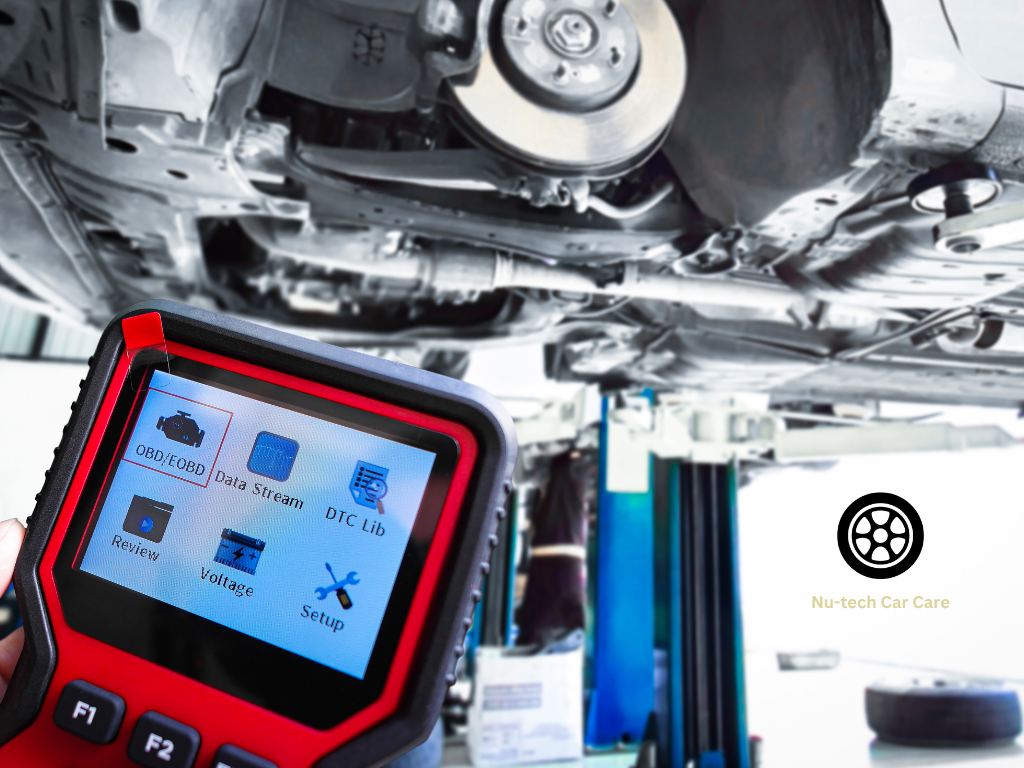
Check warning lights and electronically monitored faults
Modern vehicles use electronic modules to monitor many systems. If a dashboard warning light is active, tell the workshop when booking rather than assuming the standard service will diagnose it.
A basic scan may retrieve stored fault codes, but detailed diagnosis can require live data, electrical testing and physical inspection. A code points towards the system that detected a problem; it does not always identify the component that should be replaced.
Battery and charging checks may also be relevant, especially when the vehicle has starting difficulties or electrical warnings. Some vehicles require battery registration or system relearning after replacement.
The service reminder may be reset after the scheduled work is completed. This should not be confused with clearing an unresolved fault code simply to turn off a warning.
Ask whether scanning and fault diagnosis are included in the quoted car log book service. If not, the workshop should explain the additional diagnostic charge before proceeding.
Identify concerns that require separate diagnosis or repair
A scheduled service can reveal issues that were not known when the vehicle was booked. These may include fluid leaks, worn brakes, damaged tyres, unusual noises or stored electronic faults.
Finding a problem does not necessarily mean its diagnosis or repair is included in the service price. The workshop may need additional time, equipment or parts to determine the cause and complete the work.
A clear approval process protects both the customer and the workshop. The technician should contact you, explain the concern and provide an estimate before undertaking additional paid work.
You can ask whether the repair is urgent, whether the vehicle can be driven safely and what may happen if the work is delayed. If the cause has not yet been confirmed, the workshop should say so rather than presenting a possible cause as certain.
An itemised report can also support future planning. Work that is not immediately required can be monitored or scheduled for a later visit.
Update the Service Record Correctly
After completing the scheduled work, the workshop should update the appropriate service record. This may involve stamping and completing a printed booklet or entering details into an electronic system when access and procedures allow.
The record should normally identify the service date, odometer reading and completed interval. It should also show which workshop performed the work.
A stamp alone may not explain every item supplied or checked. Retain the invoice because it can provide more detailed evidence of fluids, filters, replacement parts and additional repairs.
If the vehicle has a digital service history, ask how the record will be updated and whether you will receive a copy. Not every independent workshop has access to every manufacturer’s branded digital system, so clarify the arrangement before booking.
Check the record before leaving the workshop. Correcting a missing entry is easier while the invoice and service details are readily available.
Keep invoices and supporting service information
Service records can be relevant when discussing warranty matters, diagnosing later problems or selling the vehicle. Keep the log book, invoices and reports together where possible.
An invoice should identify the vehicle, date, odometer reading and work completed. It should also list relevant parts and fluids rather than using only a vague description such as “full service”.
Australian motorists can choose independent repairers, and eligible repairers can access manufacturer service and repair information through Australia’s Motor Vehicle Information Scheme. However, warranty terms, servicing requirements and individual claims can vary, so owners should check the manufacturer’s conditions and retain clear records.
Australian Consumer Law rights exist separately from voluntary manufacturer warranties, but the outcome of a particular issue depends on its circumstances. If a warranty claim is disputed, seek information from the manufacturer, the ACCC or the relevant state or territory consumer agency.
Complete records do not prove that every part of the vehicle is fault-free, but they provide a clearer account of how scheduled maintenance was managed.
Compare Workshops Before Booking

Ask what the quoted log book service includes
Before accepting a quotation, confirm that it is based on the correct vehicle and current service interval. Ask which parts, fluids, inspections and labour are included.
Some prices cover only engine oil, an oil filter and general checks. Others include additional items due at that interval. A lower initial price may therefore represent a different scope rather than a better price for the same work.
Ask how the workshop handles unexpected findings. You should know whether it will contact you before completing additional work and whether diagnostic time is charged separately.
It is also useful to clarify the parts and fluid specifications, service-record process, expected completion time and warranty applying to the workshop’s work.
A helpful quotation gives you enough information to compare like with like. It should not require you to approve an unclear package and discover the true scope after the service begins.
Compare results for car log book service near me carefully
When searching for a car log book service near me, convenience matters, but it should not be the only consideration. Look for a workshop that can access suitable service information, explain the scheduled requirements and document the completed work.
Relevant trust signals include qualified technicians, clear business details, written quotations, itemised invoices and a transparent approval process. Reviews can provide context, but they should be considered alongside direct information from the workshop.
Nu-Tech Car Care can be considered when arranging log book servicing and related vehicle maintenance. Before booking with Nu-Tech Car Care or another workshop, provide the registration details, model, odometer reading and previous service information so the correct interval can be confirmed.
You can also ask whether the workshop handles related services if an inspection identifies another concern. Useful internal website links may direct readers from the log book service page to information about brakes, tyres, vehicle scanning, cooling systems and general repairs.
A car log book service should give you a clear record of what was due, what was completed and what may require attention next. Request a written quotation based on your specific vehicle and ask questions about any item you do not understand before approving the work.
