

Choosing the right walking aid can make everyday movement more manageable, especially for older Australians, people recovering from injuries and individuals experiencing mobility difficulties. With different australian medical supplies available, understanding how walking sticks, walking frames and rollator walkers compare can help you select equipment that suits your daily activities.
Walking aids are designed to provide additional support when moving around the home or community. However, each type offers different features, levels of stability and ways of being used. A walking stick may provide enough assistance for someone with mild balance difficulties, while another person may require the additional support of a walking frame.
The best option depends on individual mobility needs, physical strength, balance and the environment where the equipment will be used. Rather than choosing a product based on appearance or price alone, it is important to understand how different walking aids work and when professional guidance may be needed.
How Australian Medical Supplies Support Everyday Mobility
Australian medical supplies include various mobility products designed to assist people who have difficulty walking independently or maintaining balance.
Walking aids may help reduce the amount of weight placed on an affected leg, provide an additional point of support or make movement more comfortable. Depending on the equipment and the person’s abilities, they may also help with everyday activities such as moving between rooms, visiting shops or walking short distances outdoors.
For people recovering from surgery or injury, a walking aid may be required temporarily while strength and mobility improve. Others may use mobility equipment as part of their long-term daily routine.
The benefits depend on selecting equipment that is appropriate and correctly fitted. A walking aid that does not provide enough support, or is used incorrectly, can create additional safety concerns.
Understanding When a Walking Aid May Be Needed
A walking aid may be useful when someone experiences difficulty maintaining balance, becomes tired while walking or needs assistance due to reduced strength or joint discomfort.
Common situations include recovering from lower-limb surgery, managing arthritis, experiencing mobility changes associated with ageing or living with a condition that affects walking.
Some people may only require support when travelling longer distances, while others may need assistance throughout the day.
If walking difficulties are new, worsening or associated with repeated falls, it is important to seek medical advice rather than simply purchasing a walking aid. A physiotherapist or occupational therapist can assess movement, balance and the level of support required.
Understanding the Different Types of Walking Aids
When comparing australian medical supplies, it helps to understand the practical differences between the main types of walking equipment.
Although these products share the goal of assisting movement, they are not interchangeable. Their design affects stability, manoeuvrability and the amount of physical effort required.
Walking Sticks, Quad Canes and Standard Walking Frames
Walking sticks are among the simplest types of mobility aids. They are generally intended for people who need limited additional support when walking and can maintain a reasonable level of balance.
A standard walking stick typically has a single rubber tip and an adjustable shaft. It may assist with balance or reduce some pressure on an affected lower limb when used correctly.
Quad canes have a wider base with four contact points. They can provide additional support compared with a standard single-tip walking stick, although they may be heavier and less convenient in narrow spaces.
Standard walking frames, sometimes called pick-up frames, provide support through a wider structure with four legs. The user lifts or advances the frame, places it securely on the ground and then steps forward.
These frames may suit people requiring more substantial assistance with stability, particularly over short indoor distances. However, using them requires sufficient upper-body strength, coordination and the ability to manage the frame safely.
The most appropriate option depends on the individual’s walking pattern and level of support required.
Two-Wheel Walkers, Rollators and Four-Wheel Mobility Aids
Two-wheel walkers usually have wheels at the front and non-wheeled rear legs. This allows the frame to move forward without needing to be lifted completely off the ground.
They can be useful for some people who require greater walking support but find lifting a standard frame difficult. Their suitability depends on how the rear legs contact the floor and the user’s ability to control movement.
Four-wheel rollator walkers are designed for more continuous movement. They commonly include handles, hand-operated brakes, adjustable height settings and, on some models, a seat or storage basket.
Rollators may suit individuals who can walk with a wheeled aid, maintain sufficient balance and operate the brakes reliably. They are not necessarily appropriate for people who need to place substantial weight through a stationary frame.
Some rollators feature folding mechanisms that make transportation and storage more convenient. Others are designed with larger wheels or features intended for particular walking surfaces.
When comparing healthcare equipment, consider how each design handles turning, stopping, moving through doorways and travelling across different surfaces.
Comparing Stability, Comfort and Everyday Use
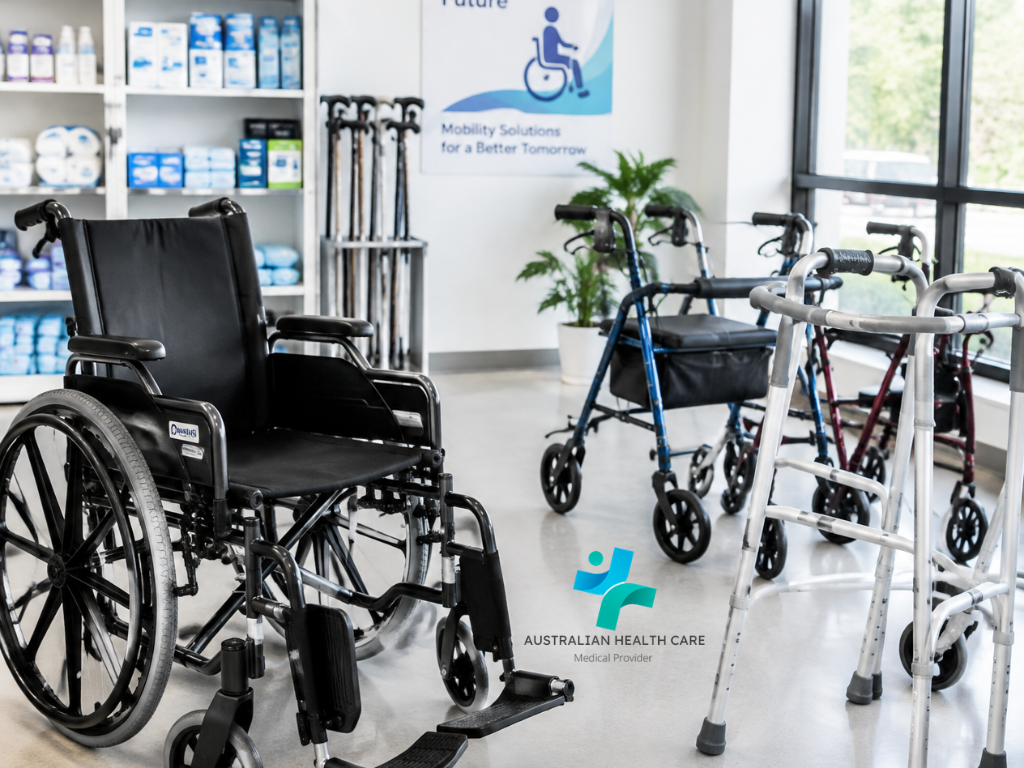
Stability and ease of movement are important considerations when selecting australian medical supplies for mobility assistance.
The most suitable walking aid is not always the product with the most wheels or accessories. Its design must match the person’s physical abilities and the environments in which it will be used.
How Walking Aid Designs Affect Balance and Support
Walking sticks provide support through one hand and may assist people who need a relatively small amount of additional stability.
A walking frame offers a wider support structure, which can be useful for someone requiring more assistance while standing or walking.
However, fixed frames need to be lifted or advanced in a controlled manner. This may be difficult for users with reduced arm strength, coordination difficulties or certain mobility limitations.
Wheeled walkers allow smoother forward movement but require the user to control the equipment as it moves. A rollator can be convenient for longer distances, but it may move unexpectedly if the brakes are not used correctly.
For indoor use, factors such as narrow hallways, furniture placement and door widths are important. Outdoors, walking surfaces, slopes, kerbs and uneven pathways can affect the suitability of particular equipment.
Neither a standard walking frame nor a rollator is automatically the safest option for every person. Individual balance, strength, walking technique and professional assessment should guide the decision.
Comparing Wheels, Brakes, Seats and Adjustable Features
Different walking aids include features that influence daily comfort and usability.
Wheels can reduce the effort required to move equipment forward. Smaller wheels may work well on smooth indoor surfaces, while some larger-wheeled designs may be easier to manoeuvre on certain outdoor pathways.
However, wheel size alone does not determine whether a product is suitable for outdoor use. The manufacturer’s specifications, surface conditions and the user’s ability to control the equipment remain important.
Braking systems are especially relevant when comparing rollator walkers. Some models include hand brakes that can be locked when the walker is stationary.
A rollator with a seat can provide a convenient place to rest if the model is designed for seated use. Before sitting, the user should follow the manufacturer’s instructions, including applying the parking brakes and positioning the walker on a suitable surface.
Seats on standard rollators are not intended for transporting a seated person unless the equipment is specifically designed and approved for that purpose.
Adjustable handles, folding frames, padded seats and storage baskets may improve convenience, but these features should not take priority over stability and correct fit.
Choosing a Walking Aid for Individual Mobility Needs
Finding suitable australian medical supplies involves more than selecting a walking aid from a product catalogue. The equipment needs to work with the person’s mobility level, living environment and everyday routine.
A walking aid that performs well in a shop or showroom may feel different when used around furniture, through doorways or on outdoor pathways.
Selecting Australian Medical Supplies for Home Mobility
Before purchasing a walking aid, consider where it will be used most often.
Someone living in a home with narrow hallways may need a compact walking frame that can move comfortably between rooms. A person who regularly visits shopping centres or community facilities may need equipment that is convenient to transport and manoeuvre, provided their balance and strength make it suitable.
Flooring can also influence equipment selection. Tiles, carpet, rugs and uneven outdoor surfaces can affect how a walking aid moves and how much effort is needed to control it.
Check the overall width of the equipment against doorways and passageways. For folding models, review the folded dimensions and weight to determine whether the user or carer can lift and store the product safely.
It is also important to consider whether the walking aid will be used near stairs or steps. Standard walkers and rollators should not be assumed suitable for use on stairs, and people who need to manage steps should seek appropriate professional instruction.
Matching Walking Aids to Strength, Balance and Lifestyle
An individual’s strength, balance and coordination influence the type of mobility aid that may be appropriate.
For example, someone with reduced grip strength may find certain braking systems difficult to operate. A person who tires easily may benefit from features that support rest breaks, but only if the equipment is suitable for their walking ability.
Handle height also matters. Equipment that is too high or too low can encourage awkward posture and make the walking aid harder to control.
A qualified healthcare professional can help determine the correct height and demonstrate appropriate walking technique.
Lifestyle requirements should also be considered. Someone who travels frequently may prefer equipment that folds for transport, while another person may prioritise stability and ease of use inside the home.
The goal is to find equipment that supports regular activities without introducing unnecessary physical demands or safety risks.
Safety and Maintenance Tips for Walking Equipment
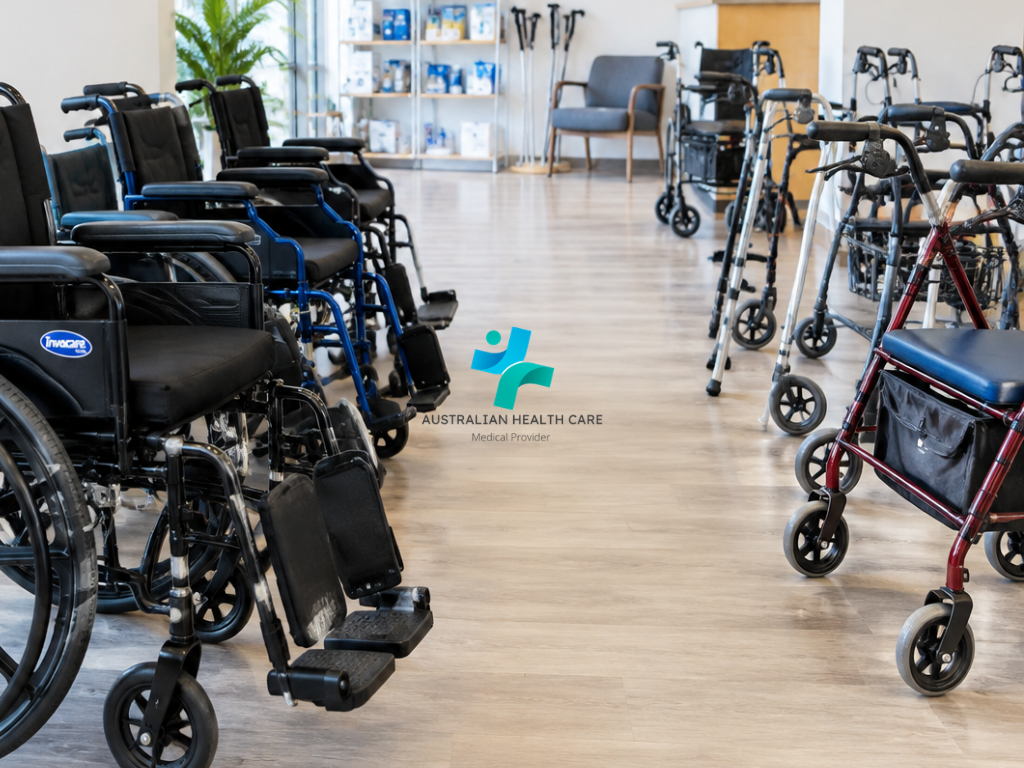
Safety should be a priority when purchasing australian medical supplies, particularly when selecting walking equipment that will be used regularly.
A walking aid needs to be suitable for the user’s physical abilities, correctly adjusted and maintained according to the manufacturer’s instructions. Even equipment that appears sturdy can become unsafe when components are worn or the product is used incorrectly.
Checking Weight Capacity, Height and Product Specifications
Before purchasing a walking aid, review the manufacturer’s specifications to confirm its dimensions, maximum user weight and intended use.
Weight capacity is particularly important for walking frames and rollators. Using equipment beyond its specified limit can compromise stability and increase the risk of damage or injury.
Handle height should also be appropriate for the user’s body proportions. Incorrect adjustment may encourage poor posture or make the equipment difficult to control. A physiotherapist can help establish suitable handle positioning and demonstrate safe walking techniques.
For wheeled walkers, check the braking system and whether the user can operate it comfortably. Some rollators have separate braking and parking functions that should be understood before the equipment is used.
It is also worth checking the product’s overall width, weight and folding mechanism. These features can determine whether the equipment is manageable at home, in a vehicle or during community activities.
When comparing health care supplies, clear technical information is more useful than general marketing descriptions.
Keeping Walking Aids Safe Through Regular Maintenance
Walking aids should be inspected regularly, particularly when they are used daily.
For walking sticks and fixed walking frames, check rubber tips for wear, cracking or loose attachment. Worn tips can reduce grip and should be replaced with compatible parts.
For rollator walkers, inspect wheels for damage or obstruction and test the brakes according to the manufacturer’s instructions. Loose fasteners, damaged handles and unreliable folding mechanisms should also be addressed.
Keep the equipment clean and follow the recommended maintenance procedures. Avoid making modifications that are not approved by the manufacturer.
A four-wheel rollator should never be used as a wheelchair unless its manufacturer specifically identifies it as suitable for transporting a seated person. Storage baskets should also not be overloaded, as excessive weight may affect stability.
If equipment becomes damaged or unsafe to operate, stop using it until it has been appropriately checked, repaired or replaced.
Where to Buy Reliable Walking Aids in Australia
Finding a suitable supplier is another important step when comparing australian medical supplies. Customers need enough product information to make purchasing decisions based on individual requirements rather than price alone.
Walking aids are available from specialist retailers, pharmacies, medical equipment suppliers and online stores. The best purchasing option depends on the complexity of the equipment and whether professional fitting or a product trial is required.
Comparing Online Medical Supply Stores and Local Retailers
An online medical supply store can make it easier to browse walking aids, compare specifications and review available designs from home.
This may be convenient for people who have difficulty travelling between stores or for family members purchasing home health supplies on behalf of someone else.
Online product listings should clearly explain the dimensions, weight capacity, adjustment range, included accessories and intended use of the equipment.
However, online shopping has limitations. Customers may not be able to test the walking aid before purchasing, which can make it difficult to assess comfort, grip suitability and ease of movement.
Physical retailers may offer opportunities to inspect equipment or arrange a trial, depending on their services. This can be particularly valuable when comparing walking frames and rollators with different features.
For customers in Sydney, Western Sydney and other parts of Australia, delivery charges and arrangements for larger medical equipment should also be considered.
Regardless of where the product is purchased, specialist assessment may still be necessary to establish whether it is appropriate for the person who will use it.
Understanding Prices, Warranties and Healthcare Equipment Quality
When comparing australian health supplies, price should be considered alongside product quality, safety features, warranty information and ongoing maintenance needs.
Walking aids can differ considerably in their materials, construction, weight and included features. For example, some rollators have steel frames, while others use aluminium designs intended to reduce overall weight.
A folding frame may be useful for transport, while adjustable handles or forearm supports may address particular requirements. These features should be assessed against the user’s needs rather than treated as automatic indicators of better quality.
Australian Health Care provides an online range of mobility products for customers researching walking aids and related healthcare equipment.
Its available products include the Classic Rollator Mobility Walker, which features a seat, hand brakes, a folding design and storage space. Other options include the EQUIPMED Foldable Aluminium Walking Frame Rollator, which has adjustable handle height, a folding frame and a seat.
These examples illustrate why reviewing individual product specifications matters. Differences in frame dimensions, weight capacities and adjustment ranges can affect whether a walking aid is suitable.
Before ordering, check the current product details, applicable warranty conditions, delivery charges and returns policies.
For organisations purchasing multiple products, wholesale healthcare supplies may be relevant to procurement planning. However, walking aids should still be selected according to each user’s needs, even when equipment is purchased in larger quantities.
Making the Right Walking Aid Purchase Decision
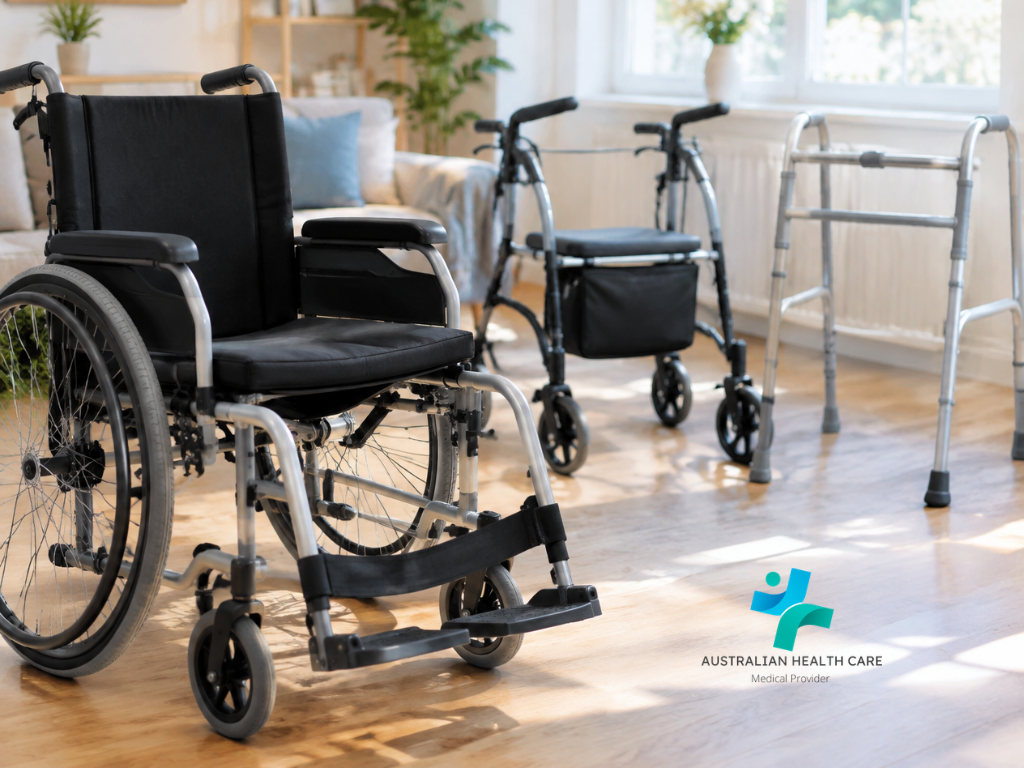
Choosing between walking sticks, frames and rollators becomes easier when the differences in support, comfort and practical use are understood.
Australian medical supplies include options for many mobility requirements, but there is no single walking aid that suits everyone.
A walking stick may be appropriate for someone needing limited additional support, while a fixed walking frame may provide greater assistance for certain balance and mobility difficulties. Wheeled walkers and rollators can offer convenience for suitable users who can control the equipment safely.
The final decision should reflect individual needs rather than product popularity or the number of included features.
When to Seek Professional Advice Before Buying Medical Equipment
Professional advice is especially important when mobility difficulties affect balance, posture, weight-bearing ability or everyday safety.
A physiotherapist can assess walking patterns, strength and balance before recommending an appropriate mobility aid. An occupational therapist may also consider how the equipment will function within the home and during daily activities.
Assessment is particularly valuable for people who have experienced recent falls, are recovering from surgery, have changing mobility needs or are uncertain about the level of support required.
A healthcare professional may recommend trying different walking aids before purchasing and can explain correct height adjustment, walking technique and safe use.
This guidance helps ensure that medical equipment is appropriate for the person rather than simply being suitable for a particular age group or general condition.
Finding Australian Medical Supplies for Long-Term Mobility
When purchasing walking equipment, consider both immediate requirements and how mobility needs may change over time.
A product used during short-term recovery may have different requirements from equipment needed for regular community activities or long-term mobility support.
Think about where the walking aid will be used, whether it needs to be transported, how easily it can be maintained and whether the user can operate its features independently.
For customers researching australian medical supplies, Australian Health Care offers an online starting point for comparing selected walking aids and related home healthcare products.
Visit Australian Health Care to explore available mobility equipment, review product specifications and compare options against your requirements.
Choosing the right walking aid involves understanding the equipment, considering individual needs and seeking professional guidance where appropriate. With careful selection and ongoing maintenance, suitable walking equipment can support safer movement, everyday comfort and greater independence.
