

Food safety in a busy commercial kitchen depends on more than careful preparation. Ingredients must also be stored under suitable conditions from delivery until they are ready to use. Choosing appropriate commercial refrigeration equipment is an important part of maintaining safe food temperatures and managing everyday kitchen operations.
For restaurants, cafés, catering businesses and food retailers, refrigeration failures can create problems beyond inconvenient equipment downtime. They may affect food suitability, interrupt preparation and require businesses to discard unsafe products.
Effective refrigeration management combines the right equipment with regular temperature checks, organised storage, cleaning and clear procedures for handling problems.
Understanding these responsibilities helps Australian food business operators make informed decisions about refrigerated storage and equipment maintenance.
What Makes Reliable Refrigeration Essential for Food Businesses?
Understanding How Commercial Refrigeration Equipment Protects Food
Certain foods need controlled temperatures to limit the growth of harmful microorganisms.
These potentially hazardous foods can include raw meat, seafood, dairy products, cooked rice and prepared meals containing ingredients that require refrigeration.
Commercial refrigeration helps maintain suitable storage conditions throughout normal kitchen operations.
However, different types of equipment serve different purposes.
An underbench refrigerator may suit ingredients used frequently during meal preparation, while an upright commercial fridge can provide additional storage for packaged and prepared products.
Freezers and cool rooms may be appropriate for businesses storing greater quantities or different categories of food.
The key is matching refrigeration capacity and temperature performance to the products being stored.
Equipment should also allow food to be arranged safely without restricting essential airflow.
Food Storage Temperatures Under Australian Standards
Australian food safety requirements generally specify that potentially hazardous foods must be kept at 5°C or colder, or 60°C or hotter.
Temperatures between 5°C and 60°C are commonly known as the temperature danger zone.
Food spending too much time within this range may become unsafe because microorganisms can multiply.
Businesses may use alternative controls where they can demonstrate that those controls keep the food safe.
Frozen products must remain frozen during frozen storage. A temperature of -18°C or colder is commonly used as a freezer operating target, although exact requirements depend on the food and applicable instructions.
Suitable commercial refrigeration equipment helps maintain required storage conditions, but staff must still verify food temperatures and follow appropriate handling procedures.
How Can Businesses Confirm Food Is Being Stored Safely?
Why Cabinet Displays Cannot Replace Food Thermometers
A refrigerator’s digital display can provide useful information about equipment operation.
However, the displayed reading may represent the temperature around a sensor rather than the temperature of the food itself.
Food stored near frequently opened doors or recently placed inside the cabinet may be warmer than the displayed reading suggests.
For this reason, businesses should use suitable thermometers to check food temperatures.
Australian food safety requirements specify that businesses handling potentially hazardous food must have a thermometer accurate to within 1°C.
A digital probe thermometer is commonly used, provided it is suitable for the intended measurement.
Probes must be cleaned and sanitised appropriately to avoid transferring contamination between foods.
Staff should also understand the correct measurement procedure and keep thermometers in good working condition.
Building Commercial Refrigeration Equipment Monitoring Habits
Temperature monitoring is most effective when it becomes part of normal workplace procedures.
A business may establish checks at the beginning of food preparation, during operating periods and when receiving refrigerated deliveries.
The appropriate frequency depends on the food handled, operational risks and applicable food safety requirements.
Staff should know how to recognise unusual readings and what actions are required when food temperatures fall outside acceptable limits.
Recording significant temperature changes can also provide useful information when equipment performance is investigated.
For businesses subject to Standard 3.2.2A, additional food safety management and evidence requirements may apply.
Regular monitoring helps businesses identify potential problems rather than relying entirely on the assumption that refrigeration equipment is working correctly.
What Storage Practices Help Prevent Food Contamination?
Keeping Raw Ingredients and Ready-to-Eat Food Separate
Safe refrigerated storage requires careful organisation.
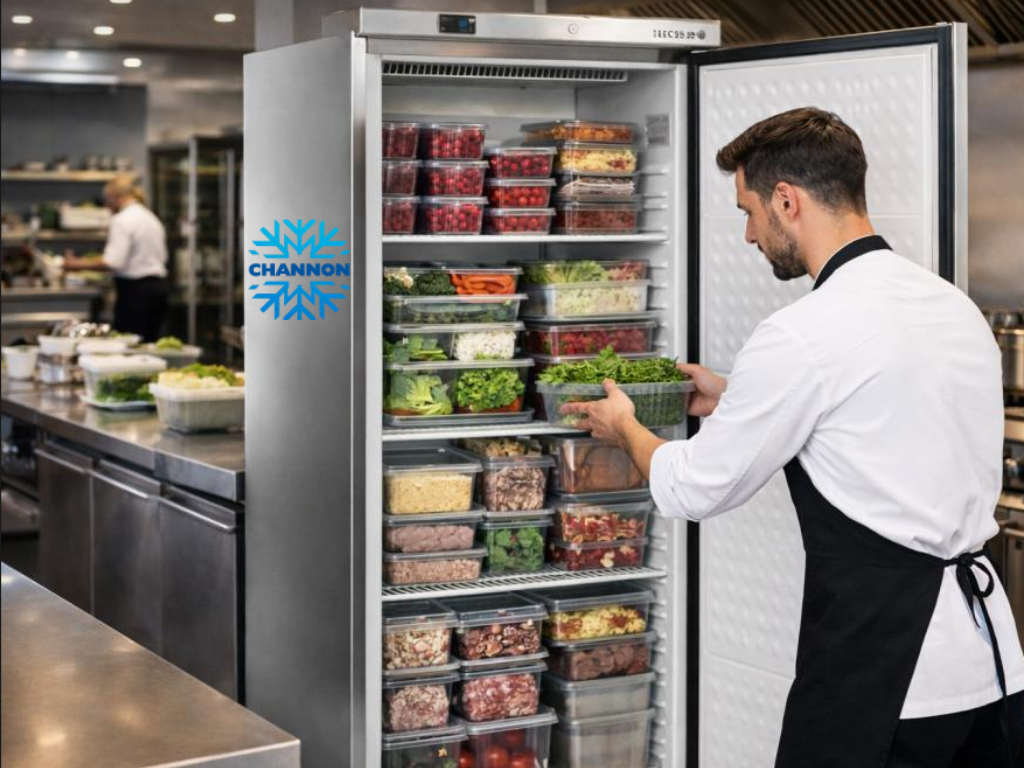
Raw meat, poultry and seafood should be kept separate from prepared foods to prevent contamination.
Where appropriate, raw products should be stored on lower shelves in sealed, leakproof containers so liquids cannot drip onto ready-to-eat ingredients.
Prepared meals, vegetables and other ready-to-eat products should remain protected in suitable food-grade containers.
Labels and date information can help staff identify ingredients and manage stock.
Stock rotation is also useful, particularly when businesses receive regular deliveries.
Using older products first can support inventory management, provided staff continue to follow use-by dates and relevant food safety instructions.
Adequate space inside commercial refrigeration equipment makes these storage practices easier to maintain during busy periods.
Checking refrigerator seals and maintaining appropriate storage conditions can support reliable cooling performance.
Avoiding Overcrowding and Incorrect Food Cooling
Commercial refrigerators need sufficient airflow to maintain appropriate internal temperatures.
Packing shelves too tightly or blocking ventilation openings can interfere with cooling.
Kitchen staff should follow the manufacturer’s loading instructions and avoid unnecessary door openings.
Food cooling procedures also require attention.
Freshly cooked potentially hazardous food generally needs to cool from 60°C to 21°C within two hours, then from 21°C to 5°C within a further four hours.
Large quantities of hot food may need to be divided into smaller portions, placed in shallow containers or cooled using suitable specialist equipment.
Placing large containers of hot food directly into an ordinary storage refrigerator may affect surrounding food temperatures and may not achieve the required cooling rate.
Businesses should establish suitable cooling procedures rather than assuming refrigeration alone will make newly cooked food safe.
How Can Refrigeration Maintenance Support Safe Operations?
Maintaining Door Seals, Shelves and Ventilation Areas
Commercial refrigeration equipment requires routine attention to remain hygienic and operate as intended.
Food contact surfaces, shelves and storage compartments should be cleaned using suitable procedures.
Door seals should be checked for damage, gaps and deterioration.
A poorly fitting seal may allow warm air to enter the cabinet and increase the demand on the cooling system.
Ventilation areas should also remain unobstructed.
Depending on the equipment design, technical maintenance may involve inspecting condenser components, drainage arrangements or other refrigeration system parts.
These activities should follow the manufacturer’s guidance.
Electrical work and refrigerant system servicing must be carried out by appropriately qualified and authorised professionals.
Good maintenance practices support equipment reliability, but no inspection schedule can guarantee that a refrigerator will never fail.
Identifying Signs of Reduced Cooling Performance
Refrigeration problems may develop gradually.
Unusual temperature readings, excessive ice, repeated alarms and inconsistent cooling should prompt further investigation.
Other warning signs include damaged door seals, abnormal noises and equipment that struggles to maintain suitable storage conditions.
These symptoms do not always indicate the same underlying fault.
Staff should report the issue, check affected food temperatures and follow the business’s food safety procedures.
Where technical faults are suspected, a suitably qualified refrigeration technician can inspect the equipment.
Keeping maintenance records helps businesses understand recurring problems and decide whether further repairs or replacement should be considered.
What Happens When a Commercial Refrigerator Stops Cooling?
Taking Appropriate Action During a Refrigeration Failure
A refrigeration breakdown can create immediate concerns for businesses holding potentially hazardous food.
The first step is to determine the condition of the affected stock.
Staff should measure relevant food temperatures and establish how long the products may have been outside appropriate temperature control.
Where safe and practical, food that remains suitable can be transferred to functioning refrigeration.
However, returning food to a cold environment does not reverse unsafe temperature exposure.
Decisions about whether food can be used depend on its temperature history, type and applicable food safety procedures.
Food cannot be considered safe simply because it appears normal.
If safe handling cannot be established, affected food should not be supplied to customers.
The refrigeration fault should also be investigated before the equipment is returned to normal operation.
Comparing commercial refrigeration products can help businesses select equipment suited to their storage requirements.
Applying the Australian 2-Hour/4-Hour Rule
The 2-hour/4-hour rule helps businesses manage potentially hazardous food that has spent time between 5°C and 60°C.
If the cumulative time is less than two hours, the food may be used, sold or returned to suitable refrigeration.
Once the total reaches two hours but remains within four hours, the food may be used or sold immediately but must not be returned to refrigeration for later use.
When the total exceeds four hours, the food must be discarded.
Time spent within the temperature danger zone is cumulative. Previous exposure during preparation, transport or display must be considered.
If the business cannot establish the food’s temperature history, it should not assume the food is safe.
This rule is different from the required cooling process for freshly cooked potentially hazardous food.
Staff should understand which procedure applies to the situation rather than using the 2-hour/4-hour rule for every refrigeration problem.
Which Refrigeration Products Are Suitable for Your Business?
Comparing Storage Capacity and Refrigeration Features
Selecting commercial refrigeration equipment begins with understanding the food being stored and how the kitchen operates.
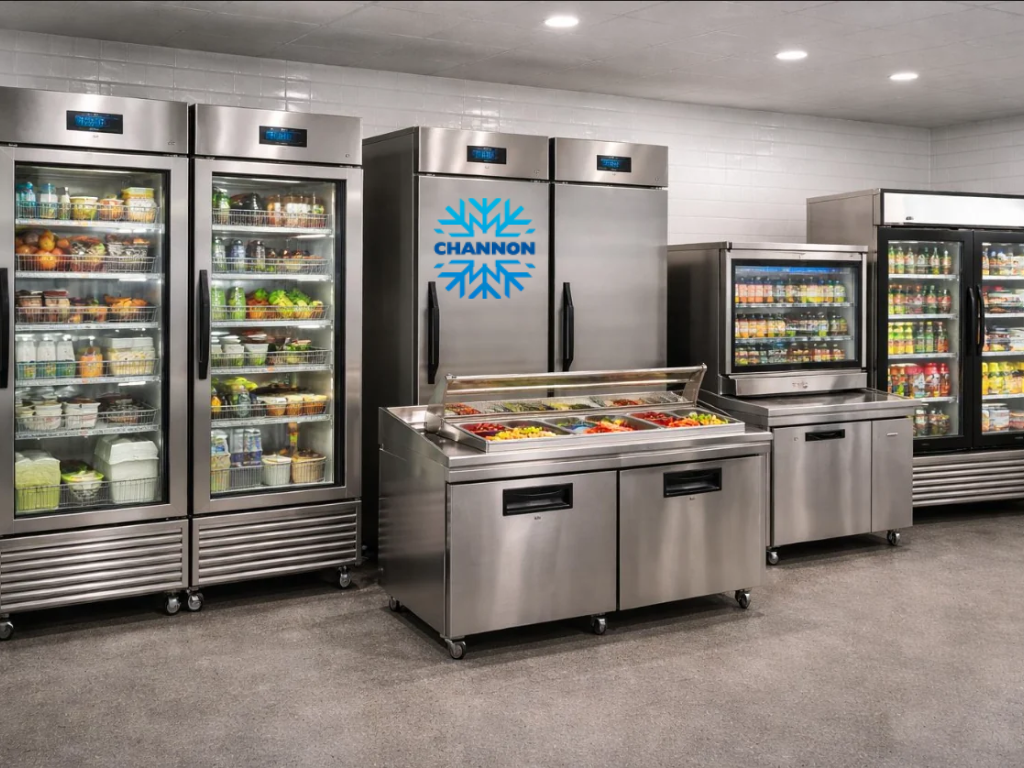
Upright commercial refrigerators offer vertical storage, while underbench models can provide convenient access to ingredients near preparation areas.
Refrigerated preparation benches combine working surfaces with chilled storage.
Commercial freezers suit products requiring frozen storage, and refrigerated display cabinets may be appropriate for certain retail operations.
Businesses handling larger stock quantities may consider commercial modular cool rooms as part of a broader kitchen storage arrangement.
When comparing equipment, review usable capacity, operating temperature range, ventilation requirements, energy consumption and available installation space.
Channon supplies commercial refrigeration products for different hospitality requirements.
Product specifications should be checked carefully to ensure the selected equipment suits the intended application.
Reviewing Purchasing, Rental and Finance Arrangements
Businesses comparing commercial refrigeration equipment for sale should examine total operating costs rather than focusing only on the initial price.
Equipment dimensions, temperature performance, warranty conditions, delivery arrangements and servicing requirements may influence the decision.
For operators exploring commercial refrigeration sales sydney, access to suitable products and supplier information can also be important.
Purchasing equipment outright is one option.
Some businesses may instead consider a commercial fridge lease or a commercial fridge on rent, depending on available arrangements.
Before agreeing to finance or rental terms, confirm the total cost, contract duration, equipment ownership and responsibilities for repairs and servicing.
Channon provides information about refrigeration products and available rental or finance arrangements.
The right purchasing approach should support the business’s practical needs and budget without compromising suitable food storage requirements.
How Can Food Businesses Improve Refrigeration Safety Over Time?
Establishing Consistent Kitchen Monitoring Procedures
A food safety routine should be simple enough for staff to follow consistently.
Temperature checks, safe food organisation and appropriate cleaning should form part of everyday kitchen operations.
Employees should understand the required storage temperatures for the foods they handle and know when to use a probe thermometer.
Door seals, ventilation openings and visible equipment condition should also be checked according to workplace procedures.
Stock should be labelled and rotated appropriately, with particular attention to use-by dates.
When problems occur, staff should record relevant details and take corrective action.
The business should also review whether its monitoring and documentation meet applicable food safety obligations.
Commercial refrigeration equipment supports safe storage only when it is used alongside suitable food handling practices.
Checking actual food temperatures is an important part of effective refrigerated food storage.
Reviewing Equipment as Kitchen Requirements Change
Food businesses may need to reassess refrigeration arrangements when menus, customer demand or food preparation activities change.
An expanding café might require additional chilled ingredient storage.
A catering business may need greater freezer capacity or a more suitable method for cooling prepared food.
Before purchasing additional equipment, review existing storage space, food quantities, available power and ventilation requirements.
Maintenance records can help identify recurring faults that may justify professional assessment.
Businesses should compare repair and replacement options based on equipment condition and operating needs.
For Australian hospitality operators reviewing their refrigeration arrangements, Channon can provide information about available commercial refrigeration products and purchasing options.
Reliable food storage depends on appropriate equipment, regular monitoring and consistent staff practices.
By understanding temperature requirements, maintaining suitable storage conditions and responding promptly to problems, food businesses can better manage refrigeration-related food safety risks.
