

Business equipment rental allows Australian businesses to access machinery, tools and other equipment without purchasing them outright. However, when equipment is needed regularly, business owners may wonder whether short-term hire or a longer-term lease offers better value.
Both arrangements can help businesses access equipment while managing upfront expenditure, but they work differently.
Short-term hire generally suits temporary projects or occasional equipment requirements. Leasing may be more appropriate when a business needs consistent access to particular machinery over an extended period.
For example, a landscaping contractor might hire an excavator for a specific project but consider leasing equipment that is used throughout the year.
The decision depends on how often the machinery is required, the total cost, business cash flow and the conditions of the agreement.
Understanding these differences can help business owners make practical decisions without committing to equipment they may not need.
Understanding Business Equipment Rental and Leasing
Equipment hire usually involves paying to use machinery for an agreed period.
The hire period might cover a day, a weekend, a week or longer, depending on the supplier’s terms.
Once the work is complete, the equipment is returned according to the hire agreement.
Leasing typically involves a longer contractual arrangement, often with regular payments.
The leasing company generally retains ownership of the equipment, although some arrangements may include different purchase or end-of-term options.
It is important to understand that hiring and leasing terminology can overlap.
Some suppliers offer long-term rental arrangements, while finance providers may offer several types of equipment leasing.
The name of the arrangement does not necessarily explain every contractual obligation.
For this reason, businesses should compare the actual terms rather than assume all rental or lease agreements work the same way.
How to Decide Which Arrangement Suits Your Business
Start by considering how frequently your business needs the equipment.
If machinery is required only for occasional projects, short-term business equipment rental may provide suitable flexibility.
For example, a contractor completing a one-off excavation project may have little reason to maintain a dedicated excavator throughout the year.
However, a business using the same type of equipment across multiple projects may benefit from predictable access.
Leasing could be worth considering where workloads are consistent and the longer commitment is justified.
The decision should also account for the equipment’s suitability.
A machine that works well on one project may not meet the requirements of another.
Businesses with changing work demands may benefit from accessing different types of machinery through short-term hire.
Before choosing, consider expected equipment use, available cash flow, storage requirements and contractual responsibilities.
The most suitable arrangement is the one that matches how your business actually operates.
When Short-Term Equipment Hire Makes More Sense
Short-term business equipment rental can be useful when machinery is needed for a defined project rather than ongoing operations.
This is particularly relevant to builders, tradespeople, landscapers and property maintenance businesses that handle different types of work.
Instead of purchasing every piece of equipment, a business can arrange access to suitable machinery when required.
However, hire availability and conditions should always be confirmed before scheduling work.
Hiring Machinery for Individual Jobs and Temporary Work
Business equipment hire can suit projects with clear start and finish dates.
For example, a landscaping contractor may need an excavator for site preparation but not for routine garden maintenance.
Hiring the machine for the relevant project may be more practical than purchasing it.
A building contractor might also require specific tools or machinery for a temporary stage of construction.
Once that stage is complete, the equipment can be returned under the agreed conditions.
This approach can help businesses avoid keeping machinery that is only used occasionally.
However, the hire period must be planned carefully.
Delays caused by weather, site conditions or changes to the project schedule may affect return dates.
Businesses should confirm how extensions work and whether additional charges apply.
Short-term hiring is most useful when the equipment and booking period are matched to the actual work.
Using Equipment Rental for Changing Project Demands
Not every business performs the same type of work throughout the year.
A contractor may require earthmoving machinery for one project and smaller maintenance equipment for another.
Business equipment rentals can provide access to different categories of equipment, depending on the supplier’s range.
For example, a property maintenance business may need a lawn mower for regular grounds work but require additional equipment for occasional landscaping tasks.
Rather than maintaining equipment for every possible job, the business can compare rental options when specific needs arise.
Equipment rental may also help businesses respond to temporary increases in workload.
However, availability is not guaranteed.
Popular machinery may need to be booked ahead, particularly when project schedules are fixed.
Before arranging hire, confirm the required equipment specifications, operating conditions and intended duration.
A flexible rental arrangement is only valuable when the machinery is suitable and available when needed.
When Leasing May Be Better for Ongoing Operations

Business equipment rental is not always the most practical option for machinery used continuously.
If a business regularly depends on the same equipment, a longer-term lease may be worth comparing.
Leasing can provide predictable access to machinery through agreed payments, but it also creates contractual commitments.
The benefits depend on how the equipment is used and the lease conditions.
Choosing Longer-Term Access to Business Machinery
Businesses with consistent equipment requirements may prefer longer-term arrangements.
For example, a landscaping company that regularly uses the same type of machinery may want dependable access rather than arranging separate bookings for every job.
A longer-term lease could provide continuity where the equipment remains suitable for ongoing operations.
However, leasing should not be confused with purchasing.
The leasing company generally owns the equipment during the agreement.
Depending on the arrangement, the business may need to return it, renew the agreement or consider another end-of-term option.
Some businesses may also consider buying machinery when usage is frequent enough.
Ownership can provide more control, but it introduces purchasing, maintenance, storage and eventual replacement responsibilities.
The right decision depends on the equipment’s expected use and the business’s financial circumstances.
Understanding Lease Payments and Contract Commitments
Leasing arrangements generally involve regular payments over an agreed term.
This can make equipment expenditure easier to plan.
However, the total amount paid over the lease period may exceed the upfront purchase price.
Businesses should also understand what happens if they no longer need the machinery.
For example, a contractor might sign a longer lease based on an expected workload.
If those projects are delayed or cancelled, the payment obligations may continue.
Early termination fees or other contractual conditions may apply.
Maintenance arrangements also vary.
Some leases include certain servicing responsibilities, while others place additional obligations on the customer.
Before signing, review the payment schedule, maintenance provisions, permitted equipment use and end-of-term requirements.
The Australian Government’s guidance on leasing or buying equipment provides a useful starting point for comparing longer-term commitments.
Business owners should also seek appropriate financial or legal advice when reviewing significant agreements.
Comparing the Total Cost of Hiring and Leasing
The most affordable option is not always the one with the lowest advertised payment.
When comparing business equipment rental and leasing, businesses should calculate the expected total cost over the period they will need the machinery.
Short-term hire and leasing can involve different fees, responsibilities and financial commitments.
A meaningful comparison should account for those differences.
Looking Beyond the Advertised Rental Rate
An equipment hire quotation may include a daily or weekly rate.
However, other costs may apply depending on the supplier and agreement.
Delivery, collection, fuel, cleaning and damage responsibilities can affect the final amount.
A longer hire period may also involve additional charges if the equipment is returned late.
Businesses should review these details before confirming a booking.
Leasing requires a similar level of attention.
Regular payments may appear manageable, but the total cost depends on the lease term, fees and other contractual conditions.
Some arrangements may also include particular maintenance or insurance requirements.
When comparing equipment rent costs, the useful question is not simply how much the machinery costs per day or month.
It is how much the business will pay during the period the equipment is needed.
The comparison should also consider whether the machinery will remain suitable throughout that period.
How Cash Flow and Equipment Use Affect Your Decision
Cash flow is particularly important for small businesses managing changing workloads.
Short-term hire may help avoid a large upfront purchase when machinery is required for a particular job.
However, repeated hiring can become costly if the same equipment is needed frequently.
Leasing spreads payments over a longer period, which may support budgeting.
However, those payments can continue even during quieter periods, depending on the contract.
Consider a contractor working on several projects across Macarthur.
If each project requires different machinery, short-term hire may provide useful flexibility.
If the business needs the same machine regularly, leasing or buying may deserve further consideration.
The comparison should reflect realistic equipment usage rather than assumptions about future work.
Businesses should also avoid treating possible tax deductions as guaranteed savings.
The tax treatment of hire, leasing and ownership depends on the arrangement and the business’s circumstances.
A registered tax professional can help explain the relevant implications before a financial commitment is made.
Choosing Equipment That Matches Your Workload
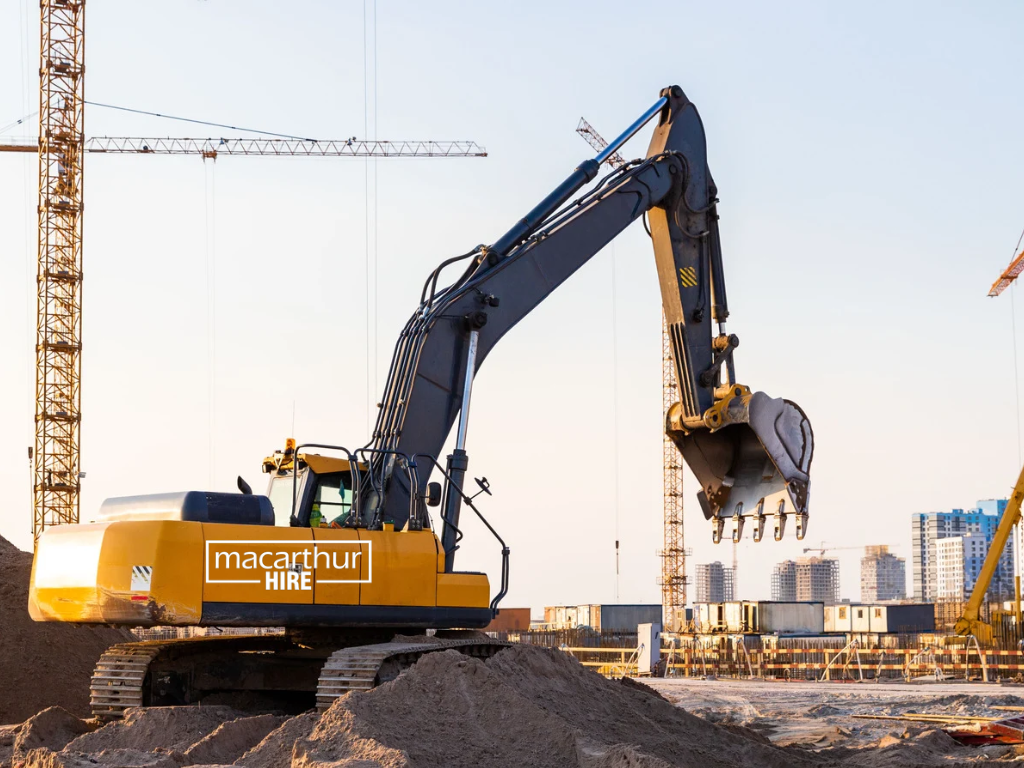
Whether you hire or lease machinery, equipment suitability remains essential.
Business equipment rental should support the work your business performs rather than create unnecessary operating difficulties.
A machine that is poorly matched to the task can affect efficiency, site access and safety.
The same principle applies to equipment used under longer-term arrangements.
Selecting the Right Machinery for Different Projects
Construction and maintenance businesses often require different equipment for different jobs.
An excavator may be suitable for earthmoving work, while a lawn mower serves a different purpose.
The correct choice depends on the intended task.
For excavation, consider digging requirements, operating dimensions and site conditions.
For mowing equipment, the size of the area, terrain and available access may be more relevant.
Businesses should also consider whether a particular machine will be needed repeatedly.
If the same equipment suits most projects, longer-term access may be practical.
However, if machinery requirements change regularly, hiring different equipment for individual jobs may provide more flexibility.
This is particularly relevant for contractors working across residential and commercial sites.
A machine that fits one location may not be suitable for another.
Before committing to a lease, assess whether the equipment will continue meeting your expected needs.
What to Check When Comparing Equipment for Rent
Customers researching equipment for rent should compare the actual specifications rather than relying only on price or equipment category.
For example, two excavators may have different operating widths, digging capabilities and attachment options.
The same applies to other machinery.
A customer should confirm whether the equipment is suitable for the worksite and intended use.
Site access is especially important.
A machine may be capable of performing the task but unable to reach the working area.
Operating requirements also need consideration.
Some machinery requires specific operator competency, training or licensing depending on the activity.
Businesses should confirm these requirements before arranging equipment.
When evaluating rental providers, ask for clear equipment information and confirm the available attachments.
It is also useful to understand who is responsible for delivery, setup and returning the machinery.
These details help ensure that equipment decisions are based on practical project needs.
Understanding Contracts, Maintenance and Responsibilities
Business equipment rental and leasing both involve agreements that define how machinery can be used.
However, their conditions may differ considerably.
Before deciding to rent equipment or enter a longer-term lease, businesses should understand their responsibilities.
Clear contract terms can help prevent misunderstandings about servicing, damage, breakdowns and return arrangements.
Who Handles Servicing, Repairs and Equipment Damage?
Equipment maintenance responsibilities depend on the agreement.
Some hire arrangements involve machinery supplied and maintained by the rental provider, while the customer remains responsible for using it correctly and reporting problems.
Leasing agreements may contain different provisions.
Some include servicing arrangements, while others require customers to organise or pay for particular maintenance activities.
Businesses should not assume that all repairs are covered.
Damage caused by incorrect use may be treated differently from equipment faults or ordinary wear.
Insurance and liability conditions should also be reviewed.
Before using the machinery, confirm how faults should be reported and what happens if the equipment becomes unsafe or unsuitable.
Equipment that appears unsafe should not continue operating.
The appropriate response should follow the manufacturer’s instructions, workplace safety requirements and the agreement with the supplier.
Clear responsibilities are particularly important when machinery is used by several workers or across different sites.
What Happens When a Project Finishes Early or Runs Late?
Project schedules can change.
For example, construction work may be delayed by weather, site access restrictions or unexpected ground conditions.
If the business has hired machinery, an extension may be necessary.
However, extra hire time may involve additional charges.
Customers should understand the supplier’s extension process before the original hire period ends.
Early completion can also affect costs.
Some hire providers may have specific conditions for early returns.
Businesses should confirm whether returning machinery before the agreed date changes the amount payable.
Longer-term leases may be less flexible.
If equipment is no longer required, payments or termination conditions may continue to apply.
The relevant contract determines what happens.
For this reason, businesses should compare how each agreement handles unexpected changes.
A suitable arrangement should reflect not only the expected project duration but also the financial consequences if circumstances change.
Making the Right Equipment Decision for Your Business
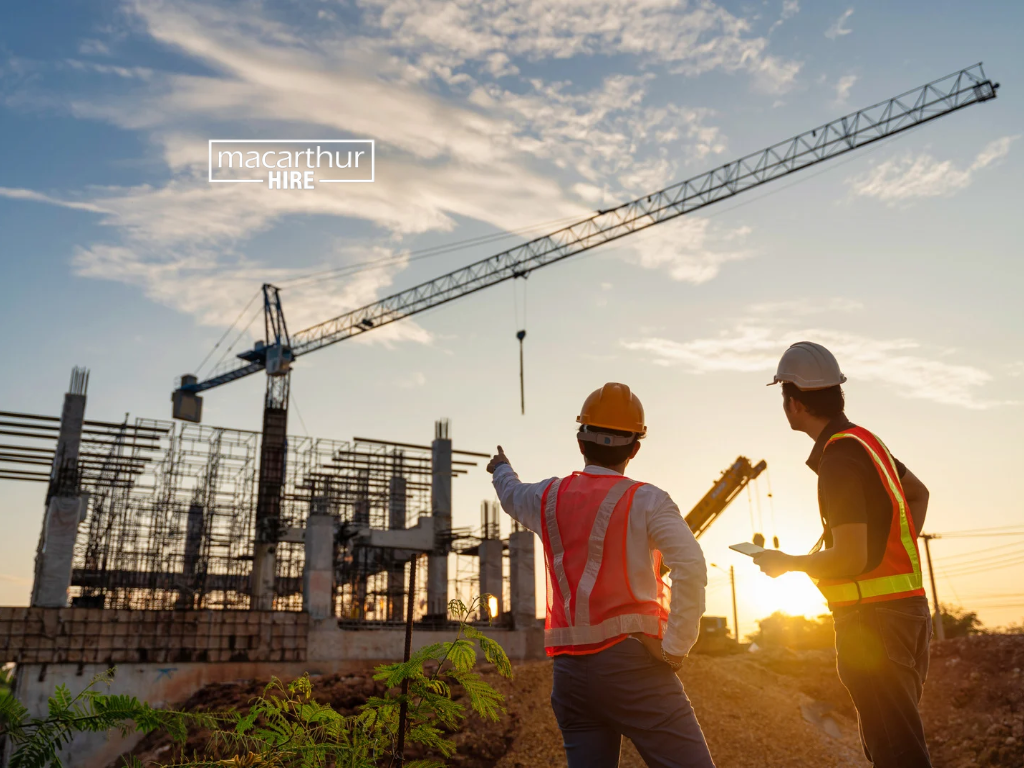
The choice between hiring and leasing depends on how your business operates.
Business equipment rental may suit occasional or project-specific needs, while leasing may be worth considering for equipment used consistently over longer periods.
Neither option is automatically better.
The most practical decision comes from comparing the equipment requirements, expected usage, total costs and agreement conditions.
Questions to Ask Before Choosing an Equipment Hire Provider
Before selecting a supplier, explain what the equipment needs to do.
For example, a construction contractor should be ready to describe the intended task, site conditions and expected hire period.
The provider may also need information about access restrictions and required attachments.
Customers should confirm the available equipment models and relevant specifications.
Hire charges and additional fees should be explained clearly.
It is also important to understand delivery arrangements, return conditions and responsibilities if equipment develops a fault.
When comparing Equipment Hire providers, consider how clearly they explain the available options.
A useful supplier conversation should help you assess whether the machinery matches your project.
If you need longer-term access, ask whether the provider offers extended hire arrangements and how those differ from financial leasing.
Do not assume that long-term rental and finance leasing are the same service.
Finding a Practical Option for Macarthur Projects
Businesses across Campbelltown, Camden, Oran Park and surrounding Macarthur areas often manage projects with different equipment needs.
For example, a landscaping contractor may require earthmoving machinery for one job and lawn maintenance equipment for another.
A building business may need specialist machinery only during certain stages of a project.
In these situations, short-term equipment hire may offer a practical alternative to purchasing equipment that is not needed continuously.
Macarthur Hire provides equipment rental options for construction, landscaping and other project requirements.
Its published range includes excavators, lawn maintenance equipment and other tools and machinery.
Customers can review the equipment rental range and check the hire information and frequently asked questions before enquiring.
For projects requiring specific equipment, it is important to confirm current availability, specifications and booking conditions directly.
Businesses considering longer-term financial leasing should compare agreements with providers offering that service rather than assume an equipment hire business provides lease financing.
Ultimately, choosing between hiring and leasing should begin with the work your business needs to complete.
If the equipment is required occasionally, short-term hire may provide useful flexibility.
If the same machinery is needed throughout the year, longer-term arrangements may deserve consideration.
Before making a decision, compare the total costs, equipment suitability, maintenance responsibilities and contractual commitments.
If your next project requires machinery or tools, contact Macarthur Hire to discuss suitable hire options and confirm the relevant conditions.
The right equipment arrangement should support your workload, suit your budget and allow you to plan your projects with greater confidence.
