

CNC sheet metal fabrication is a manufacturing process that uses computer-controlled equipment and other fabrication methods to turn flat metal sheets into finished components. It is commonly used to produce brackets, industrial cabinets, equipment enclosures, machinery guards and custom metal parts.
Depending on the design, the process may involve laser cutting, CNC punching, press-brake bending, welding and surface finishing.
However, not every component requires all these operations.
A flat mounting plate may only need cutting and finishing, while a metal enclosure may require cutting, bending and assembly. More complex products may also need welding to join separate components.
Understanding how these stages work together helps businesses prepare clearer drawings, choose appropriate manufacturing methods and communicate their requirements to fabrication providers.
How CNC Sheet Metal Fabrication Turns Drawings Into Parts
The manufacturing process normally begins with a technical drawing or computer-aided design, commonly known as CAD.
The drawing describes the intended component, including its shape, dimensions, material and any important manufacturing requirements.
Before production begins, the design must be reviewed to determine how it will be manufactured.
For example, a flat metal panel may only require the sheet to be cut into the correct profile.
A folded bracket requires additional planning because the metal must be bent after cutting.
A fabricated enclosure may need several panels to be formed and assembled.
Once the design and manufacturing requirements are confirmed, the appropriate equipment can be programmed to produce the required parts.
Computer-controlled cutting equipment follows programmed paths or tool instructions based on the approved design.
However, successful manufacturing depends on more than the accuracy of the machine.
Material selection, cutting methods, bending requirements and final assembly must all be considered.
This is why reviewing the complete manufacturing process before production can help identify design issues early.
Why Cutting, Bending and Welding Must Be Planned Together
Cutting, bending and welding are connected stages of sheet metal fabrication.
A decision made during cutting can affect what happens during bending or assembly.
For example, the position of a hole may appear correct in a flat drawing.
However, if that hole is too close to a bend, the surrounding metal may deform during forming.
Similarly, a component designed for welding must provide suitable access to the intended joint.
The assembly sequence can also influence how parts should be cut and formed.
If these requirements are considered separately, changes may be necessary after the first manufacturing stage.
Planning the entire process helps the designer and fabricator understand how the finished component should fit and function.
This approach is commonly described as design for manufacture.
It involves considering practical manufacturing limitations while developing the component.
The objective is to produce a design that performs its intended function and can be manufactured using suitable processes.
Preparing Sheet Metal for Accurate CNC Cutting
Before cutting begins, the material and design specifications must be confirmed.
In CNC sheet metal fabrication, the cutting stage establishes the basic profiles and features that later operations may depend on.
If the material grade, thickness or dimensions are incorrect, those problems can affect bending, welding and final assembly.
Clear specifications are therefore essential before the material enters production.
Choosing Materials and Checking CNC Stainless Steel Needs
Sheet metal components are commonly manufactured from materials such as mild steel, stainless steel and aluminium.
Each has different properties that can influence fabrication.
Mild steel may suit general manufacturing applications where its mechanical properties and corrosion protection meet the requirements.
Stainless steel may be selected where corrosion resistance or surface appearance is important.
Aluminium may be considered when lower weight is a priority.
However, the suitability of each material depends on its specific grade and the intended application.
Customers researching cnc stainless steel manufacturing should confirm which stainless steel grade their component requires.
Different grades can behave differently during cutting, bending and welding.
For example, a stainless steel component intended for a particular industrial environment may need more specific material properties than a decorative indoor panel.
Material thickness is another consideration.
The chosen thickness must support the finished component’s intended function while remaining compatible with the proposed manufacturing methods.
If the part requires bending or welding after cutting, these requirements should be discussed before the material is finalised.
How a CNC Cutting Machine Follows Digital Drawings
A cnc cutting machine uses programmed instructions to control the cutting process.
In sheet metal manufacturing, these instructions may guide a laser cutting head or determine the movements and tool operations of a CNC punching machine.
The process begins with digital information describing the required component.
Suitable software is then used to prepare the manufacturing instructions.
For laser cutting, the machine follows programmed cutting paths to produce the required outline, holes or other supported features.
For punching, the equipment uses appropriate tools to create specified shapes and openings.
Although these processes are computer-controlled, the quality of the result still depends on correct preparation.
An incomplete drawing may leave important requirements unclear.
Duplicate geometry or incorrect dimensions can also create manufacturing problems.
Customers should provide files in formats accepted by the supplier and clearly identify the required material, sheet thickness and quantities.
The provider should then confirm whether the design is suitable for its equipment.
Laser Cutting and CNC Punching: What Is the Difference?
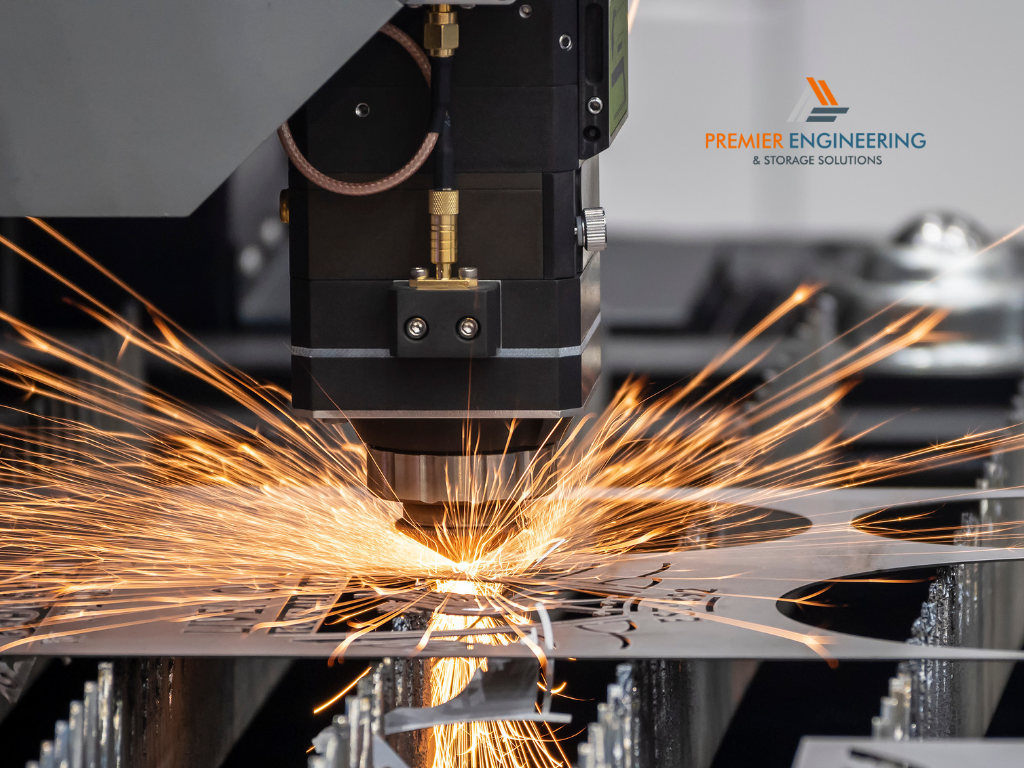
Laser cutting and CNC punching are two processes used in cnc sheet metal fabrication.
Both can create components from flat metal sheets, but they use different methods.
Laser cutting removes material along a programmed path, while punching uses mechanical tools to produce holes, openings and other supported features.
The appropriate process depends on the component’s design, material, thickness and production requirements.
When Laser Cutting Suits Detailed Metal Profiles
Laser cutting is commonly used where components have detailed outlines or complex profiles.
The laser follows a programmed cutting path to produce the specified geometry.
This can be useful for custom brackets, panels and parts with shapes that would be difficult to produce using standard punching tools.
Laser cutting also allows different profiles to be manufactured without requiring a dedicated punching tool for every shape.
However, it is not automatically the most suitable process for every component.
Material type, thickness and feature dimensions influence what can be cut.
The required edge condition and dimensional tolerances should also be considered.
Customers comparing cnc cutting services should explain whether the component needs simple openings, detailed profiles or features that will later be formed.
The supplier can then assess whether laser cutting is suitable or whether another method should be considered.
How CNC Punching Services Create Holes and Features
CNC punching uses a punch and die arrangement to create features in sheet metal.
The equipment positions the metal and uses selected tools to produce the required shapes.
A cnc punching service may be useful for components containing repeated holes, slots or other features supported by the available tooling.
Some punching equipment can also produce certain formed features, depending on the machine and tooling.
For example, an industrial enclosure may require repeated ventilation openings or fastening holes.
Metal punching services can be considered for this type of work, provided the design is compatible with the process.
However, punching has its own limitations.
Tool availability, hole dimensions, material thickness and spacing between features can affect suitability.
Laser cutting and punching may sometimes be used as alternative methods.
In other situations, a fabrication provider may combine processes to meet specific requirements.
The most practical approach is to choose the manufacturing method based on the component rather than assuming one process is always faster or cheaper.
Forming Sheet Metal With Press-Brake Bending
Once the flat metal component has been cut, the next stage may involve bending.
Press-brake bending is commonly used in cnc sheet metal fabrication to create angles, folds and shaped components from flat sheet metal.
This process is useful for producing brackets, channels, metal enclosures and other formed parts.
However, successful bending requires accurate planning because the material changes shape during forming.
How a Metal Bending Press Creates Angles and Folds
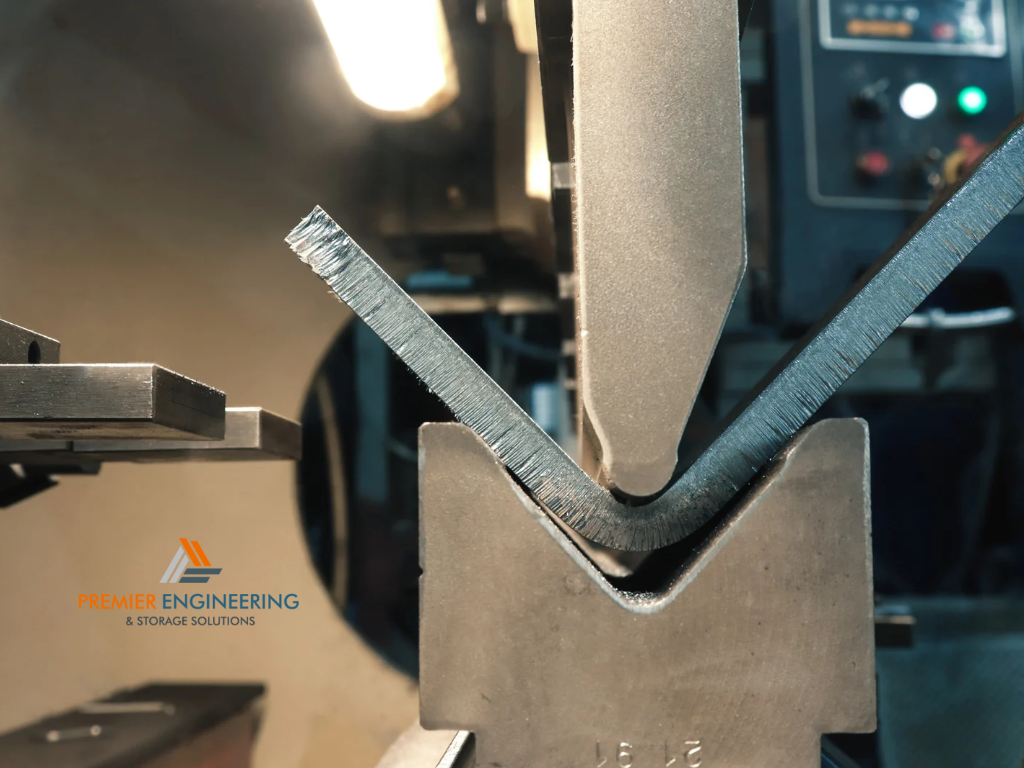
A metal bending press, commonly known as a press brake, forms sheet metal using controlled pressure and suitable tooling.
The metal is positioned between a punch and die arrangement.
The machine applies force to form the required angle or bend.
Modern CNC press brakes can use programmed settings to control aspects of the bending process.
However, the final result depends on the material, tooling and setup.
For example, mild steel and stainless steel may respond differently to bending forces.
Different sheet thicknesses may also require different tooling arrangements.
Another consideration is springback.
Springback occurs when the metal partially returns towards its original shape after the bending force is removed.
The amount of springback depends on the material and forming conditions.
Fabricators must account for this behaviour when planning the operation.
For parts requiring several bends, the order of operations also matters.
One bend may restrict access for another if the sequence has not been considered.
This is why a design should be reviewed as a formed component rather than only as a flat cutting profile.
Why Bend Radius, Hole Placement and Thickness Matter
Bend radius describes the curvature formed at a bend.
It is an important part of sheet metal design because different materials and thicknesses have different forming requirements.
A bend that is too tight for the selected material may create cracking or other defects.
Hole placement can also affect the result.
If a hole or slot is located too close to a bend, the surrounding material may stretch or distort during forming.
This can affect the hole’s shape or final position.
Flange length is another consideration.
A flange is a section of metal extending from a bend.
If it is too short for the available tooling, the part may be difficult or impractical to form as designed.
Designers also need to consider bend allowance.
Bend allowance helps account for how much material is required to create the intended finished dimensions.
These requirements depend on material properties, thickness and the particular forming process.
Customers should confirm critical bend dimensions with the fabrication provider before releasing drawings for production.
Doing so helps ensure that the cut part can be formed into the required final shape.
Welding and Assembling Fabricated Metal Parts
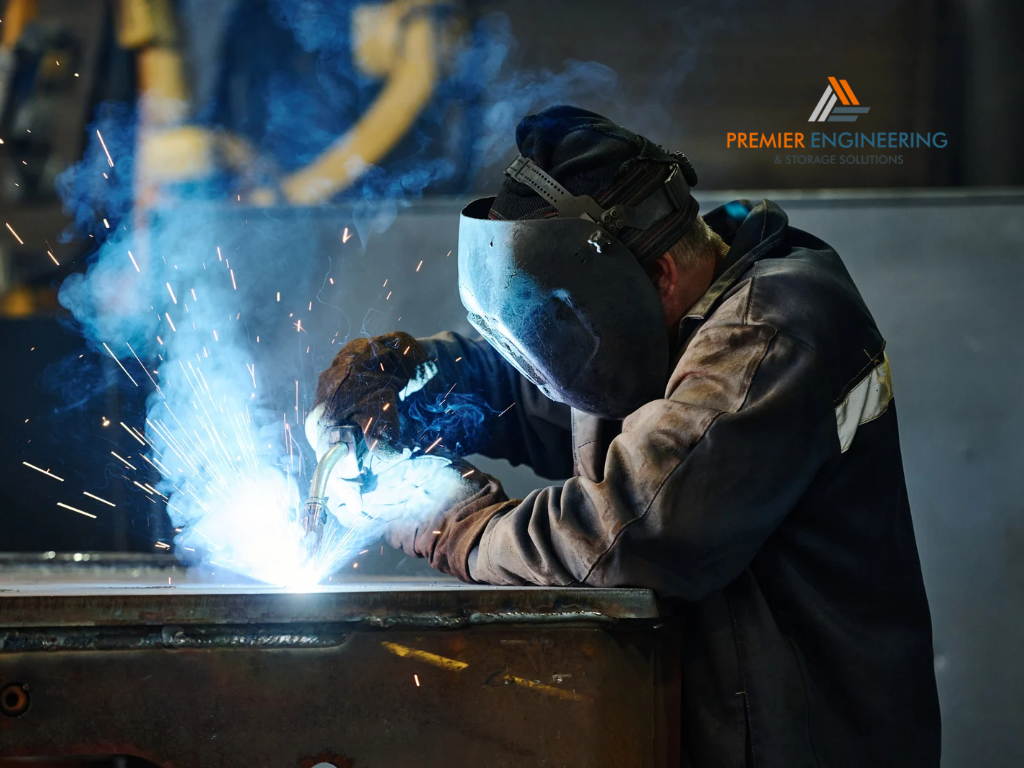
Not every component requires welding.
However, where separate parts need to be joined, welding may become an important stage of cnc sheet metal fabrication.
It is commonly considered for metal enclosures, industrial cabinets, fabricated frames and equipment assemblies.
The appropriate joining method depends on the materials, component design and intended use.
When Sheet Metal Components Need Welding
Welding joins compatible metal components using an appropriate welding process.
It may be required when several cut or bent parts must form a single assembly.
For example, a metal enclosure may contain separate panels that need to be joined.
A fabricated equipment frame may also require welded connections.
However, welding is not always necessary.
Some components can be manufactured through cutting and bending alone.
Others may use bolts, rivets or suitable mechanical fastening methods.
The decision should reflect the assembly’s functional and structural requirements.
Material compatibility matters.
Different metals and grades may require different welding procedures or preparation.
The thickness of the material can also influence the choice of welding process.
Customers should clearly identify which parts need joining and whether the finished assembly has particular strength or appearance requirements.
For safety-critical or structurally significant components, the relevant design and welding requirements should be confirmed by appropriately qualified professionals.
Managing Joint Design, Distortion and Final Fit
Welding introduces heat into the material.
As the welded area heats and cools, the metal can expand and contract.
This may cause distortion or affect the alignment of the finished assembly.
The amount of movement depends on the material, geometry, joint design and welding process.
For example, a thin sheet metal panel may require particular care to manage distortion during welding.
The sequence of welds can also influence the final shape.
Appropriate joint preparation, positioning and fixturing can help control the assembly during fabrication.
Access to the joint is another important consideration.
A component may look correct in a CAD model but be difficult to weld if the joint cannot be reached using the proposed process.
This is why welding requirements should be considered during the design stage.
The finished assembly may also require inspection to confirm that critical dimensions and weld requirements have been met.
Where necessary, customers should discuss the intended inspection and acceptance criteria before production.
Finishing, Inspection and Preparing for Production
Cutting, bending and welding are not always the final manufacturing steps.
In cnc sheet metal fabrication, the finished component may also require deburring, surface treatment, dimensional inspection or preparation for assembly.
These stages help confirm that the component meets its documented requirements before it is delivered or used.
The appropriate checks depend on the design, application and agreed specifications.
Checking Dimensions After Cutting, Bending and Welding
Dimensional accuracy should be considered throughout the manufacturing process.
A flat component may meet its cutting dimensions but change slightly during bending.
Welding may introduce further movement.
These effects can influence how the finished component fits into an assembly.
For example, an enclosure may have several bends that determine the location of mounting holes.
Even when individual features meet their stated tolerances, variation across several operations may affect the final fit.
This is known as tolerance accumulation.
Designers should identify which dimensions are critical and how they will be checked.
Not every measurement requires the same tolerance.
Unnecessarily tight specifications can complicate manufacturing without providing a practical benefit.
However, dimensions affecting alignment, function or safety may require closer control.
Inspection methods should match the component and its agreed requirements.
For some parts, dimensional measurement may be sufficient.
More demanding applications may require additional inspection or documented verification.
Customers should agree on these expectations with the fabrication provider before manufacturing begins.
Planning Surface Finishing and Repeat Production
Sheet metal components may require finishing after fabrication.
Depending on the material and application, finishing can improve appearance, provide suitable surface protection or prepare the part for use.
Common finishing methods include powder coating, plating, galvanising and anodising.
However, these processes are not interchangeable.
For example, anodising is commonly associated with suitable aluminium components, while other protective coatings may be selected for steel.
The appropriate finish depends on the material and intended environment.
Surface preparation is also important.
Cut edges, burrs, welding residue and other surface conditions may need attention before finishing.
If the component will be used outdoors or in a demanding industrial environment, the intended exposure conditions should be discussed early.
Repeat production introduces another consideration.
When a part will be manufactured in larger quantities, reviewing an initial prototype or approved sample may help identify fit and assembly issues.
However, prototype review does not guarantee that every later component will be identical.
Clear drawings, agreed acceptance criteria and appropriate production controls remain important.
Choosing a CNC Sheet Metal Fabrication Partner
Selecting a fabrication provider involves more than finding a business with a cutting machine.
A suitable cnc sheet metal fabrication partner should understand the required material, design features, forming operations, joining requirements and finishing expectations.
This is particularly important when a project involves several manufacturing stages.
A provider’s documented capabilities and willingness to clarify specifications can help customers make a more informed choice.
Questions to Ask About CNC Sheet Metal Fabrication
Before requesting a quotation, prepare clear information about the intended component.
The provider should understand what the part is designed to do and which requirements are critical.
Material grade and thickness should be specified.
The drawing should also communicate the required dimensions, relevant tolerances and intended quantities.
If the part needs bending, confirm that the design can be formed using the available equipment.
For welded components, clarify the joining requirements and any necessary inspection criteria.
Finishing should also be discussed.
A quotation for cutting alone may not cover bending, welding or surface treatment.
Customers should ask which processes are included and which services may be handled separately.
It is also important to confirm accepted CAD file formats and any design review requirements.
A useful fabrication quotation should make the manufacturing scope clear.
This allows customers to compare providers based on the actual work required rather than price alone.
Comparing CNC Cutting Services in Western Sydney
Businesses researching cnc cutting services western sydney may be looking for a supplier that can manufacture components locally and support additional fabrication requirements.
However, location is only one consideration.
The provider must also have suitable capabilities for the intended materials and manufacturing processes.
For example, a project requiring cutting and bending needs more than a basic cutting service.
A welded assembly may also require suitable joining, inspection and finishing arrangements.
For customers seeking related manufacturing services, Premier Engineering provides sheet metal fabrication capabilities in South Western Sydney.
Its published manufacturing capabilities include laser cutting, CNC punching, CNC brakepress bending, welding and other fabrication services.
Customers can also review its laser cutting services when considering metal profile cutting requirements.
These capabilities may be relevant to projects involving industrial cabinets, brackets, enclosures and other sheet metal components.
Before selecting a provider, confirm that the proposed material, thickness, dimensions and manufacturing requirements can be accommodated.
It is also useful to clarify whether the supplier can assist with reviewing fabrication drawings before production.
The right manufacturing approach should reflect the complete component rather than treating cutting, bending and welding as unrelated tasks.
If your project requires custom sheet metal parts, begin by reviewing the drawings, materials, quantities and finishing requirements.
Then contact Premier Engineering to discuss the available fabrication services and request a quotation based on the actual project specifications.
Clear requirements and early communication can help you plan the manufacturing process and reduce avoidable uncertainty before production begins.
