

Acrylic sheets are used across Sydney for signage, retail displays, protective screens, furniture, light boxes, shelving, glazing and custom fabricated products.
The material is available in clear, solid, tinted, translucent, frosted and mirrored options. It can also be cut, drilled, routed, bent, polished and bonded into many different forms. Australian suppliers commonly offer both full sheets and cut-to-size acrylic, with machining and fabrication available for more detailed projects.
However, choosing the right product involves more than selecting a colour and thickness.
The customer needs to consider where the acrylic will be used, how it will be supported, whether it will be exposed to sunlight and which edges or surfaces will remain visible.
Acrylic Sheets Sydney customers purchase for a small indoor sign may be very different from the material needed for an outdoor panel, supermarket screen or large unsupported display.
The following guide explains how to compare acrylic grades, plan fabrication and select a supplier that can produce a practical finished result.
Define what the acrylic component needs to do
The intended use should guide every other decision.
A clear retail display panel may need high visibility and polished edges. A sign face may require coloured or opal acrylic that diffuses light. A shelf may need greater rigidity and stronger support than a decorative wall panel.
An acrylic screen used at a counter must remain stable, provide suitable visibility and fit around equipment, payment terminals and customer interaction points.
A machine cover or protective panel may have impact or safety requirements that should be assessed before acrylic is selected.
Begin by recording the finished panel size, quantity, installation location and expected handling.
Explain whether the sheet will be mounted vertically, supported on all sides, fixed with screws, placed in a frame or used as a freestanding component.
The supplier should also know whether the panel will be used indoors or outside, whether it sits near a heat source and whether it needs holes, bends, slots or bonded parts.
These details allow Acrylic fabrication requirements to be planned before the material is cut.
Confirm whether acrylic is the right material
Acrylic is valued for its glass-like clarity, relatively low weight and ability to be fabricated into custom shapes. It is commonly used in signage, retail displays and architectural applications.
However, it is not the right plastic for every project.
Where very high impact resistance is needed, polycarbonate or another material may be more suitable. Where the panel will be exposed to particular chemicals, high temperatures or structural loads, the material should be assessed against those conditions.
Acrylic can scratch more readily than glass and may crack when holes are poorly positioned or fixings are overtightened.
It can still be a practical alternative for many screens, covers and displays, particularly where weight, machining and visual clarity matter.
The supplier should be willing to explain the limitations of the material rather than treating acrylic as a universal solution.
For load-bearing, safety-critical or regulated applications, appropriate technical or engineering advice may also be required.
Compare Acrylic Types and Surface Finishes
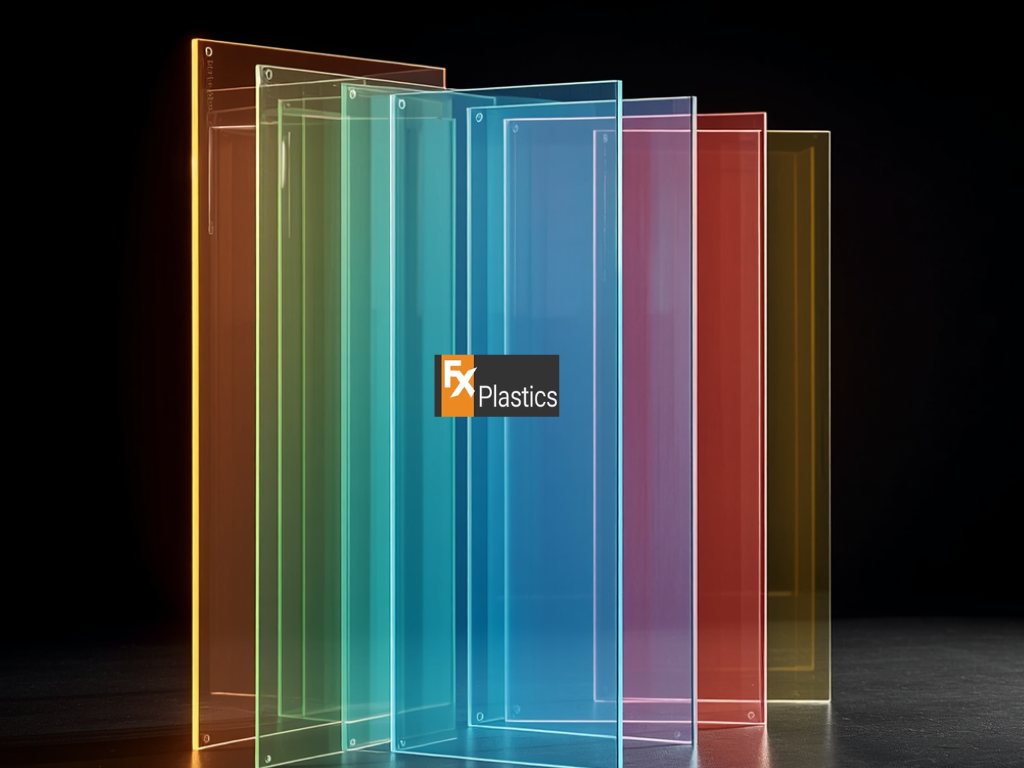
Clear acrylic is commonly used for protective panels, display cases, windows, covers and signs where visibility is important.
Solid-colour sheets can be used for branding, decorative panels, signage and retail fixtures.
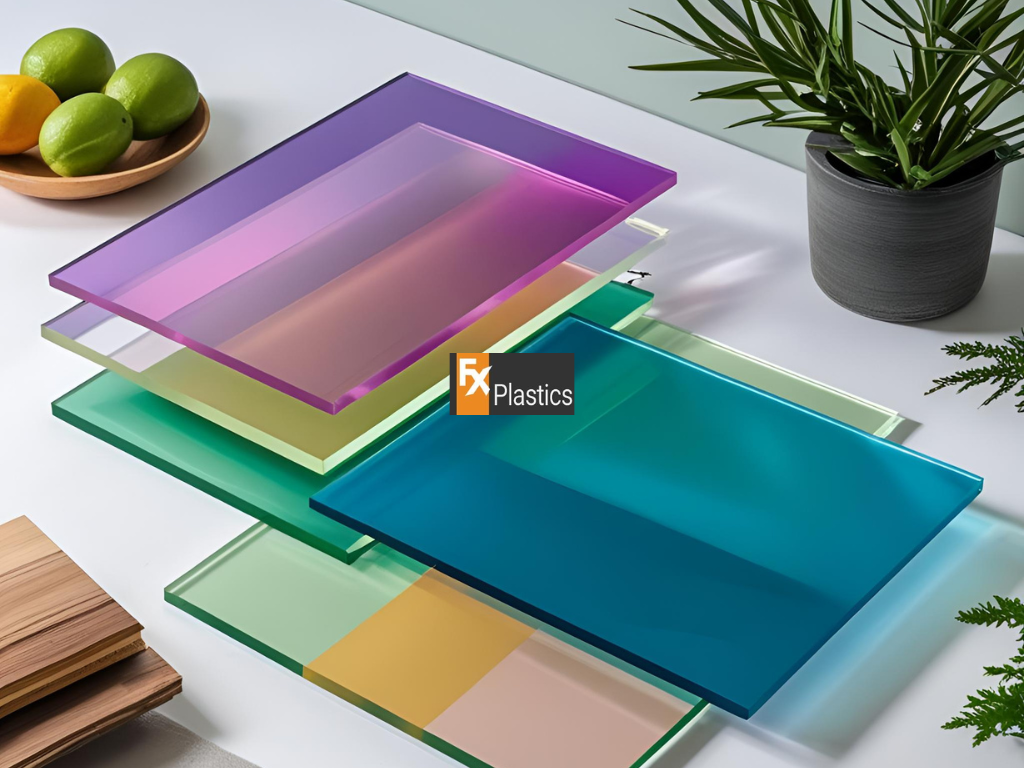
Tinted transparent acrylic allows some visibility while changing colour and light transmission.
Frosted or matte sheets diffuse light and reduce direct visibility. They may suit privacy screens, decorative interiors and illuminated displays.
Opal acrylic is often used for light boxes and illuminated signs because it spreads light more evenly and helps reduce the visibility of individual light sources.
Mirrored acrylic may be used for displays and decorative installations where lower weight and easier fabrication are useful.
Current Australian acrylic ranges include clear, solid, tinted, translucent, mirrored and specialist surface options.
The final appearance should not be approved from a screen image alone. Colour, opacity and light diffusion can look different under actual lighting.
Request a physical sample when the project depends on accurate colour or translucency.
Select indoor or UV-resistant material
Indoor-only and UV-resistant acrylic should not be treated as the same product.
UV-resistant acrylic is designed for longer-term exposure to sunlight and outdoor conditions. Clear UV-resistant sheets are promoted for outdoor and weather-exposed applications.
Indoor-only acrylic may be a more economical option where long-term UV exposure is not expected.
However, an indoor-grade sheet may yellow or weaken after extended exposure to direct sunlight, depending on the product and conditions. One Australian supplier specifically warns against using its indoor-only clear acrylic where long-term sunlight exposure is expected.
This distinction matters for outdoor signs, patio screens, exterior covers and panels positioned beside sun-facing windows.
Do not assume that every clear sheet supplied under the general name acrylic has the same weathering performance.
Ask for the product grade and current technical information.
Outdoor performance also depends on the installation. Heat, panel size, support, movement and fixings should be considered alongside UV resistance.
Match Thickness to Size and Support
Consider rigidity, load and fixing points
Thickness affects rigidity, weight, cost and fabrication.
A small framed sign may work well in a relatively thin sheet, while a large unsupported panel may flex at the same thickness.
Acrylic screens should be thick enough to remain stable within their supports. However, increasing thickness does not correct a weak bracket, narrow base or unsuitable panel shape.
Shelves and horizontal panels require particular care because they may carry weight.
The span between supports can be more important than the total panel length.
A shelf supported at both ends behaves differently from one supported across the rear or at several points.
Large acrylic screens for supermarkets may also need openings, bends or brackets. Each feature can change how the panel behaves.
The recommended thickness should therefore be based on the finished design rather than one general chart.
Where the acrylic forms part of a barrier, guard or load-bearing component, the design should be reviewed for the specific use.
Avoid choosing thickness by appearance alone
A thick polished edge can create a premium appearance in furniture and display work, but visual preference should not be the only reason for selecting a sheet.
Thicker material costs more, weighs more and may take longer to machine.
It can also require different bending, drilling and edge-finishing methods.
Acrylic is available in a wide range of sheet sizes and thicknesses, although availability varies by grade, colour and supplier.
Clear acrylic is often available in more thicknesses than specialised colours, textures or mirrored options.
Before finalising the design, ask whether the required colour and thickness are stocked or need to be ordered.
The project may need to balance visual appearance, rigidity, availability and cost.
A sample or small prototype can be useful where the appearance of the edge or the amount of flex is difficult to judge from a specification alone.
Plan Cutting, Edges and Fabrication
Different fabrication methods suit different shapes and finishes.
Saw cutting is commonly used for straight rectangular pieces. It can be an efficient choice for standard panels and basic cut-to-size orders.
Acrylic Laser Cutting Sydney services are often used for lettering, signage, decorative profiles and detailed shapes.
Laser cut acrylic can have a smooth and clear-looking edge, although the result depends on the material grade, thickness, geometry and machine settings.
CNC routing may suit larger pieces, circles, curves, slots, recesses and thicker materials.
It can also provide controlled machining where several holes and cut-outs need to align with hardware.
The cutting method affects tolerance, edge condition, setup time and cost.
A rectangular screen may not need laser cutting, while a complex display component may not be practical with a panel saw alone.
The supplier should select the process according to the finished part rather than using one method for every order.
When two parts need to fit together, explain the required fit and assembly rather than requesting only a general dimension.
Decide whether bending, bonding or polishing is required
Cutting may be only one stage of the project.
Acrylic screens may need heat-formed bends, supports, bonded feet or pass-through openings.
Displays may require clear bonded joins, shelves or removable panels.
Signage may need polished edges, engraved details or mounting holes.
A standard cut edge may be suitable when it is hidden inside a frame. A visible edge may need sanding, buffing, flame polishing, diamond polishing or a laser-finished surface.
The best option depends on the intended appearance and later fabrication.
A highly polished edge may be worthwhile for a premium display but unnecessary for a concealed panel.
Some edge-finishing methods may affect later bonding or introduce stress if they are not suitable for the material and application.
Ask whether the quotation includes all required fabrication.
The term cut to size may include only straight cutting unless polishing, drilling, bending and assembly are listed separately.
Choose the Right Product and Supplier
Compare material specifications and fabrication capability
A useful supplier should identify the material being quoted.
The quotation should state the acrylic type, colour, thickness, sheet size or finished dimensions and whether the material is suitable for indoor or outdoor use.
It should also identify the cutting method and any fabrication services.
A supplier offering Acrylic Sheets Western Sydney customers can collect locally may be convenient, but location should not be the only consideration.
Check whether the business can complete the required straight cutting, laser cutting, CNC routing, drilling, polishing, bending and bonding.
A supplier with several fabrication processes may be better placed to choose a suitable method for each component.
However, capability should still be confirmed for the required panel size, thickness and quantity.
Ask whether physical samples are available and whether enough stock from one batch can be supplied when colour consistency matters.
For acrylic screens for supermarkets or food displays, provide the complete counter and opening dimensions rather than requesting a generic screen size.
NSW food guidance recognises physical barriers such as Perspex or glass sneeze guards as one way of protecting displayed food from likely contamination. The final screen should still be designed for the actual counter and food-service process.
Review quotations, tolerances, packaging and delivery
A quotation should make it clear what the customer will receive.
It should include the finished dimensions, quantity, material, edge finish, holes, slots, bends, joins and any protective masking.
The tolerance should be stated where fit is important.
Standard saw cutting, laser cutting and CNC machining may each have different practical tolerances.
Packaging also matters, especially for clear or polished panels.
Large acrylic sheets can scratch, flex or crack when they are not transported with suitable protection and support.
Ask whether the masking remains on the panel during delivery and whether the finished parts will be wrapped individually.
For oversized panels, confirm delivery access and whether the customer needs lifting or handling assistance.
Comparing acrylic vs glass windows cost should also include more than the sheet price.
The final comparison may involve framing, cutting, drilling, transport, installation, replacement risk, maintenance and expected service conditions.
The less expensive raw sheet may not be the lower-cost completed option when extensive fabrication is required.
Plan Installation, Cleaning and Maintenance
Acrylic expands and contracts as temperatures change.
Large panels, outdoor installations and screens near windows may require additional movement allowance.
Acrylic should not be clamped so tightly that it cannot move.
Screw holes may need to be larger than the fastener shank, depending on the installation design.
Washers, spacers or suitable brackets can help distribute pressure.
Holes should not be placed too close to the panel edge.
Where possible, request drilling during fabrication so hole locations are controlled from the same drawing as the outside profile.
Frames also need suitable clearance.
A panel cut to the exact internal frame size may be difficult to install or may have no room to move.
For acrylic screens, check that the support system cannot tip, shift or obstruct customer access.
Any barrier used around food, customers or equipment should be designed for the actual site rather than copied from a generic photograph.
Protect the surface during use and cleaning
Acrylic should be cleaned with soft materials and products suitable for plastic.
Abrasive pads can scratch the surface.
Harsh solvents and unsuitable chemicals may cause hazing, crazing or other damage.
Loose dust should be removed carefully before wiping because particles can mark clear acrylic.
Protective masking should normally remain on the sheet during cutting, transport and installation.
It should then be removed according to the supplier’s instructions.
Temporary masking should not be left outdoors for an extended period unless the manufacturer confirms that it is suitable.
Screens and displays should be checked regularly for cracks around holes, loose fittings and unsupported movement.
A damaged panel should be assessed before the crack spreads or creates a sharp edge.
Proper cleaning and installation can help preserve clarity, but acrylic should not be described as scratch-proof or maintenance-free.
When to Contact FX Plastics
Request help with acrylic sheets and custom fabrication
FX Plastics may be contacted when a homeowner, builder, retailer, designer or business needs help selecting or fabricating acrylic components.
Before making contact, explain what the finished part needs to do.
Provide the width, height, quantity, preferred colour and expected location.
Identify whether the panel will be installed indoors or outside and whether it will be framed, screwed, bonded, bent or freestanding.
For acrylic screens, describe the counter, panel supports and any pass-through opening.
For signage and displays, explain which edges will remain visible and whether the project needs Acrylic Laser Cutting Sydney services.
FX Plastics can then discuss sheet types, thicknesses and fabrication options.
Material availability, tolerances, edge finishes, lead times and delivery should be confirmed for the exact order.
Prepare drawings and information for an accurate quote
Accurate information helps the supplier prepare an accurate quotation.
Provide all dimensions in millimetres and clearly identify the finished width and height.
For holes, include the diameter and centre positions.
For curves, include the radius or provide a suitable digital drawing.
Show bends, slots, cut-outs, joins and edge finishes.
Explain whether the panel needs to fit inside an existing frame or align with another fabricated component.
Photographs can provide useful context, but they should not replace measurements and drawings.
Ask whether the quotation includes material, cutting, polishing, drilling, bending, bonding, packaging and delivery.
Customers searching for Acrylic Sheets Sydney or Acrylic Sheets Western Sydney may need anything from one rectangular panel to a fully fabricated display.
Discussing the completed application helps FX Plastics identify practical details before the sheet is cut.
A successful acrylic project begins with the correct material, suitable thickness, accurate measurements and a clear fabrication plan. These decisions are more important than selecting a sheet by colour or price alone.
