

Online advertising gives Australian businesses several ways to reach potential customers, promote their services and generate enquiries. However, with search engines, social media platforms, video advertising and business directories available, deciding where to invest time and money can be challenging.
The most popular advertising platform is not necessarily the most suitable for every business.
A local plumbing company may benefit from reaching people actively searching for emergency repairs, while an online fashion retailer may prefer visual advertising that introduces products to interested audiences.
Similarly, a business providing specialised professional services may need a different approach from a restaurant attracting customers within a particular suburb.
Choosing the right platform begins with understanding who your customers are, how they search for information and what action you want them to take.
It is also important to consider advertising costs, available management resources and how results will be measured.
For Australian small businesses, a suitable strategy may involve one primary advertising channel supported by other online activities.
Rather than trying to advertise everywhere, the goal is to select platforms that connect your business with relevant customers and provide measurable value.
Why Online Advertising Platform Selection Matters
Different advertising platforms attract audiences with different intentions.
Someone searching Google for a particular product or service may already know what they need and be comparing available providers.
A person browsing social media may not be actively looking to purchase anything but could become interested in a product after seeing relevant content.
These differences affect how advertising messages should be created and where businesses allocate their budgets.
Choosing an unsuitable platform may result in website visits or impressions from people who are unlikely to become customers.
For example, a business providing local industrial equipment repairs may need to prioritise customers searching for specific technical services rather than broad social media exposure.
Understanding customer behaviour helps businesses make more informed advertising decisions.
Platform selection should also consider whether the business has the capacity to manage campaigns, respond to enquiries and maintain accurate information.
An advertising channel is only useful when the business can support the customer interactions it generates.
How Online Advertising Supports Different Business Goals
Businesses use online advertising for different reasons.
Some want to introduce their brand to new audiences, while others need more enquiries, online purchases or bookings.
A newly established business may focus on awareness because potential customers are unfamiliar with its services.
An established local business may place greater importance on generating enquiries from people who already need a particular service.
Retailers may aim to increase product sales, while professional service providers may focus on consultation requests.
These goals influence which platforms and advertising formats are most appropriate.
For example, a business seeking immediate enquiries from customers researching a particular service may consider search advertising.
A business launching a visually appealing product might explore social media or video advertising to reach a broader audience.
Before selecting a channel, define the action that would make the advertising worthwhile.
This provides a clearer basis for comparing platforms and evaluating results.
Understanding the Main Advertising Platforms in Australia
Australian businesses can choose from several digital advertising channels, each with different features, audiences and pricing arrangements.
Understanding how they work is an important step when comparing online advertising options.
The main distinction is between platforms that help reach people actively looking for something and those that introduce businesses to audiences through content or promotional placements.
Search Advertising, Social Media and Video Platforms
Search advertising allows businesses to display paid advertisements in response to relevant searches.
Google Ads is a widely used example, while Microsoft Advertising provides advertising opportunities across its supported search network.
Search campaigns can be useful when customers are already looking for a specific product or service.
For example, a business selling commercial refrigeration equipment may want to reach people searching for a particular type of refrigerator.
Social media advertising works differently.
Platforms such as Facebook and Instagram allow businesses to promote products and services using available audience and campaign targeting options.
These platforms may suit businesses that benefit from photographs, videos, product demonstrations or ongoing audience engagement.
LinkedIn advertising may be relevant to businesses targeting professional audiences, organisations or particular business roles.
Video advertising can help communicate information that is easier to demonstrate visually, such as how a product works or what a service involves.
However, producing effective video content may require additional resources.
When choosing where to place ads online, consider whether the platform’s audience matches the business’s target customers.
A visually engaging advertisement will not necessarily produce enquiries if it reaches people with little interest in the product or service.
Business Directories and Other Internet Advertising Options
Online business directories provide another way for customers to discover businesses.
Unlike advertising platforms that charge for individual clicks or impressions, directories may offer free listings, fixed-price subscriptions or paid promotional placements.
A business directory generally organises companies by category, location or service type.
Customers browsing a directory may be looking for information about available suppliers, local services or businesses operating within a particular industry.
This can make directories useful as an additional source of business information.
However, appearing in a directory does not guarantee customer enquiries or higher search rankings.
Other internet advertising options include display advertising on websites, advertising through mobile applications and promotional placements within relevant publications.
Email marketing is another digital promotional channel, although businesses must comply with applicable Australian consent and marketing requirements.
Some businesses also work with internet advertising services providers to manage several channels.
Before choosing a platform, determine whether it is intended to generate direct enquiries, introduce a brand or provide another place where customers can find business details.
Matching Advertising Channels to Your Target Customers
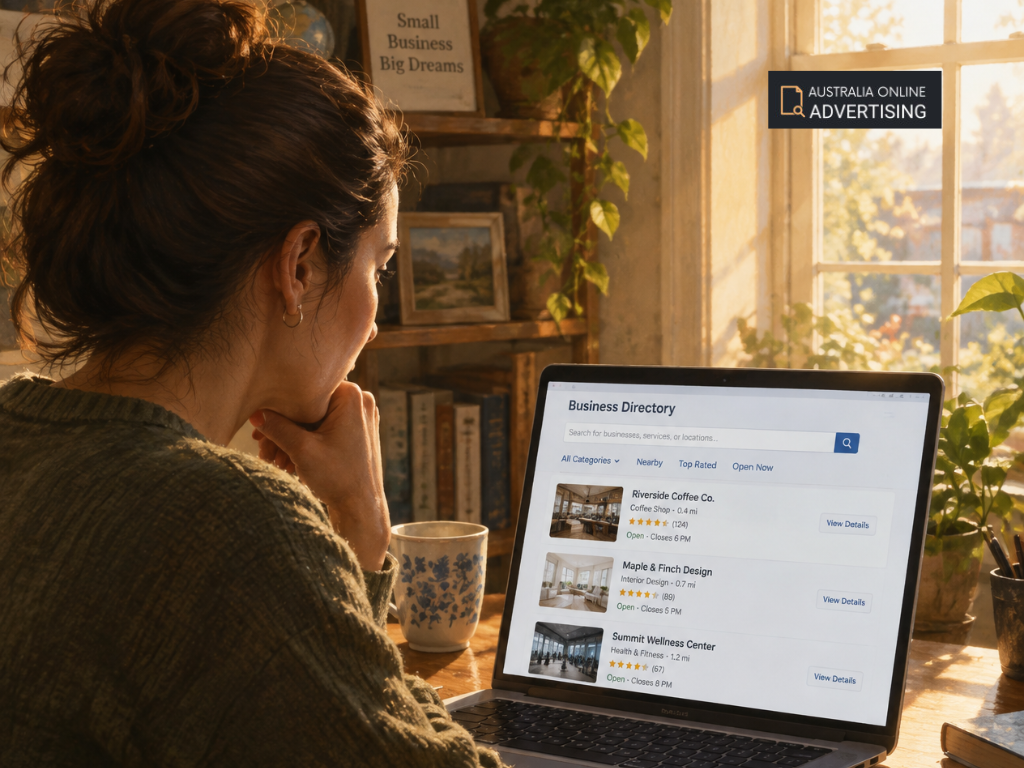
The right advertising platform depends heavily on the people a business wants to reach.
Understanding customer behaviour can help Australian businesses avoid spending money on advertising that attracts attention from the wrong audience.
Rather than starting with a particular platform, online advertising decisions should begin with the customer.
Choosing Platforms Based on Customer Search Behaviour
Customers use digital platforms for different reasons.
Some search for immediate solutions, while others browse content, compare products or research suppliers over an extended period.
A person looking for emergency electrical repairs may search online because they need assistance quickly.
A homeowner planning a kitchen renovation may spend more time exploring photographs, comparing materials and researching providers.
These different behaviours can influence the advertising channels that are most appropriate.
Search advertising may suit businesses offering products or services that customers already know they need.
Social media advertising can be useful when products benefit from visual presentation or when businesses want to introduce their services to interested audiences.
Business directories may provide another opportunity for customers to compare companies within a particular category or location.
For businesses considering advertising online, it is useful to identify the questions customers ask before making contact.
These questions can guide advertising messages and help determine whether a platform supports the customer’s decision-making process.
Reaching Local, National and Business-to-Business Audiences
A business’s geographic coverage also influences advertising platform selection.
Local service providers generally need to reach customers within specific suburbs, cities or service areas.
For example, an electrician operating across Western Sydney may want to avoid paying for enquiries from locations outside the areas serviced.
Where supported, geographic targeting can help paid advertising campaigns focus on relevant regions.
However, geographic targeting is not always exact, and businesses should review campaign settings and results carefully.
National retailers have different requirements because their products may be available to customers throughout Australia.
For these businesses, product search behaviour, delivery coverage and ecommerce functionality may influence channel selection.
Business-to-business companies may need to reach a smaller audience of decision-makers.
A supplier of industrial machinery, for example, may prefer advertising channels that connect with purchasing managers or organisations researching specialist equipment.
LinkedIn, relevant search campaigns and industry directories may all be worth considering, depending on the audience.
The important question is not which platform attracts the largest number of users.
It is which platform provides a realistic opportunity to reach people who may need the business’s products or services.
Comparing Online Advertising Costs and Budget Requirements
Advertising costs can vary considerably between platforms and campaign types.
Before committing to a channel, businesses should understand how charges are calculated and what additional resources may be required.
A realistic online advertising budget should account for more than the amount paid directly to a platform.
Understanding Cost Per Click, Impressions and Listing Fees
Cost per click is a common pricing model used in search advertising and some other digital campaigns.
Under this model, advertisers are charged when someone clicks their advertisement.
The actual cost can vary according to factors such as competition, targeting, bidding arrangements and advertising quality.
Another model is cost per thousand impressions, commonly referred to as CPM.
This relates to the cost of displaying advertising a specified number of times rather than charging only for clicks.
Impression-based advertising may be relevant when the main goal is increasing awareness.
Some platforms also provide campaign objectives linked to leads, purchases or other actions.
However, selecting a conversion-focused campaign does not mean the advertiser is guaranteed a particular number of customers.
Business directory advertising often uses a different pricing structure.
A directory may offer a free basic listing, a paid subscription or a fixed fee for additional features.
Businesses should check whether the listing includes contact details, website links, photographs, category placement and other relevant information.
Comparing the cost models helps establish what the business is paying for and what results can reasonably be measured.
Choosing an Advertising Budget Your Business Can Maintain
Advertising budgets should reflect both business goals and available resources.
A small business may prefer to begin with a limited campaign budget while learning which messages and audiences produce useful enquiries.
However, a budget should not be selected without considering the cost of reaching relevant customers.
Some industries face greater competition for particular search terms, which can influence advertising expenses.
Businesses should also allow for creative production, campaign setup, ongoing management and website improvements where necessary.
A paid advertising campaign may require regular attention to targeting, keywords, advertisements and performance data.
Social media advertising may also involve the cost of producing photographs, graphics or videos.
Businesses using online advertising companies should establish whether management fees are separate from the advertising budget paid to the platform.
A sustainable budget is one that the business can review against its financial circumstances and expected commercial outcomes.
Rather than assuming a particular amount will produce results, businesses should set clear objectives and evaluate performance using reliable data.
Choosing Between Paid Ads and Business Directory Listings

Paid campaigns and business directory listings support different types of online visibility.
They should not automatically be treated as competing alternatives because some businesses may benefit from using both.
When evaluating online advertising channels, the decision should reflect the business’s goals, available budget and preferred level of ongoing management.
When Paid Advertising May Be the Better Option
Paid advertising may be appropriate when a business needs greater control over audience targeting, campaign timing and promotional messages.
For example, a retailer launching a new product may want to promote a specific offer during a defined period.
Search and social media advertising platforms generally allow advertisers to adjust budgets, campaign settings and advertisements.
This can be useful for seasonal promotions, new product launches or businesses targeting particular customer groups.
Paid campaigns also provide reporting tools that can help businesses understand impressions, clicks and tracked customer actions.
However, results depend on campaign quality, audience suitability, competition and the website or contact process used.
Paying for advertising does not guarantee sales or enquiries.
A business should also consider whether it has enough time or professional support to manage the campaign effectively.
Poorly configured advertising may attract irrelevant traffic or spend money without generating useful business outcomes.
Paid advertising is most appropriate when the business understands the objective, can manage the costs and has a practical way to evaluate results.
How Online Directories Complement Your Marketing Strategy
Online directories provide a different promotional opportunity.
Instead of creating a campaign around specific advertisements, businesses generally publish information that customers can browse or discover through directory categories.
A listing may include the business name, description, services and other information, depending on the platform and selected plan.
This can support customer research by providing another place to learn about the business.
For smaller businesses, directory listings may also offer a relatively straightforward way to establish an additional online presence.
However, directory visibility varies between platforms.
A listing should not be assumed to attract regular enquiries simply because it has been published.
When comparing directories, review category relevance, available features, listing duration, contact options and any ongoing costs.
A business may decide to maintain directory listings alongside search advertising, social media activity and its own website.
These channels can work together by helping customers encounter consistent business information at different stages of their research.
The value of a directory should be assessed according to its suitability and actual results, not unsupported promises about search engine rankings.
Measuring Results Before Investing More in Advertising
Selecting a platform is only the beginning of an advertising strategy.
Businesses also need to understand whether their promotional activities are generating meaningful results.
Effective online advertising measurement helps distinguish general attention from customer actions that contribute to business goals.
Tracking Website Visits, Enquiries and Conversions
Advertising platforms provide different performance measures.
Impressions indicate how often an advertisement was displayed.
Clicks show how often people interacted with an advertisement by selecting it.
These figures can help explain campaign activity, but they do not necessarily represent genuine customer interest.
For businesses seeking enquiries, more useful measures may include completed contact forms, telephone enquiries or quotation requests.
Online retailers may focus on purchases and the revenue associated with their advertising.
Conversion tracking can help measure certain actions when implemented correctly.
For example, a business may track completed enquiry forms or online purchases to understand how often advertising interactions lead to those outcomes.
Cost per enquiry can be calculated by dividing the relevant advertising expenditure by the number of recorded enquiries.
However, not every enquiry becomes a customer.
Businesses should distinguish between total enquiries, qualified leads and confirmed sales.
For ecommerce advertising, return on advertising spend can be useful when reliable revenue information is available.
Website analytics and advertising reports can provide valuable information, but tracking limitations, attribution differences and privacy requirements should be considered.
The most useful measures are those connected to the business’s actual goals.
Recognising When an Advertising Platform Is Underperforming
An advertising platform may appear unsuccessful for several reasons.
The advertisements may be reaching people outside the intended audience, or the message may not explain the product or service clearly.
In other cases, people may click the advertisement but leave because the destination page does not provide the information they expected.
For example, someone searching for a specific service may be less likely to enquire if the advertisement leads to a general homepage rather than a relevant service page.
Complicated enquiry forms, unclear contact details and unsuitable geographic targeting can also affect results.
Before abandoning a platform, review whether these issues can be addressed.
Businesses should compare results over a suitable evaluation period rather than relying on a small number of interactions.
For directory listings, useful measures may include referral visits, customer enquiries or evidence that customers are discovering the business through the platform.
Where a directory does not provide detailed reporting, businesses can ask new customers how they found the company.
If a channel continues to produce little relevant activity after reasonable improvements, the business may decide to reduce its investment or focus on another platform.
Advertising decisions should be guided by evidence rather than popularity or assumptions.
Making the Right Advertising Choice for Your Business

There is no single online advertising platform that is suitable for every Australian business.
The most appropriate choice depends on target customers, advertising objectives, available resources and the results the business wants to achieve.
Before investing further, businesses should compare the practical differences between advertising channels and understand the conditions of any services they use.
Questions to Ask Online Advertising Companies
Businesses considering professional internet advertising services should understand what is included before entering an agreement.
The provider should be able to explain which platforms are recommended and why they suit the intended audience.
It is important to clarify whether the quoted fee includes advertising expenditure or only campaign management.
Businesses should also ask how performance will be measured and what reporting will be provided.
For paid advertising accounts, ownership and administrative access are worth discussing before work begins.
A business should understand whether it will retain access to its campaign information, creative materials and relevant tracking arrangements if it changes providers.
Contract duration, cancellation conditions and additional charges should also be reviewed.
When comparing online advertising companies, avoid relying on promises of guaranteed enquiries, immediate sales or permanent top search rankings.
A reliable provider should explain the proposed approach, associated costs and the uncertainties involved.
These considerations also apply when comparing directory subscriptions and other promotional services.
Clear terms help businesses make informed choices and avoid unexpected commitments.
Getting Started With Online Advertising in Australia
Businesses new to online advertising Australia opportunities can begin by identifying where their customers are most likely to search for products or services.
For a local service business, relevant search advertising and local business information may be worth exploring.
A visually focused retailer may consider social media advertising alongside its ecommerce website.
A specialist supplier may benefit from search campaigns and relevant industry directories.
The next step is to compare the available costs, features and management requirements.
Businesses should also ensure their website, business descriptions and contact details are ready to support customer enquiries.
Australia Online Advertising offers an Australian business directory where companies can explore free and paid listing options.
Its published free listing option includes basic business information and a short description, with the listing expiring after 10 days.
The Silver package is currently advertised at $5 AUD per month and includes detailed company information, contact details, a website link and featured listing placement.
The Gold package is advertised at $10 AUD per month and includes additional features such as a business gallery, Google Map location and search engine snippet information.
These are directory listing services rather than substitutes for the targeting and campaign controls available through platforms such as Google Ads or Meta advertising.
Businesses should review the current features, prices and subscription terms before selecting a plan.
You can explore the Australia Online Advertising business directory and review its listing plans and pricing to determine whether its options suit your promotional needs.
The right advertising approach does not necessarily involve choosing a single platform forever.
As business goals change, different channels may become more useful.
By understanding customer behaviour, comparing costs and measuring actual results, Australian businesses can make better-informed decisions about where to advertise online and how to use their marketing resources effectively.
