

Metal storage cabinets can be a practical way to organise tools, equipment, documents, components and workplace supplies, but choosing the right size is about more than finding the largest cabinet that fits the room. The cabinet needs to suit what you plan to store, how often those items are accessed and how much usable space is available around it.
For workshops, warehouses, offices and industrial environments, cabinet dimensions can affect accessibility, organisation and day-to-day efficiency. A cabinet that is too small may quickly become overcrowded, while one that is too large can take up valuable floor or wall space without improving how the area is used.
The best approach is to measure the available area, review the items you need to store and then compare metal storage cabinets based on internal capacity, shelving layout, construction and future storage needs.
The right size for metal storage cabinets starts with the contents rather than the cabinet itself.
A workshop storing hand tools will have different requirements from an office storing documents, or an industrial site storing components, maintenance items or equipment. Before looking at dimensions, it helps to group the items by size, weight and how frequently they need to be accessed.
How Metal Storage Cabinets Should Match the Size of Your Items
Metal storage cabinets should provide enough internal space for the largest items you intend to store without forcing them into shelves that are too shallow or narrow.
Measure the height, width and depth of the items that will go inside the cabinet. If equipment has handles, cables, cases or irregular shapes, allow for those as well.
It is also worth considering how the items will be removed. A cabinet may technically fit an object, but if there is not enough room to lift, slide or rotate it out comfortably, the storage arrangement may not work well in practice.
This is particularly important for tools, spare parts and high-precision sheet metal parts that may need to remain organised and protected from unnecessary handling.
Why Metal Storage Cabinets Should Allow Room for Future Storage
A cabinet should meet current needs without becoming full immediately after installation.
Metal storage cabinets that are completely packed from the start leave little flexibility for additional tools, supplies or project materials.
That does not mean choosing a cabinet far larger than necessary. Instead, it means allowing a reasonable amount of spare capacity so storage can adapt as the workplace changes.
For growing workshops or production areas, this can reduce the need to replace cabinets or add another unit shortly after the first one is installed.
Measure the Available Space Before Choosing a Cabinet
Once you understand what needs to be stored, the next step is measuring the area where the cabinet will be placed.
Metal storage cabinets should fit the available floor or wall space without interfering with doors, machinery, walkways or other equipment.
How to Measure Floor and Wall Space for Metal Storage Cabinets
Start by measuring the width, height and depth of the intended location.
For metal storage cabinets placed against a wall, check for power points, switches, windows, skirting, pipes or other features that may reduce the usable space.
Ceiling height can also matter for taller cabinets, particularly in workshops with overhead services or shelving.
If several cabinets will be installed side by side, measure the full run rather than assuming standard cabinet sizes will fit perfectly.
Small differences in wall dimensions can affect how the final arrangement works.
Why Metal Storage Cabinets Need Enough Clearance for Access
The space in front of the cabinet is just as important as the space behind it.
Metal storage cabinets with hinged doors need enough clearance for the doors to open without hitting equipment, benches or nearby storage.
Shelves and drawers also require space for users to stand comfortably while accessing contents.
In busy industrial or workshop environments, access should not obstruct normal movement through the area.
Thinking about these details before ordering can help avoid a cabinet that technically fits the footprint but is awkward to use every day.
Choose the Right Height, Width and Depth
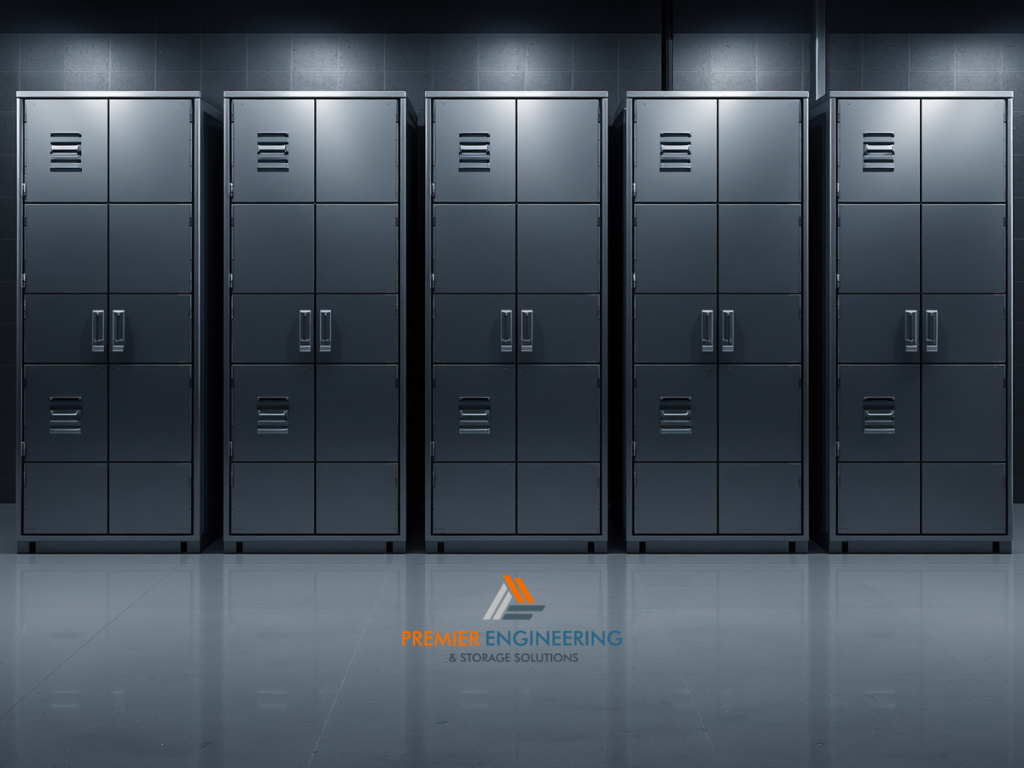
The right cabinet size should match your available space, stored items and everyday access requirements.The right cabinet size should match your available space, stored items and everyday access requirements.There is no single ideal size for metal storage cabinets.
The right dimensions depend on what is being stored and how the cabinet fits into the wider workspace.
Tall cabinets can provide more storage without using additional floor area, while wider or deeper cabinets may be better for bulky equipment and larger components.
How Metal Storage Cabinets Differ in Height and Internal Capacity
Taller metal storage cabinets can make good use of vertical space, especially where floor space is limited.
However, very high shelves may be inconvenient for frequently used items. Heavier equipment is usually better positioned lower down, while lighter or less frequently accessed items can be stored higher.
Shorter cabinets may work better beneath benches or in areas where users need easy access to all shelves.
Internal dimensions are also important. Two cabinets with similar external sizes may provide different usable space depending on door construction, shelving systems and internal framing.
Why Metal Storage Cabinets Should Balance Space and Access
Storage capacity should not come at the expense of usability.
Very deep metal storage cabinets can hold larger items, but smaller objects may become difficult to see or reach if they are pushed to the back.
Likewise, a very wide cabinet may offer excellent capacity but be difficult to position in a narrow work area.
The best size usually balances enough internal room with easy access to the contents.
This is why measurements should be based on both the items being stored and how people will use the cabinet in practice.
Consider Shelf Layout and Weight Requirements
Internal layout is one of the most important factors when comparing metal storage cabinets.
A cabinet with suitable external dimensions may still be a poor choice if the shelves cannot be positioned where they are needed or are unsuitable for the weight being stored.
How Metal Storage Cabinets Use Shelving to Maximise Space
Adjustable shelving can make metal storage cabinets more flexible because shelf heights can be changed to suit different items.
For example, small tools or boxes may need closely spaced shelves, while larger equipment may require more vertical clearance.
A well-planned shelf layout can help reduce wasted space and make it easier to keep different categories of items organised.
Before ordering, consider how many shelves are required and whether they can be repositioned later if storage needs change.
What to Check When Metal Storage Cabinets Hold Heavier Equipment
If metal storage cabinets will hold heavier tools, components or equipment, shelf capacity becomes important.
The cabinet should be specified for the intended load, and weight should be distributed appropriately rather than concentrated on a shelf that was not designed for it.
For industrial environments, it may also be useful to consider how the cabinet itself is constructed and whether it can remain stable when fully loaded.
Where unusual sizes, loads or layouts are required, custom fabrication may be worth considering instead of adapting a standard cabinet that does not suit the application.
Match the Cabinet Material to the Environment
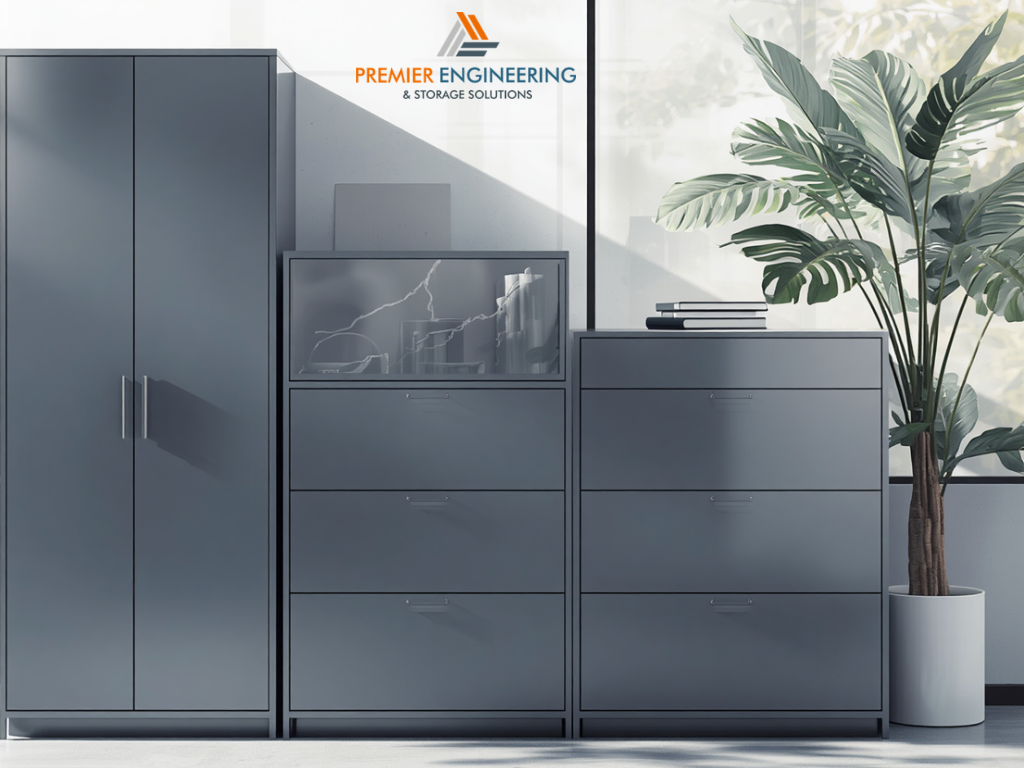
The environment where the cabinet will be used can influence the most suitable material and finish.
Metal storage cabinets used in a clean office environment may have different requirements from cabinets installed in workshops, food-related areas, laboratories or places exposed to moisture.
When Metal Storage Cabinets in Stainless Steel May Be More Suitable
Stainless steel storage cabinets may be considered where corrosion resistance, cleanability or appearance is particularly important.
The right material grade should still be selected for the intended environment, especially if the cabinet will be exposed to moisture, cleaning chemicals or demanding industrial conditions.
For some applications, powder-coated steel may be entirely suitable. In others, cnc stainless steel fabrication may be preferred because the project requires a specific material, shape or finish.
The decision should be based on the actual working environment rather than assuming one material is automatically best for every situation.
How Metal Storage Cabinets Can Be Specified for Different Workplaces
Metal storage cabinets can be configured differently depending on where they will be used.
A workshop may prioritise durability, shelving capacity and lockable storage, while an office may place more emphasis on appearance and document organisation.
Industrial sites may need cabinets sized around specific components, tools or production materials.
For custom work, cnc sheet metal fabrication can allow cabinet panels and components to be produced to particular dimensions. Metal punching services may also be used where vents, slots, holes or mounting features are needed as part of the design.
These manufacturing options can be useful when a standard cabinet does not suit the available space or intended use.
Decide Whether Standard or Custom Cabinets Suit You
Standard metal storage cabinets can work well when the available space and storage requirements match common sizes.
However, custom fabrication may be more suitable when dimensions, internal layouts or environmental requirements are unusual.
When Metal Storage Cabinets May Need Custom Dimensions or Layouts
Custom metal storage cabinets may be useful when a cabinet needs to fit into a specific alcove, under an existing bench or alongside machinery.
They can also be designed around unusual items, larger components or specialised shelving arrangements.
This is particularly relevant for industrial or manufacturing environments where the storage system may need to support a specific workflow.
Premier Engineering can be considered where metal storage requirements need to be assessed alongside broader fabrication capabilities. The important step is to provide clear dimensions, intended use and storage requirements so the cabinet can be properly specified.
How Metal Storage Cabinets Can Work With CNC Sheet Metal Fabrication
Custom metal storage cabinets can be manufactured using processes such as cnc sheet metal fabrication, cutting, bending and punching.
These methods allow cabinet components to be produced to defined dimensions and assembled around the requirements of the project.
CNC processes may also support repeatability when several cabinets or matching components are required.
For stainless steel projects, cnc stainless steel work can be used where the material is appropriate for the environment.
The manufacturing process should always follow the cabinet design and intended use rather than being selected simply because a particular technology is available.
Compare the Complete Storage Solution Before Ordering
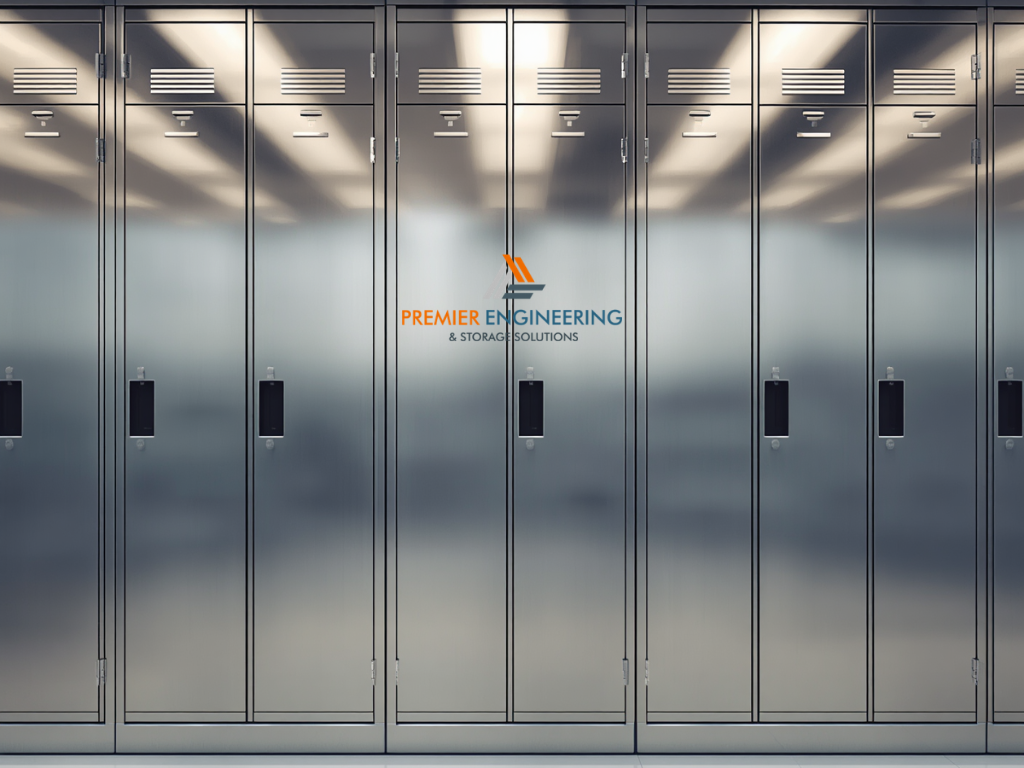
The best metal storage cabinets are not necessarily the tallest, widest or most expensive options.
The right cabinet is the one that fits the available space, stores the intended items properly and remains practical for the people using it.
This is why the final decision should consider dimensions, shelving, material, access and construction together.
How to Compare the Best Metal Storage Cabinets for Your Needs
When comparing the best metal storage cabinets, start with the actual storage problem you need to solve.
Check the external dimensions against the available area, then compare the internal shelf layout and usable depth.
Consider the weight and size of the stored items, whether the cabinet needs to be locked and whether the material suits the environment.
If the cabinet will be used in an industrial setting, it may also be useful to consider how it interacts with nearby benches, machinery and workflow areas.
A cabinet that looks suitable on a product page may not be the best fit once these practical details are considered.
Why Metal Storage Cabinets Should Be Assessed Beyond Size Alone
Size is important, but metal storage cabinets should also be evaluated for usability, construction and long-term suitability.
A cabinet with the correct dimensions may still be inconvenient if shelves cannot be adjusted, doors cannot open fully or the material does not suit the environment.
For specialised applications, Premier Engineering and Storage Solutions may be able to review requirements such as custom dimensions, stainless steel construction or fabricated features.
This can be useful where standard products do not suit the available space or the items being stored.
Before ordering metal storage cabinets, measure the available area carefully and review what will actually go inside. Consider shelf layout, access, material and future storage needs as well as the external dimensions.
Taking this approach can help you choose a cabinet that works with the space rather than simply occupying it.
