

Industrial electrical shutdowns services Sydney businesses arrange are an important part of maintaining electrical infrastructure while managing workplace safety. For manufacturing facilities, warehouses, production plants and other industrial premises, shutting down electrical equipment creates an opportunity to complete maintenance, repairs, inspections and upgrades that may not be possible during normal operations.
However, stopping production does not automatically make electrical equipment safe to work on.
Industrial facilities often contain interconnected systems, machinery, switchboards and equipment that can present hazards even after normal operations have stopped. Electrical supplies, stored energy and other operational risks must be considered before maintenance begins.
This makes safety planning an essential part of any scheduled shutdown.
A properly coordinated shutdown involves more than arranging electricians and selecting a maintenance date. Facility managers, contractors and operational teams need a shared understanding of the work, affected equipment, isolation responsibilities and conditions required before operations can resume.
Understanding these considerations helps industrial businesses prepare for planned electrical work without overlooking the safety requirements involved.
Why Industrial Electrical Shutdowns Services Sydney Require Safety Planning
Industrial electrical systems can present serious hazards when maintenance and repair work is not appropriately planned.
Electrical risks may include electric shock, burns, arc flash and unexpected energisation. Machinery may also contain mechanical, hydraulic or pneumatic energy capable of causing injury.
A planned shutdown provides an opportunity to identify these hazards and establish appropriate controls before workers begin.
The required arrangements depend on the installation and the work being undertaken.
For example, maintenance involving a distribution switchboard may have different isolation and access requirements from work on an individual machine.
Industrial equipment can also receive electricity from more than one source. Backup generators, alternative supplies, batteries and connected systems may need to be considered.
This is why a shutdown should begin with a clear assessment of the work and relevant energy sources.
Electrical isolation and verification must be carried out by appropriately qualified and authorised personnel.
The objective is to establish safe working conditions before maintenance begins, rather than relying on assumptions about whether equipment has been switched off.
Understanding the Risks of Poorly Coordinated Shutdowns
Industrial maintenance often involves several teams working within the same facility.
Electricians may be undertaking switchboard work while mechanical contractors, equipment technicians or maintenance personnel are working on connected machinery.
Without clear coordination, one team may not understand how its activities affect another.
For example, an operational worker may assume equipment is available for use while maintenance personnel are still working on it.
Similarly, changes to the planned work may create additional hazards if isolation arrangements are not reviewed.
Unclear responsibilities can also lead to confusion about who is authorised to release equipment for service.
These situations highlight the importance of agreed procedures and communication.
Facility managers should establish which equipment is affected, who controls access and how work completion will be confirmed.
Production deadlines should not override necessary safety controls.
A well-planned shutdown considers operational requirements while ensuring that maintenance work can be undertaken under appropriate conditions.
Identifying Electrical Hazards Before Shutdown Work
Before industrial maintenance begins, the workplace needs to understand the hazards associated with the electrical systems and equipment being taken out of service.
For businesses considering industrial electrical shutdowns services Sydney providers offer, identifying these risks is a central part of preparing the shutdown.
The assessment should reflect the actual installation rather than relying on a generic description of industrial electrical work.
Common Electrical Risks in Industrial Facilities
Industrial workplaces may contain switchboards, motors, control panels, machinery, distribution systems and electrical equipment serving multiple operational areas.
These installations can have different electrical characteristics and associated hazards.
Damaged insulation, deteriorated components, exposed conductors and faulty equipment may present risks requiring professional attention.
Some industrial systems also operate at higher electrical capacities than those commonly found in smaller commercial premises.
The possibility of arc flash and other electrical incidents must be considered where relevant.
However, electrical hazards are not limited to equipment that appears to be operating.
A machine that has stopped moving may still contain electrical energy or remain connected to an alternative power supply.
Control systems, stored-energy devices and interconnected equipment can complicate isolation arrangements.
Certain machinery may also retain mechanical or pressurised energy after the electrical supply has been disconnected.
For this reason, the assessment should consider both the electrical installation and the wider plant or equipment affected by the work.
The appropriate controls must be determined by competent personnel who understand the equipment and its operating requirements.
Why a Pre-Shutdown Risk Assessment Matters
A pre-shutdown risk assessment helps identify what could cause harm during the proposed work and which controls are required.
It should consider the specific maintenance activities, affected equipment, access arrangements and interaction between workers.
Facility management may provide information about site operations and known equipment problems.
Production supervisors can explain how machinery is used and which activities may be affected by the shutdown.
Electrical contractors contribute technical information about the installation, associated electrical hazards and work requirements.
Together, these details help establish a more complete understanding of the project.
The assessment should also identify whether specific permits, safe work procedures or additional controls are required.
Where work falls within a category of high-risk construction work under NSW requirements, a Safe Work Method Statement may be necessary.
However, not every industrial maintenance activity is classified in the same way.
Requirements depend on the nature of the work and the relevant hazards.
If unexpected conditions are identified during the shutdown, the assessment and work arrangements may need to be reviewed before proceeding.
Risk assessment should therefore be treated as an ongoing part of the shutdown rather than paperwork completed only at the beginning.
Managing Electrical Isolation and Lockout Procedures
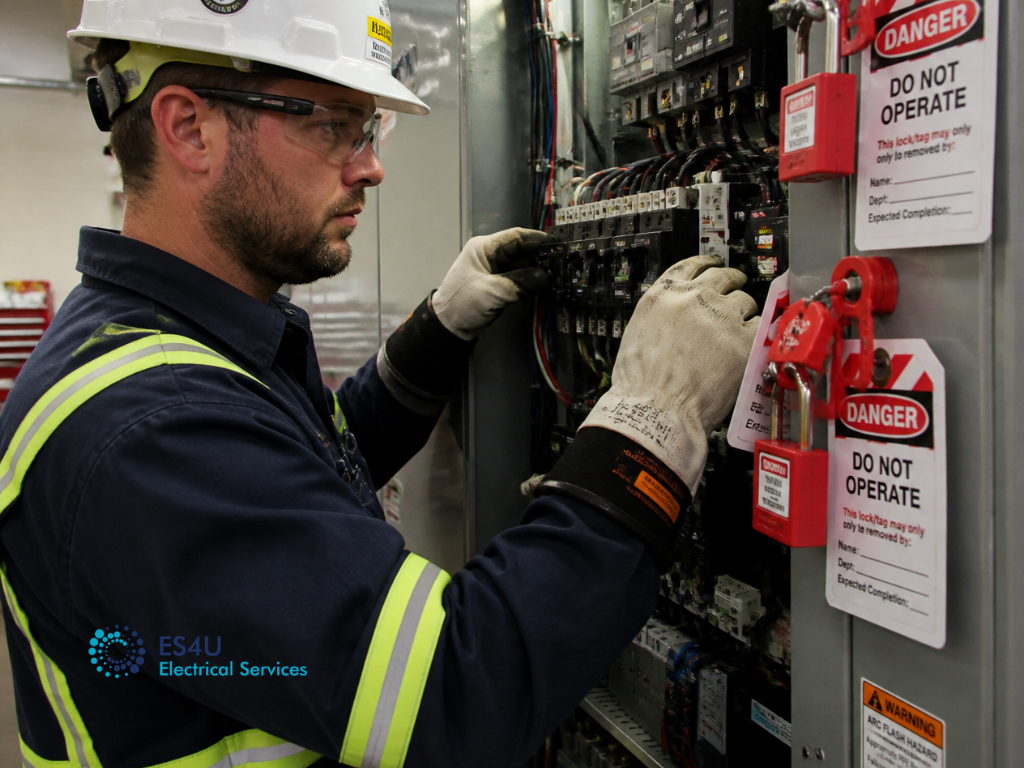
Electrical isolation is one of the most important safety considerations during industrial maintenance.
For facilities arranging industrial electrical shutdowns services Sydney, isolation procedures must reflect the actual electrical installation and the equipment affected by the planned work.
Switching off machinery through its normal operating controls is not necessarily the same as establishing a safe electrical isolation.
How Industrial Electrical Shutdowns Services Sydney Manage Isolation
Before relevant electrical work begins, the equipment must be appropriately isolated and verified as de-energised by competent, authorised personnel.
SafeWork NSW explains that electrical equipment should not be assumed de-energised simply because a switch has been operated.
The relevant circuits and energy sources must be identified, and the required isolation arrangements established.
Industrial facilities can involve more than one electricity supply.
Standby generators, battery systems, alternative supply arrangements or interconnected switchboards may need consideration.
An apparently isolated section of equipment may remain hazardous if another source can energise it.
Lockout and tagout controls are used to help prevent equipment from being unintentionally re-energised while work is underway.
These arrangements must follow the applicable procedures for the installation and workplace.
The purpose is to ensure that workers are not exposed to unexpected electrical energy during maintenance.
NSW electrical safety requirements generally prohibit work on energised equipment, subject to limited circumstances permitted by legislation and additional mandatory controls.
Normal production demands or a preference to avoid downtime should not be treated as reasons to bypass electrical safety requirements.
Facility managers should establish who is responsible for isolation, who is authorised to conduct electrical work and how the isolation will remain controlled throughout the shutdown.
Why Lockout, Tagout and Stored Energy Controls Matter
Industrial machinery can contain several forms of hazardous energy.
Even after the electrical supply has been disconnected, the equipment may retain hydraulic pressure, compressed air, mechanical tension or other stored energy.
Some systems may also contain stored electrical energy.
These hazards need to be considered before workers enter areas or perform maintenance activities where unexpected movement or energy release could cause injury.
Lockout/tagout arrangements are intended to prevent equipment from being operated or energised while maintenance is underway.
SafeWork NSW recommends developing energy isolation procedures in consultation with relevant workers.
The arrangements should reflect the equipment and all relevant hazardous energy sources.
Where multiple workers or contractors are involved, isolation responsibilities must be coordinated.
Workers should understand which controls protect their activities and who has authority over those controls.
Removing another person’s lock or danger tag is not a routine administrative action.
SafeWork NSW guidance describes exceptional circumstances where removal may be considered under a controlled process involving authorised personnel and management approval.
Such situations require appropriate checks to establish that equipment can be safely returned to service.
The central principle is that isolation controls must remain effective for as long as workers depend on them for protection.
Preparing Workers and Contractors for a Safe Shutdown
Industrial shutdowns often require coordination between electrical contractors, maintenance teams, production staff and site management.
For industrial electrical shutdowns services Sydney businesses engage, clear responsibilities and communication arrangements help ensure that everyone understands the work being undertaken.
Even technically straightforward maintenance can create risks if people are unaware that equipment has been taken out of service.
Establishing Roles, Communication and Site Access
The facility manager or relevant site representative should establish who is responsible for coordinating the shutdown.
This includes confirming which areas and equipment will be affected, how contractors will access the site and who has authority to approve work.
Electrical contractors need appropriate information about the installation and proposed activities.
Production supervisors should understand which operations must stop and when affected areas will be available.
Other contractors may need information about equipment restrictions, shared workspaces and the boundaries of their authorised tasks.
Site inductions and relevant safety procedures should be completed before work begins.
Access to hazardous work areas may need to be restricted while maintenance is underway.
The communication arrangements should also explain how unexpected problems will be reported.
If the work scope changes, affected teams must be informed before additional activities proceed.
For shutdowns involving several contractors, coordination is particularly important because different tasks may depend on the same equipment or isolation arrangements.
Clear responsibilities help reduce confusion about who can authorise work, release an area or approve the return of equipment to service.
Using an Electrical Maintenance Checklist Before Work Begins
An electrical maintenance checklist can help facility managers organise the practical requirements of a planned shutdown.
The planning record should identify the equipment requiring attention, known faults, proposed maintenance activities and operational areas affected.
It should also establish whether relevant drawings, equipment information and previous maintenance records are available.
The required electrical contractors, equipment specialists and site personnel should be identified in advance.
Access arrangements, permits, safety procedures and communication responsibilities should also be considered.
Where electrical isolation is necessary, the planning process should confirm that suitable authorised personnel and site-specific procedures will be available.
The shutdown schedule should account for the work itself as well as appropriate inspection, testing and recommissioning.
Facility managers should also establish how unexpected findings will be handled.
For example, a contractor may discover deterioration that was not visible before equipment was opened for authorised maintenance.
Additional work may require technical assessment, revised approvals or a change to the schedule.
A checklist can help ensure these considerations are not overlooked.
However, it does not replace an electrical risk assessment, isolation procedure, permit system or the judgement of competent personnel.
Maintaining Electrical Safety During Shutdown Work

Once maintenance begins, the safety controls established during preparation must remain effective throughout the work.
For industrial electrical shutdowns services Sydney businesses arrange, this includes managing access, maintaining isolation arrangements and coordinating activities as the project progresses.
A shutdown should not be treated as safe simply because work began under suitable conditions. Changes during maintenance can introduce new risks.
Safe Practices During Industrial Electrical Maintenance
Industrial electrical maintenance may involve inspection, testing, repairs or replacement of components within existing electrical installations.
The work must be undertaken by appropriately licensed, qualified or authorised personnel according to the activities involved.
Isolation arrangements should remain effective while workers depend on them for protection.
Access restrictions and relevant site procedures must also be maintained.
Where several contractors are working nearby, their activities should be coordinated to prevent one task from creating hazards for another.
Unexpected findings can change the work requirements.
For example, an electrician may identify damaged electrical components that require further assessment before work can continue.
The additional work should not simply be added without considering the revised risks and necessary approvals.
Maintenance teams should communicate relevant changes to the shutdown coordinator and affected personnel.
Electrical testing and fault investigation require appropriate equipment and competence.
Work on energised electrical equipment is generally prohibited under NSW requirements except in narrowly defined circumstances with additional controls.
A production deadline does not remove these obligations.
The priority should remain the safe completion of authorised work and protection of everyone affected by the shutdown.
How Shutdown Maintenance Sydney Supports Workplace Safety
Planned shutdown maintenance provides an opportunity to address electrical systems that may be difficult to access during normal operations.
Depending on the facility, the agreed work may involve switchboard inspection, fault investigation, electrical repairs or replacement of deteriorated components.
Other activities may relate to distribution equipment, control systems or electrical infrastructure supporting industrial machinery.
For industrial electrical maintenance Sydney facilities require, the scope should reflect the actual equipment and its maintenance needs.
Some inspections may identify issues requiring immediate attention.
Others may support longer-term planning by documenting component condition or recommended future work.
A planned shutdown can also provide a more suitable opportunity for coordinating electrical work with mechanical maintenance or production changes.
However, maintenance cannot guarantee that every hidden defect will be discovered.
It also cannot eliminate the possibility of future equipment failure.
The value of planned maintenance lies in addressing relevant risks through a controlled process and maintaining suitable records of completed work.
Any defects remaining at the end of the shutdown should be documented and assessed before the affected equipment is returned to service.
Testing, Re-Energisation and Safe Equipment Restart
Completing maintenance does not automatically mean that industrial electrical equipment is ready to operate.
Before operations resume, appropriate inspection, testing and recommissioning arrangements must be completed.
For industrial electrical shutdowns services Sydney facilities use, the return-to-service stage deserves the same attention as the initial shutdown.
What Happens Before Electrical Equipment Returns to Service?
The completion of electrical work needs to be confirmed by the personnel responsible for that work.
Depending on the installation and activities undertaken, this may involve inspection, electrical testing and verification that the completed work meets relevant requirements.
Work areas must also be reviewed to ensure that personnel, tools and temporary equipment are appropriately accounted for.
Where isolation controls have been used, their release must follow the established procedures.
The removal of locks, tags or other isolation arrangements should not occur simply because someone believes the maintenance is finished.
Authorised personnel need to confirm that the relevant conditions for releasing equipment have been met.
Communication with affected workers and operational supervisors is essential.
People working near machinery or connected systems should know when the equipment is expected to become operational again.
In NSW, electrical installation work may also require a Certificate of Compliance for Electrical Work.
Current NSW requirements specify that relevant certificates must be submitted through the BCNSW eCert system.
The exact documentation depends on the electrical work completed and applicable legal requirements.
Site management should establish who is responsible for receiving relevant records and approving the operational handover.
A controlled return to service helps prevent misunderstandings between maintenance teams and production personnel.
Why Controlled Restart Procedures Reduce Operational Risks
Industrial machinery may need further checks before normal production resumes.
Electrical systems can interact with motors, automated controls, safety devices, conveyors and other plant shutdown electrical services sydney.
Re-energising a system does not necessarily mean the associated machinery should immediately begin operating.
The return-to-service arrangements must reflect the equipment and its approved operating procedures.
Maintenance personnel may need to confirm that their work has been completed and relevant defects addressed.
Electrical personnel may be responsible for the required electrical testing and associated authorisations.
Operational supervisors may need to confirm that workers are clear of affected areas and production systems are ready.
The precise responsibilities depend on the facility and equipment.
Some systems may require a planned recommissioning sequence developed by competent personnel.
Any abnormal conditions observed during restart should be assessed before normal operation continues.
Unexpected alarms, faults or unusual equipment behaviour should not be dismissed simply because the shutdown schedule has ended.
Safe recommissioning involves confirming that the electrical work is complete and the wider plant can return to its intended operation under appropriate conditions.
Choosing the Right Industrial Electrical Shutdown Services
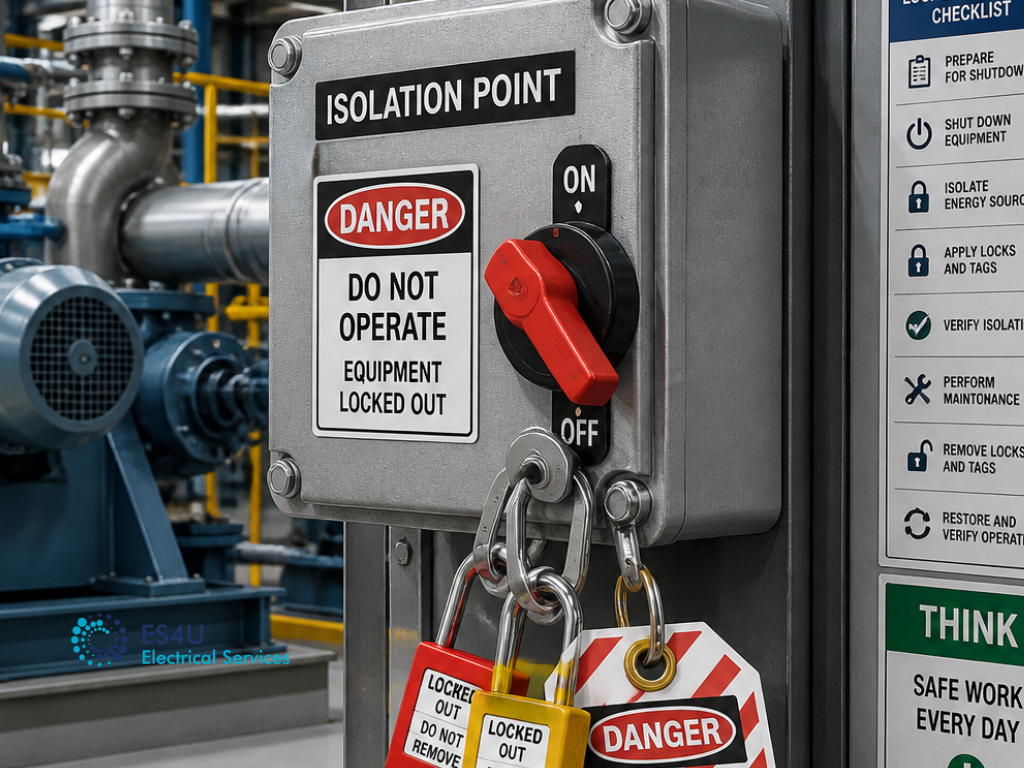
Selecting a suitable contractor is an important part of planning industrial electrical work.
For businesses comparing industrial electrical shutdowns services Sydney providers offer, the decision should be based on the work required, the contractor’s relevant capabilities and the safety arrangements needed for the facility.
Industrial shutdowns can involve complex equipment, shared workspaces and operational dependencies, making clear communication particularly important.
What to Look for in Industrial Electrical Contractors in Sydney
Industrial businesses should consider whether a contractor has experience with electrical installations and equipment similar to those at their facility.
Relevant services may include industrial electrical fault finding, switchboard work, electrical maintenance, repairs and electrical installation upgrades.
Appropriate NSW licensing is essential for electrical wiring work.
Contractors should also understand the need for site-specific risk assessments, isolation arrangements, authorisations and testing requirements.
Facility managers can ask how the proposed work will be coordinated with site operations.
A suitable contractor should be able to explain the anticipated scope, relevant access needs and factors that could affect the shutdown.
The quotation should distinguish the planned work from additional repairs that may be identified later.
Businesses should also understand how findings will be reported and what documentation will be provided after completion.
An urgent electrical breakdown may require a different response from a planned maintenance shutdown.
Where an emergency breakdown industrial in Sydney is needed, businesses should confirm the provider’s actual availability and capabilities rather than assume that every electrical contractor offers immediate emergency attendance.
Selecting a contractor solely on price may overlook differences in service scope, qualifications and project requirements.
The more useful comparison is whether the proposed services suit the installation and can be coordinated with the facility’s safety and operational responsibilities.
Discussing Industrial Electrical Shutdowns Services Sydney With ES4U
For industrial businesses planning electrical maintenance or installation work, ES4U provides industrial electrical services across Greater Sydney.
Its published industrial fit-out services include electrical installations, power distribution, switchboard work, fault finding and repairs.
ES4U also provides information about industrial electrical maintenance, including planned inspections and maintenance activities.
These services may be relevant to facilities preparing for electrical work that requires equipment or systems to be taken out of service.
Industrial managers can discuss the equipment involved, existing electrical concerns, planned maintenance activities and operational restrictions.
Providing relevant information about the installation and proposed work can help establish what needs further assessment.
Before proceeding, the facility and contractor should determine the appropriate work scope, safety responsibilities and scheduling requirements.
Where additional technical advice, specialist personnel or operational coordination is necessary, those requirements should be identified during planning.
Businesses should also clarify what work will be completed during the shutdown and which activities may need separate arrangements.
To discuss an industrial electrical project, facility managers can contact ES4U with details about their site and proposed electrical work.
An industrial electrical shutdown maintenance sydney is more than a temporary interruption to production.
It is a coordinated activity involving electrical safety, equipment condition, worker responsibilities and controlled recommissioning.
By identifying hazards early, establishing suitable isolation arrangements, coordinating contractors and confirming that equipment is ready before operations resume, industrial businesses can approach planned electrical work with a clearer understanding of the risks involved.
For facilities across Sydney, effective shutdown safety begins with preparation and continues until the relevant systems have been appropriately checked and returned to service.
