

For an older person, a standard toilet seat may sometimes feel hard or uncomfortable, particularly when sitting takes longer than it once did. A soft toilet seat cushion can add a padded surface and may make everyday toileting more comfortable, but softness is only one part of choosing the right product.
Fit, stability, seat height, cleaning and the person’s ability to sit down and stand up safely all matter. A cushion that feels comfortable but moves during use, changes the sitting height too much or is difficult to clean may create new problems rather than solving the original one.
It is also important to distinguish between a comfort product and equipment intended to support mobility. A toilet seat pillow or cushioned toilet seat may improve the seating surface, while a raised toilet seat, over-toilet frame, grab rail or other bathroom medical equipment may be intended to address different needs.
For older Australians, this distinction is particularly relevant because current Australian Government aged-care arrangements recognise toileting supports and bathroom modifications as forms of assistive technology or home modification where they meet assessed needs.
This guide explains what to check before buying, how to compare different bathroom products and when professional advice may be more useful than simply choosing a thicker cushion.
Comfort During Everyday Toileting
A standard toilet seat is designed to be durable and easy to clean, but its firm surface may not feel comfortable for everyone.
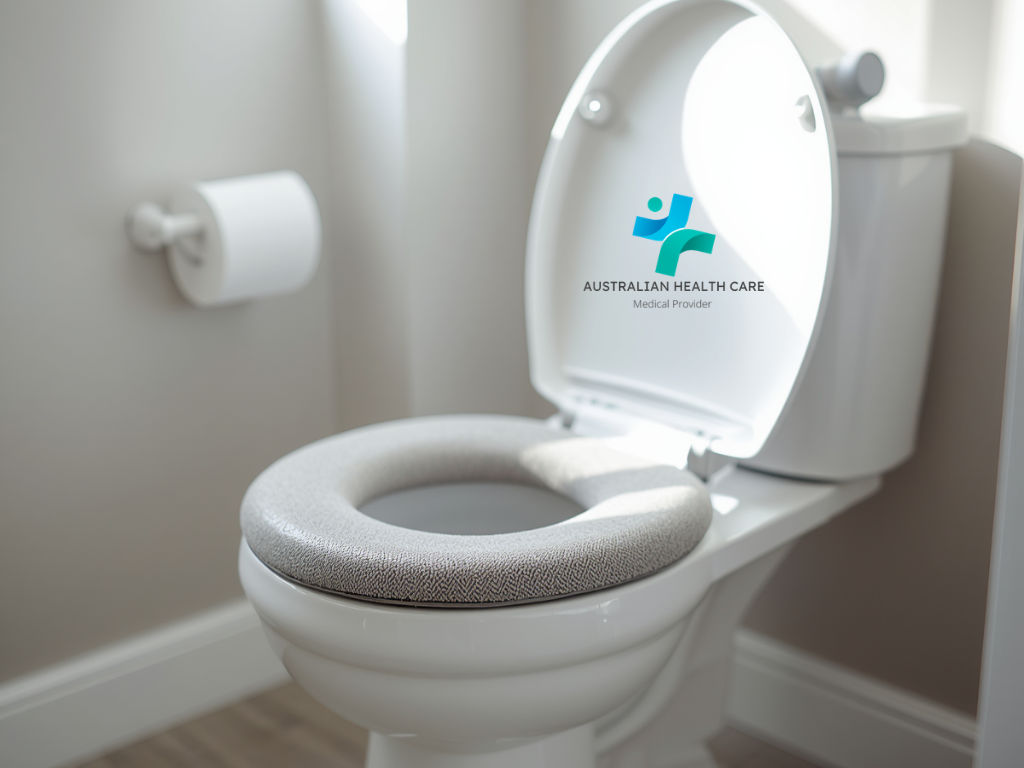
A soft toilet seat cushion adds padding between the user and the original toilet seat. Similar products may also be described as a toilet seat pillow, cushioned toilet seat, cushion toilet seat or soft toilet seat.
For someone who finds a hard toilet seat uncomfortable, this extra layer may make sitting feel gentler during normal bathroom use. It can also be useful when a person takes longer to complete their toileting routine and simply wants a softer seating surface.
However, comfort varies between people. A very thick, soft cushion may feel pleasant to one user but unstable to another. The person’s balance, sitting position, strength and ability to transfer on and off the toilet should therefore be considered alongside cushioning.
This is why choosing by appearance alone is not ideal.
Before buying, think about how the person currently uses the bathroom. If they can sit down and stand up independently but dislike the firmness of the seat, a cushion may be worth considering. If they struggle with lowering themselves onto the toilet or rising afterwards, the issue may involve mobility rather than comfort alone.
That difference becomes important when deciding whether a cushion is the right product.
When Comfort Is Only Part of the Problem
A padded toilet seat does not perform the same function as every other toileting aid.
An older person may say that the toilet is uncomfortable when the real difficulty is that the seat feels too low, there is nothing secure to hold during a transfer, or their balance has changed.
In those situations, simply adding more padding may not address the main problem.
A raised toilet seat can increase sitting height. An over-toilet frame can provide a different type of support around the toilet. Appropriately installed grab rails may help in some bathroom setups, while other users may require more specialised equipment recommended following an assessment.
Healthdirect advises that older people can reduce fall risks around the home by addressing hazards in wet areas and considering supports such as handrails or seating where appropriate.
If someone has recently started struggling to stand, has fallen in the bathroom, feels unsteady during transfers or has experienced a noticeable change in mobility, it is sensible to seek professional advice rather than assuming that a softer seat will solve the problem.
A physiotherapist or occupational therapist can assess the person’s movement, strength and bathroom environment and help determine whether the need is primarily comfort, mobility support or both.
What Should You Check Before Choosing a Toilet Seat Cushion?
A soft toilet seat cushion needs to fit the toilet it will actually be used on.
Toilet seats vary in shape, width, length and opening size. Some are more rounded, while others are elongated. Attachment systems also differ between products.
Before ordering, measure the existing toilet seat and compare those measurements with the supplier’s product specifications.
Check the overall width and length as well as the opening through the centre of the cushion. A product that sits too far over the edge of the toilet seat or leaves large unsupported sections may not feel secure.
Also check how the cushion attaches.
Some products may use straps, hook-and-loop fasteners or another fixing method. The important question is whether the attachment is compatible with the existing seat and whether it can remain properly positioned during normal use.
If dimensions are missing from a product listing, contact the supplier rather than assuming the item will fit.
This small step can help avoid buying a product that appears suitable online but does not work with the toilet once it arrives.
Check Cushion Thickness and Seat Height
Thickness affects more than softness.
Adding a toilet seat pillow changes the height of the seating surface. A small increase may make little difference for one person, while a much thicker cushion could noticeably change how they position themselves.
This matters because sitting height affects transfers.
For some users, a slightly higher surface may feel easier to use. For others, extra height or very soft padding may make it harder to place their feet comfortably on the floor or feel stable.
The thickest cushion is therefore not automatically the best option.
Look at the stated padding thickness and compare it with the person’s current toilet setup. If the seat already feels appropriately positioned but simply too firm, a moderate amount of cushioning may make more sense than choosing the deepest product available.
Australian Health Care currently lists an over-toilet frame with a soft seat that uses 40 mm of padding, illustrating how suppliers may provide specific cushioning measurements for bathroom products. That product is an over-toilet frame rather than a simple add-on cushion, so it should not be treated as interchangeable with a standalone soft seat pad.
When comparing products, pay attention to the complete design rather than one measurement in isolation.
Why Do Stability and Secure Fastening Matter?
Look for a Cushion That Stays in Position
A cushion should not slide around unexpectedly during normal bathroom use.
This becomes especially important when the intended user has reduced balance, slower movement or difficulty adjusting their position once seated.
Check how the soft toilet seat attaches to the existing toilet. The product description should explain its fastening method and how it is intended to remain in place.
Some designs may use non-slip surfaces, straps or other fixing systems. Whatever the design, it should be installed according to the manufacturer’s instructions.
After installation, check the cushion before routine use. It should sit evenly and should not visibly shift when light pressure is applied.
Also inspect it regularly.
Fasteners can stretch, surfaces can wear and padding can change shape over time. A product that was secure when new may eventually need adjustment or replacement.
Stability should always take priority over adding maximum softness.
If the cushion repeatedly moves even when fitted according to the instructions, continuing to use it may not be appropriate.
Consider Transfers On and Off the Toilet
The moment when a person sits down or stands up can place more sideways and downward force on the toilet seat than simply sitting still.
This means a cushion that feels stable once the person is seated could still move during a transfer if it is not properly secured.
Observe how the person normally approaches the toilet. Do they turn and lower themselves independently? Do they use furniture or walls for support? Does a carer assist them?
If the person depends heavily on pulling or pushing against nearby surfaces, adding a cushion alone may not address the wider transfer issue.
Bathroom medical equipment such as an over-toilet frame or properly selected support rails may be more appropriate in some situations. The Australian Government’s current Support at Home framework recognises toileting supports including commodes and home modifications such as bathroom grab rails where these relate to assessed needs.
Someone searching for a handicap safety grab bar supplier may actually need more than a product catalogue. Grab rail position, wall construction, installation and the user’s movement pattern all affect whether a support is suitable.
For that reason, more complex bathroom safety changes are worth discussing with an occupational therapist or other appropriately qualified professional.
How Easy Should a Toilet Seat Cushion Be to Clean?
Bathroom products need to cope with regular cleaning and moisture.
When comparing a cushioned toilet seat, look carefully at the material covering the padding. A smooth, wipeable surface is generally easier to maintain than an absorbent surface that holds moisture.
The supplier should provide cleaning instructions.
Follow those instructions rather than assuming that every household disinfectant is suitable. Some harsh cleaning chemicals may damage coatings, seams or padding materials.
After cleaning, allow the cushion to dry as directed before regular use.
Hygiene becomes particularly important when more than one person uses the bathroom or when a person receives assistance with personal care.
Australian Health Care’s current guidance on bathroom medical equipment similarly emphasises that soft toilet products should be selected with cleaning and hygiene in mind and that product-specific care instructions should be followed.
If a cushion becomes difficult to clean thoroughly, develops cracks or tears, or absorbs moisture into the padding, replacement may be more appropriate than continuing to use a damaged product.
Inspect the Cushion Regularly
Bathroom aids should not be treated as permanent fixtures that never need checking.
Look at the cushion surface, seams and attachment points during regular cleaning. The padding should remain reasonably even, and fasteners should still hold the product securely.
Pay attention to any areas that have become compressed or damaged.
A split covering can allow moisture to reach internal padding. Loose straps can affect fit. Warped or permanently compressed cushioning may change how the user sits.
Cleaning is a good opportunity to notice these changes early.
The same principle applies to other bathroom equipment.
If the person also uses medical bench seats, shower chairs, an over-toilet frame or another bathroom support, inspect those products according to their manufacturer’s guidance. Check that adjustment mechanisms, feet, grips and other moving or supportive parts remain in usable condition.
A small amount of routine maintenance can make it much easier to identify when something no longer works as intended.
Do You Need a Cushion, Raised Seat or Other Bathroom Equipment?
Match the Product to the Actual Need
One of the most useful questions before buying is simply: what problem are we trying to solve?
If the standard toilet seat feels too hard but the person otherwise uses the toilet independently, a soft toilet seat cushion may be the product worth comparing.
If the main difficulty is lowering onto a low toilet or standing afterwards, a raised toilet seat may deserve consideration instead.
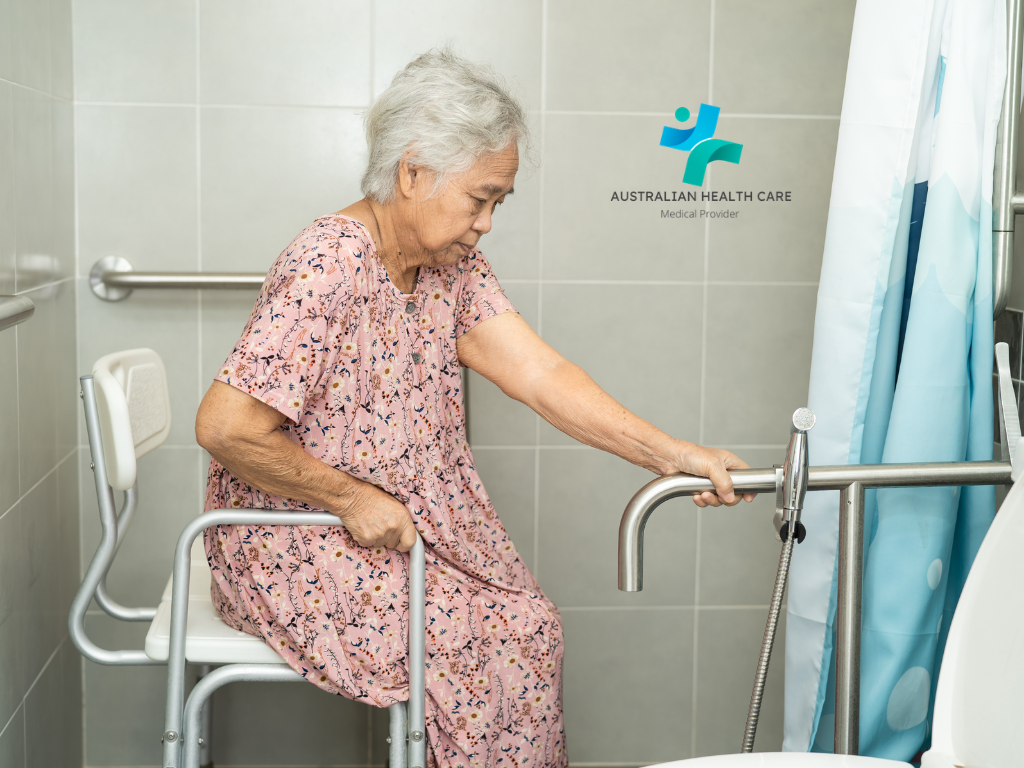
If the person needs support on both sides while transferring, an over-toilet frame may provide a different type of assistance.
If toileting is difficult because the bathroom itself is not easily accessible, the problem may involve the wider environment rather than the toilet seat alone.
These products are not automatically interchangeable.
That is why generic descriptions such as “toilet aid” can sometimes be misleading for shoppers. Two products may both be sold in the same bathroom category while serving very different purposes.
Before ordering, read the intended-use description and check the dimensions, attachment method and design.
If the person’s needs are more complicated than simply wanting a softer seat, professional assessment may save time and prevent unnecessary purchases.
Consider Grab Bars and Medical Bench Seats Where Appropriate
Bathroom support often involves more than the toilet.
An older person may also find standing in the shower difficult, need somewhere stable to sit while washing or require appropriately positioned support when moving around wet areas.
Medical bench seats, shower chairs and similar equipment may be considered where sitting support is needed during bathing. Grab rails may also form part of an accessible bathroom setup.
However, these products should be selected around the person and the space.
A bench that is too wide for the shower is not useful. A rail positioned where the user cannot comfortably reach it may provide little practical support. Equipment that crowds a small bathroom may even create additional obstacles.
The Australian Government recognises bathing equipment such as shower chairs and non-slip mats, as well as certain bathroom home modifications, within its current assistive technology framework for eligible older people with assessed needs.
This reinforces an important buying principle: bathroom equipment should be chosen according to function rather than simply because it appears to provide extra support.
How Should You Compare Toilet Seat Cushions and Bathroom Products?
Compare Fit, Materials, Cleaning and Product Specifications
Price is easy to compare, but it should not be the only deciding factor.
Start with fit. Check the toilet dimensions and confirm that the cushion is intended for the relevant seat shape.
Then look at thickness and firmness. Consider whether the extra height and softness are appropriate for the person using it.
Check how the product stays attached and whether the fastening system can be used with the existing toilet seat.
Cleaning requirements matter as well. Look for clear care instructions and materials suitable for regular bathroom cleaning.
Also check whether the supplier provides information about intended use, product dimensions and any relevant user limitations.
If you are comparing a cushion toilet seat with more substantial bathroom medical equipment, make sure you are comparing products designed to solve the same problem.
For example, a standalone cushion and a freestanding over-toilet frame may both offer a soft seating surface, but they differ substantially in structure, support and intended function.
The right product is therefore the one that matches the person’s actual need, not necessarily the one with the most features.
Choose a Supplier That Provides Clear Product Information
A supplier should make it possible to understand what you are buying before placing an order.
Useful product pages should provide dimensions, material information, intended use, included components and relevant care instructions.
The supplier should also provide clear contact information so you can ask questions about compatibility, replacement parts, returns or delivery.
Australian Health Care currently offers a range of bathroom medical equipment, including over-toilet aids and accessories, and its website provides product specifications for individual items.
If you are comparing a soft toilet seat cushion, cushioned toilet seat or related bathroom product through Australian Health Care or another supplier, use the same buying criteria regardless of the company.
Check fit first, then stability, cleaning requirements, intended use and any additional support the user may require.
A supplier can help explain the differences between products. That does not replace clinical advice when the question is whether a particular item is suitable for an individual’s mobility, recovery or health needs.
When Should You Contact a Supplier or Health Professional?

Contact the Supplier When Product Details Are Unclear
A supplier is the appropriate place to ask product-specific questions.
If the product listing does not clearly show dimensions, ask for them. If you are unsure how the cushion attaches to the toilet, ask the supplier to explain the fastening system.
You can also ask about cleaning instructions, replacement parts, product materials, delivery and returns.
Before contacting the company, having basic measurements ready can make the conversation easier. Know the width and length of the existing toilet seat and, where possible, its general shape.
If the person already uses other equipment around the toilet, mention that as well because the products need to fit together physically.
Australian Health Care may be useful to contact when comparing its bathroom medical equipment or soft-seat toileting products, particularly when you need clarification about dimensions, materials or differences between available models.
The supplier’s role is to help you understand the product.
The decision becomes more clinical when the question changes from “Will this fit my toilet?” to “Is this the right equipment for this person’s mobility?”
Seek Professional Advice for Mobility or Transfer Concerns
An older person who simply wants a more comfortable toilet seat may not require a professional bathroom assessment.
However, the situation changes when there are falls, major balance problems, difficulty transferring, changing mobility or more complex care needs.
Healthdirect notes that falls can significantly affect independence in older people and recommends reducing hazards and considering appropriate supports around the home.
An occupational therapist can assess how a person moves through the bathroom, sits, stands and uses existing fixtures. A physiotherapist may also be involved where mobility, strength or balance are concerns.
This can help determine whether a soft toilet seat is enough or whether another solution would be more appropriate.
The goal is not to add as much bathroom equipment as possible. It is to provide the level of support that suits the person without unnecessarily complicating the room.
A soft toilet seat cushion can be a simple way to make a standard toilet surface more comfortable, but a good buying decision looks beyond softness. Fit, fastening, hygiene, seat height and the person’s ability to transfer safely all deserve attention.
For an older person who remains independently mobile and simply dislikes a hard seat, a cushion may be a straightforward option. When sitting, standing or balance has become difficult, broader bathroom support or professional assessment may be more appropriate.
Taking a few measurements, checking product specifications and being clear about the actual problem before buying can make it much easier to choose a product that fits both the person and the bathroom.
