

A battery chainsaw can be a practical choice for pruning, cutting small trees, preparing firewood and handling general property maintenance, but one of the first questions buyers ask is how long the battery will actually last. There is no single runtime that applies to every chainsaw because battery capacity, timber size, chain condition, cutting technique, temperature and the intensity of the work can all affect how much cutting you complete from one charge.
This is why manufacturer runtime figures should be treated as a guide rather than a promise. Husqvarna Australia, for example, states that battery runtime depends on the battery capacity, machine, application, weather, battery age and condition, operating style and power level. Its published runtime figures are described as “up to” values and may vary in real-world conditions.
How Chainsaw Runtime Is Measured During Real Use
Chainsaw runtime is often misunderstood because a chainsaw does not normally run continuously in the same way as some other garden equipment.
During a typical backyard job, you may make several cuts, stop to reposition timber, clear branches, inspect the work area and then begin cutting again. The battery is therefore supporting a mixture of active cutting and periods when the machine is not under full load.
This makes elapsed time a poor way to compare every battery chainsaw.
Two people could each use a chainsaw for an hour but complete very different amounts of cutting. One may spend most of that time working through dense logs, while another is trimming small branches around a garden.
Manufacturer runtime tools often account for different applications for this reason. Husqvarna Australia’s battery runtime tool separates chainsaw activities such as log cutting and removal because different workloads place different demands on the battery.
When comparing a chainsaw, it is therefore more helpful to think about the amount and type of work you want to complete per charge rather than concentrating only on a headline number of minutes.
For occasional residential pruning, even a relatively modest battery may provide enough usable cutting time. Regular firewood preparation or repeated larger cuts can require substantially more stored energy.
Why Chainsaw Runtime Can Vary Between Jobs
The same chainsaw and battery can deliver different runtime from one job to another.
Timber diameter is one obvious factor. Cutting through a small branch requires much less sustained work than cutting through a thick log.
Wood density and condition can also influence how hard the chainsaw works. A long series of demanding cuts can place much more load on the motor than occasional pruning.
Temperature and weather can also affect battery performance. Husqvarna specifically identifies ambient temperature and environmental conditions as factors that can change battery runtime. Battery age, health and previous use can matter as well.
Operator behaviour makes a difference too.
Allowing the chain to cut properly is generally more efficient than forcing the saw aggressively through timber. Using a dull chain can also increase the effort required to complete the same cut.
For this reason, avoid comparing battery chainsaws solely from a quoted runtime number. Check which battery was used, what application was tested and whether that test resembles the work you actually expect to do.
Match Battery Capacity to the Work You Do
How Chainsaw Battery Size Affects Runtime
Battery capacity is an important part of chainsaw runtime, but the numbers need to be understood correctly.
Within the same battery platform and voltage, a higher amp-hour rating generally means the battery can store more energy and support longer operation. The trade-off is that larger batteries can also be heavier.
This matters with a handheld tool such as a chainsaw because battery weight affects the overall balance of the machine.
When comparing batteries across different voltage systems, amp-hours alone are not enough. Watt-hours provide a more useful indication of total stored energy because they account for both voltage and amp-hour capacity.
The key is to choose enough battery capacity for the task without making the chainsaw unnecessarily heavy for the way you use it.
For example, a homeowner who mainly removes small branches around the garden may prefer a lighter battery even if it means less maximum runtime. Someone cutting a larger quantity of firewood may value extra capacity more than minimum tool weight.
Current Australian battery chainsaw ranges illustrate this variety. Husqvarna offers both 18V and 36V battery saws, with different battery capacities and performance levels depending on the intended application.
The appropriate battery should therefore be matched to the chainsaw model and workload rather than chosen simply because it has the largest available capacity.
Choosing a Chainsaw Battery for Home Tasks
For light residential work, runtime requirements can be quite modest.
Pruning small trees, reducing fallen branches after a storm or cutting occasional pieces of timber may involve short periods of actual chainsaw operation.
A machine designed for these tasks does not necessarily need the battery capacity required for repeated heavy log cutting.
Husqvarna’s current 225i, for example, is positioned for tasks such as pruning, firewood cutting and felling smaller trees and is supplied in one Australian configuration with a 36V 4Ah battery.
More demanding work changes the equation.
If you regularly prepare firewood, maintain a larger property or expect the chainsaw to complete a long sequence of cuts, additional battery capacity or a second battery may be useful.
Before buying, think about your most demanding normal job rather than the easiest one.
A chainsaw that comfortably handles routine pruning but consistently stops halfway through your regular firewood session may not have the battery arrangement that best suits you.
Understand How Wood and Cutting Conditions Affect Runtime
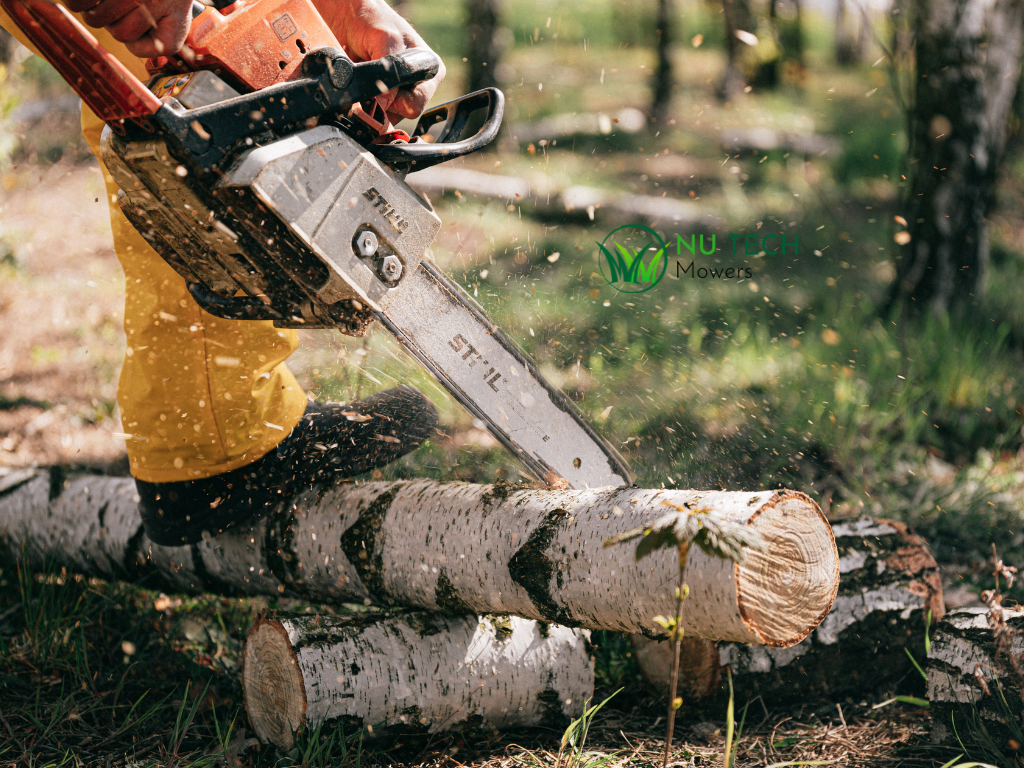
Why a Chainsaw Uses More Power on Thick Timber
Thicker timber generally keeps the chainsaw under load for longer.
A small branch may be cut in seconds, while a large log keeps the motor working continuously through a much greater volume of wood.
The result is greater energy consumption per cut.
This is why battery runtime should always be considered together with cutting capacity. A long runtime figure achieved during light pruning cannot automatically be applied to sustained firewood cutting.
The type of chainsaw also matters.
A smaller homeowner saw may be ideal for lighter garden work but require more time on demanding cuts. A higher-output chainsaw can cut faster but may also place greater demands on the battery when operated at full capacity.
Some modern battery systems provide different operating modes for this reason. Husqvarna’s 435i, for example, includes an energy-saving mode intended to provide increased runtime for jobs that do not require maximum power.
Use full performance when the work requires it, but there is little benefit in demanding maximum output for every light branch.
Choosing a chainsaw that is appropriately sized for the normal workload can make both cutting performance and battery use more practical.
How Chain Condition Affects Chainsaw Battery Life
A battery chainsaw works best when the cutting equipment is properly maintained.
A sharp chain removes material efficiently. A dull chain requires more effort, can slow progress and may encourage the operator to push harder on the saw.
That extra resistance can increase the work required from the motor and reduce the useful cutting completed per charge.
Chain tension also matters.
The chain needs to be adjusted according to the manufacturer’s instructions. A chain that is incorrectly tensioned can affect performance and create safety issues.
Regularly inspect the chain, guide bar and lubrication before working. If cutting performance noticeably declines despite a charged battery, do not automatically assume the battery is the problem.
The chain may need sharpening, tension adjustment or replacement.
A well-maintained chainsaw is not only easier to use; it also allows the battery and motor to perform under the conditions they were designed for.
This makes chain maintenance one of the simplest ways to avoid wasting available battery capacity.
Plan for Longer Jobs Without Running Out of Power
Using Spare Batteries With a Chainsaw
A second battery can be one of the simplest ways to make a battery chainsaw practical for longer jobs.
Instead of choosing an unnecessarily large and heavy battery solely to maximise runtime, some homeowners prefer using two more manageable batteries and changing them when required.
This can be particularly useful when working through a pile of firewood or completing several garden tasks on the same day.
The value becomes even greater when one battery platform works across several outdoor tools.
Some current Husqvarna 36V products, for example, use the company’s interchangeable BLi-X battery system, allowing compatible batteries to be used across multiple tools.
That can be useful if your normal garden routine involves a chainsaw followed by a trimmer, hedge trimmer or leaf blower.
However, sharing batteries across several tools also means thinking about total workload.
A battery that comfortably handles the chainsaw may have little charge remaining when you move on to trimming or cleanup.
For larger property-maintenance sessions, planning battery availability across all of your cordless equipment can be more useful than considering each tool independently.
Charging a Chainsaw Battery Between Tasks
Charging strategy also influences how convenient a battery chainsaw feels in everyday use.
If your cutting jobs are short, you may simply recharge the battery after each use and have it ready for the next job.
Longer sessions may benefit from charging one battery while another is being used, provided the charger and battery system are designed for that arrangement.
Charging time varies considerably between batteries and chargers, so check the specifications for the exact combination you are considering.
Do not assume that every charger fills every compatible battery at the same speed.
Homeowners using several battery garden tools should also plan the order of work. You might complete chainsaw cutting first, place that battery on charge and then use another battery in the trimmer or leaf blower.
Battery condition is important as well. Manufacturers generally provide specific instructions for charging, temperature and storage, so follow the manual supplied with the battery rather than relying on generic advice.
Good charging habits help make cordless equipment more predictable and reduce the likelihood that a job stops simply because every available battery is flat.
Compare Battery Chainsaws With Petrol for Home Use
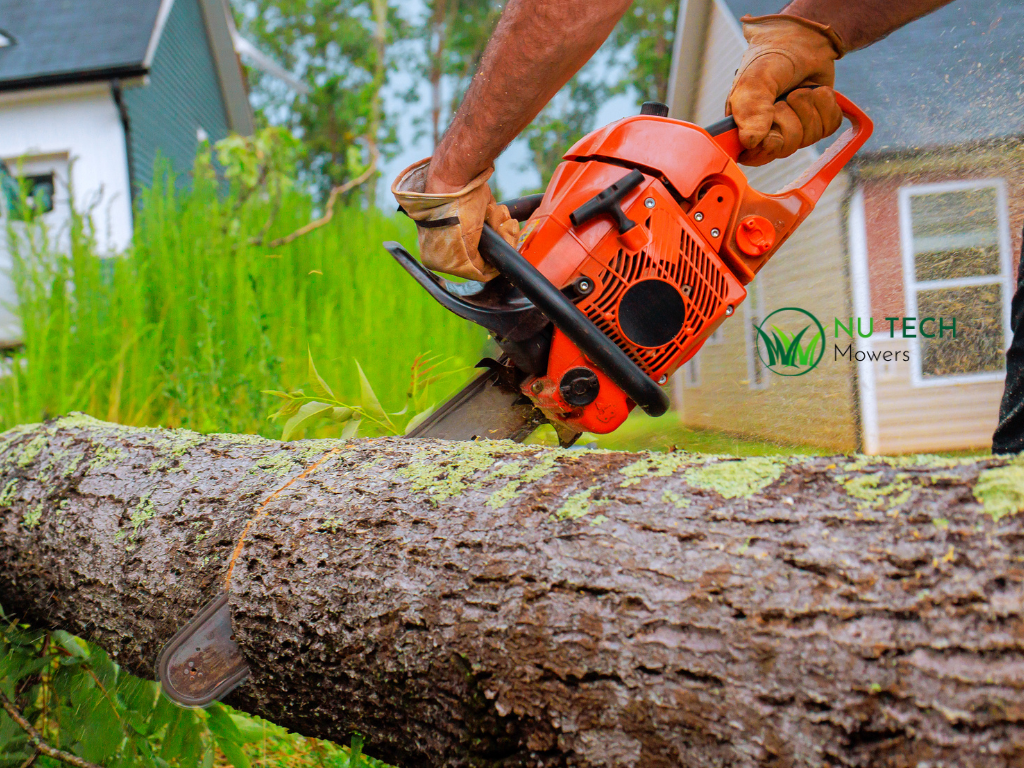
When a Battery Chainsaw Is Practical for Homeowners
A battery chainsaw can make sense for many residential applications.
There is no fuel mixture to prepare, starting is generally straightforward and routine engine maintenance is reduced compared with a petrol saw.
Battery models are also typically quieter during operation and can suit intermittent tasks where the chainsaw may be picked up for a few cuts and then put away again.
Husqvarna’s Australian battery range includes models aimed at tasks such as pruning, clearing, smaller-tree work and firewood preparation, showing how cordless equipment has moved well beyond very light trimming.
Runtime still needs to match the workload.
A homeowner who cuts several fallen branches after garden maintenance may find one battery more than sufficient. Someone spending a large part of the day processing timber may prefer multiple batteries or a different power source.
Battery equipment can also become more attractive when the household already owns compatible cordless garden tools.
A common battery ecosystem across the chainsaw, hedge trimmer, trimmer and leaf blower can simplify charging and battery management, provided each tool and battery are confirmed as compatible.
When a Petrol Chainsaw May Suit Longer Cutting Work
Petrol chainsaws remain practical where sustained cutting is the priority.
If the machine runs for extended periods, refuelling can be quicker than waiting for batteries to recharge. This can matter on larger properties, remote locations or during repeated heavy firewood cutting.
Husqvarna’s Australian comparison notes that petrol machines can continue working while fuel is available, while battery operating time depends on battery size and workload.
The decision should therefore be based on the job rather than assuming one power source is universally better.
Battery can be highly convenient for regular suburban garden maintenance. Petrol can remain practical for prolonged heavy use or work away from reliable charging.
Some property owners may even have a reason to own both types if their work ranges from light garden pruning to occasional major timber cutting.
The important step is to estimate how much continuous cutting you actually do.
If a battery chainsaw can comfortably complete your normal work on one or two batteries, the convenience may outweigh the need for petrol. If your regular workload consistently exceeds that capacity, petrol may still be the more practical option.
Use the Right Safety Gear While Cutting
Safety Equipment to Use With a Chainsaw
Battery power does not make a chainsaw risk-free.
The cutting chain still moves at high speed, and users need to protect themselves against cuts, flying chips, falling material and noise.
Australian workplace guidance gives a useful indication of the protective equipment commonly associated with chainsaw tasks. WorkSafe Queensland guidance identifies items including eye or face protection, hearing protection, protective footwear, high-visibility clothing and cut-resistant leg protection for chainsaw work.
For a homeowner, the exact PPE should follow the manufacturer’s instructions and the hazards of the particular job.
Protective glasses or suitable eye protection help protect against wood chips and debris. Hearing protection may also be required depending on the machine and exposure. SafeWork NSW lists earmuffs as a recognised form of hearing PPE and stresses that hearing protection must be properly selected and fitted for the noise exposure involved.
HI Vis Gear can be useful where visibility is important, particularly around other people, vehicles or equipment, but high visibility clothing does not replace chainsaw-specific protective equipment.
Cut-resistant leg protection, appropriate footwear, gloves and head protection may also be relevant depending on the task.
Why Chainsaw Safety Matters Even for Short Jobs
A quick chainsaw job still deserves proper preparation.
Many backyard cuts feel routine because they may involve only one fallen branch or a small amount of firewood. The duration of the job does not remove the hazards created by a fast-moving chain.
Before starting, inspect the chainsaw and cutting equipment and make sure the work area is clear.
Consider where the branch or timber may move after the cut. Keep other people away from the immediate work area and avoid attempting work that requires skills or equipment beyond your experience.
WorkSafe Queensland’s chainsaw guidance emphasises keeping the saw in good working order, keeping the work area clear, using the chain brake appropriately and holding the saw firmly with both hands during operation.
Tree felling, working at height and cutting timber under significant tension can involve hazards well beyond normal garden maintenance. Those jobs may require trained or qualified professionals.
Battery convenience should never encourage users to treat a chainsaw like a simple cordless hand tool. The machine deserves the same careful setup and operating discipline regardless of how quickly it starts.
Store and Maintain Your Chainsaw Between Jobs
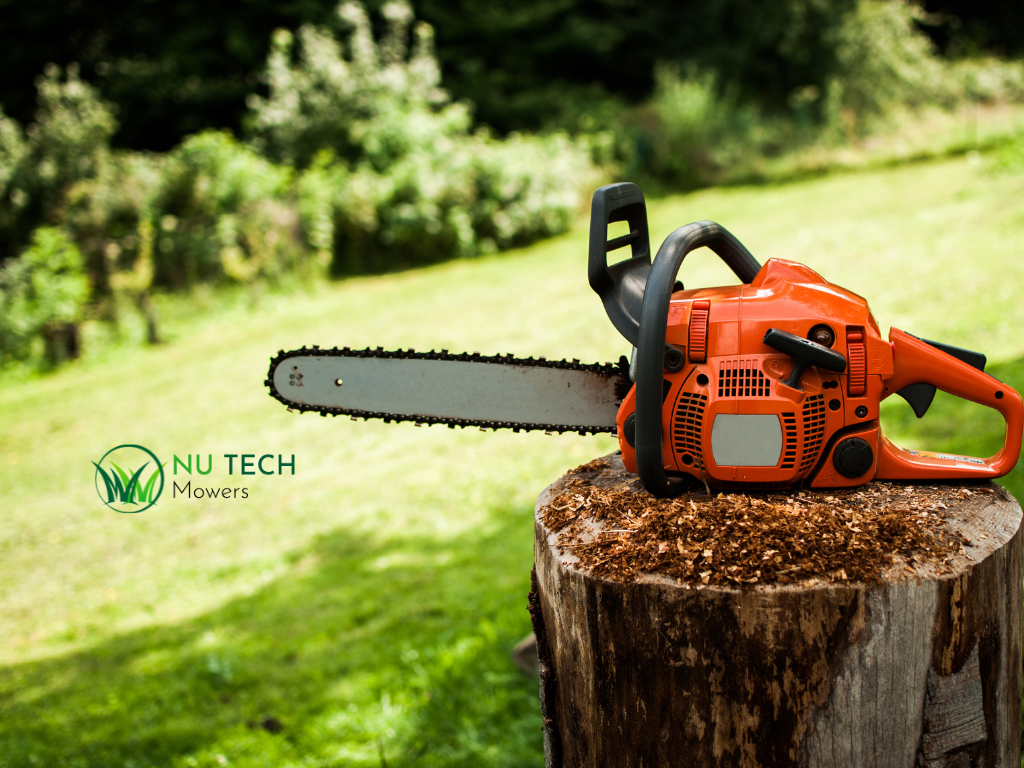
How a Chainsaw Bag Helps With Storage and Transport
A chainsaw bag can help keep the saw and related equipment organised when the machine is being transported or stored.
It can also help contain residual dirt, sawdust and chain oil that would otherwise transfer to a vehicle or storage area.
Before placing the chainsaw into a bag, allow the machine to stop completely and follow the manufacturer’s storage instructions.
A guide-bar cover or scabbard should be fitted where required so the cutting chain is not left exposed.
The battery should also be handled according to its specific storage guidance. Depending on the manufacturer and model, batteries may need to be removed from the tool during storage or transportation.
Do not assume the chainsaw bag itself provides protection against every transport hazard. The saw still needs to be secured so it cannot move around inside a vehicle.
The same principle applies to accessories such as protective glasses, an earmuff or spare batteries. Keep them clean, protected and available so that essential safety equipment does not become separated from the machine.
A well-organised storage setup makes it easier to inspect and prepare the chainsaw properly before the next job.
Maintaining Your Chainsaw for Better Battery Performance
Regular maintenance can help a battery chainsaw deliver consistent cutting performance.
Inspect the chain before use and sharpen it when cutting performance declines. Check tension according to the manufacturer’s instructions and make sure the chain receives the required lubrication.
Clean wood chips and debris from appropriate areas of the machine after use, following the product manual.
Battery condition should also be monitored over time.
Husqvarna notes that battery age, health, usage history and remaining capacity can all influence runtime. If an older battery delivers noticeably less work than it once did, the chainsaw itself may not necessarily be at fault.
It is also worth considering your complete garden equipment setup.
If the same battery system supports your chainsaw, hedge trimmer, trimmer or leaf blower, choosing the right combination of batteries and chargers can make property maintenance more convenient than assessing each tool separately.
When comparing battery chainsaws or replacement batteries, a specialist supplier such as Nu Tech Mower can help you check model compatibility, battery capacity, charger options and whether a particular setup is suitable for the type of cutting you normally do.
The best chainsaw battery runtime is ultimately the runtime that completes your regular job without adding unnecessary weight or cost. Occasional pruning may require relatively little capacity, while repeated firewood cutting may justify a larger battery or a spare.
Rather than relying on a single advertised runtime figure, compare the actual chainsaw, battery, timber size and workload together. If you are unsure which combination suits your property, speak with Nu Tech Mower about the type of cutting you expect to do and the other battery garden equipment you already use.
