

Selecting the right Commercial ice machines for a hospitality business involves several decisions, including production capacity, storage space and operating expenses. One factor that is sometimes overlooked is how the equipment removes heat. Air-cooled and water-cooled machines perform the same essential task, but their cooling methods can make a noticeable difference to installation requirements and day-to-day operation.
For Australian cafés, restaurants, bars and catering businesses, reliable ice production is especially important during busy trading periods. A poorly suited machine may struggle in a hot kitchen, require more water than expected or occupy valuable working space.
Understanding the differences between these two systems can help venue owners compare equipment more confidently. This guide covers their operation, advantages, limitations, running costs and practical considerations when choosing an ice maker.
Understanding Ice Machine Cooling Systems
How Ice-Making Equipment Works in Hospitality Venues
Commercial ice machines operate through a refrigeration cycle that removes heat from potable water until ice forms. Depending on the model, the equipment may produce cubes, flakes or other shapes for drinks, food preparation and display applications.
After production, the ice is deposited into an integrated compartment or a compatible storage bin. The amount of ice produced and the quantity that can be stored are separate specifications.
Production capacity generally describes the volume of ice a machine can manufacture over 24 hours under stated testing conditions. Storage capacity indicates how much finished ice can remain in the bin at one time.
This distinction matters when choosing equipment for a busy venue. A machine with adequate daily production may still have insufficient storage to meet a sudden increase in demand during peak service.
Why Condenser Cooling Makes a Difference
The refrigeration system generates heat that must be removed for ice production to continue. Air-cooled and water-cooled commercial ice machines use different methods to accomplish this.
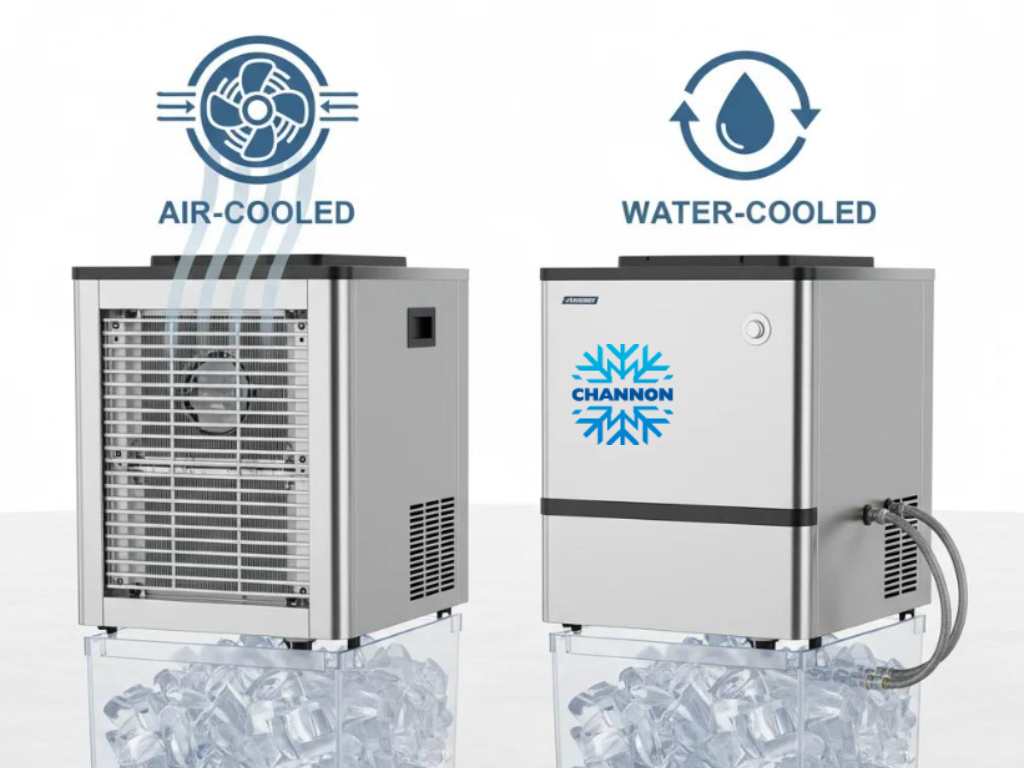
An air-cooled condenser transfers heat into the surrounding air, usually with the assistance of a fan. A water-cooled condenser transfers heat into water circulating through the condenser system.
Both configurations need water to manufacture ice. Depending on its design, a water-cooled model also requires water for heat removal.
The cooling method affects how the machine should be installed, how it performs in different temperatures and the resources it consumes.
Considering Air-Cooled Equipment for Your Venue
Advantages of Air Cooling in Everyday Operations
Air-cooled commercial ice machines are widely used in hospitality environments because they can be suitable for many standard café, restaurant and bar installations.
One of their main advantages is that they generally avoid the additional condenser water consumption associated with once-through water-cooled systems. This can be useful for businesses looking to manage water usage.
Air-cooled equipment is available in different configurations, including compact undercounter machines and larger units intended for higher ice demand.
A properly selected commercial ice maker may work well in a café or restaurant where there is enough space for ventilation and convenient access to water, drainage and electricity.
However, air cooling is not suitable for every location. The machine must be able to draw in and discharge air according to the manufacturer’s requirements.
Why Kitchen Temperature and Airflow Matter
The surrounding temperature has a direct influence on how effectively an air-cooled condenser can reject heat.
When a kitchen becomes unusually warm, the refrigeration system may operate less efficiently and ice production can decrease. This is particularly relevant in Australian summer conditions or kitchens with heat-producing appliances.
Poor ventilation can create similar problems. Placing a machine inside an enclosed cabinet without adequate airflow may cause warm air to circulate around the condenser.
Dust and grease accumulating on accessible condenser surfaces can further affect performance.
Before installing commercial ice machines, review the manufacturer’s operating temperature range and required clearances. If the proposed location is too hot or restricted, consider improving airflow or selecting a more suitable position.
Understanding Water-Cooled Ice Machine Options
How Water Cooling Works in Restricted Spaces
Water-cooled commercial ice machines remove condenser heat through water instead of depending primarily on the surrounding air.
This arrangement can be considered where conventional air-cooled equipment would struggle because of high ambient temperatures or limited ventilation.
Water-cooled machines may also release less condenser heat directly into the surrounding room, although the overall effect depends on the equipment and cooling arrangement.
An important distinction is whether the system uses once-through or recirculated cooling water.
Once-through systems discharge condenser water after it absorbs heat. Recirculating arrangements may reuse water through additional cooling infrastructure.
These differences affect installation complexity, water usage and operating costs, making individual model specifications essential.
Evaluating Plumbing and Water Requirements
The main trade-off with water cooling is the potential increase in water consumption.
In a once-through system, water is used for condenser cooling as well as for producing ice. Depending on the machine and its operating conditions, this additional consumption can significantly influence the total running cost.
The installation may also require suitable water connections, drainage capacity and compliance with applicable plumbing and water-use requirements.
Before selecting water-cooled commercial ice machines, businesses should request information about the model’s water demand and confirm whether the building can accommodate the proposed system.
A kitchen with poor ventilation does not automatically require water-cooled equipment. Relocating the ice maker, improving airflow or investigating another condenser arrangement may be worth considering first.
Comparing Operating Efficiency and Ice Production
Looking Beyond Electricity Consumption
A useful efficiency comparison considers more than the amount of electricity consumed by a machine.
Some water-cooled models may use less refrigeration electricity than comparable air-cooled equipment under certain operating conditions. However, additional condenser water consumption can offset that advantage when overall operating expenses are calculated.
Air-cooled machines generally avoid this extra cooling-water requirement, but their performance can be affected by high room temperatures.
When evaluating commercial ice machines, compare manufacturer information about electricity use, water consumption and expected ice output rather than relying on broad efficiency claims.
Australian buyers should also check applicable Greenhouse and Energy Minimum Standards (GEMS) requirements. Since 3 March 2026, covered commercial ice-maker models have been subject to relevant minimum energy performance and registration requirements, with applicable exemptions or transitional arrangements.
Confirm the model’s current compliance information before purchasing.
Understanding Production Ratings in Real Kitchens
An ice machine’s advertised daily production figure is measured under specified testing conditions. Actual output can change when the operating environment differs from those conditions.
For instance, warmer incoming water or higher kitchen temperatures may increase the work needed to freeze water into ice.
This is particularly important for hospitality venues where ice demand increases during hot weather. A machine that performs adequately during cooler months may have less available production capacity during busy summer periods.
Ask suppliers for performance information at different ambient and incoming water temperatures where available.
Also compare production capacity with storage capacity. Commercial ice machines need enough output to replenish ice supplies, but the storage bin must also accommodate demand during the busiest periods of service.
Selecting Equipment and Comparing Hospitality Suppliers
Matching Your Ice Maker to Your Business Needs
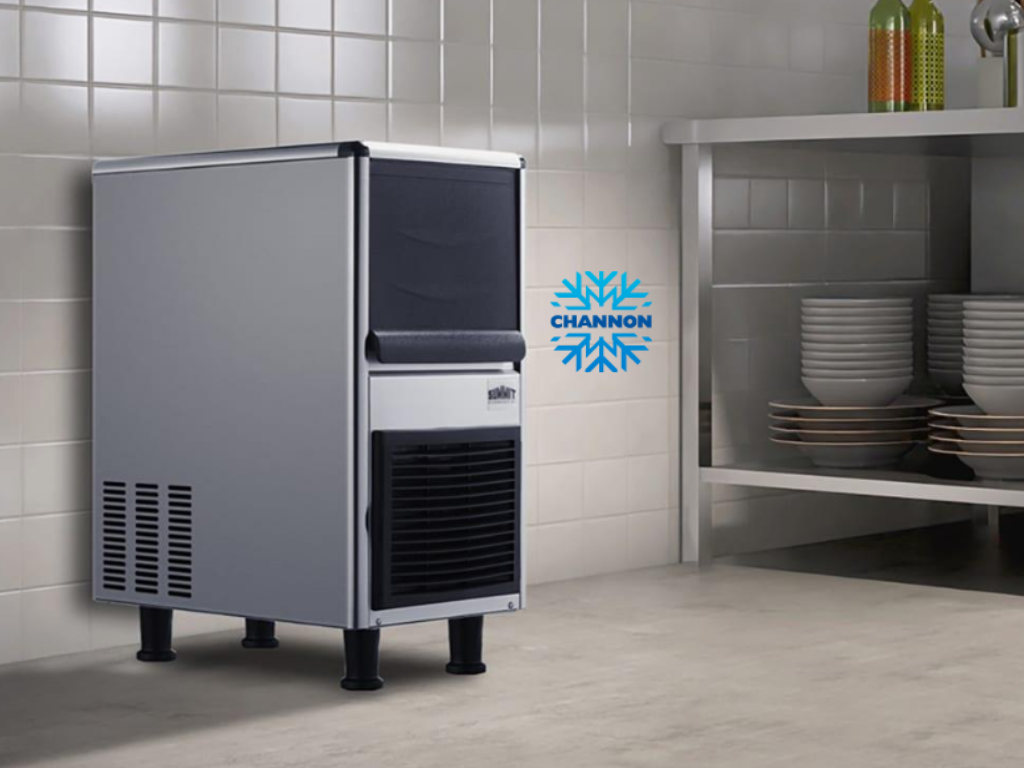
The best machine for a venue depends on how ice will be used, the quantity required and the available installation space.
A café serving iced coffee may need a different production arrangement from a cocktail bar, hotel or seafood business. Ice shape can also influence the choice, as cubes and flake ice are suited to different purposes.
Consider the expected daily demand, peak service requirements, machine dimensions, electrical supply and drainage arrangements.
A self-contained unit may be appropriate for a smaller operation, while a modular system with a separate storage bin may suit higher production requirements.
Equipment selection should also account for the surrounding beverage equipment, particularly where ice is needed for blended drinks, beverage preparation or food-service operations.
The aim is to choose a machine that fits the workflow without sacrificing essential access for cleaning and maintenance.
What to Consider When Choosing a Supplier
A suitable hospitality equipment supplier should provide clear product specifications and explain the practical differences between available configurations.
For businesses opening new premises, Cafe setup services may involve coordinating ice-making equipment with refrigeration, beverage preparation areas and other kitchen requirements.
Before ordering, ask about equipment dimensions, manufacturer warranties, installation conditions, product availability and relevant servicing arrangements.
Channon offers ice makers and commercial refrigeration equipment for hospitality businesses.
Customers can compare published specifications and enquire about models that may suit their production and storage requirements.
However, confirm whether the selected machine is air-cooled or water-cooled, along with its installation requirements and any available support services, rather than assuming these details are the same across every product.
Preparing for Installation and Ongoing Maintenance
Planning Space, Ventilation and Ice Storage
Choosing an ice machine without checking its installation requirements can create unnecessary complications.
Commercial ice machines need suitable access to potable water, drainage and electrical power. Air-cooled equipment also requires adequate airflow, while water-cooled configurations may have additional plumbing requirements.
Smaller venues may prefer undercounter equipment, provided the selected model is designed for that type of installation.
Larger hospitality operations may benefit from modular machines paired with commercial ice storage bins, depending on production requirements and available space.
The storage bin should be compatible with the ice-making unit and accessible for staff during service.
When planning the kitchen layout, allow sufficient room for cleaning, equipment servicing and safe movement around surrounding work areas.
Keeping Ice Equipment Hygienic and Reliable
Ice is food, so its production and handling require appropriate hygiene practices.
Staff should follow the manufacturer’s instructions for cleaning and sanitising the ice machine, bin, scoop and other food-contact components.
Ice scoops should be stored hygienically rather than left in locations where handles can contaminate the ice. Staff should also avoid collecting ice with drinking glasses or handling it directly.
Maintenance may involve checking filters, removing mineral scale and keeping accessible ventilation areas clean.
Air-cooled condensers can be affected by accumulated dust and grease, while water-cooled systems may require attention to water quality and relevant cooling components.
Qualified technicians should perform specialised refrigeration servicing.
Regular maintenance helps commercial ice machines remain hygienic and can reduce avoidable performance problems.
Making a Confident Equipment Decision
Which Cooling Configuration Is More Practical?
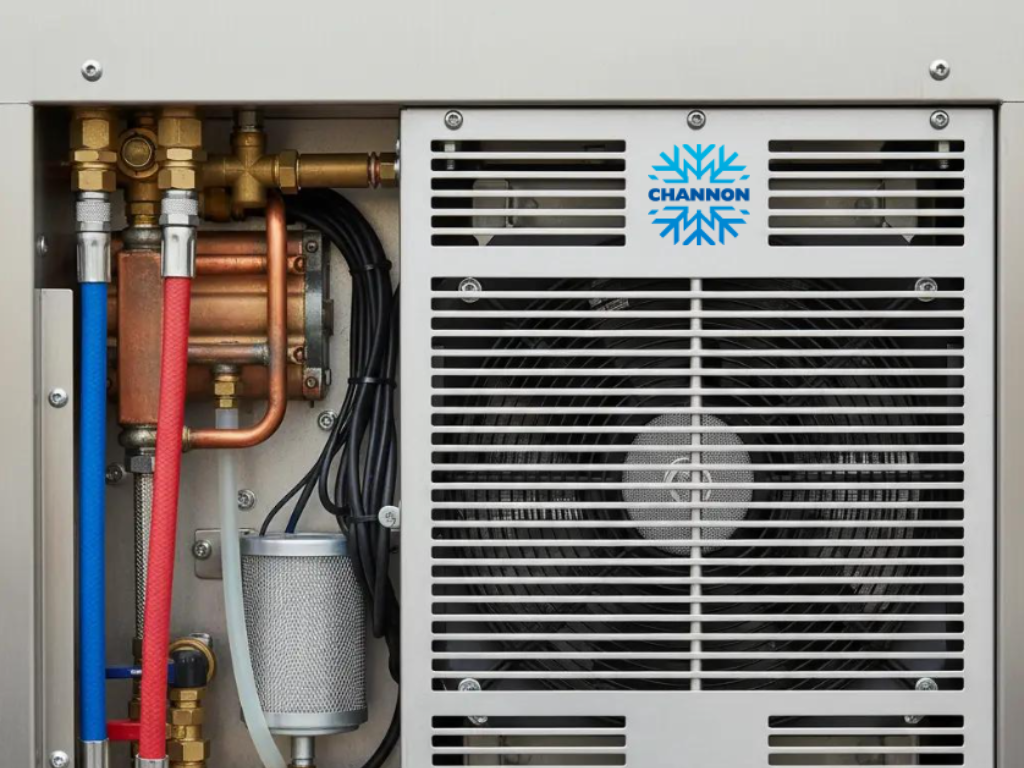
The best cooling system depends on the venue’s environment, available utilities and operating priorities.
For many Australian hospitality businesses with suitable ventilation, air-cooled commercial ice machines provide a practical starting point because they generally avoid the additional condenser water use of once-through water-cooled models.
Water-cooled equipment may deserve consideration when room temperature or ventilation conditions make air cooling difficult.
However, water consumption, drainage requirements and ongoing expenses should be reviewed carefully before choosing that option.
Neither configuration is universally superior. Different machines can vary significantly in performance, capacity and efficiency.
Comparing specific models under realistic operating conditions is more useful than choosing solely by cooling method.
Planning for Growth and Future Ice Demand
Hospitality equipment needs can change as menus expand, operating hours increase or customer demand grows.
Before replacing an existing ice maker, review how much ice is used during ordinary trading and whether shortages occur during peak service.
Consider whether current production is insufficient, whether storage is the real limitation or whether poor ventilation or maintenance is affecting the machine’s output.
Businesses planning future growth should also review available kitchen space and whether additional equipment could be accommodated later.
Channon supplies hospitality and refrigeration equipment for Australian commercial kitchens, including a range of ice-making products.
If you are comparing air-cooled and water-cooled options, you can contact Channon to enquire about suitable models, technical specifications and current product availability.
Before making a final decision, confirm the cooling method, rated production, storage capacity, water consumption, electricity requirements and installation conditions.
Choosing commercial ice machines that match your venue’s actual operating needs can help maintain a consistent ice supply while keeping equipment and running costs under control.
