

Sustainable veneer can provide the natural colour and grain of timber while using thin decorative leaves across larger panel surfaces. However, the word sustainable should not be accepted as proof by itself.
A veneer product may involve timber from one source, a substrate from another manufacturer, an adhesive system, a protective finish and several businesses involved in pressing, fabrication and distribution. Each part of that supply chain can affect whether the final product meets the environmental goals of the project.
For designers, cabinetmakers, builders and property owners comparing wood veneer suppliers, the best approach is to request specific evidence and assess the complete panel rather than focusing only on the visible wood face.
This guide explains how certification works, what to ask suppliers, how natural and reconstructed veneers differ and which specification details can improve material efficiency and long-term performance.
Look beyond the natural timber appearance
Timber is a renewable material when forests are managed responsibly and harvested at a rate that supports regeneration. However, a product should not be described as responsible simply because it contains natural wood.
A meaningful assessment should consider where the timber came from, whether its journey through the supply chain can be traced and how the finished panel was produced. The expected life of the product, maintenance requirements and possible end-of-life pathways should also be considered.
The Timber Veneer Association of Australia describes veneer as thin slices of timber applied to a board substrate. It also identifies veneering as an efficient use of timber because a decorative surface can be created from relatively thin wood leaves.
That material efficiency is useful, but it is only one part of the sustainability assessment. The substrate, adhesive, finish and manufacturing process still need to be reviewed.
Claims such as environmentally friendly, green or natural should therefore be supported by specific information.
Assess the complete panel rather than the face alone
A finished veneered panel normally includes more than the visible timber leaf.
The veneer may be pressed onto MDF, particleboard, plywood or another substrate. Adhesives join the materials, while stains, sealers or protective coatings may be applied to create the finished appearance.
The panel may also include edge strips, balancing material on the reverse face and hardware used during fabrication. These components can affect durability, emissions, maintenance and whether the panel can be separated or reused later.
For this reason, two products using the same timber species may have different environmental profiles. One may use a certified substrate with documented emissions information, while another may provide little supporting evidence.
A responsible specification should identify the veneer, substrate, adhesive or pressing system where relevant, finish and intended application. This gives suppliers a clearer basis for providing comparable wood veneer supplies.
Check Certification and Chain-of-Custody Evidence
Forest certification provides a structured method for assessing forest-management practices and tracing forest products through the supply chain.
FSC certified veneer generally refers to veneer supplied with an eligible Forest Stewardship Council claim through certified organisations.
Australia also has Responsible Wood, which is endorsed by PEFC. Responsible Wood explains that chain-of-custody certification under AS 4707 tracks forest-based products from sustainable sources through the supply chain using independent auditing.
Chain of custody matters because certified timber can pass through log suppliers, veneer producers, panel manufacturers, distributors and fabricators before reaching the final project.
A forest certificate at the beginning of the chain does not automatically mean every later business can sell the finished material with a certified claim. The relevant organisations generally need appropriate chain-of-custody controls and documentation.
Confirm that evidence applies to the actual order
A logo on a website is not enough to confirm that a specific order will be supplied as certified material.
Ask the supplier for its current certificate number, certification scheme, expiry date and scope. The scope should include the relevant activities and product categories, such as veneer, veneered panels or wood-based boards.
The Responsible Wood database, for example, records current certificate details, covered products and scope descriptions for participating businesses. Processed Forest Products is listed with current PEFC chain-of-custody certification covering the purchase of certified veneer sheets and wood-based panels, together with cutting, joining, pressing and sale of wood products.
The buyer should also ask how the certified claim will appear on the quotation, order confirmation, invoice or delivery documentation. This helps establish that the delivered material is connected to the certification claim.
For a project requiring FSC certified veneer, Responsible Wood or another specific scheme, write the requirement into the material schedule and purchase order. Do not rely on a general conversation that the supplier can usually provide certified material.
Certificate status can change, so evidence should be checked close to the time of purchase rather than copied from an old project file.
Compare Natural and Reconstructed Veneer
Choose natural variation when character is important
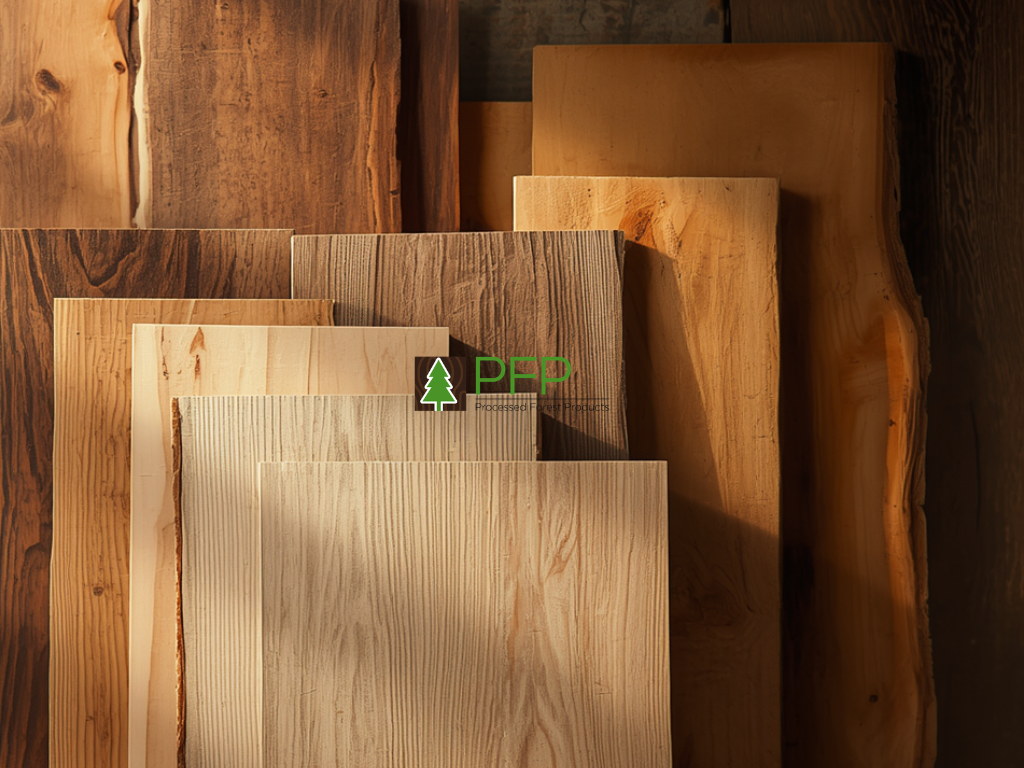
Natural wood veneers are sliced or peeled from logs and retain the individual colour, figure and grain characteristics of the source timber.
This variation is often part of their appeal. Doors, panels and furniture components can show subtle changes that make the finished interior feel less uniform than a printed surface.
However, natural variation needs to be planned. A small sample may not represent the full range of colour and grain that will appear across a larger order.
The Timber Veneer Association of Australia advises specifiers to discuss colour, figure and natural characteristics with the supplier. It also recommends confirming species, cut, dimensions, substrate and quantity before ordering.
For a large wood veneer design, ask for representative samples or a larger layout showing how the selected leaves may appear together. Confirm whether the panels will be sequence matched and how natural variation will be distributed.
Natural veneer may be suitable when the project values individual character and accepts reasonable differences between leaves and panels.
Consider reconstructed veneer when consistency matters
Reconstructed veneer is made by combining veneer material into a block and slicing it again to create a controlled decorative pattern.
It can provide greater consistency across large quantities, making it useful for extensive joinery, repeat locations or projects where replacement panels may be needed later.
The Timber Veneer Association of Australia states that reconstructed natural veneers may be produced from undyed sustainable veneers and can use lower-grade or waste material to create decorative products. It also notes that reconstructed products generally provide more consistent grain and colour than natural veneer, although variation can still occur between production blocks.
This can support efficient use of material, but reconstructed veneer should not automatically be treated as the more sustainable option. The sourcing of the raw veneers, adhesives, manufacturing process, substrate and finish still need to be assessed.
Ask for product-specific environmental and certification documents rather than relying on assumptions about the manufacturing method.
Review the Substrate, Adhesive and Finish
The substrate gives the veneered panel most of its thickness and structural behaviour.
Common options include MDF, particleboard and plywood. The right choice depends on the intended use, panel size, machining, hardware, expected loading, moisture conditions and project requirements.
MDF can provide a smooth and consistent surface for pressing and machining. Particleboard is widely used in joinery panels, while plywood may be selected for applications requiring different structural or edge characteristics.
No substrate should be described as universally more sustainable without comparing product-specific evidence.
The substrate should also be suitable for the location. A panel used in dry office joinery will face different conditions from one installed near sinks, food service areas or frequently cleaned surfaces.
Selecting the wrong substrate can shorten the product’s service life. A panel that needs early replacement may create more waste than one with a better-suited construction.
Ask how adhesives and coatings affect the specification
Adhesives are required to join the veneer to its substrate, while coatings protect the surface and create the desired colour and sheen.
Ask the supplier or manufacturer whether product information is available for the adhesive and finish systems. This may include emissions data, application guidance, cleaning requirements and compatibility with the chosen substrate.
Finishes can affect service life by protecting the timber from everyday handling, staining and cleaning. However, they may also make later refinishing, repair or separation of materials more difficult.
A durable finish that suits the actual setting may be preferable to a low-protection coating that requires early replacement. The correct balance depends on the use of the panel.
For commercial interiors, confirm how the surface will respond to regular cleaning and contact. For residential joinery, consider sunlight, moisture and household cleaning products.
The term veneer laminate can also create confusion. Some products contain genuine wood veneer supplied in a flexible or prefinished laminate-like form, while others are printed decorative laminates with a timber appearance. Confirm whether the visible face is real wood before comparing products.
Design Panels to Reduce Waste and Extend Service Life
Plan dimensions and grain direction before production
Material efficiency begins during design, not after the panels have been manufactured.
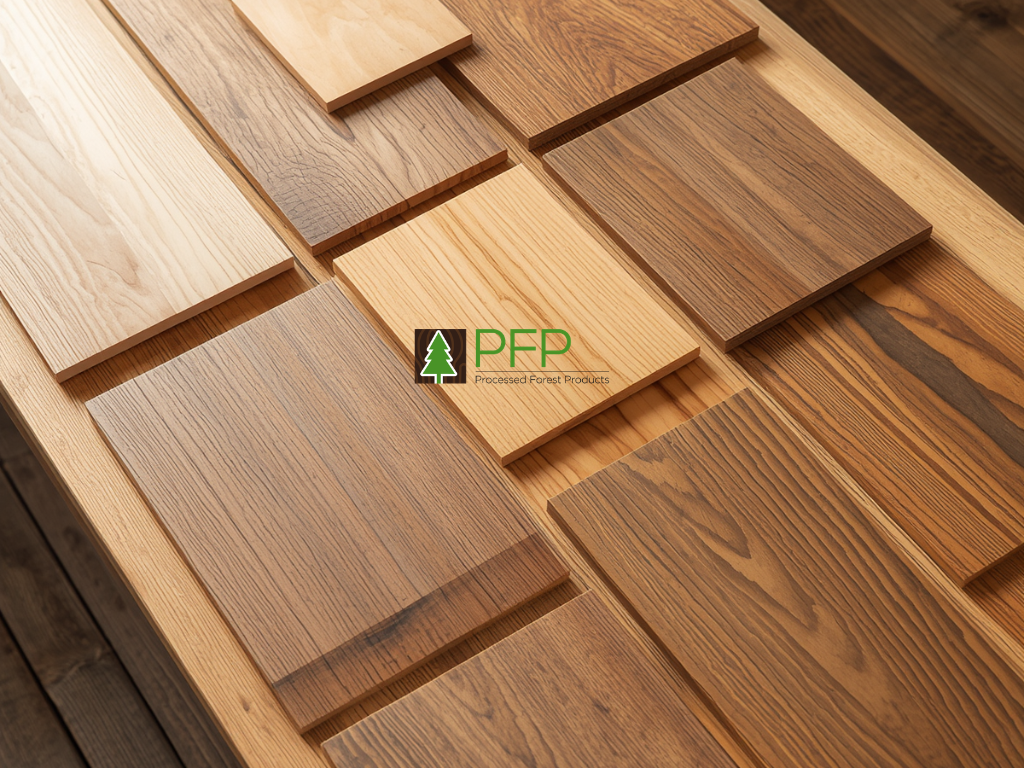
Panel dimensions, grain direction, sequence requirements and visible edges should be confirmed before pressing and cutting. Late design changes can result in panels being recut or rejected even when the material remains physically usable.
The Timber Veneer Association of Australia recommends specifying board dimensions in length, width and thickness and clearly confirming the direction of the veneer grain. It also advises buyers to consider veneer availability, required lengths and sequence matching when calculating quantities.
Designers should coordinate doors, drawer fronts, end panels and wall sections so the grain direction is intentional. This can improve appearance while reducing last-minute remanufacturing.
Standard panel dimensions may be more efficient for some projects, while custom pressing may reduce waste in others. The supplier or fabricator can help compare cutting layouts before the order is placed.
Reasonable spare material may also be useful for future repairs, particularly when the veneer has strong natural variation or may be difficult to match later.
Select a durable design for the intended setting
Sustainability also involves keeping materials in useful service for as long as practical.
A veneered reception desk, wall panel or cabinet door should be designed around its likely wear. High-contact corners may need suitable edging, while removable panels can make access and repairs easier.
The finish should match cleaning requirements, and hardware should be positioned so components can be adjusted or replaced without damaging the panel.
Exposure to direct sunlight can change the colour of timber veneer over time. Large differences in exposure may become visible when part of a surface is permanently covered.
Moisture around sinks, floors and service areas should be considered through panel construction, edge protection and installation details.
Design for disassembly may also be useful where components could later be removed, reused or replaced separately. The Green Building Council of Australia includes design for disassembly, material reduction, waste prevention, product longevity and end-of-life pathways within its circular-product considerations.
These principles should be adapted to the actual project rather than included as unsupported sustainability language.
Compare Wood Veneer Suppliers Carefully
A suitable supplier should be able to explain where the veneer fits within the complete panel specification.
Before approval, request a representative veneer sample and confirm whether it reflects current stock. Ask for the species, cut, matching method and expected range of natural variation.
Where certification is required, request the current chain-of-custody certificate and confirm that its scope covers the relevant veneer or panel products.
The supplier should also identify the proposed substrate, panel thickness, pressing method, balancing material and finish where these services are included.
For larger projects, an approved control sample can provide a shared reference for colour, grain, matching and finish. However, natural variation should still be acknowledged in the specification.
Wood veneer suppliers should be willing to distinguish confirmed facts from matters that depend on the final manufacturing or finishing process.
Compare complete specifications rather than headline prices
Two quotations may use the same veneer species but cover different products and services.
One price may apply only to raw veneer leaves. Another may include pressing onto a certified substrate, balancing, sanding, finishing, packaging and delivery.
Compare the species, certification claim, cut, matching method, panel dimensions, substrate, finish and quantities. Also review minimum order requirements, lead times and whether samples are included.
Ask how offcuts and manufacturing waste are managed if this is important to the project.
Transport distance may be one consideration, but it should not be used alone to judge environmental performance. Local supply can improve communication and reduce freight for some projects, while the full material and manufacturing evidence still needs to be assessed.
The most useful quote is one that clearly defines what will be supplied and which sustainability claims can be supported.
When to Contact Forest Products
Seek advice before finalising the material schedule
Forest Products can be contacted when an architect, designer, cabinetmaker, builder or property owner needs help comparing sustainable veneers, substrates or pressed panel options.
Early supplier input is particularly useful when the project requires certified material, sequence matching, large panel quantities or a specific appearance across several joinery elements.
Forest Products is listed in the Responsible Wood database with current PEFC chain-of-custody certification covering veneer sheets, fibreboard, particleboard, plywood and the manufacture of wood products through cutting, joining and pressing. The current certificate details should still be checked when ordering.
The discussion should establish which certification claim is required, whether the proposed product falls within the supplier’s scope and how that claim will appear on transaction documents.
Supplier advice can also help confirm availability before a design is built around a species, grain or quantity that may be difficult to source.
Prepare clear project information before requesting a quote
Before requesting pricing, provide the intended application, approximate panel dimensions and total quantity.
Explain whether the panels will be used for cabinetry, furniture, doors, wall linings, retail displays or commercial joinery.
State any required certification scheme and whether supporting chain-of-custody documents must be provided. Include the preferred veneer species, cut, matching method and grain direction where these have already been selected.
Identify the proposed substrate, thickness and finish, or ask which options should be considered for the application.
Provide the delivery location, project schedule and whether samples or a control panel are required before production.
Clear information allows Forest Products or another supplier to prepare a more comparable quotation and identify any specification details that remain unresolved.
By reviewing certification, complete panel construction, durability and supporting evidence, buyers can select sustainable veneer with more confidence and avoid relying on broad claims that do not apply to the actual product.
