

Sustainable veneer offers Australian homeowners, architects and interior designers a way to introduce the natural appearance of timber into modern spaces while considering responsible material sourcing and efficient timber use. From decorative feature walls to kitchen cabinetry, furniture and commercial joinery, timber veneer provides design flexibility across a wide range of residential and commercial applications.
Modern Australian interiors often combine natural textures, warm finishes and materials suited to long-term use. Timber veneer works well with these approaches because its distinctive woodgrain patterns, colours and textures can complement contemporary, coastal, minimalist and traditional spaces.
However, choosing sustainable veneers involves more than selecting an attractive timber species. The origin of the timber, manufacturing methods, supporting substrates, adhesives and surface finishes can all influence the environmental characteristics and practical performance of the finished product.
Timber has long been used in Australian architecture and interior design because of its natural appearance, versatility and ability to complement different materials.
Sustainable veneer can provide the visual character of genuine timber while allowing a relatively thin layer of decorative wood to be applied to a suitable supporting panel.
This makes veneer worth considering for projects where appearance, material efficiency and practical construction requirements are important.
Understanding Sustainable Veneer and Responsible Timber Sourcing
Timber veneer is produced by slicing or peeling timber into thin sheets that can be applied to substrates such as plywood, medium-density fibreboard or particleboard.
Because only a thin layer of decorative timber is needed, a single suitable log can produce a considerable area of veneer surface.
This can make efficient use of timber resources, particularly where distinctive woodgrain or decorative species are required across larger interior surfaces.
However, veneer does not automatically qualify as an environmentally responsible product simply because it uses less decorative timber than a comparable solid timber surface.
The source of the wood, forest management practices, manufacturing processes, adhesives, substrates and finishes also influence its environmental characteristics.
When selecting sustainable veneer, buyers should look for reliable information about timber origin, sourcing practices and any relevant environmental certifications.
Product-specific documentation is particularly important because different products from the same supplier may have different sourcing and manufacturing characteristics.
Understanding these details helps homeowners, builders and designers distinguish supported environmental claims from general sustainability descriptions.
How Natural Timber Finishes Complement Contemporary Design
Natural timber finishes can introduce warmth and visual depth into interiors that otherwise feature smooth painted surfaces, stone, glass or metal.
In contemporary Australian homes, lighter timber veneers may complement neutral flooring, white walls and soft furnishings.
Medium timber tones can create a welcoming atmosphere in living rooms and dining areas, while darker veneers may provide contrast in more minimalist interiors.
The natural variation in timber grain also gives veneer surfaces a distinctive appearance.
Unlike printed woodgrain patterns, genuine timber veneer displays characteristics formed during the tree’s growth, including changes in grain direction, colour and figure.
These differences can be incorporated into the overall design rather than treated as imperfections.
Choosing sustainable veneer with suitable grain patterns and protective finishes can help create an interior that remains visually appealing as other design elements change.
Creative Ways to Use Sustainable Veneer in Interior Design
Timber veneer is suitable for a variety of decorative and functional applications when paired with an appropriate substrate and finishing system.
Its flexibility makes it useful for both small design features and larger architectural surfaces.
The best application depends on the surrounding interior, expected use and practical installation requirements.
Timber Veneer Feature Walls and Decorative Wall Panelling
Timber veneer feature walls can introduce natural texture without requiring solid timber across the entire surface.
In living rooms, veneer-faced panels may be installed behind entertainment units or shelving to create a coordinated architectural feature.
Bedrooms can benefit from timber veneer behind a bedhead, particularly when the grain pattern complements surrounding furniture and flooring.
For hallways and entrance areas, decorative veneer panels can introduce warmth while maintaining a relatively simple appearance.
Panel dimensions and grain direction influence the final result.
Vertical grain arrangements may emphasise height, while horizontal patterns can create a sense of width.
Larger veneer-faced panels can also provide a more continuous visual effect when joints and grain matching are carefully planned.
Before installation, designers should consider the supporting wall, panel weight, fixing methods and required clearances.
For commercial interiors, the complete wall lining system may also need to satisfy applicable fire performance requirements.
Well-planned sustainable veneer feature walls balance visual appeal with appropriate material construction and installation.
Sustainable Veneer for Cabinetry, Furniture and Joinery
Cabinetry and furniture provide opportunities to incorporate genuine timber surfaces into everyday interiors.
Timber veneer can be applied to suitable engineered boards to create cabinet doors, shelving, wardrobes, tables and decorative joinery.
For kitchen cabinetry, veneer-faced panels may complement stone benchtops, neutral splashbacks and other contemporary finishes.
However, kitchens introduce practical considerations involving humidity, occasional water exposure, cleaning and daily handling.
The substrate, adhesive, protective coating and edge treatment should be appropriate for the intended application.
In bedrooms, sustainable veneer may be used for wardrobes, bedside furniture and built-in storage.
Commercial joinery can also incorporate timber veneer in reception desks, meeting tables, retail counters and fitted furniture.
These applications benefit from careful attention to durability and repairability.
A suitable protective finish can help reduce surface wear, while appropriate cleaning and maintenance can extend the useful life of the completed joinery.
Selecting materials according to actual use is more valuable than choosing a veneer based solely on its appearance.
Choosing Timber Veneer Species and Natural Wood Finishes
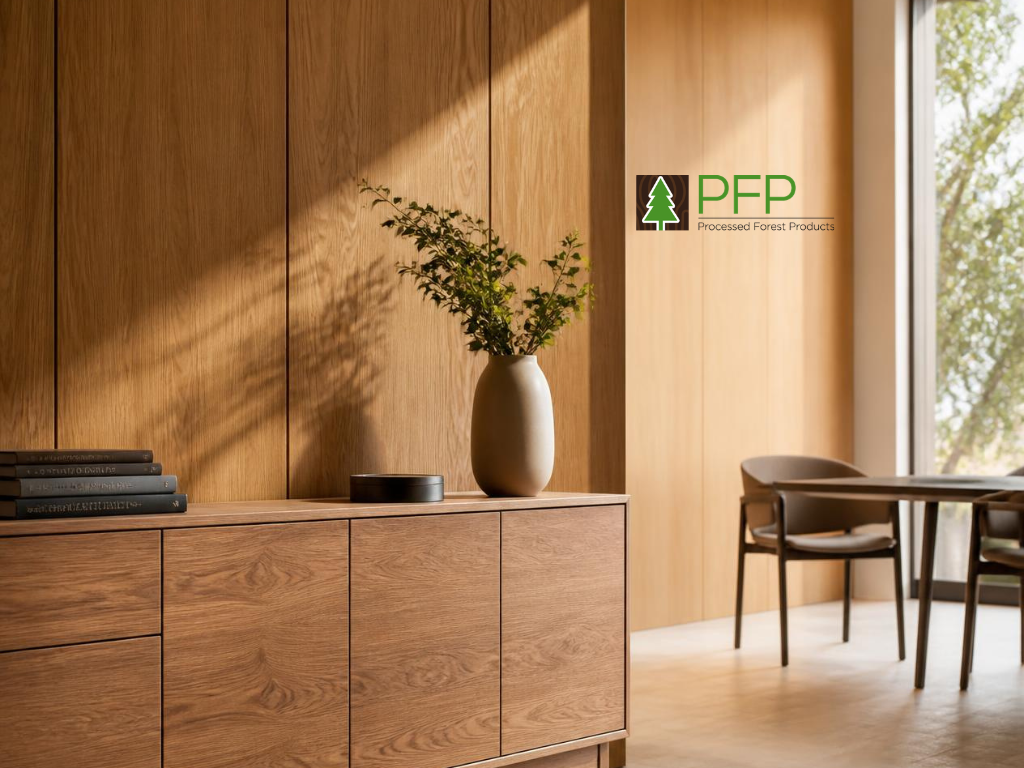
Different timber species offer distinct colours, grain patterns and decorative characteristics.
Some veneers provide a relatively consistent appearance, while others feature pronounced grain movement or unusual figure.
Understanding these differences helps designers choose finishes suited to the intended interior.
American Oak Veneer and Anegre Timber for Lighter Interiors
American oak veneer is a familiar choice for contemporary interiors because of its attractive grain and versatile colouring.
Depending on the timber and finishing method, American oak may display light beige, pale brown or warmer golden tones.
Its grain characteristics can complement cabinetry, furniture, wall panelling and architectural joinery.
American oak veneer is particularly useful where designers want a recognisable natural timber appearance that works with neutral materials and contemporary furnishings.
Anegre timber offers another decorative option.
Anegre veneer often displays pale cream, yellowish or warm golden tones, sometimes with fine grain patterns and a subtle natural lustre.
These characteristics may suit furniture, decorative panels and cabinetry where a softer timber appearance is preferred.
However, timber colour varies between individual logs, veneer cuts and finishing systems.
Samples should be examined before final selection, especially when the project requires matching across multiple panels.
Neither American oak nor anegre should automatically be described as sustainably sourced. Buyers seeking sustainable veneer should verify the sourcing information for the specific product being considered.
Wenge Veneer and Burl Veneer for Statement Features
Darker and more decorative timber veneers can create distinctive interior features.
Wenge veneer is known for its deep brown colouring and strong grain contrast. It can be used to create a dramatic appearance in furniture, reception counters and selected wall features.
Because dark timber can visually dominate smaller spaces, wenge is often best considered alongside lighter surrounding surfaces.
Its use should also involve careful sourcing checks, including species identification and any applicable trade requirements.
Burl veneer offers a different appearance.
Burl refers to highly figured timber containing irregular, swirling or clustered grain patterns. These decorative characteristics can produce striking results in furniture, cabinetry and smaller architectural features.
Burl veneer may be selected for tabletops, cabinet fronts or feature panels where the natural figure becomes an important part of the design.
However, the appearance can vary considerably between sheets.
For larger applications, designers should confirm the available quantity and discuss matching requirements before specifying a particular veneer.
Responsible sourcing remains important for highly decorative species.
When choosing sustainable veneer for statement features, buyers should consider the timber’s origin, availability and supporting documentation alongside its visual qualities.
Understanding FSC Certification and Sustainable Veneer Selection
Environmental claims should be supported by information that buyers can examine and verify.
For timber veneer, responsible sourcing is one of the most important considerations, but it is not the only factor affecting the finished product.
Certification systems and detailed product specifications can help architects, designers and homeowners make informed decisions.
What FSC Certified Veneer Means for Australian Buyers
The Forest Stewardship Council, commonly known as FSC, provides a certification system covering responsible forest management and the tracking of eligible forest-based materials through supply chains.
FSC chain-of-custody certification establishes requirements for businesses handling and selling products with FSC claims.
For Australian buyers, FSC certified veneer can provide a way to identify products supplied under recognised certification requirements.
However, it is important to understand that a supplier holding FSC certification does not necessarily mean every veneer product it sells is certified.
Certification claims should be checked against the specific product and relevant sales documentation.
A buyer may request information about the supplier’s certification status, the product’s FSC claim and any applicable chain-of-custody details.
Different FSC claims can apply to different combinations of certified, controlled and reclaimed forest-based materials.
The appropriate claim should be confirmed rather than assuming that all FSC-labelled products have identical material content.
For commercial projects involving sustainability specifications, keeping accurate product records can also support procurement reviews and project documentation.
Choosing sustainable veneer therefore involves verifying the claim associated with the material being purchased, not simply relying on the presence of a certification logo in general marketing material.
Comparing Sustainable Veneers and Product Specifications
Natural and reconstituted timber veneers provide different design possibilities.
Natural veneer retains the grain and colour characteristics of the original timber. Individual sheets can display variation, making each installation visually distinctive.
Reconstituted veneer is manufactured by processing, colouring and assembling wood material into decorative blocks that are sliced to create controlled patterns.
This can provide more consistent colour and grain appearances across larger projects.
Neither option is automatically more sustainable.
Environmental considerations depend on timber sourcing, manufacturing processes, adhesives, available documentation and the construction of the finished panel.
The substrate also matters.
For example, veneer applied to MDF may have different weight, machining and moisture characteristics from veneer applied to plywood.
Adhesive and surface coating selection can influence emissions, durability and maintenance requirements.
Buyers comparing sustainable veneers should therefore evaluate the complete product rather than focusing solely on the decorative timber surface.
Product specifications, available environmental documentation and samples can help establish whether the material suits the intended application.
Creating Timeless Interiors Through Wood Veneer Design
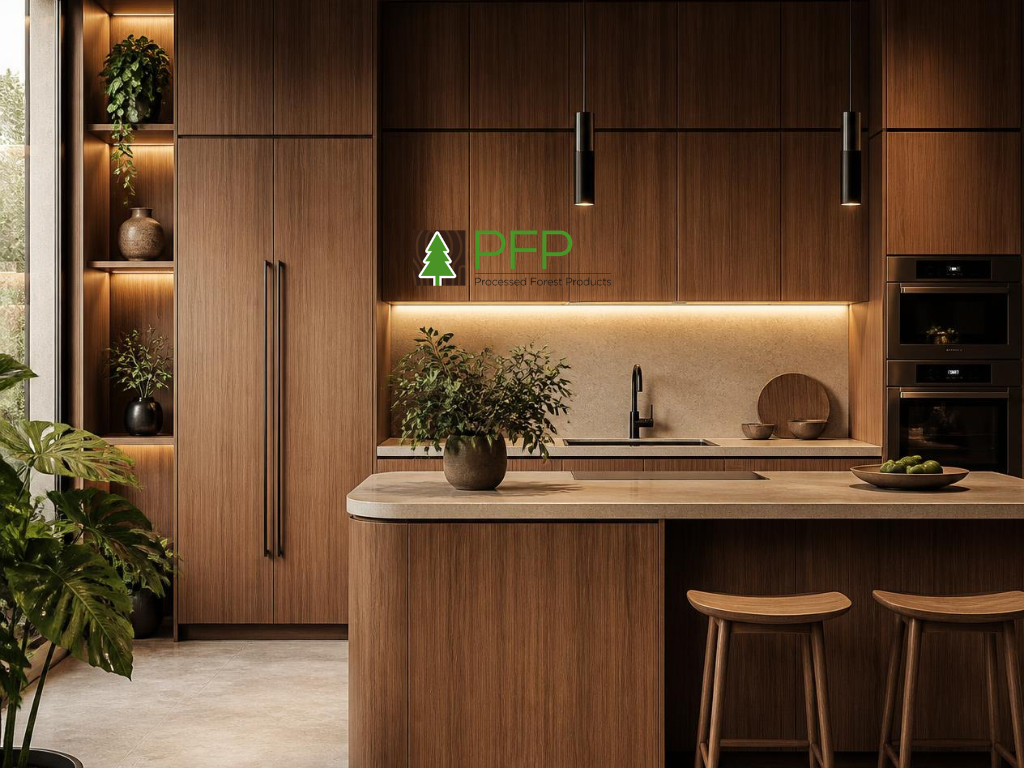
A carefully planned timber veneer installation can remain visually relevant beyond short-term decorating trends.
Timeless design often relies on balanced proportions, appropriate material selection and finishes that complement the surrounding architecture.
Wood veneer design offers flexibility because timber grain, colour and panel arrangement can be adapted to different interior styles.
Grain Matching, Panel Layouts and Decorative Patterns
Grain matching is an important consideration when timber veneer is used across cabinetry, furniture or large architectural surfaces.
Book matching involves positioning consecutive veneer leaves in alternating directions to create a mirrored grain pattern.
This arrangement can highlight distinctive timber figure and produce a symmetrical appearance.
Slip matching uses consecutive veneer leaves placed in the same orientation, producing a different relationship between adjacent grain patterns.
Other arrangements may be selected depending on the species, available veneer and desired visual effect.
For feature walls, planning the layout before manufacturing can help determine where grain transitions and panel joints will occur.
In cabinetry, matched veneer may be used across adjoining doors or drawer fronts to produce a continuous appearance.
These design choices become particularly important when working with strongly figured materials such as burl veneer.
Sustainable veneer projects can also benefit from efficient cutting plans that consider available sheet dimensions and potential material waste.
Discussing grain matching and panel layout with the manufacturer before production can help avoid unnecessary changes and material use.
Choosing Natural Finishes, Colours and Textures
The finishing system can significantly influence the appearance of timber veneer.
Clear coatings may preserve much of the timber’s natural colour and grain, while stains can alter the tone to complement other materials.
Matte finishes can create a subtle appearance, whereas glossier coatings reflect more light and emphasise certain decorative characteristics.
The most suitable finish depends on the intended use and maintenance requirements.
For a feature wall with limited physical contact, appearance may be the main consideration.
For kitchen cabinetry, office furniture or high-use joinery, resistance to everyday wear and cleaning requirements may carry greater importance.
Finishing samples should be examined under the lighting conditions expected in the completed room.
Natural daylight, warm artificial lighting and cooler commercial lighting can make the same timber surface appear different.
Selecting a finish based on actual samples helps reduce uncertainty and supports a more coordinated result.
For sustainable veneer applications, buyers may also wish to review available information about coating composition and emissions where indoor environmental performance is important.
Practical Considerations for Residential and Commercial Interiors
A decorative timber surface must be supported by materials and installation methods suited to its intended environment.
While appearance is important, panel construction, moisture exposure, durability and maintenance all influence long-term performance.
Understanding these requirements helps prevent unsuitable material selection.
Selecting Veneer Substrates for Different Applications
Timber veneer is commonly bonded to engineered substrates such as MDF, plywood and particleboard.
Each material has characteristics that may make it suitable for particular applications.
MDF provides a relatively smooth and consistent surface that can be useful for cabinetry, decorative panels and machined joinery components.
Plywood is manufactured from bonded wood veneers arranged in layers and can provide different structural and dimensional characteristics depending on its grade and construction.
Particleboard is another common substrate used in furniture and cabinetry applications.
The most suitable option depends on panel dimensions, expected loading, fixing requirements, moisture conditions and the intended finish.
For example, a decorative wall panel may have different substrate requirements from a cabinet door or frequently used tabletop.
Moisture exposure should also be considered.
Standard interior substrates may not be appropriate for locations where significant water exposure is expected.
Edge sealing, suitable adhesives and protective coatings can be important parts of the complete panel construction.
Before specifying sustainable veneer, designers should confirm the substrate’s suitability and whether the proposed assembly meets the project’s practical requirements.
Durability, Maintenance and Indoor Environmental Considerations
Proper maintenance can help preserve the appearance and useful life of timber veneer.
Routine cleaning should generally use suitable products recommended for the applied finish.
Excess water, harsh chemicals and abrasive cleaning materials may damage certain coatings or affect the panel beneath.
Veneered surfaces should also be protected from prolonged moisture exposure and unnecessary impact.
Where direct sunlight reaches the surface, timber colour may change over time. The extent of the change depends on the species, finish and exposure conditions.
For commercial interiors, durability considerations may include frequent cleaning, public access and contact with furniture or equipment.
Indoor environmental performance is another important factor.
Substrates, adhesives and coatings can contribute to emissions from finished interior products.
Where low-emission materials are required, request relevant product information or test documentation rather than assuming that natural timber veneer automatically produces low emissions.
Commercial wall panels may also need to satisfy applicable fire hazard requirements under the National Construction Code.
A veneer surface does not establish the fire performance of the complete wall lining system. The substrate, adhesive, coating and installation arrangement may all need consideration.
Selecting sustainable veneer should therefore involve an assessment of the complete product, including durability, appropriate documentation and suitability for the intended space.
How to Choose Sustainable Veneer for Your Australian Project
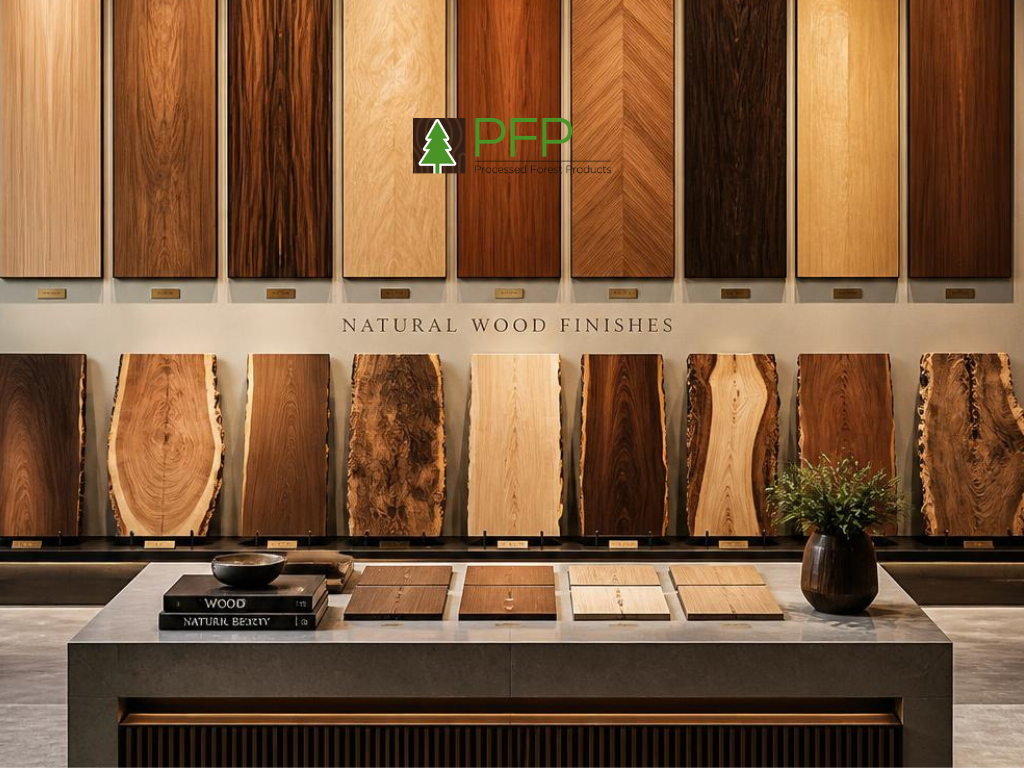
Selecting the right timber veneer requires a balance between design preferences, material performance, responsible sourcing and practical manufacturing requirements.
Taking time to compare available products can help homeowners and professionals make more confident decisions.
What to Ask Before Purchasing Timber Veneer Products
Before purchasing timber veneer, consider the intended application and the appearance required.
A residential feature wall may prioritise natural grain and colour, while a commercial joinery project may require greater consistency across several panels.
The timber species is an important starting point, but the veneer cut, grade, available dimensions and matching arrangement also influence the finished result.
Buyers should request samples to compare woodgrain, colour and surface texture.
For larger projects, it is worth confirming whether sufficient matching veneer is available for the required quantity.
The supporting substrate, panel thickness and finishing system should also be discussed before manufacturing.
If responsible sourcing is a project requirement, ask for relevant documentation, including any applicable product-specific certification claims.
For FSC certified veneer, verify that the actual product is eligible to be supplied with the stated FSC claim.
Architects and builders may also need technical information relating to emissions, fire performance or other requirements associated with the intended installation.
Careful preparation helps ensure the selected sustainable veneer meets both the visual and practical needs of the project.
Choosing a Sustainable Veneer Supplier in Australia
A suitable timber veneer supplier should provide clear information about product construction, available species, finishes and manufacturing options.
Homeowners may need assistance selecting timber colours and decorative surfaces, while cabinetmakers, architects and commercial fitout professionals may require specific panel dimensions, veneer matching and technical documentation.
Forest Products, operating as Processed Forest Products, supplies natural and reconstituted timber veneer and manufactures veneered panels using substrates including MDF, particleboard and plywood.
Based in Milperra, Sydney, the business also offers veneer layon manufacturing, decorative veneer matching and panel lamination services for furniture, cabinetry and architectural applications.
Its range includes decorative timber veneers and board products that can be considered for residential and commercial interior projects.
For buyers exploring sustainable veneer, it is important to confirm the sourcing and certification information applicable to the specific product being ordered rather than assuming that all materials have identical environmental credentials.
Forest Products can assist customers with enquiries about available timber veneer products, panel construction and manufacturing requirements.
When discussing a project, provide details about the intended application, preferred timber species, panel dimensions, grain matching and finishing requirements.
For residential renovations, cabinetry projects and commercial fitouts, selecting appropriate materials at the planning stage can help reduce unnecessary modifications during manufacturing and installation.
Sustainable veneer can provide an attractive natural timber finish for modern Australian interiors while supporting more informed decisions about sourcing and material use.
The most successful projects combine suitable timber species, carefully selected substrates, thoughtful grain matching and finishes appropriate for the intended application.
Whether you are designing a feature wall, manufacturing custom cabinetry or specifying decorative joinery, reviewing samples and supporting documentation can help ensure the final product meets your expectations.
Explore the timber veneer and board options available from Forest Products or contact the team to discuss material selection and manufacturing requirements for your next interior project.
