

A soft toilet seat cushion can make a standard toilet more comfortable for someone who finds a hard seat uncomfortable, but cushioning does not necessarily address every bathroom support need. If a person has difficulty lowering themselves onto the toilet, standing back up, maintaining balance or transferring safely, it may be worth considering whether another type of bathroom aid is more appropriate.
The important distinction is between comfort and functional support. A padded seat may improve the sitting surface, while products such as raised toilet seats, toilet frames, grab rails and other bathroom medical equipment are designed for different purposes. Healthdirect advises that mobility aids should suit the individual and be fitted or installed safely, with health professionals able to assess needs and recommend suitable equipment.
A soft toilet seat cushion is primarily designed to change the sitting surface of the toilet. Depending on the product, it may provide padding and some additional height, but it should not automatically be treated as a complete mobility solution.
Understanding this difference makes it easier to decide whether a cushioned toilet seat is enough or whether another type of bathroom support should also be considered.
How Extra Padding Can Improve Sitting Comfort
A standard toilet seat is firm, which some people may find uncomfortable, particularly when sitting for longer periods.
A soft toilet seat or toilet seat pillow adds a padded layer between the user and the existing seat. Different products can use foam or other cushioning materials, and some attach directly to the existing toilet seat.
For someone whose main concern is simply the hardness of the existing seat, that extra cushioning may be the feature they are looking for.
When comparing products, it is useful to check thickness, overall dimensions, surface material, cleaning instructions and how the cushion attaches to the toilet.
A cushion toilet seat that moves during use, does not fit the toilet properly or is difficult to keep clean may not provide the practical improvement expected.
Why Cushioning Does Not Automatically Improve Mobility
Comfort and mobility are separate considerations.
A soft toilet seat cushion does not provide something secure to hold while sitting down or standing up. It also does not necessarily raise the toilet by enough to make transfers easier for someone who has difficulty bending their knees or lowering themselves.
This means a person can find the seat more comfortable while still struggling with the actual movement required to use the toilet.
If balance, strength or transfers are becoming difficult, it is useful to look beyond padding alone.
Healthdirect notes that mobility aids can support everyday tasks and independence but emphasises the importance of choosing the right equipment for the individual and ensuring it is used safely.
A Soft Toilet Seat Cushion May Not Be Enough When Standing Is Difficult
One of the clearest signs that a soft toilet seat cushion may not address the main problem is when the difficulty occurs while sitting down or standing up rather than while seated.
In that situation, the issue may relate more to toilet height, strength, balance or the need for hand support.
Difficulty Rising May Point to a Need for Additional Height
A standard toilet requires the user to lower themselves to a fixed height and then rise again.
For some people, increasing the effective seat height can reduce the amount of movement required during this transfer. Purpose-designed raised toilet seats are available specifically for this reason.
Although a thick soft toilet seat cushion may add some height, it is not necessarily the same as a raised toilet seat designed around a defined height increase, fitting system and intended mobility use.
The correct height is also important. A seat that is too high or too low for the individual may create other difficulties.
If getting up from the toilet is becoming consistently difficult, an occupational therapist, physiotherapist, nurse or another appropriate health professional can help assess whether a raised toilet aid or another support is suitable. Healthdirect specifically identifies health professionals as people who can assess mobility needs and help select appropriate equipment.
Using Nearby Fixtures for Support Can Be a Warning Sign
People sometimes compensate for difficulty standing by pulling on a towel rail, pushing against a basin or holding another nearby fixture.
Those items are not necessarily designed to carry a person’s body weight during a transfer.
If someone regularly needs to grab surrounding fixtures to get on or off the toilet, a soft toilet seat cushion is unlikely to address that need on its own.
Purpose-designed supports may be more appropriate.
This is where options such as toilet frames, support arms or properly installed grab rails may need to be considered. Current NDIS guidance lists grab rails among simple home adaptations that can support accessibility, although suitability and installation still need to reflect the individual and the property.
A Soft Toilet Seat Cushion Does Not Provide Balance Support
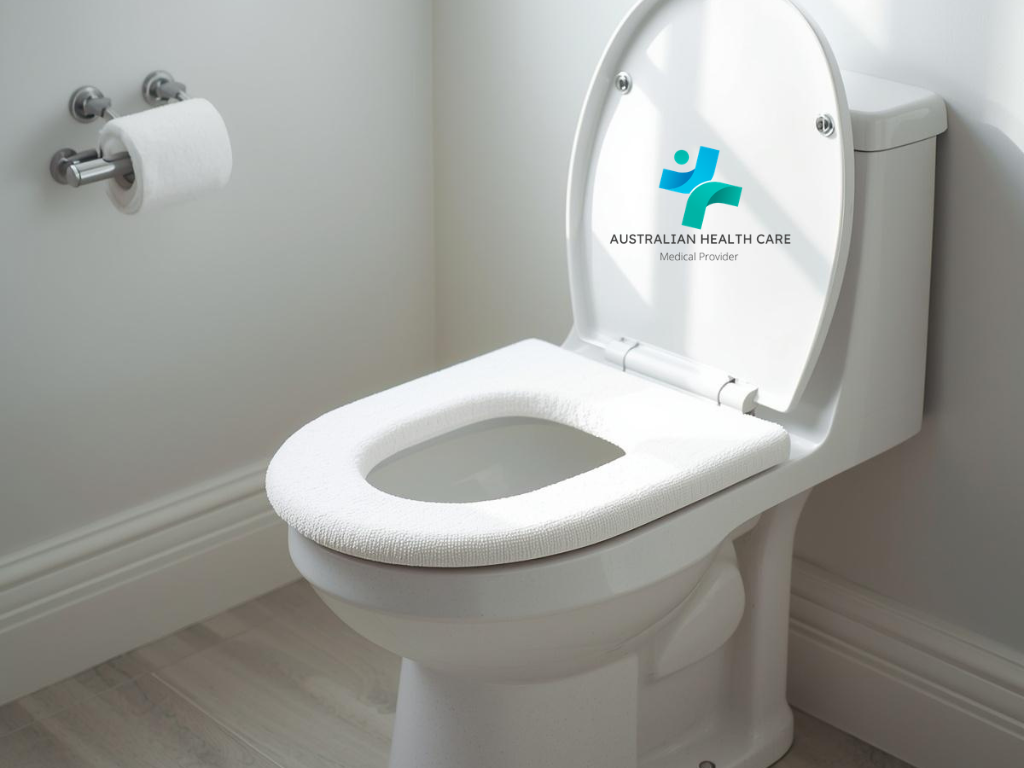
Balance is another important factor when deciding whether a soft toilet seat cushion provides enough assistance.
A padded surface can improve comfort, but it cannot replace equipment designed to give someone a stable handhold or additional support while moving around the toilet.
A Cushion Cannot Provide Something Secure to Hold
If a person feels unsteady while turning, lowering themselves or rising, they may need something more than a cushioned toilet seat.
A secure support point can help someone position themselves more confidently, but that support should be designed and installed for the intended purpose.
A loose towel rail, bathroom shelf or other household fixture should not be assumed to be suitable.
Grab rails, toilet support frames and similar products are designed for different types of bathroom support, and the appropriate option depends on the person’s movement, strength and bathroom layout.
For people with more complex mobility needs, professional assessment can be especially important. Healthdirect warns that mobility aids can cause injury if they are not appropriate, fitted correctly or used safely.
Look at Support Options Designed for Safer Transfers
Different support products solve different problems.
A toilet frame may provide arm supports beside the toilet. A grab rail can provide a fixed handhold where appropriate. Some raised toilet seats include arms, while other systems combine height adjustment and support.
Someone searching for a handicap safety grab bar supplier should therefore consider more than the presence of a rail. Position, wall construction, installation method and the user’s movement all matter.
The NDIS currently identifies grab rails as examples of simple home adaptations, while more complex bathing and toileting devices may fall into higher-risk assistive technology where advice is required.
A soft toilet seat cushion can still be part of the bathroom setup, but it should not be relied on to perform a function it was not designed to provide.
Compare a Raised Toilet Seat With a Soft Toilet Seat Cushion
A raised toilet seat and a soft toilet seat cushion can look similar because both sit on or around the existing toilet seat, but their main purposes can be different.
Understanding that distinction can prevent someone from buying a padded product when what they actually need is additional height.
Extra Cushioning and Extra Height Solve Different Problems
A soft toilet seat cushion focuses mainly on providing a softer sitting surface.
A raised toilet seat is specifically intended to increase the height of the sitting position. This can reduce how far someone needs to lower themselves and rise again.
Some products combine both features by offering a padded raised surface, but buyers should still check exactly what the product is designed to do.
If the person’s main concern is discomfort while sitting, a cushion may be enough.
If the main concern is difficulty getting down to or up from the toilet, increased height or additional hand support may be more relevant.
Healthdirect provides examples of raised toilet seats and grab bars as equipment that can assist toilet access in some circumstances and notes that occupational therapists can advise on suitable equipment.
Fit, Stability and Height Should Be Checked Before Buying
Not every toilet aid fits every toilet.
Toilet shape, seat dimensions, attachment system and available space can all influence whether a product is suitable.
For a soft toilet seat cushion, check that the cushion sits securely and does not shift during normal use.
For a raised seat, consider how it attaches, how much height it adds and whether that height is appropriate for the person.
A seat that adds height but feels unstable may create a different problem. Likewise, a very thick cushion may change sitting height without providing the secure fixing expected from a purpose-designed raiser.
Where mobility limitations are significant, choosing the equipment based only on an online product description may not be enough. Individual assessment can help identify the appropriate height, support and installation.
Look Beyond the Soft Toilet Seat Cushion if Other Bathroom Tasks Are Difficult
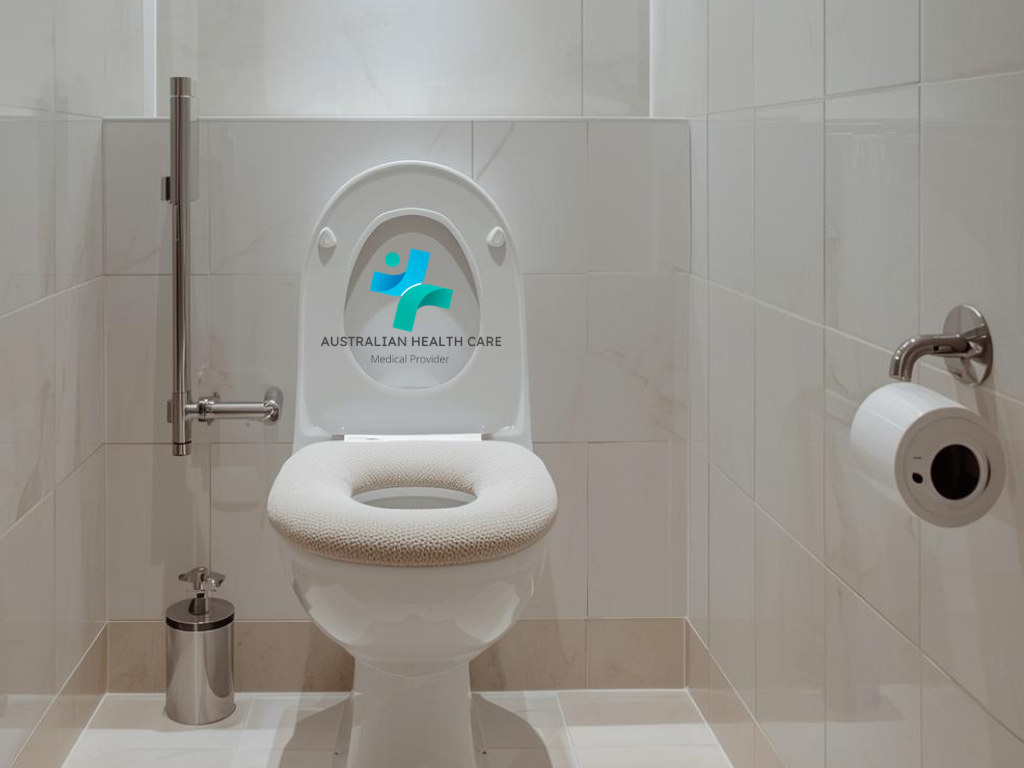
Difficulty using the toilet may be part of a wider change in bathroom mobility.
If someone also struggles with showering, standing while washing or moving between wet areas, it may be useful to look at the bathroom as a whole rather than concentrating only on a soft toilet seat cushion.
Showering and Bathing May Need Additional Support
Bathrooms combine hard surfaces, confined spaces and wet floors, so the type of support needed can vary from one activity to another.
A person who needs help rising from the toilet may also find it difficult to stand for a full shower or step safely into a bathing area.
A toilet cushion does not address those tasks.
Depending on the individual’s needs, other bathroom medical equipment may include shower stools, shower chairs, transfer benches or grab rails.
The NDIS describes a shower stool as an example of low-risk assistive technology, while Healthdirect notes that mobility aids can make everyday activities such as bathing easier and safer.
Consider Other Bathroom Equipment Where Appropriate
Medical bench seats and shower or transfer benches can be useful in certain bathroom setups because they provide a seated surface for bathing or transferring.
However, these products are not interchangeable with a toilet seat cushion.
Each piece of equipment should match the task it is intended to support.
For someone comparing a soft toilet seat, shower chair, bench seat or grab rail, it helps to identify exactly where the difficulty occurs. Is the problem discomfort while seated, standing for too long, maintaining balance, stepping into the shower or transferring between surfaces?
Answering that question first makes product comparisons more useful and reduces the risk of choosing equipment simply because it appears convenient.
Choose Support Around the Person, Not Just the Soft Toilet Seat Cushion
Bathroom equipment should fit the user rather than expecting the user to adapt to whatever product is easiest to buy.
A soft toilet seat cushion may be appropriate for one person and completely inadequate for another, even when both initially describe the problem as difficulty using the toilet.
Consider Strength, Balance, Movement and Bathroom Layout
Several factors can influence which bathroom aid is suitable.
The person’s ability to stand, sit, turn and reach matters. So does the toilet height, surrounding wall space, position of the basin and amount of room available for equipment.
A narrow bathroom may not accommodate a large toilet frame. A grab rail requires suitable positioning and installation. A raised toilet seat needs to fit the toilet securely.
A cushioned toilet seat may provide adequate comfort without changing the bathroom significantly, but that simplicity should not be the only reason it is selected.
The NDIS describes assistive technology as equipment that can help people do things more easily, safely and independently, while also distinguishing between low-risk items and more complex equipment that requires specialist advice.
Seek Professional Guidance When Needs Are More Complex
Professional advice becomes more important when someone has recurring falls, major balance problems, significant difficulty transferring or changing mobility needs.
An occupational therapist can assess both the person and the bathroom environment and may recommend equipment or modifications based on how the space is actually used.
Healthdirect identifies occupational therapists, physiotherapists, nurses, doctors and specialists among the professionals who may help assess mobility needs and recommend appropriate aids.
This does not mean every soft toilet seat cushion requires professional assessment.
For straightforward comfort needs, a simple padded product may be sufficient. The point is to recognise when the concern has moved beyond comfort and into mobility, transfers or safety.
Know When to Move Beyond a Soft Toilet Seat Cushion
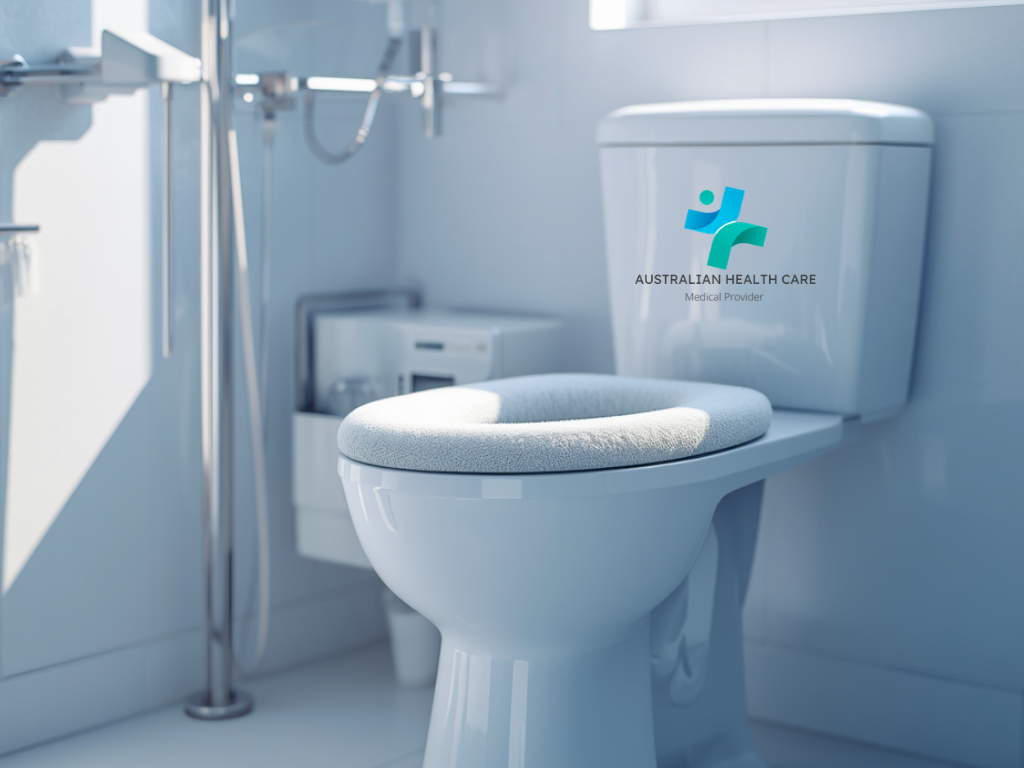
A soft toilet seat cushion can still be useful even when other bathroom supports are introduced. The important question is whether it is solving the problem the person actually has.
If the padding improves comfort but the user continues to struggle with standing, transfers or balance, additional equipment may need to be considered.
Review the Setup if Comfort Improves but Safety Does Not
A cushioned toilet seat should not be judged only by how soft it feels.
Pay attention to whether the user can get on and off the toilet comfortably, whether the cushion remains stable and whether they still need to grab unsuitable fixtures for support.
If difficulties remain, the bathroom setup may need to include a raised seat, frame or appropriately positioned rail.
The best combination depends on the person.
A soft toilet seat cushion can provide comfort alongside other equipment, but each item should have a clear purpose rather than adding products without understanding what problem they are intended to solve.
Compare the Full Range of Bathroom Support Options
Before purchasing bathroom equipment, compare the user’s needs with the function of each product.
Australian Health Care can be considered when comparing options such as a soft toilet seat cushion and other bathroom support products. When making an enquiry, it is useful to explain whether the main concern is comfort, additional height, transfers, balance or another practical requirement so available products can be compared more meaningfully.
Where significant mobility or safety concerns are involved, supplier advice should complement rather than replace assessment by an appropriate health professional.
A soft toilet seat cushion can be a simple and useful product when extra padding is what the person needs. It becomes less suitable as a stand-alone solution when the difficulty involves getting on or off the toilet, maintaining balance or needing secure hand support.
The most useful approach is to identify the actual difficulty first and then choose equipment that addresses it. That may mean a cushioned toilet seat alone, or it may mean considering a raised seat, toilet frame, grab rail, shower support or other bathroom medical equipment as part of a broader setup.
