

Compaction is an important part of preparing ground for paving, concrete, retaining walls, drainage, landscaping and other construction work. It reduces air spaces in suitable fill and creates a firmer, more stable base for the finished surface.
The challenge is that not every compactor works the same way. A vibrating plate may suit granular material beneath a paved area, while a rammer may be easier to use in a narrow trench. Larger open areas may require a roller, depending on the material and project specifications.
When comparing construction equipment rental options, consider the material, size of the area, access, layer thickness and required finish. This guide explains the main differences and helps you prepare a more accurate hire enquiry.
Identify the material beneath the surface
Compaction equipment in equipment hire macarthur must be matched to the material. Sand, gravel and road base are granular materials made up of separate particles. Vibration helps these particles settle into a denser arrangement, which is why plate compactors and vibrating rollers are commonly considered for this type of work.
Clay and some mixed soils are cohesive. Their fine particles bind together, so they may respond better to equipment that applies a stronger impact or kneading action. A rammer can be useful in confined areas containing suitable cohesive material, while specialised rollers may be required for larger projects.
The material should not be identified by colour alone. Soil that appears firm at the surface may contain soft fill, organic matter or different layers below. If the project supports a building, retaining wall, driveway or another load-bearing structure, follow the approved design and seek appropriate engineering or geotechnical advice where required.
Moisture also affects compaction. Material that is too dry may not bind or settle effectively, while excessively wet soil can pump, rut or move under the machine. A compactor cannot correct unsuitable fill or poor moisture conditions simply by making more passes.
Before arranging equipment hire, ask what material has been delivered or exposed. A supplier docket, project specification or advice from the contractor may provide more reliable information than guessing on site.
Define the area, depth and required finish
The total area influences the practical machine size. A small plate compactor may suit a garden path or patio, but using it across a large driveway can be slow. A roller may cover an open area more efficiently but may be unable to enter a narrow residential site or work close to walls.
Trench width is particularly important. The machine needs enough room to operate without striking shoring, pipes or trench edges. A rammer has a smaller working footprint than many plate compactors, but suitability still depends on the trench, material and safe work method.
Consider the full depth of fill as well. Deep fill is not normally compacted successfully from the surface in one operation. It is placed in manageable layers, often called lifts, with each layer compacted before the next is added. The suitable lift thickness depends on the material, machine, moisture and project specification.
The required finish also changes the decision. Preparing road base under pavers is different from compacting backfill around services or building a base for vehicle traffic. If the surface must meet a specified density, level or bearing requirement, visual appearance alone is not enough. Appropriate testing may be required.
Clarifying these details helps the rental provider understand whether a compact plate machine is suitable or whether the project requires different equipment or specialist advice.
Use a Plate Compactor for Flat and Accessible Areas
A forward plate compactor uses a vibrating base plate and moves mainly in one direction. It is commonly considered for paths, patios, paving bases, small driveways and landscape preparation where the surface is relatively flat and accessible.
This type of machine generally works best with suitable granular materials such as sand, gravel and road base. Vibration encourages the particles to rearrange and settle, helping to create a firmer layer.
Plate width matters. A wider plate covers more surface with each pass, while a narrower unit may be easier to control near edges or in restricted spaces. Machine weight, vibration and plate design also affect performance, so width should not be the only comparison.
Macarthur Hire currently lists an 82 kg plate compactor intended for sand, dirt and road base. Its published dimensions are 610 mm by 460 mm, which gives customers useful information for checking transport and site access. The product page also states that it can be transported in a ute or trailer, subject to safe loading and vehicle capacity.
A forward plate should not be assumed to suit every soil or layer depth. Before booking, tell the hire company what material is being compacted, how deep each layer will be and what will be installed above it.
Reversible plates for deeper or more demanding work
A reversible plate can travel forward and backwards, making it easier to work over the same area without repeatedly turning the machine. These models are often heavier than basic forward plates and may be considered for larger areas or more demanding granular compaction.
The ability to reverse can be useful in trenches, between structures or in areas where turning space is limited. However, the machine must still fit safely within the work area and suit the material.
Heavier does not automatically mean better. A machine that is too large can be difficult to manoeuvre, damage nearby work or be unsuitable for transport and access. The additional compaction force must also be appropriate for buried services, adjacent structures and the project specification.
Availability differs between construction equipment rental providers. If a reversible plate appears to suit the job, ask the company to confirm whether one is available and whether its weight, plate size and operating characteristics match the site.
For a small residential project, a compact forward plate may be more practical. For a larger base or repeated commercial work, a reversible model may reduce handling and cover the area more efficiently. The choice should be based on the complete task rather than equipment size alone.
Choose a Rammer for Confined Trenches and Cohesive Soil
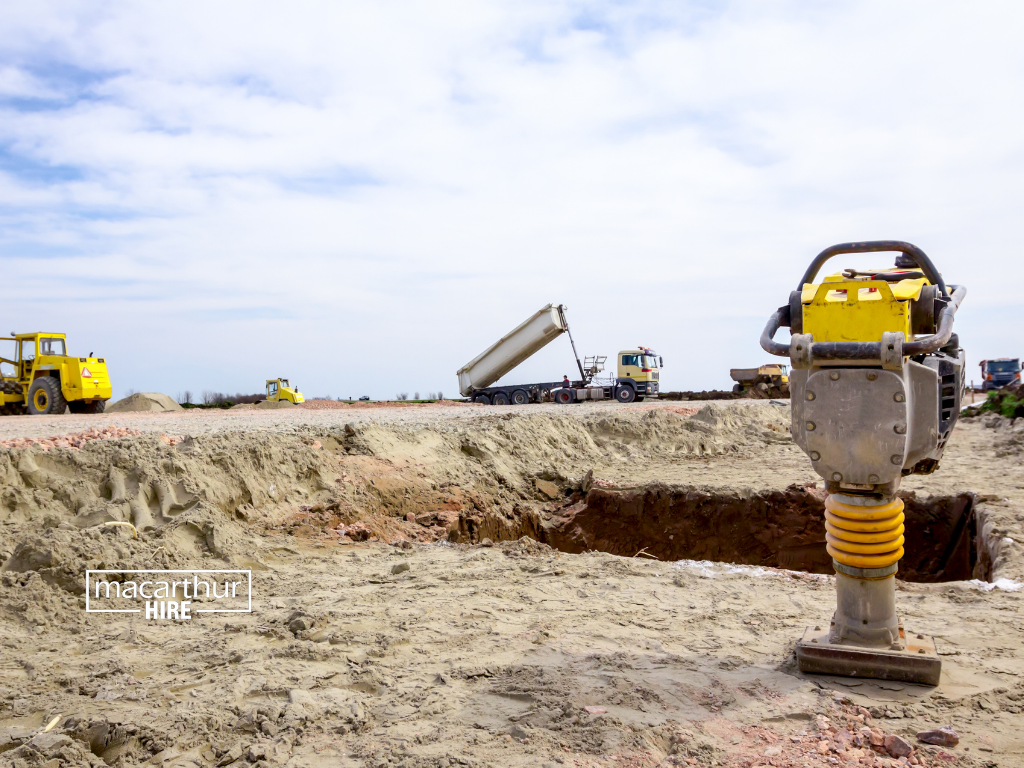
Concentrated compaction in narrow spaces
A rammer, sometimes called a jumping jack, applies repeated impact through a relatively small foot. This concentrated action can suit narrow trenches, footings and confined areas where a wider plate cannot operate effectively.
Rammers are commonly considered for cohesive or mixed soils, although the exact machine must still suit the material. Their narrow footprint allows them to work between trench walls or around selected structures where there is enough safe clearance.
The operator should know the trench dimensions before hiring. Measure the base width as well as the opening at ground level. A trench that appears wide from above may narrow lower down or contain pipes, shoring and other obstructions.
Working inside or beside an excavation introduces hazards beyond equipment selection. The excavation must be assessed for collapse, access, underground services, water and the effect of vibration. Compaction equipment should be used only within an appropriate safe system of work.
A rammer can be physically demanding and behaves differently from a plate compactor. Anyone hiring one should review the operating instructions and confirm that the intended operator is competent to use it.
Recognise where a rammer may not suit the surface
A rammer is not the default choice for every small area. Its concentrated impact can leave an uneven surface and may be unsuitable for finishing broad paving bases or working directly over materials that require a smoother vibration pattern.
Loose sand or gravel may respond better to a vibrating plate, depending on the project. Pavers and finished surfaces also require care because direct impact from unsuitable equipment can chip, crack or mark them.
The position of pipes and services must be considered. Aggressive compaction too close to newly installed or vulnerable services can cause movement or damage. Follow the project specification and the service manufacturer’s requirements for bedding, cover and compaction.
If the trench contains several different materials, one machine may not suit every layer. The bedding around a pipe, selected backfill and upper road base may each have different requirements.
Where the required compaction method is specified on a drawing or by an engineer, do not replace it with another machine simply because that equipment is easier to hire. Ask for clarification if the specified machine is unavailable.
Consider a Roller for Larger Open Areas
Rollers cover a wider area than plates or rammers and are generally considered for larger, more open worksites. They may be walk-behind or ride-on machines, with different drum configurations, weights and vibration systems.
A smooth vibrating drum may suit certain granular bases and asphalt work. Other roller types use a kneading action that is more appropriate for particular soils. The correct choice depends on material, layer thickness, required density and project specifications.
For smaller landscaping or residential work, a roller may be unnecessary. Delivery, turning space and the time required to position the machine can outweigh the benefit of its wider coverage.
On commercial or civil work, the required compaction result may be specified and tested. In that situation, the contractor should select equipment using the project documentation rather than a general online comparison.
When seeking a roller through a construction equipment rental company, provide the surface area, material, layer thickness, site access and required result. Ask for the machine’s operating weight and dimensions so the proposed equipment can be checked against the site.
Check access, edges and turning space
Rollers need enough room to enter, turn and work without approaching unsafe edges. Narrow gates, soft driveways, overhead restrictions and steep slopes may prevent a larger machine from reaching the compaction area.
The delivery vehicle also needs safe access during equipment rental macarthur . A machine may fit through the worksite gate but still be impossible to unload because there is no firm, level space for the transport vehicle.
Edges around pits, trenches, retaining walls and embankments require careful planning. The weight and vibration of a roller can affect the ground near an unsupported edge. A smaller compactor may be needed in these sections even when a roller is used across the main area.
Buildings and neighbouring properties should also be considered. Vibration may affect nearby structures, fragile finishes or services. Where this risk is uncertain, obtain appropriate advice before choosing the equipment.
Many projects use more than one compactor. A roller may handle the open centre, while a plate or rammer works around edges, services and confined areas. Include both needs in the initial hire enquiry so availability and scheduling can be assessed together.
Match the Equipment to the Complete Project
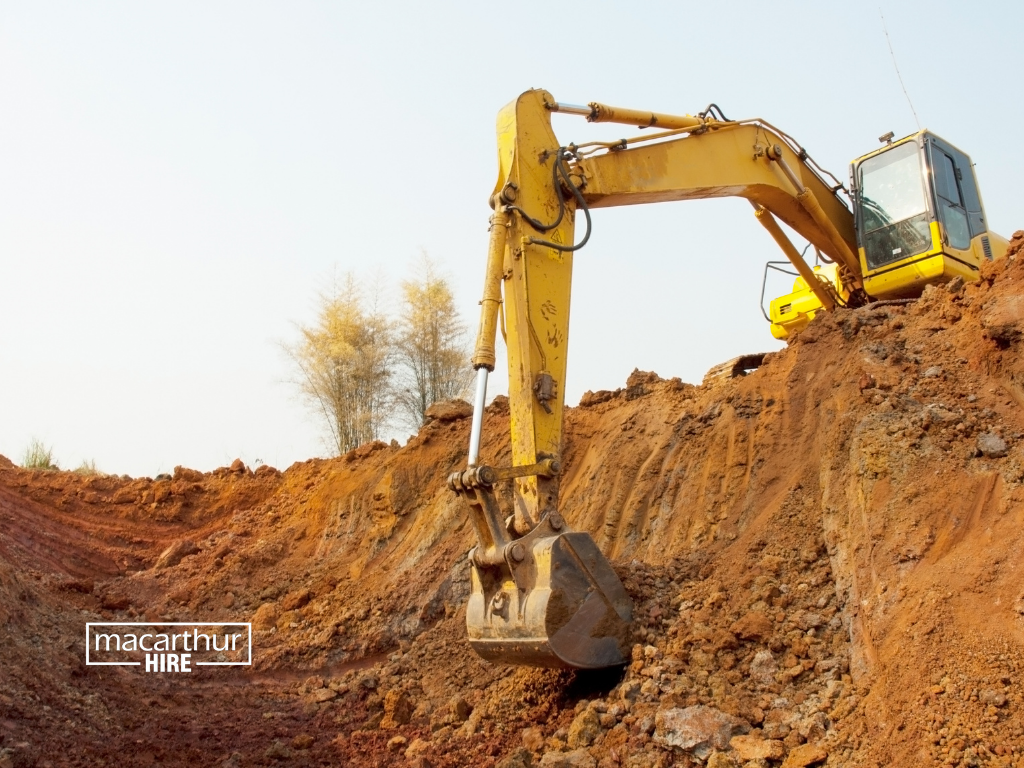
Compact material in manageable layers
Placing all fill at once and compacting only the top surface can leave poorly compacted material below. A more reliable process places fill in layers that suit the material, compactor and project requirements.
There is no universal lift thickness for every job. It depends on factors such as particle size, soil type, moisture, machine weight and vibration. Follow the equipment manual and any engineering or construction specification that applies.
Each layer should be reasonably even before compaction begins. Large variations in depth can produce inconsistent results because shallow sections receive a different compaction effort from deeper ones.
The number of passes should also come from the machine guidance and required outcome rather than guesswork. Continuing indefinitely may not improve unsuitable or overly wet material. If the surface remains soft, moves underfoot or shows water pumping, stop and investigate the cause.
For work requiring verified compaction, arrange the appropriate testing. A surface can look firm without meeting the specified density below. Testing requirements should be planned before later work covers the area.
Coordinate excavation, transport and surface preparation
Compaction usually follows excavation, removal of unsuitable material and placement of selected fill. Planning these stages together can reduce idle hire time.
Customers comparing excavator hire in Macarthur may use a compact machine to remove soil, shape the area or place fill before changing to compaction equipment. Macarthur Hire lists a Kubota excavator for tight-access work and a larger Kubota U55-4 excavator for projects requiring different capacity and access. Suitability must be confirmed for the site and task.
Material transport may also need planning. A 2-ton tray truck can be useful for selected loads, but customers must confirm payload, dimensions, load restraint, licence requirements and whether the proposed material is suitable for transport in that vehicle.
Once construction work is complete, landscaping and clean-up equipment may be needed. Lawn mower hire may suit reinstating or maintaining surrounding grass, while a petrol pressure washer may help with appropriate exterior clean-up. These items do not form part of the compaction process, so they should be booked only when the wider project genuinely requires them.
Scheduling each stage helps avoid paying for an excavator, compactor or truck while another task is incomplete. Allow for weather, material delivery and any required inspection or testing.
Choose the Right Construction Equipment Rental Service
Start by checking whether the provider stocks equipment suited to the material and site. Product dimensions, weight, fuel type and transport requirements are more useful than a general description such as “heavy-duty compactor.”
Ask what is included in the rate and whether delivery or collection costs apply. Confirm the hire period, return time, fuel requirements, cleaning expectations and procedure for extending the booking.
Macarthur Hire’s plate-compactor listing identifies the model type, weight, dimensions, fuel and transport options. This gives customers specific details to compare when looking for equipment rental in Macarthur rather than relying on broad promotional claims.
Price should be considered alongside suitability. A lower-cost machine is poor value if it cannot compact the material effectively or does not fit the site. Likewise, hiring a much larger machine than necessary can create avoidable transport and access problems.
Review the provider’s hire terms and conditions before confirming the order. Ask about anything that is unclear, particularly responsibilities for operation, fuel, damage, cleaning, security and late returns.
Consider all the equipment needed across the job
A good hire plan looks at the whole project rather than treating each machine as an isolated booking. Excavation, material delivery, compaction, access work and final clean-up may depend on one another.
For example, the compactor cannot begin until unsuitable soil has been removed and the correct fill is available. Paving cannot proceed until the base has been prepared, compacted and checked. Booking every machine for the same first day may therefore create unnecessary standby time.
Customers searching for equipment hire in Macarthur should prepare a simple work sequence and estimated dates. The hire company can then confirm current availability and whether daily, weekend or weekly options suit the expected schedule.
Transport should be planned at the same time. Macarthur Hire states that its 82 kg plate compactor can be transported in a ute or trailer, but the customer remains responsible for confirming safe loading, restraint and vehicle capacity. Delivery may be the better choice where suitable transport or handling is unavailable.
If several items are required, request a written quote that identifies each machine, the hire period and any delivery or additional costs. This makes the full project cost easier to understand.
Know When to Contact an Equipment-Hire Company
Ask for advice when the material or site is uncertain
Contact the hire company before booking when you do not know whether the material is granular, cohesive or mixed. Explain what has been excavated or delivered and what the finished surface will support.
You should also ask for guidance when access is restricted, the area is sloped, the trench is narrow or the compactor will operate near structures and services. Measurements and photographs can help the provider understand the site, although they do not replace a professional assessment where one is required.
Macarthur Hire is a practical contact for construction equipment rental around Campbelltown, Camden, Narellan, Minto, Ingleburn and surrounding Macarthur areas. The company can confirm whether its listed plate compactor suits the described task and whether it is available for the required dates.
If a rammer, reversible plate or roller appears necessary, confirm whether that equipment is currently stocked. Do not assume that every provider carries every compactor discussed in this guide.
Contact an engineer, geotechnical professional or relevant contractor when the required compaction result forms part of a structural design or cannot be determined from the equipment instructions. A hire company can explain its available machinery, but it should not replace project-specific engineering advice.
Provide enough information for an accurate booking
Tell the company whether the work involves paving, a trench, a driveway, landscaping, concrete preparation or another application. Describe the material and state who supplied or specified it.
Provide the length and width of the area, trench dimensions, total fill depth and planned layer thickness if known. Explain whether there are gates, slopes, steps, soft access routes, overhead hazards or limited unloading space.
Include the site address, preferred dates and expected hire period. State whether you need delivery or intend to collect the machine. When collecting, provide details of the proposed vehicle or trailer so transport requirements can be checked.
Mention any other equipment needed for excavation, material movement or clean-up, but avoid adding unrelated items solely for convenience. A coordinated booking should follow the actual work sequence.
To discuss availability and project requirements, contact Macarthur Hire with the material, dimensions, access details and preferred dates. Confirm the final machine selection, charges and hire conditions before placing the order.
Choosing compaction equipment becomes easier when the decision starts with the ground rather than the machine. Identify the material, define the area and required result, check access, and compare the available plate, rammer or roller against those needs. This creates a clearer hire request and a more practical foundation for the work that follows.
