

A free ai maturity audit can help a business understand how ready it is to use AI in a safe, useful, and practical way. Many businesses are interested in AI, but not every team is ready to buy tools, automate work, or connect AI to business data straight away.
A maturity audit gives a clearer starting point. It helps review your goals, workflows, data, systems, team skills, risks, and current use of AI. This can make it easier to see what is ready, what needs work, and what should happen next.
For Australian businesses, this is especially important because AI adoption is moving quickly. Teams may already be using AI for writing, research, customer service, reporting, or admin work without a clear policy or process. A simple audit can help bring structure to that activity.
Start with readiness before tools
AI tools can support many tasks. They can help draft emails, summarise documents, answer customer questions, prepare reports, support marketing, review data, and reduce repetitive admin.
However, the tool should match the business need. Buying software before checking readiness can lead to poor results. The business may not have clean data. Staff may not know how to use the tool safely. Managers may not know which outputs need human review.
A readiness check helps answer basic questions first. What problem are you trying to solve? What data will AI need? Who will use the tool? What risks need to be managed? What result would count as success?
Avoid rushed AI decisions
Rushed AI decisions can create confusion. Staff may use different tools without approval. Sensitive data may be copied into public platforms. AI outputs may be trusted without checking. A business may also pay for tools that do not fit its systems or workflows.
A simple AI Readiness Audit can help reduce these risks. It gives the business a structured way to review current maturity before making larger decisions.
This does not mean every business needs a complex AI strategy from day one. It means the business should understand its current position before investing more time and money.
What Does an AI Maturity Audit Review?
An ai maturity audit should look at more than technology. It should review people, processes, data, systems, risks, and business value.
The best audits explain findings in plain English. This helps business owners, managers, and team leaders understand what to do next.
Business goals, workflows, and opportunities
A useful audit should begin with business goals. AI should support a real business outcome, not just be used because it is popular.
The audit may review workflows such as:
- Customer enquiries
- Admin tasks
- Sales follow-up
- Internal reporting
- Marketing content
- Document drafting
- Data entry
- Scheduling
- Staff knowledge sharing
- Business process automation
The goal is to find practical use cases. These may include saving time, improving consistency, reducing manual work, supporting faster decisions, or helping staff complete routine tasks.
For example, a business with many repeated customer questions may benefit from AI-supported response templates. A business with messy reporting may need data cleanup before AI can help. A team using AI for content may need review rules and brand guidelines.
Data, systems, and access controls
An ai readiness audit tool may also review the data and software systems the business already uses. This can include where data is stored, who can access it, how accurate it is, and whether it is suitable for AI use.
Data quality matters. If customer records, product details, internal documents, or reports are outdated or inconsistent, AI outputs may be less useful.
Access controls also matter. Not every staff member should have access to every dataset or AI tool. The audit should consider permissions, security settings, approved platforms, and whether sensitive information is protected.
This helps the business understand whether it is ready to test AI now or whether it should improve systems first.
How Does a Free AI Readiness Assessment Help?

A free ai readiness assessment helps a business understand its current stage of AI maturity. This can be useful for owners, managers, marketing teams, operations teams, HR teams, IT decision-makers, and customer service teams.
The purpose is not to make the business feel behind. It is to show what is working, what needs attention, and what steps are most practical.
Understand your current maturity level
Businesses usually sit at different maturity stages. Some are only exploring AI. Some staff may already be using public AI tools. Others may be testing chatbots, automation, reporting tools, content tools, or internal assistants.
A maturity review may show whether the business is:
- Not yet using AI
- Exploring basic AI tools
- Testing AI in one or two workflows
- Using AI across several teams
- Ready to scale AI with stronger governance
This type of result helps the business choose the right next step. A beginner team may need simple training and an AI policy. A team already using AI may need stronger privacy checks, approval processes, and tool controls.
Turn audit results into next steps
A useful audit result should be more than a score. It should give practical next steps.
These may include:
- Create an AI use policy
- Train staff on safe AI use
- List approved AI tools
- Review privacy and data handling
- Choose one low-risk pilot project
- Clean up key business data
- Map manual workflows
- Set review and approval steps
- Define success measures
- Build a staged AI roadmap
This is where a free ai maturity audit can be valuable. It helps turn interest into a clear action plan.
What Risks Should an AI Audit Identify?
An ai audit should help identify risks before they become bigger problems. AI can be useful, but it still needs controls.
Many risks are practical. They include entering sensitive information into the wrong tool, relying on inaccurate outputs, using AI without review, or allowing staff to choose tools without approval.
Privacy, security, and sensitive data
Privacy and data handling should be part of any audit. Businesses need to know what information staff are entering into AI tools.
This may include customer names, contact details, financial records, contracts, staff information, product data, passwords, or internal documents.
The audit should also review access. Who can use AI tools? Who can upload files? Who can approve AI-generated outputs? Who is responsible if something goes wrong?
Clear rules can reduce mistakes and protect sensitive information.
Accuracy, bias, and human review
AI outputs can be wrong, incomplete, outdated, or biased. This is why human review is important.
Human review is especially important for customer advice, legal content, financial information, health-related topics, hiring, safety, compliance, or any decision that affects people.
An audit should help the business decide which tasks are suitable for AI support and which tasks need stronger approval. It should also help define who checks outputs before they are used.
A good audit should not promise that AI removes all risk. It should help the business use AI with better controls.
How to Choose the Right AI Readiness Product or Service
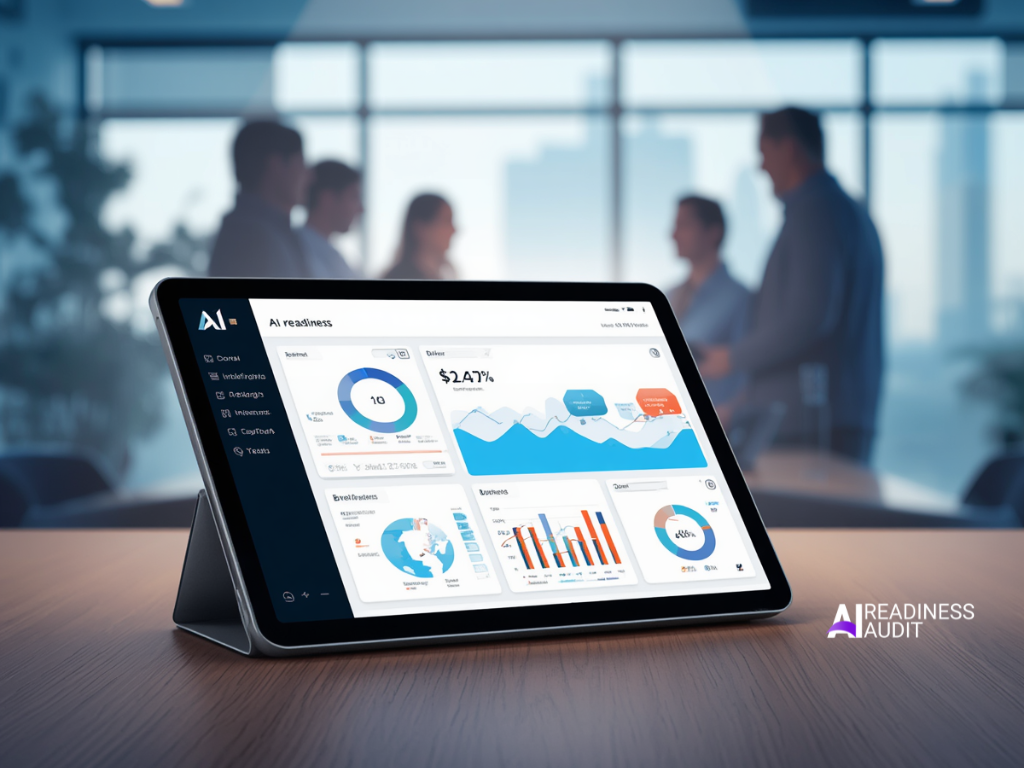
Choosing the right product or service means looking at what the audit actually provides. Some free tools may only give a quick score. Others may provide a clearer report with practical recommendations.
The best option depends on how much guidance your business needs.
Compare the tool, score, and report
When comparing an AI Readiness Audit, check the questions, scoring method, privacy approach, report detail, and quality of recommendations.
Useful questions include:
- What areas does the audit check?
- Does it review data readiness?
- Does it consider privacy and security?
- Does it include staff skills?
- Does it review workflows?
- Does it explain risk in plain English?
- Does it provide next steps?
- Is the report useful for non-technical managers?
- Does it suggest pilot ideas?
- Is follow-up support available?
A useful audit should explain both opportunity and risk. It should not only say that AI is useful. It should show where AI makes sense for your business.
When specialist guidance can help
AI Readiness may be useful to consider when a business wants support with a free ai maturity audit, ai readiness audit free option, ai readiness audit tool, AI Readiness Audit, free ai readiness assessment, or ai maturity audit.
This can help when a team is unsure where to start, which workflows to review, what risks to check, or how to move from interest to action.
A specialist provider can also help explain results, suggest sensible first use cases, and support the business with policy, training, governance, and implementation planning.
What Mistakes Should Businesses Avoid?
AI can create value, but it should not be treated as a quick fix. Businesses get better results when AI is matched to clear goals, useful data, and practical workflows.
A readiness audit can help identify gaps before the business invests too heavily.
Avoid treating AI as a quick fix
AI works best when the business knows what it wants to improve. Without a clear goal, teams may test random tools without measuring value.
For example, using AI to draft emails may save time, but only if the tone is reviewed and the information is accurate. Using AI for reporting may help, but only if the data is reliable. Using AI for customer service may improve speed, but only if escalation and human review are clear.
Start small. Choose one workflow where AI can be tested safely and measured properly.
Avoid skipping staff and governance planning
AI adoption is not only about technology. Staff need to understand what tools are approved, what data can be used, what outputs must be checked, and who is responsible for final decisions.
This is where training, policies, and communication matter. A business may need simple AI guidelines, staff workshops, approval steps, and a clear process for reporting concerns.
Without people and process planning, AI use can become inconsistent and risky.
When Should You Contact the Company?

You should contact the company when your business wants to explore AI but does not know where to begin. You should also ask for help if staff are already using AI tools without clear rules.
It is better to ask early than to discover problems after tools are already in use.
When your team is unsure where to start
Contact the company if you need help choosing AI use cases, reviewing workflows, checking data, identifying risks, or understanding your current maturity level.
You may also need support if your leadership team wants to use AI but is unsure how to manage privacy, security, staff training, tool selection, or approval steps.
A simple readiness conversation can help clarify what should happen first.
When you are ready to move from audit to action
Contact the company when you are ready to turn audit findings into a practical plan. This may include choosing a pilot project, creating an AI policy, training staff, selecting tools, reviewing data, or setting success measures.
To finish, a free ai maturity audit is a useful starting point for businesses that want to use AI with more confidence. It helps identify what is ready, what needs work, and what steps should come next. With the right approach, AI adoption can become more practical, safer, and better aligned with real business goals.
