

Choosing the right metal is one of the most important decisions in CNC sheet metal fabrication. Whether you’re manufacturing brackets, machinery components, electrical enclosures or custom metal panels, the material you select affects the finished product’s strength, durability, appearance and manufacturing cost. Understanding the differences between common sheet metals can help you choose a suitable option before production begins.
For Australian manufacturers, engineers and businesses requiring custom metal components, material selection involves more than comparing prices. Different metals respond differently to cutting, punching and bending, which can influence the manufacturing process and the final result.
Sheet metal fabrication involves transforming flat metal sheets into finished components using processes such as cutting, punching, bending, welding and assembly.
Computer numerical control, commonly known as CNC, allows compatible machinery to follow programmed instructions based on digital designs. This helps manufacturers produce complex shapes and repeatable components.
However, the results depend on more than the equipment. The material itself plays an important role in determining how the component can be manufactured and how it performs during use.
How CNC Sheet Metal Fabrication Works With Different Metals
CNC sheet metal fabrication commonly begins with a design created using computer-aided design software.
The design provides information about the component’s dimensions, shape, holes and other manufacturing requirements.
Depending on the project, a CNC cutting machine may be used to cut flat profiles, while CNC punching equipment produces holes, slots and other suitable features.
A press brake can then form the metal into brackets, channels, panels or enclosures.
Each metal behaves differently during these operations.
For example, mild steel is generally suitable for many common cutting and forming applications, while stainless steel may require greater forming force or different tooling considerations.
Aluminium can be useful for lightweight components, but its bending behaviour varies considerably between alloys and tempers.
Understanding these differences helps manufacturers select appropriate processes and avoid unnecessary manufacturing complications.
Why the Right Metal Matters for Your Project
The intended use of a component should guide material selection.
A bracket designed to support equipment may require different properties from a decorative panel or a protective enclosure.
Strength, weight, corrosion resistance, appearance and exposure to heat or moisture are all relevant considerations.
For example, a component used in a damp environment may need corrosion-resistant material or an appropriate protective finish.
A lightweight equipment enclosure may benefit from aluminium, while a general-purpose mounting bracket might be suitable for mild steel.
The thickness and grade of the material also matter.
Selecting an unsuitable material can create problems during manufacturing or result in a component that does not perform as intended.
For safety-critical or load-bearing applications, material selection should be confirmed against the applicable engineering and design requirements.
Comparing Common Metals Used in Sheet Metal Fabrication
Mild steel, stainless steel and aluminium are commonly used in sheet metal manufacturing because they offer different combinations of strength, formability, durability and cost.
Choosing between them requires understanding how the finished component will be used.
For customers considering CNC sheet metal fabrication, comparing the properties of these materials is a practical starting point.
Mild Steel for General Fabrication and Manufacturing
Mild steel is widely used for general fabrication because it offers useful strength, formability and welding characteristics.
It is commonly selected for mounting brackets, equipment panels, frames, cabinets and other manufactured components.
One advantage of mild steel is its suitability for a range of manufacturing processes, including laser cutting, punching, bending and welding.
It is also often more economical to purchase than comparable stainless steel materials, although actual costs depend on specifications and market conditions.
However, untreated mild steel can corrode when exposed to moisture and other environmental conditions.
Depending on the application, protective finishes such as powder coating, painting or galvanising may be required.
The appropriate finish should be selected according to the operating environment and expected service conditions.
For many indoor industrial applications, properly specified mild steel provides a practical balance between performance and fabrication cost.
CNC Stainless Steel and Aluminium Applications
Stainless steel is commonly selected for components requiring corrosion resistance, durability or particular appearance characteristics.
Applications may include commercial kitchen equipment, machinery panels, protective covers and components used in demanding environments.
When considering CNC stainless steel fabrication, the specific grade is important.
For example, grades 304 and 316 have different corrosion-resistance characteristics, and the appropriate choice depends on environmental exposure and other requirements.
Aluminium offers a different set of advantages.
Its relatively low density makes it useful for lightweight panels, enclosures and selected equipment components.
Aluminium also offers corrosion resistance, although its properties vary between alloys and surface conditions.
Some aluminium grades are more suitable for bending than others. For example, 5052 aluminium is commonly selected for formed sheet metal components, while 6061-T6 requires greater care when tight bends are involved.
Neither stainless steel nor aluminium is automatically the better choice.
The decision should consider strength, weight, corrosion resistance, appearance, formability and the manufacturing processes required.
How Metal Properties Affect CNC Cutting and Punching
Cutting and punching are important stages of many sheet metal manufacturing projects.
These processes allow manufacturers to create flat shapes, holes, openings and other features before forming or assembly.
However, material thickness, hardness and component design can affect which manufacturing method is most suitable.
Understanding these factors helps customers compare CNC sheet metal fabrication methods and prepare more practical designs.
Choosing a CNC Cutting Machine for Different Materials
A CNC cutting machine follows programmed instructions to produce specified shapes and profiles.
Different technologies are suitable for different applications.
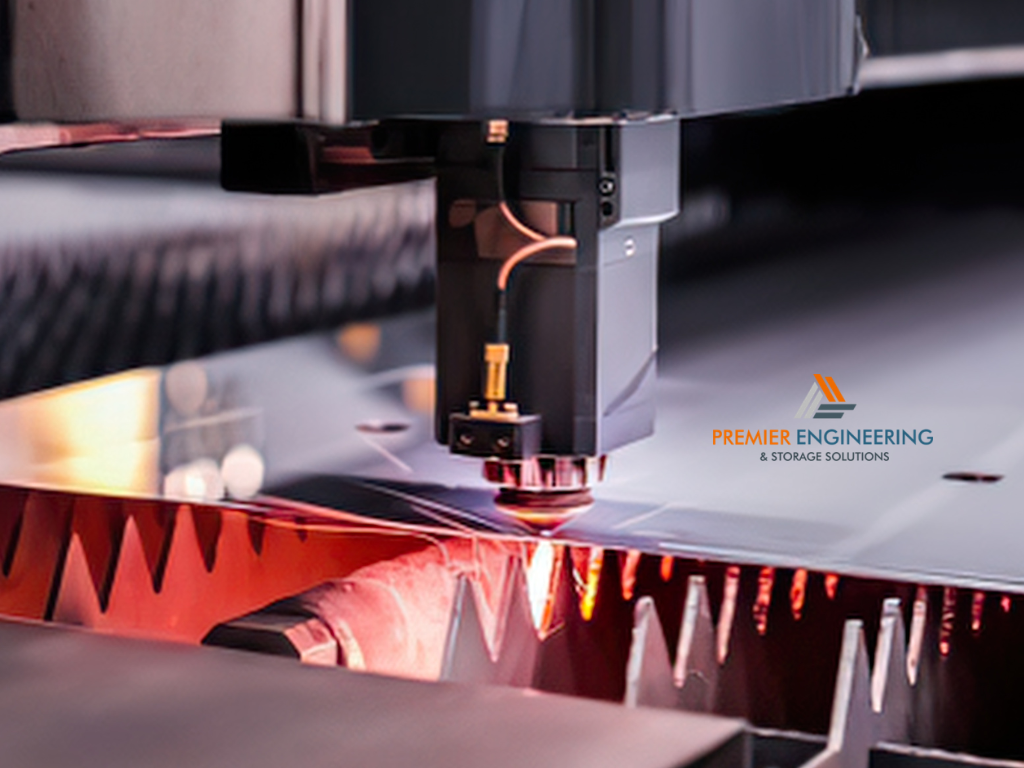
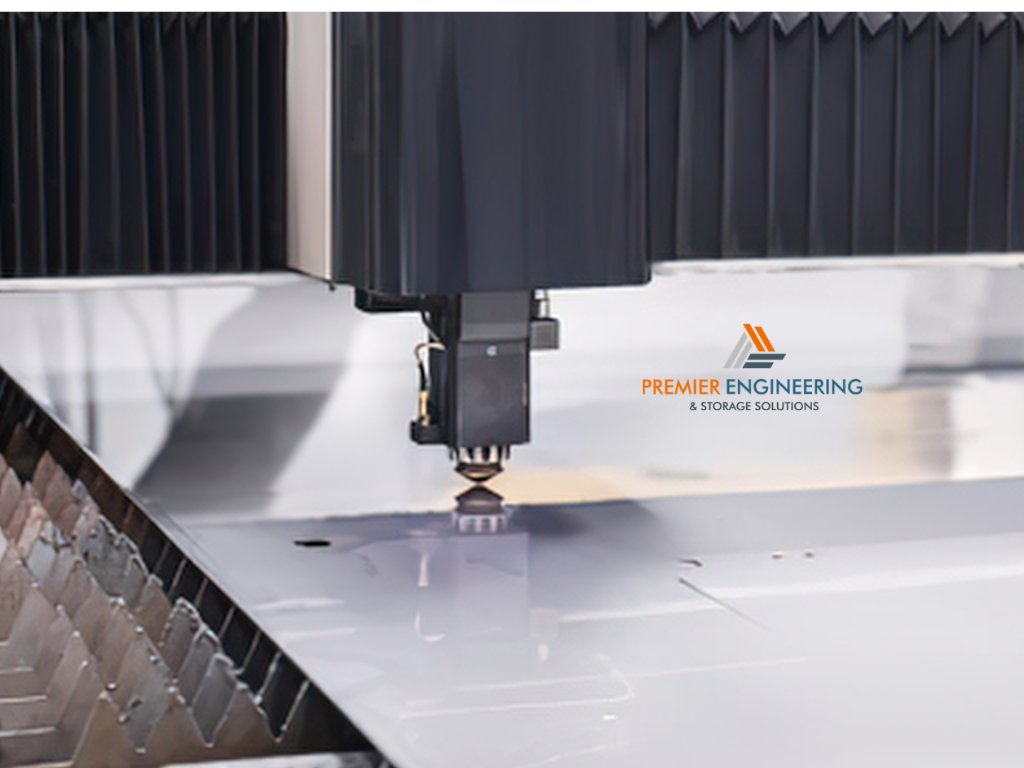
Laser cutting is commonly used for detailed metal profiles, particularly when the design includes complex outlines or varied features.
CNC punching uses shaped tools and a mechanical punching process to produce holes, slots and other features in suitable sheet metal.
The selection of equipment depends on the material, thickness, required accuracy and component geometry.
For example, intricate profiles may be better suited to laser cutting, while repeated holes or standardised features may be produced efficiently through CNC punching.
Material thickness also affects the machine capacity and tooling needed.
Manufacturers must consider the equipment’s operating limits rather than assuming every cutting system can process every metal grade or sheet thickness.
For customers, the most useful approach is to provide accurate drawings and material requirements so the supplier can recommend an appropriate cutting method.
When CNC Punching Service and Metal Punching Services Work Best
A CNC punching service is commonly used to create holes, slots, perforations and other suitable features in sheet metal.
The process uses a punch and die arrangement to remove or form material according to programmed instructions.
Metal punching services may be useful for components with repeated features, such as ventilation panels, equipment covers and electrical enclosures.
For suitable production requirements, punching can provide an efficient alternative to laser cutting.
However, the design must be compatible with the available tools and machine capabilities.
Very intricate shapes, unusual feature sizes or certain material thicknesses may be more suitable for another cutting method.
Tooling availability, production quantity and required edge quality can also influence the decision.
Discussing these details with a fabrication provider can help determine whether CNC punching, laser cutting or a combination of processes is appropriate.
Understanding Metal Bending and Forming Requirements
Many sheet metal components require more than flat cutting.
After the initial profiles and holes are produced, the metal may need to be bent or formed into the required shape.
This is where material properties become especially important.
For CNC sheet metal fabrication, bending requirements should be considered during the design stage rather than after the cutting process has been completed.
How a Metal Bending Press Shapes Sheet Metal
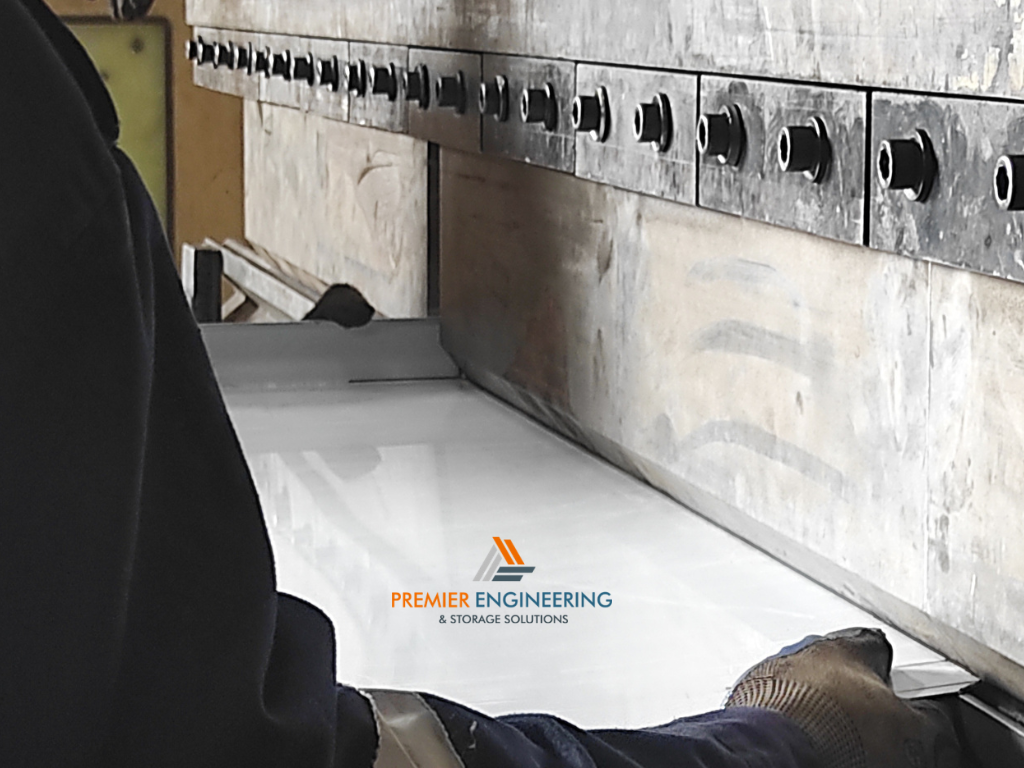
A metal bending press, commonly called a press brake, forms sheet metal by applying controlled force through a punch and die.
This allows flat sheets to be shaped into brackets, channels, panels and other manufactured components.
Modern CNC press brakes use programmed settings to control bending operations and help achieve repeatable results.
However, the required force and tooling depend on the material type, sheet thickness, bend length and intended angle.
Stainless steel may require different bending conditions from mild steel, while aluminium can have specific limitations depending on its alloy and temper.
The geometry of the component is also important.
For example, narrow flanges, closely positioned bends or deep enclosure shapes may create tooling access difficulties.
Reviewing the design before production helps identify whether the component can be formed using the available equipment.
Bend Radius, Thickness and Material Springback
When sheet metal is bent, the material experiences compression on the inside of the bend and stretching on the outside.
The inside bend radius must be suitable for the selected metal and its thickness.
A radius that is too tight can increase the risk of cracking, particularly with less formable alloys or certain material conditions.
Springback is another important consideration.
After bending pressure is released, metal may partially return towards its original shape. This can affect the final bend angle.
The amount of springback depends on factors such as material grade, thickness, bend radius and tooling.
Manufacturers account for this behaviour when selecting bending methods and preparing fabrication programs.
Bend allowance also affects the dimensions of the flat sheet before forming.
For components requiring accurately positioned holes, bends and adjoining surfaces, these details must be considered together.
Confirming bend requirements with the fabricator helps reduce the risk of dimensional problems during production.
Balancing Material Costs and Manufacturing Requirements
Material price is an important consideration, but it is only one part of the total fabrication cost.
Two components with similar dimensions may require different manufacturing processes depending on the chosen metal, thickness and design complexity.
Customers comparing CNC sheet metal fabrication quotations should therefore consider the complete manufacturing requirements rather than the cost of raw materials alone.
How Metal Choice Affects Fabrication Costs
Different metals have different purchase prices, cutting characteristics and finishing requirements.
Mild steel may offer an economical starting point for many general fabrication applications, but additional corrosion protection can increase the final cost.
Stainless steel may have a higher initial material cost, although its corrosion resistance can make it appropriate for applications where protective coatings are unsuitable or unnecessary.
Aluminium may be preferred where reducing component weight provides a practical advantage.
Manufacturing complexity also affects pricing.
Components requiring numerous holes, complex profiles, multiple bends or tight tolerances may need additional processing time.
Production quantity can influence the overall cost because setup activities may be spread across multiple components.
Material waste should also be considered.
Designs that allow efficient cutting arrangements within standard sheet sizes may reduce unnecessary material consumption.
A well-planned fabrication project balances material performance, manufacturing feasibility and the overall cost of producing a suitable finished component.
Comparing CNC Cutting Services Western Sydney
Businesses looking for CNC cutting services Western Sydney providers should compare more than advertised prices.
Different workshops may specialise in laser cutting, CNC punching, bending, welding or particular types of sheet metal products.
A supplier offering several manufacturing processes may be able to coordinate multiple stages of production.
However, customers should confirm the actual material grades, thicknesses and equipment capabilities supported by the workshop.
When comparing CNC cutting services, consider whether the supplier can review drawings, recommend suitable manufacturing methods and explain the requirements of the proposed component.
Material availability can also affect production schedules.
For projects involving uncommon grades or specialised finishes, sourcing the required material may take longer than using commonly available sheet stock.
Businesses across Sydney and Western Sydney can benefit from discussing these requirements before placing an order.
The aim should be to identify a supplier whose manufacturing capabilities match the project, rather than selecting a provider based only on proximity.
Preparing Your Design for Sheet Metal Manufacturing
Accurate design information helps turn a concept into a manufacturable component.
Even when a business has already selected a suitable metal, the project may still require adjustments to accommodate cutting, punching and bending limitations.
Preparing suitable drawings is an important part of CNC sheet metal fabrication because it helps manufacturers understand the intended dimensions, material requirements and finished result.
Creating Manufacturing-Ready CAD Drawings
Computer-aided design drawings provide the information needed to plan and manufacture sheet metal components.
Depending on the process, a fabrication provider may request files such as DXF, DWG, STEP or other compatible formats.
The drawing should identify the required dimensions, material grade, sheet thickness, hole positions and relevant bend details.
Where appropriate, it should also specify the finished component’s critical tolerances and surface requirements.
For example, a mounting bracket may require accurately positioned holes so it can align with another part during assembly.
An equipment enclosure may require particular clearances, bend angles and fastening arrangements.
The intended quantity is also useful when requesting a quotation because production volume can influence process selection and manufacturing planning.
Before submitting drawings, confirm the supplier’s preferred file formats and whether additional manufacturing information is required.
Clear design documentation helps reduce misunderstandings and supports more accurate quotations.
Designing for Cutting, Punching and Bending
Sheet metal designs must account for the physical limitations of the selected material and manufacturing process.
Features positioned too close to a bend may become distorted during forming.
Small holes, narrow sections and tightly spaced features can also present difficulties depending on material thickness and the cutting or punching method.
For example, a hole placed near a bend line may change shape as the metal is formed.
Similarly, a very narrow flange may be difficult to bend using available press brake tooling.
The required bend radius should also be compatible with the material grade and thickness.
When designing parts for assembly, consider how components will fit together and whether welding, fasteners or other joining methods are required.
A prototype may be useful when the project involves unfamiliar geometry or particularly important dimensional requirements.
Reviewing these factors before manufacturing can help identify necessary design changes and avoid preventable production issues.
Choosing the Right Metal and Fabrication Provider
Selecting the appropriate material involves balancing performance, manufacturing requirements and budget.
There is no single metal that is ideal for every fabrication project.
For businesses considering CNC sheet metal fabrication, the most useful approach is to understand the component’s intended purpose and confirm that the selected material can be manufactured to the required specifications.
A Practical CNC Sheet Metal Fabrication Selection Guide
Begin by considering the environment where the component will operate.
If the part will be used indoors and requires general mechanical strength, mild steel may be a suitable option when appropriately specified.
For environments where corrosion resistance is important, stainless steel may be worth considering.
Aluminium may be appropriate for lightweight panels, enclosures or other components where reducing overall weight is beneficial.
Next, consider the manufacturing processes involved.
A material that performs well in the finished application may still require particular care during punching, cutting or bending.
The selected grade, sheet thickness and temper should therefore be reviewed alongside the design.
Appearance and finishing requirements also matter.
A component requiring a decorative finish may need a different material or surface treatment from one intended for industrial use.
Finally, consider the overall manufacturing cost and whether the material is readily available in the required dimensions.
These decisions are easier to make when customers and fabrication providers discuss the design before production begins.
What to Ask Before Requesting a Fabrication Quote
Before requesting a quotation, prepare the available design files and explain the intended use of the component.
Confirm the required material, grade, thickness, quantity and any important dimensional tolerances.
Ask whether the supplier can provide the necessary cutting, punching, bending and finishing processes.
For components requiring several manufacturing stages, it can be helpful to understand how those operations will be coordinated.
You should also discuss material availability, inspection requirements and estimated production times.
Premier Engineering provides sheet metal manufacturing services, including CNC punching, laser cutting, press brake bending, CAD design and prototyping.
For businesses planning custom metal components, discussing the design and material requirements with Premier Engineering can help clarify suitable fabrication processes and whether the proposed specifications can be accommodated.
A well-prepared enquiry gives the manufacturing team the information needed to review the project and provide a more relevant quotation.
Choosing the right metal is not simply about finding the strongest or least expensive option. It is about selecting a material that meets the component’s performance requirements while remaining suitable for the intended manufacturing process.
Whether your project involves mild steel brackets, stainless steel panels or lightweight aluminium components, understanding material properties and fabrication requirements is an important step towards a successful result.
Contact Premier Engineering to discuss your CNC sheet metal fabrication requirements, review your drawings and request a quotation for suitable metal manufacturing services.
