

The physical environment can have a major influence on how comfortable, independent and connected a person living with dementia feels in residential aged care. A building may look modern and attractive, yet still be difficult to navigate if corridors are confusing, important rooms are hard to recognise, lighting creates distracting shadows or there are few familiar cues to help residents understand where they are.
For families researching aged care for dementia patients, this means the appearance of a home should be only one part of the decision. A dementia-friendly environment should help the person use the abilities they still have, reduce unnecessary confusion and provide opportunities for movement, rest, social connection and meaningful daily routines.
Australian guidance increasingly reflects this approach. The National Aged Care Design Principles and Guidelines focus on creating accessible, dementia-friendly and home-like residential environments that support independence, outdoor access and community connection. The strengthened Aged Care Quality Standards, which took effect on 1 November 2025, also place greater emphasis on dementia care and require residential care environments to be safe, supportive and suited to residents’ needs.
A dementia-friendly home is therefore not defined by one secure door, sign or activity program. It is created through the way the building, staff, routines and individual care arrangements work together.
Support independence without creating unnecessary restrictions
Dementia can affect memory, orientation, perception, communication and the ability to interpret surroundings. The impact varies from person to person, which is why the environment should support individual abilities rather than assuming everyone living with dementia needs the same level of restriction.
Dementia Australia’s environmental guidance focuses on maintaining independence, meaningful engagement and accessibility while reducing unnecessary risks. Its principles include supporting movement, creating familiar spaces, reducing unhelpful stimulation and allowing people opportunities to be both with others and alone.
In practical terms, this might mean making a bathroom easy to find rather than relying on a resident to remember a complicated route. It could mean providing a safe walking path rather than automatically preventing a person from walking. It may also involve placing seating where someone can rest without having to ask for help.
Safety remains important, but good aged care for dementia patients should not treat safety and independence as opposites.
A suitable environment looks for ways to reduce hazards while still allowing residents to make choices, move around and participate in everyday life as much as possible.
Reduce confusion and unnecessary stress
A complicated environment can require people to make repeated decisions.
Imagine leaving a bedroom and facing a long corridor where every door looks identical. There may be several turns before reaching the dining room, few recognisable landmarks and signs containing information that is difficult to interpret.
Someone without cognitive impairment may navigate this without difficulty. A person living with dementia may find the same environment frustrating or disorienting.
Australian aged care design guidance therefore recommends making environments understandable and easier to navigate. It notes that signage alone is not enough; simpler layouts, clear sightlines to important destinations and recognisable visual or architectural cues can often be more helpful.
This is why families comparing dementia aged care facilities should look at how the home actually feels to move through.
Can you see important destinations?
Do different areas have recognisable features?
Would a resident need to remember several turns to reach a commonly used room?
A calmer, understandable layout can remove some of the effort required simply to get through the day.
Make Rooms and Shared Areas Easier to Navigate
Wayfinding means helping someone understand where they are, where they want to go and how to get there.
In dementia care, this can involve much more than signs.
A bedroom door may include recognisable personal features. A toilet should be easy to identify. A dining room can be visually distinct from a sitting room rather than appearing as another identical institutional space.
The Australian Government’s design guidelines recommend simplifying layouts first and using visibility, multisensory cues and architectural landmarks before relying heavily on signage. Where signs are needed, they should be clear, consistently positioned and free from unnecessary visual clutter.
Personalisation can also help.
A familiar photograph, decoration or meaningful object near a resident’s bedroom may be easier to recognise than a room number alone.
This does not mean every corridor should be filled with signs and colours.
Too many competing visual cues can themselves become confusing.
The goal is clarity.
When visiting dementia and memory care facilities, families can walk from a prospective bedroom to the bathroom, lounge, dining area and outdoor space and consider whether those routes feel understandable.
Avoid layouts that create unnecessary confusion
Long, identical corridors can feel institutional and provide few clues about location.
Similarly, doors that all look the same can make it harder to recognise a bedroom or bathroom.
A better environment may create smaller, more recognisable areas with visible destinations and straightforward pathways.
This links closely with the Australian Government’s broader design principle of creating a home rather than simply an accommodation facility. Current national guidance emphasises familiar environments where residents have privacy, control and a sense of belonging.
Families should therefore look beyond new furniture or attractive décor when comparing modern facilities.
Ask whether the design actually helps the person understand the space.
A building can be visually impressive while still being difficult to navigate.
Conversely, a relatively simple environment can work very well if important areas are easy to recognise, residents can move freely and the surroundings feel familiar.
Use Lighting, Colour and Noise to Create a Calmer Setting
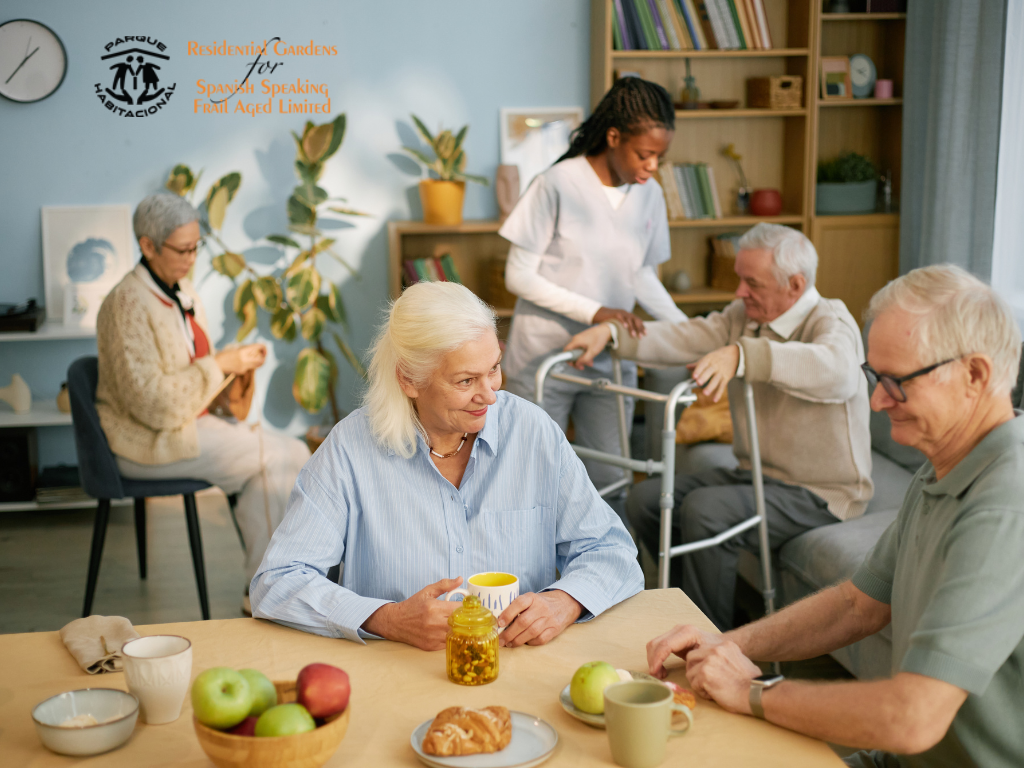
Provide comfortable and consistent lighting
Lighting affects more than visibility.
Poor lighting can make it harder to recognise objects, judge distances or understand the shape of a room. Strong glare and dramatic shadows can also make an environment harder to interpret.
Natural light during the day can be valuable, particularly when combined with appropriate artificial lighting where needed.
Families can notice whether hallways, bathrooms and shared areas are evenly lit, whether there are dark corners and whether polished surfaces create strong glare.
Contrast can also help certain objects stand out from their surroundings.
For example, a toilet that visually contrasts with the floor and nearby surfaces may be easier to recognise than one that blends into an all-white bathroom.
However, visual features should be used carefully. A highly patterned floor or strong contrasting pattern may itself become distracting or difficult to interpret for some people.
Dementia-friendly design is therefore less about making everything brightly coloured and more about making important information easier to understand.
Manage noise and overstimulation
The sound environment matters too.
Televisions, conversations, alarms, kitchen noise, equipment and activity happening at the same time can create a very busy environment.
Some people living with dementia may find high levels of stimulation difficult to process, particularly later in the day or when they are already tired.
Dementia Australia’s environmental principles specifically include reducing unhelpful stimulation while providing useful stimulation that supports engagement.
That makes access to quieter areas important.
A resident who enjoys a social dining room at lunchtime may still want somewhere calm afterward.
Families visiting dementia aged care facilities can listen as well as look.
Is there constant background television?
Do alarms repeatedly sound?
Can residents have conversations without competing with several other noises?
Are there smaller spaces available for someone who wants a quieter environment?
A dementia-friendly home should offer different levels of stimulation rather than assuming every resident wants the same atmosphere all day.
Create Familiar Spaces That Support Daily Routines
Moving into residential aged care involves leaving a familiar home environment, which can be particularly significant for someone living with dementia.
A bedroom that contains recognisable belongings can help create continuity.
My Aged Care explains that residents should have a room they can personalise as well as communal areas for socialising and relaxing.
Depending on the home’s policies and available space, familiar photographs, bedding, a favourite chair, artwork or other meaningful possessions may help the room feel more personal.
The important question is not whether the bedroom resembles a hotel room.
It is whether the person can begin to recognise it as their own space.
When comparing alzheimers nursing homes or broader residential aged care services, families can ask what residents are allowed to bring with them and how the provider supports personalisation.
It can also be helpful to consider the person’s existing home.
If they have always kept family photographs beside the bed or spent evenings in a particular chair, maintaining familiar elements may help the transition feel less abrupt.
Keep important routines as predictable as possible
The physical environment cannot be separated from the way care is delivered.
A beautifully designed home may still feel confusing if everyday routines change constantly without explanation.
Meals, waking, personal care, activities, rest and family visits can provide important points of familiarity throughout the day.
Person-centred care means learning what is normal for the individual rather than forcing everyone into exactly the same routine.
The strengthened Aged Care Quality Standards emphasise care that meets a person’s needs and preferences and supports their rights.
For families, this creates practical questions to ask.
Does the person normally wake early or prefer to sleep later?
Are there foods they particularly enjoy?
Do they like group activities or prefer quieter interests?
Are there cultural, language or religious routines that matter to them?
A dementia-friendly environment works best when the surroundings and care routine reinforce each other.
Familiarity can come from the room, but it can also come from knowing what usually happens next.
Provide Safe Access to Outdoor and Social Spaces
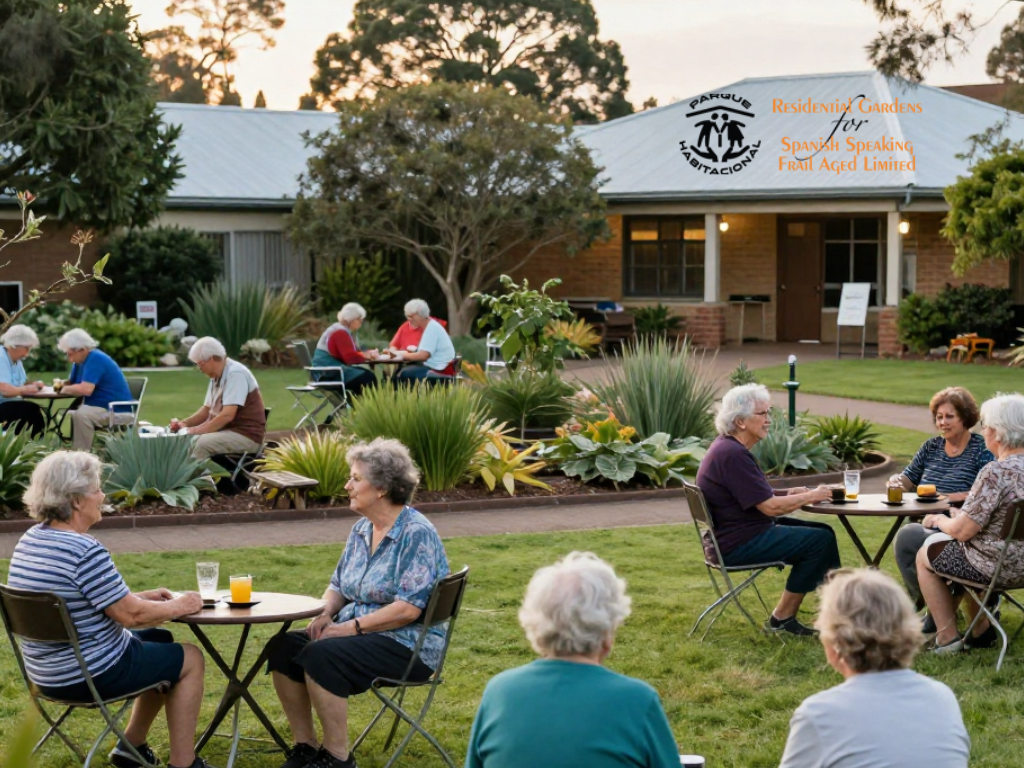
Make outdoor areas easy to reach and use
Being able to see and spend time outdoors is one of the four main National Aged Care Design Principles.
Australian Government guidance states that access to outdoor spaces and nature can support health, psychological and social wellbeing, while the current design program specifically promotes environments where older people can easily see and access the outdoors.
For someone living with dementia, the outdoor area should also be understandable and practical to use.
A garden that is visible but difficult to access offers less value than one residents can actually reach with appropriate support.
Useful features may include comfortable paths, seating, shade and routes that do not unnecessarily lead someone into confusing dead ends.
When visiting memory care residential homes or other aged care facilities, families can ask how residents access outdoor areas and whether staff support people who enjoy walking or gardening.
The answer should reflect individual ability and safety needs rather than a blanket rule for everyone with dementia.
Balance safety with freedom of movement
Dementia care sometimes raises difficult questions around wandering, falls and getting lost.
Families understandably want their relative to be safe.
However, limiting movement too aggressively can reduce independence, physical activity and quality of life.
Australian aged care design guidance emphasises environments that allow older people to move freely while environmental risks are appropriately managed. Standard 4 of the strengthened Quality Standards expects residential environments to be safe, comfortable, supportive and suitable for residents’ needs.
This makes thoughtful design important.
A safe walking route can allow movement without forcing residents into unsafe areas.
Clear destinations can reduce confusion.
Seating can provide opportunities to rest.
Staff awareness can add another layer of support without turning everyday movement into something that is automatically prohibited.
A person living with dementia is still an individual with preferences, habits and a right to participate in everyday life.
A dementia-friendly environment should reflect that.
Choose a Home Based on More Than the Building
Families searching for aged care for dementia patients may encounter terms such as dementia specific aged care facilities, dementia and memory care facilities or memory care residential homes.
These labels can be useful starting points, but they should not replace a detailed comparison.
In Australia, residential aged care homes can provide 24-hour care and may offer specialised support for needs including dementia, but the available services and environment vary between homes.
Start with the individual.
Consider mobility, communication, personal care, sleep patterns, health conditions, interests, cultural background and the level of supervision or assistance currently required.
Then ask the provider how those needs would be supported.
A secure area may matter for one person.
Another resident may benefit more from easy garden access, strong language support or a quiet environment.
Someone with complex clinical needs may require different support again.
This is also why families should be cautious about assuming every home using dementia-related language provides the same service.
Ask what dementia support actually involves.
Look at staff support as closely as physical design
Buildings do not provide dementia care on their own.
Staff need to understand the resident as a person.
That includes learning how they communicate, what routines matter to them, what may cause distress and what helps them feel comfortable.
Good environmental design makes that work easier, but it cannot replace thoughtful care.
Families should therefore observe interactions during a visit.
Are residents spoken to respectfully?
Are people given time to respond?
Do staff appear to know individual residents?
Can the provider explain how changes in behaviour, health or mobility are identified and communicated?
Residential Gardens in Rooty Hill currently states that it offers high, low and respite residential care, 24-hour support and individualised assistance with personal needs. Its respite service also specifically refers to support for people living with dementia. These verified services may make it relevant for families to contact when comparing local care options, but families should still ask directly whether the home and current care arrangements are suitable for their relative’s particular dementia-related needs.
That distinction is important.
A provider should be chosen because it can appropriately support the individual, not simply because dementia appears somewhere in its service information.
Visit the Home and Confirm How Dementia Support Works in Practice
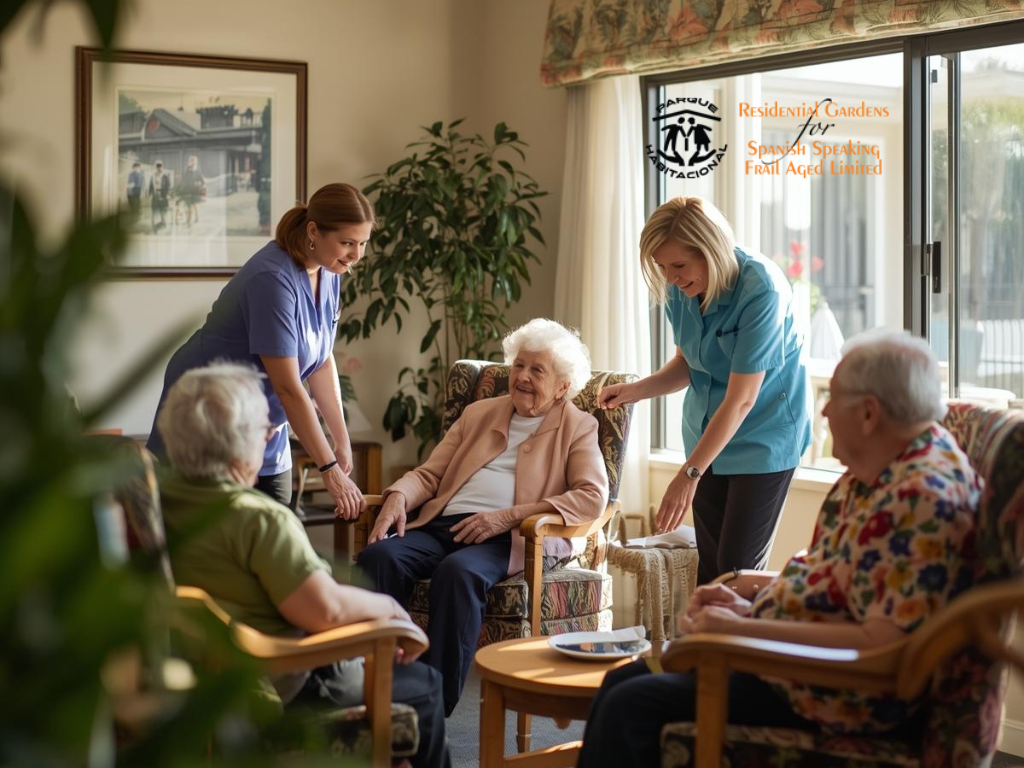
Observe how the environment feels during a normal day
An online photograph cannot tell you whether a corridor is confusing or a dining room becomes very noisy at lunchtime.
This is why visiting shortlisted homes is so valuable.
Walk through the environment as though you were the prospective resident.
Notice whether bedrooms and bathrooms are easy to identify.
Look at the lighting.
See whether residents can access outdoor areas.
Listen to the sound level.
Consider whether there are places for social activity as well as quieter spaces.
Look at how personal the bedrooms and shared areas feel.
Australian Government guidance now even provides a Care Home Assessment Tool designed to help assess residential environments against the National Aged Care Design Principles and Guidelines.
It can also be useful to visit at a time when ordinary activity is happening rather than judging the home solely during a quiet appointment.
The objective is not to find a completely silent or perfectly designed facility.
It is to understand whether the environment would make everyday life easier for the particular person.
Contact the provider when individual needs require clarification
There is no online checklist capable of determining whether a residential aged care home is right for every person living with dementia.
Direct discussion becomes particularly important when the person’s needs are changing, there are safety concerns, communication is difficult or the family needs to understand how particular routines will be supported.
Before contacting a provider such as Residential Gardens or another shortlisted home, gather useful information about the person’s current situation.
Explain how independently they move, what personal care they need, how they communicate, their usual routines, medical considerations, foods they enjoy, interests and anything that commonly causes distress or reassurance.
Families sometimes search phrases such as nursing home dementia or nursing home patients when beginning this research. Within residential aged care, however, “resident” or “person living with dementia” is generally more appropriate because the aged care home becomes the person’s home rather than simply a clinical setting.
The same people-first thinking should guide the choice of environment.
A dementia-friendly aged care home is not simply one with locked doors, colourful signs or a dementia label on its website.
It should help residents recognise where they are, move around with appropriate independence, find quiet when they need it, spend time outdoors, maintain familiar routines and remain connected with other people.
For families, the best comparison therefore combines three things: the physical environment, the quality of care and the individual person’s needs.
When those elements work together, the home can provide more than safety.
It can provide an environment that continues to support identity, choice, comfort and everyday life.
