

A clear panel can serve many purposes. It may protect a retail display, divide a customer counter, cover an artwork, form part of a sign or provide a removable insert within an existing frame.
Acrylic and glass can both provide a transparent surface, but they do not behave in the same way. Acrylic is lighter and easier to cut into custom shapes. Glass may provide greater surface hardness and may be required for particular building applications.
The strongest choice depends on where the panel will be used, how it will be supported and whether it forms part of a regulated building element.
People comparing Acrylic Sheets Sydney should therefore begin with the application rather than the sheet price. Dimensions, exposure, cleaning, fixing, fabrication and compliance can all affect the final decision.
Separate screens and displays from regulated glazing
Begin by identifying what the clear panel is expected to do.
A freestanding counter screen, retail display cover or removable protective panel is different from a window, glazed door, balustrade or external building opening. These applications may look similar, but they can carry very different structural, impact and compliance requirements.
The National Construction Code contains specific requirements for glass in doors, full-height panels, bathrooms, kitchens and locations with a high potential for human impact. It also refers to safety-glazing types, sizes, installation and identification requirements.
This means an acrylic panel should not be assumed to be a compliant replacement simply because it fits an existing glass opening. Where the proposed panel forms part of a window, door, barrier or other regulated assembly, the material and installation should be checked by an appropriately qualified person.
For ordinary displays, covers, signs and non-structural interior screens, acrylic may provide greater design flexibility. The supplier still needs to understand the intended use before recommending a material or thickness.
Identify exposure, handling and visibility requirements
Consider whether the panel will be indoors, outdoors or close to a source of heat.
Indoor-only acrylic products may not be designed for continuing direct sunlight. Current Australian product information distinguishes between clear indoor-use sheet and UV-resistant acrylic intended for longer outdoor exposure.
Also consider how frequently people will touch, clean or move the panel. A removable menu cover has different handling requirements from a permanent display case or a large counter screen.
Visibility is another factor. Clear acrylic may suit applications where customers need an unobstructed view. Frosted or opal sheets may be more appropriate when the panel needs to diffuse light or provide partial visual screening.
Describe these conditions when requesting a quote. A supplier can provide better guidance when it understands the environment, installation and expected use.
Compare Acrylic and Glass in Everyday Use
Clear acrylic can provide glass-like clarity while weighing approximately half as much as an equivalent glass panel. PERSPEX technical guidance also describes standard acrylic as having greater impact resistance than ordinary glass, although polycarbonate provides substantially higher impact resistance than acrylic.
Lower weight can make acrylic easier to transport, lift and support. This may be useful for portable screens, suspended signs, large display covers and removable frame inserts.
Acrylic can also be cut, routed, drilled, polished, bent and formed. These processes allow fabricators to create shapes and assembled products that may be difficult or expensive to produce in ordinary glass.
However, acrylic is not unbreakable. Thin material can flex, poorly positioned holes can create stress and unsuitable machining may cause cracking. The sheet dimensions, supports and fabrication details still need to be planned properly.
Glass may be preferred where surface hardness, particular optical expectations or a regulated glazing specification are important. The decision should reflect the complete application instead of relying on a general claim that one material is always better.
Consider scratching, cleaning and long-term appearance
Acrylic can scratch, particularly when it is cleaned with abrasive cloths, dry paper products or unsuitable chemicals. Australian material guidance describes acrylic as more scratch-resistant than several other clear plastics, including ordinary polycarbonate, but it does not have the same surface hardness as glass.
This distinction matters in public settings. A screen that is wiped repeatedly throughout the day may need careful cleaning procedures, a suitable surface grade or a design that allows damaged panels to be replaced.
Glass may retain a harder surface under frequent cleaning, although it can be heavier and more difficult to customise after manufacture.
The panel’s expected lifespan also depends on the product grade and environment. UV-resistant acrylic may suit long-term exterior exposure, while an indoor-only grade may weaken or discolour when used continuously in direct sunlight.
Ask the supplier for cleaning instructions for the exact product. Staff should know which cleaner and cloth to use before the panel enters service.
Choose the Right Acrylic Sheet for the Application
Compare clear, frosted, opal, tinted and UV-resistant sheets
Clear acrylic is useful when visibility and light transmission are priorities.
Frosted acrylic reduces direct visibility while still allowing light through. It can suit privacy panels, decorative screens and illuminated applications. Opal acrylic diffuses light more strongly and is commonly considered for signs, light boxes and lighting features.
Tinted sheets allow objects to remain visible while changing the tone and reducing some direct brightness. Solid colours can support branding, decorative panels and signage where transparency is unnecessary.
Current Australian ranges include clear, translucent, solid, tinted, mirrored, anti-glare and textured options. Availability depends on colour, sheet size and thickness.
A physical sample is useful when colour, privacy or light diffusion matters. Photographs on a screen may not show the final appearance accurately.
For an exterior project, confirm that the quoted grade is suitable for continuing UV and weather exposure. Do not assume that every clear or coloured acrylic sheet has the same outdoor performance.
Select a suitable thickness and sheet construction
Acrylic is available in many thicknesses, but not every colour or finish is stocked across the full range. Australian supplier guidance describes general acrylic availability from approximately 1.5 mm to 50 mm, while many coloured products are concentrated in thinner options.
The correct thickness depends on the panel’s height, width and support.
A small sign held within a frame may need less rigidity than a large freestanding screen. A horizontal shelf or cover may require different support from a vertical decorative panel.
The fixing system also affects thickness. A sheet supported on all edges behaves differently from one held only at several drilled points.
Buyers may also need to choose between cast and extruded acrylic. Cast acrylic is widely used for detailed fabrication and is available in a broad range of colours and finishes. Extruded acrylic can provide consistent thickness and may suit economical production, but its machining and material characteristics differ.
Provide the supplier with the finished dimensions and installation method rather than selecting thickness from a general chart alone.
Plan Acrylic Screens for Retail and Supermarket Settings
Acrylic screens can separate work areas while allowing staff and customers to see one another.
The design should reflect how people use the counter. A supermarket checkout screen may need space for conversation, payment equipment and the transfer of smaller items. A customer-service counter may require a document opening or a gap at one side.
The phrase acrylic screens for supermarkets can refer to several different designs. Some are freestanding, while others attach to counters, frames or overhead supports. The right arrangement depends on the checkout layout and available fixing points.
Avoid positioning a panel where it blocks a payment terminal, customer display, scanner, emergency control or staff access route.
The screen should also be visible enough that customers do not walk into an unexpected clear edge. Frames, coloured edges, decals or other visible details may improve awareness where appropriate.
Acrylic screens should support the normal operation of the space rather than creating a new obstruction.
Include openings, supports and cleaning access
Every opening should be dimensioned before fabrication.
State the width, height and position of document slots, payment gaps and cable openings. Avoid vague instructions such as “leave enough room for transactions,” because the supplier cannot confirm the intended size.
The support method should also be shown. Freestanding feet need enough depth to keep the screen stable. Fixed screens require suitable hardware, panel thickness and hole positions.
Drilled holes should not sit unnecessarily close to an edge. Internal cut-outs may benefit from rounded corners to reduce concentrated stress and simplify fabrication.
Cleaning access is equally important. Staff should be able to reach both sides without dismantling unrelated equipment or leaning across an unsafe area.
Where screens will be moved regularly, ask whether handles, rounded corners or removable supports would improve handling. The final design should be assessed as a complete product rather than a flat rectangular sheet.
Match the Design to the Right Fabrication Process
Compare laser cutting, CNC routing and saw cutting
Different cutting processes suit different shapes.
Saw cutting is generally efficient for large rectangular pieces and straight edges. CNC routing can produce profiles, holes, slots and machined components. Laser cutting is particularly useful for detailed shapes, lettering and smaller internal features in suitable acrylic.
Australian fabrication services currently use CNC routers, lasers and panel saws to produce custom sheet components.
Customers searching for Acrylic Laser Cutting Sydney may not need to specify the machine themselves. A clearer approach is to provide a drawing, material, thickness, quantity and required edge appearance.
The fabricator can then determine whether the component should be saw cut, routed or produced as laser cut acrylic.
A large order may use more than one process. Straight backing sheets could be saw cut, while logos, lettering or detailed inserts could be laser cut.
Specify holes, edges, bends and assembled components
A fabrication drawing should show every finished feature.
Include the overall dimensions, hole diameters, hole-centre positions, internal openings, external corner radii and any required bevels or countersinks. Mark which side is the front when the component is not symmetrical.
Visible edges may need additional finishing. Depending on the shape and process, options can include laser-finished, diamond-polished, sanded, buffed or flame-polished edges.
Do not assume that every edge will be polished automatically. The quotation should identify the edges receiving a decorative finish.
Acrylic fabrication can also include heat bending, bonding, welding or assembly. These services may turn several flat pieces into a display box, screen, cover or retail fixture.
The final specification should make clear whether the supplier is providing sheets only, cut components or a completed fabricated product.
Compare Total Project Costs and Supplier Services
People researching acrylic vs glass windows cost may initially compare only the price of the transparent panel.
That comparison can be misleading. The complete project may include cutting, polishing, drilling, hardware, frames, removal, delivery and installation.
For genuine residential or commercial windows, thermal performance and compliance also matter. Australian Government guidance explains that glazing and window frames work together to determine whole-window performance, while the NCC regulates glass selection and safety glazing in relevant building locations.
An acrylic insert may be practical for some secondary, temporary or non-structural applications. It should not automatically be treated as an equivalent substitute for certified building glazing.
For screens and displays, acrylic’s lower weight and fabrication flexibility may reduce some handling or machining costs. Glass may offer advantages where surface hardness or a particular approved glazing system is needed.
Compare the complete installed outcome rather than the raw price of one square metre.
Compare quotations, installation and ongoing support
A useful quotation should identify the material brand or grade, colour, thickness, finished dimensions and quantity.
It should also state whether the price covers holes, cut-outs, polished edges, protective film, packaging, delivery and GST.
For custom work, confirm whether the drawing is ready for production or still requires design development. Ask how revisions will be approved before cutting begins.
Compare the quoted tolerances where accurate fitting is important. A basic display panel and a component fitting into an existing machine or frame may need different levels of dimensional control.
Businesses comparing Acrylic Sheets Western Sydney should also consider collection, delivery and access to fabrication support. A nearby supplier may make it easier to review physical samples, discuss drawings or replace a damaged component.
The best value comes from receiving the right finished product, not simply the cheapest uncut sheet.
Know When to Contact FX Plastics
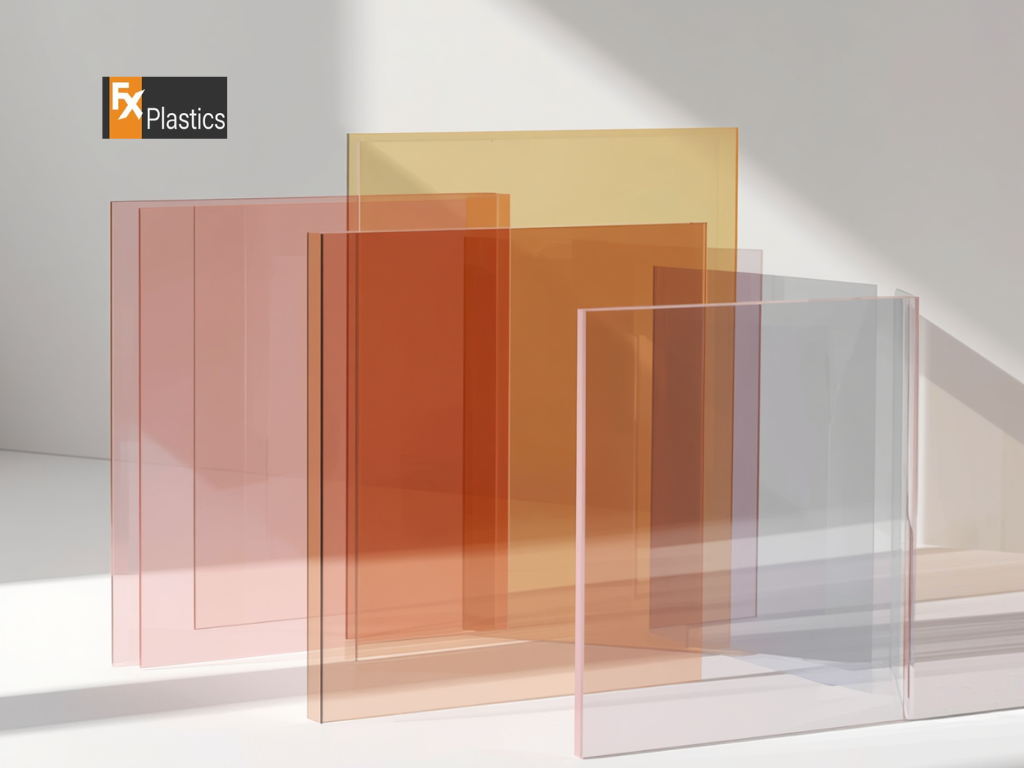
Request cut-to-size and Acrylic fabrication support
FX Plastics may be contacted when a Sydney or Western Sydney customer needs cut-to-size acrylic, detailed machining or a completed fabricated product.
Its current website lists cut-to-size sheets, CNC routing and machining, CNC laser cutting, CNC saw cutting, diamond polishing and acrylic screens. The business currently lists its premises in Penrith. Exact materials, stock, production capacity and turnaround times should be confirmed for each enquiry.
Contact may be useful when the project contains several holes, custom shapes, polished edges, bends or bonded components.
It may also help when the customer is unsure whether acrylic, polycarbonate or another plastic is appropriate. The recommendation should follow the application, dimensions, environment and required performance.
Prepare the right information before requesting a quote
Begin with the purpose of the component and its finished dimensions.
Provide the preferred sheet colour, finish and thickness where known. Explain whether the panel will be used indoors, outdoors, within a frame or as a freestanding product.
Attach a dimensioned drawing for holes, cut-outs or irregular shapes. Identify which edges will remain visible and whether the finished component needs bending, joining or assembly.
For retail screens, include a photograph or drawing of the counter and mark the required transaction openings and fixing points.
Ask FX Plastics to confirm the proposed material, fabrication method, edge finish, tolerances, quote inclusions and collection or delivery arrangements before production.
Clear information allows the supplier to recommend an appropriate process and helps the buyer compare Acrylic Sheets Sydney services on a fair basis.
