

Finding the right construction equipment rental starts with understanding what your project needs to accomplish. A machine that performs well on a large commercial site may not be practical for a residential renovation, landscaping job or property maintenance task.
Excavators, loaders, compactors and elevated work platforms each serve different purposes. Choosing machinery without checking its dimensions, operating capacity or site requirements can create unexpected difficulties once work begins.
For Australian builders, contractors, tradespeople and property owners, hiring equipment can provide access to machinery without the responsibilities of long-term ownership. However, making the right selection requires more than comparing hire prices.
This guide explains how to assess project requirements, compare machinery types, understand rental conditions and prepare your worksite before booking equipment.
Assess the Work Before Selecting Machinery
Match Construction Equipment Rental to the Job
The first step in choosing machinery is understanding the work that needs to be completed.
Construction projects often involve several activities, including excavation, moving materials, preparing surfaces and working at heights.
Each activity may require a different type of machine.
For example, an excavator is generally used for digging and trenching, while a loader can help move loose materials around a suitable site. Compaction equipment is used to consolidate appropriate ground materials during surface preparation.
Construction equipment rental allows customers to select machinery for particular stages of a project instead of purchasing equipment that may only be used occasionally.
Before hiring, consider the sequence of work and whether different machines will be required at different times.
This can help you plan equipment bookings around the actual construction schedule.
Review Site Conditions Before Booking
The physical conditions of a worksite can influence which machines are suitable.
A residential property may have narrow access gates, limited turning space or established landscaping that restricts machinery movement.
Commercial construction sites may offer more working space but involve different ground conditions, traffic movements and safety requirements.
Before you rent equipment, measure important access points and identify any obstacles.
Consider the surface on which the machinery will operate, including slopes, soft ground and uneven areas.
Also estimate how long the equipment will be required.
Providing these details to the hire company can help determine whether a machine is practical for the location and intended tasks.
Compare Excavators and Material-Handling Equipment
Choosing Excavators for Different Types of Work
Excavators are used across construction, landscaping, drainage and earthmoving projects.
However, not every excavator offers the same capabilities.
Smaller excavators may be suitable for certain residential tasks, particularly where available space is limited. Larger models may provide additional digging depth, reach or lifting capability for more demanding applications.
When considering an excavator through an equipment rental service, review the machine’s operating weight, width, digging depth and attachment options.
For example, a compact model may be able to access a restricted backyard but might not reach the required excavation depth.
The surrounding work area must also provide enough clearance for the machine to operate safely.
Discuss the intended excavation work with the supplier before selecting a particular model.
Understanding the Differences Between Loaders and Excavators
Excavators and loaders are both used on construction sites, but their main functions differ.
An excavator is designed primarily for digging and related tasks using its boom, arm and bucket.
Loaders are more commonly used to collect, carry and load suitable loose materials.
Skid steer loaders offer compact material-handling capabilities and may accept different attachments depending on the machine.
Tracked loaders are another option where their design and specifications suit the ground conditions.
When reviewing equipment for rent, consider whether the main task involves digging, moving materials, loading or surface preparation.
For instance, removing soil from a trench is different from moving a stockpile of gravel across a site.
Understanding these differences helps customers avoid selecting equipment based on appearance or machine size alone.
Select Compaction Equipment for the Ground Conditions
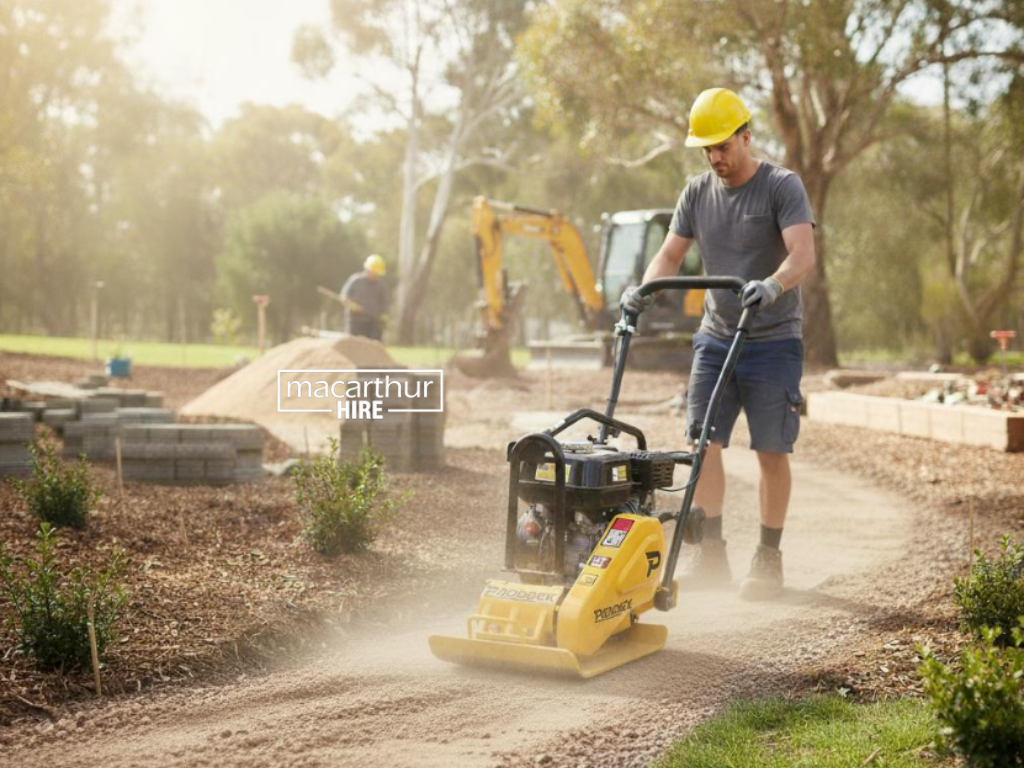
Understanding Common Compaction Machines
Preparing a suitable base is an important part of many construction and landscaping projects.
Compaction machinery is used to consolidate materials for applications such as paving, driveways, footpaths and other prepared surfaces.
Different machines are designed for different working conditions.
Vibrating plate compactors are often used on suitable granular materials, while rammers can be useful for certain confined areas and trenches.
Rollers are commonly considered for larger surfaces where their size and operating characteristics are appropriate.
When organising construction equipment rental, identify the area to be compacted and the type of material involved.
A residential paving project may require a different compaction method from a larger construction site.
The equipment should be selected according to the required outcome, site conditions and manufacturer’s operating guidance.
Why Soil Type and Moisture Matter
Compaction results depend on more than the machine being used.
Soil composition, moisture content and the thickness of each material layer can affect how well the ground consolidates.
Granular materials may respond differently from clay-rich soils or mixed fill.
Before arranging equipment rental, identify the material being compacted and whether the work is subject to particular engineering requirements.
Consider the size and shape of the work area.
Narrow trenches may restrict equipment choice, while larger open surfaces may accommodate different machinery.
For projects requiring specified compaction performance, follow the relevant engineering specifications and verification procedures.
Selecting an appropriate machine is important, but operating it correctly and checking the result are equally necessary.
Choose Suitable Equipment for Elevated Work
Understanding Scissor Lifts and Boom Lifts
Some construction and maintenance activities require workers to access areas above ground level.
Elevated work platforms provide different ways to reach these locations.
Scissor lifts generally raise a working platform vertically, making them suitable for certain tasks where workers can position the machine beneath the work area.
Boom lifts can offer horizontal outreach, allowing access to locations that may be difficult to reach directly from below.
For construction equipment rental involving elevated work, consider the required height, operating surface and available space.
Platform capacity is also important because the machine must accommodate the workers, tools and permitted materials without exceeding its rated limits.
The correct equipment depends on the intended work and the hazards present at the site.
Check Operating Requirements Before Hiring
Access equipment must be selected and operated according to applicable safety requirements.
When comparing equipment hire options, ask about the machine’s working height, platform capacity, operating limitations and ground requirements.
Also confirm the training or licensing needed to operate the equipment.
In Australia, operating a boom-type elevated work platform with a boom length of 11 metres or more requires the relevant high risk work licence.
Other elevated work platforms still require competent operators and appropriate instruction, even where a high risk work licence is not mandatory.
Worksites should also be assessed for hazards such as overhead electrical lines, unstable surfaces and restricted movement.
Confirm these requirements before booking rather than assuming every machine can be operated under the same conditions.
Match Equipment Specifications to the Worksite
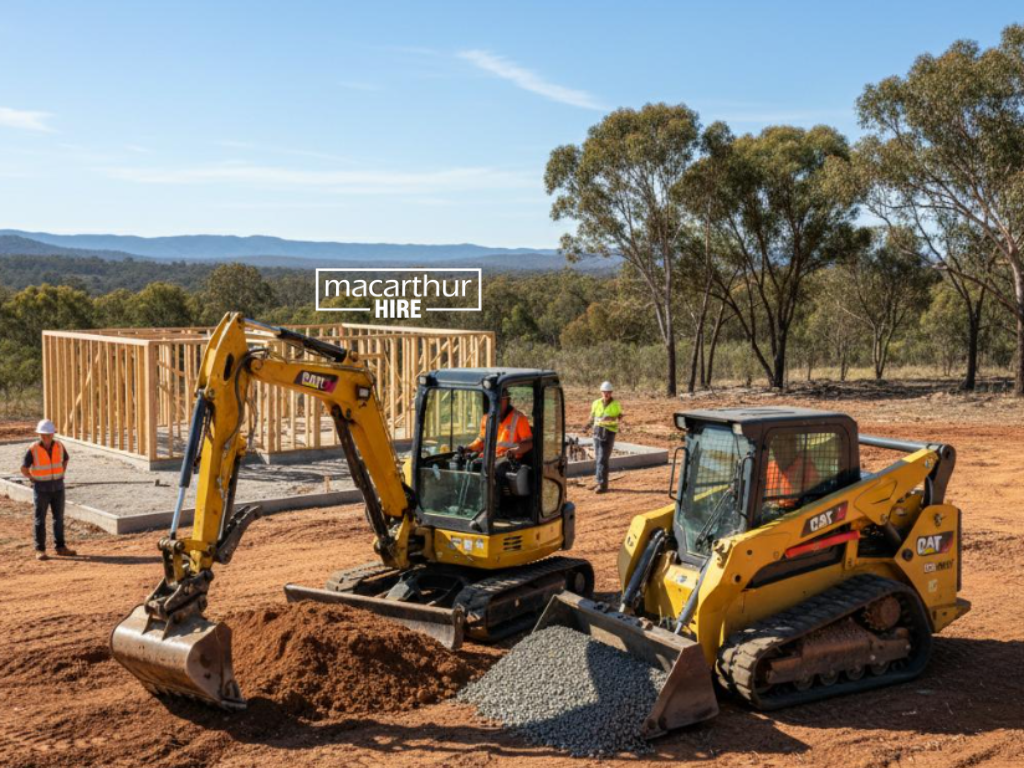
Compare Machine Capacity, Dimensions and Reach
Construction machinery is available in different sizes and configurations.
The correct choice depends on the tasks involved and the conditions in which the machine will operate.
For excavators, important specifications include digging depth, reach, operating weight and machine width.
For loaders, consider the rated operating capacity, attachment compatibility and physical dimensions.
Compaction machinery should be assessed according to the material being worked on and the size of the area.
Access equipment requires additional consideration of working height, outreach and platform capacity.
When comparing construction equipment rental options, review the actual specifications rather than relying only on broad equipment categories.
A machine described as compact may still be unsuitable for a narrow entrance or restricted working area.
Manufacturer information and advice from the hire provider can help determine which models are worth considering.
Why Bigger Machinery Is Not Always Better
Larger machinery may provide greater working capacity, but it can also require more operating space and different transport arrangements.
A machine that is too large for a residential site may be difficult to manoeuvre safely.
Smaller machinery can offer practical advantages where access is limited, although it must still have sufficient capacity for the required work.
Choosing equipment that is too small may result in slower progress or the need to replace the machine.
The aim of construction equipment rental is to find suitable equipment rather than simply selecting the largest or least expensive option.
Before finalising an equipment rent arrangement, compare machine width, weight, operating capabilities and site limitations.
Ask the supplier whether the selected model is appropriate for the intended application.
Taking these details into account can help avoid unnecessary hire changes after work has started.
Understand What an Equipment Hire Provider Offers
Compare Services, Equipment Availability and Support
A suitable rental provider should be able to explain what machinery is available and how the hire arrangement works.
When comparing construction equipment rental businesses, consider the available equipment range, machine specifications, maintenance arrangements and booking conditions.
Check whether the required attachments can be supplied and whether delivery or collection services are available.
You should also understand what happens if equipment develops a mechanical issue during the rental period.
Some providers offer dry hire, where machinery is supplied without an operator. Wet hire arrangements generally include an operator, although exact inclusions vary.
Macarthur Hire provides equipment and vehicle rental options for construction, landscaping and related activities, including excavators, compactors and scissor lifts.
Customers can explore Macarthur Hire to review available machinery and enquire about equipment suitable for their project.
Availability and rental terms should always be confirmed for the required dates.
Understand Rental Charges and Responsibilities
The advertised hire rate is only one part of the overall rental arrangement.
Before booking, ask how the rental period is calculated and whether weekend or weekly rates are available.
Check for delivery charges, security deposits, fuel requirements and potential cleaning fees.
Damage liability and late-return conditions should also be explained in the rental agreement.
Certain attachments may involve additional charges or require separate confirmation.
If you intend to transport the machinery yourself, ensure the towing vehicle and trailer are suitable for the combined load and comply with applicable road rules.
Operator competency is another important consideration.
Some machinery requires specific licences, while other equipment requires adequate training and experience.
Understanding these details before accepting the rental agreement can help you make a more informed decision about the overall cost and responsibilities.
Prepare the Worksite and Confirm Your Booking
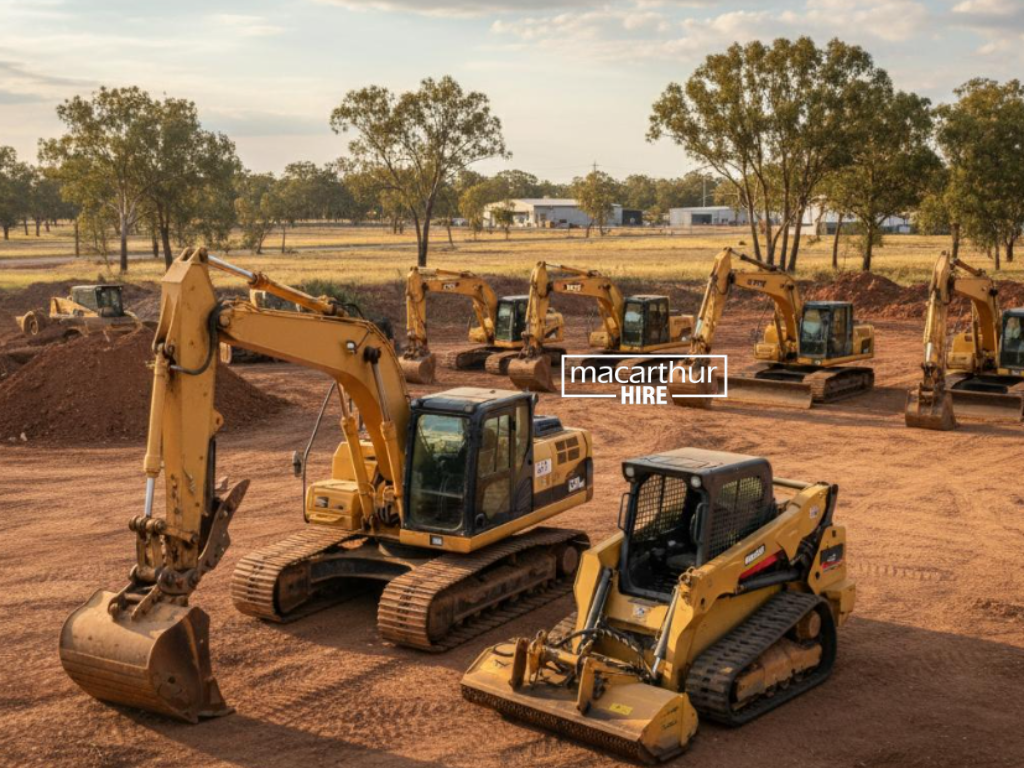
Complete Site Checks Before Equipment Arrives
Worksite preparation should begin before the hire period starts.
Check that the delivery vehicle and machinery can access the site safely.
Identify areas where equipment will operate and assess hazards associated with uneven ground, slopes, structures and nearby people.
For excavation projects, underground services require particular attention.
In NSW, Before You Dig Australia can help customers obtain available underground service information before excavation. However, plans may not identify every service accurately, and additional investigation or locating may be required.
Overhead electrical hazards and other site-specific risks should also be considered.
When planning construction equipment rental, confirm that the appropriate safety controls and operating arrangements are in place.
High-risk construction work requires suitable risk management and a Safe Work Method Statement where applicable.
Equipment should only be operated by people with the necessary competency and any required licences.
Confirm the Equipment and Hire Terms
Once you have selected a suitable machine, review the booking before making final arrangements.
Confirm the equipment model, required attachments and intended rental period.
Check delivery or collection details, including site access and any transport requirements.
Make sure the chosen machine has the necessary operating capacity and is appropriate for the worksite.
If there is a possibility that the project will take longer than expected, ask how rental extensions are managed.
Review the agreement for fuel, cleaning, breakdown reporting and damage responsibilities.
For construction, landscaping and property maintenance projects in Macarthur and surrounding areas of South Western Sydney, discussing these requirements with a local equipment provider can help simplify the selection process.
Visit Macarthur Hire to explore its equipment range, confirm current availability and enquire about rental arrangements.
Choosing suitable construction equipment rental is ultimately about matching machinery to the work rather than selecting equipment based on price or size alone.
By understanding site conditions, comparing machine specifications and reviewing hire conditions, customers can plan their projects more effectively and reduce avoidable equipment selection problems.
