

Choosing a caregiver pager Australia families can use at home may provide a practical way for ageing parents to request assistance without calling out or reaching for a mobile phone. As older Australians experience changes in mobility, strength or confidence moving around the home, having an accessible way to contact a nearby caregiver can make everyday communication easier.
A caregiver pager is typically a wireless communication system consisting of a call button and a receiver. When the person presses the button, the receiver alerts a family member or caregiver who can respond. Depending on the product, call buttons may be worn around the neck, attached to clothing or positioned beside a bed or chair.
However, not every caregiver pager offers the same features. Some systems are designed for communication between nearby rooms, while others may include additional receivers, movement sensors or different alert settings. A basic pager should not be confused with a monitored personal alarm that can contact an external response service.
For families supporting older parents, the right choice depends on physical abilities, home layout, communication needs and whether someone will be available to respond.
This guide explains what to consider when choosing a caregiver pager, how to compare available features and when another type of support may be more appropriate.
Why Caregiver Pagers Can Be Useful for Ageing Parents
Older parents may occasionally need assistance getting out of a chair, reaching an item or completing a daily activity. If a family member is in another room, calling out may not always be practical.
A caregiver pager provides another way to attract attention. Instead of needing to find a telephone or raise their voice, the person can activate a call button to send an alert to the receiver.
For example, an older parent resting in the bedroom may use a bedside button to request assistance from a family member working elsewhere in the house.
A wearable button may also be convenient for someone who regularly moves between rooms and wants the device within reach.
These systems can support everyday communication, but their usefulness depends on whether the person can activate the button and whether the caregiver receives and responds to the alert.
A caregiver pager does not prevent falls, replace personal supervision or guarantee that help will arrive immediately.
Families should view it as one part of a wider home care arrangement rather than a complete safety solution.
Understanding Caregiver Pager Australia Options
Caregiver pager systems are available in several configurations.
A basic system commonly includes one or more wireless call buttons and a receiver that produces an audible alert when activated.
Some receivers can be carried in a pocket or attached to a belt, allowing the caregiver to move around the home while remaining within the device’s operating range.
Australian Health Care offers a Two Call Buttons and Pager Kit for the Elderly. Its published specifications include two call buttons, lanyards and a portable pager. The product information describes a nominal call distance of approximately 50 metres, although actual performance should be tested in the intended environment.
Other products operate differently. Motion sensor pagers, for example, can notify a caregiver when movement is detected in a designated area. They do not require the person to press a call button, but they also serve a different purpose.
When comparing options, consider whether your parent needs to request assistance actively or whether a particular movement-related alert would be helpful.
Understanding this difference provides a useful starting point before assessing the person’s individual needs.
Assess Your Parent’s Daily Communication Needs
Before purchasing a pager, consider how your parent manages everyday activities and what usually happens when assistance is needed.
Some older people can move around independently but occasionally need help. Others may have significant mobility restrictions or difficulty operating small devices.
When researching a caregiver pager Australia supplier, it is important to focus on the person’s physical abilities and living arrangements rather than selecting a product based only on price.
Consider Mobility, Hand Strength and Button Accessibility
A caregiver pager is useful only when the person can operate it when needed.
For someone with reduced hand strength or arthritis, a small or difficult-to-press button may be unsuitable.
A larger call button with simple operation may be easier to activate, but this should be confirmed through practical testing whenever possible.
Vision and hearing should also be considered. If the person has difficulty seeing, the button should be easy to locate and distinguish from other objects.
Some older adults may prefer a wearable pendant, while others may find a fixed button beside the bed more convenient.
Comfort matters as well. A pendant that is uncomfortable may be removed and left somewhere inaccessible.
If your parent experiences memory difficulties, consider whether they can remember what the button does and when to use it.
It may be helpful to practise activating the pager together and explain what will happen when the caregiver receives the alert.
For people with significant cognitive, physical or communication difficulties, professional advice may be needed to determine whether a pager is appropriate.
When Mobility Aids and Caregiver Pagers Work Together
Caregiver pagers may complement other equipment used around the home.
For example, someone using a walking frame might keep a call button nearby when resting in a chair or bed. This provides a way to request assistance without attempting an activity beyond their current abilities.
However, the pager should not be relied upon to compensate for an unsuitable mobility aid or an unsafe home environment.
Families searching for mobility aids Parramatta providers may also be considering walking frames, wheelchairs or other equipment to support an older parent’s daily routines.
These products have different purposes and should be selected according to individual needs.
A physiotherapist may help assess walking ability and suitable mobility equipment, while an occupational therapist can consider home accessibility, daily activities and environmental modifications.
For example, a person who regularly needs assistance moving between rooms may benefit from a broader assessment of their mobility and home arrangement rather than simply adding another call button.
A caregiver pager can make communication more convenient, but it works best alongside appropriate mobility support and a realistic care plan.
Choose Features That Suit the Home Environment
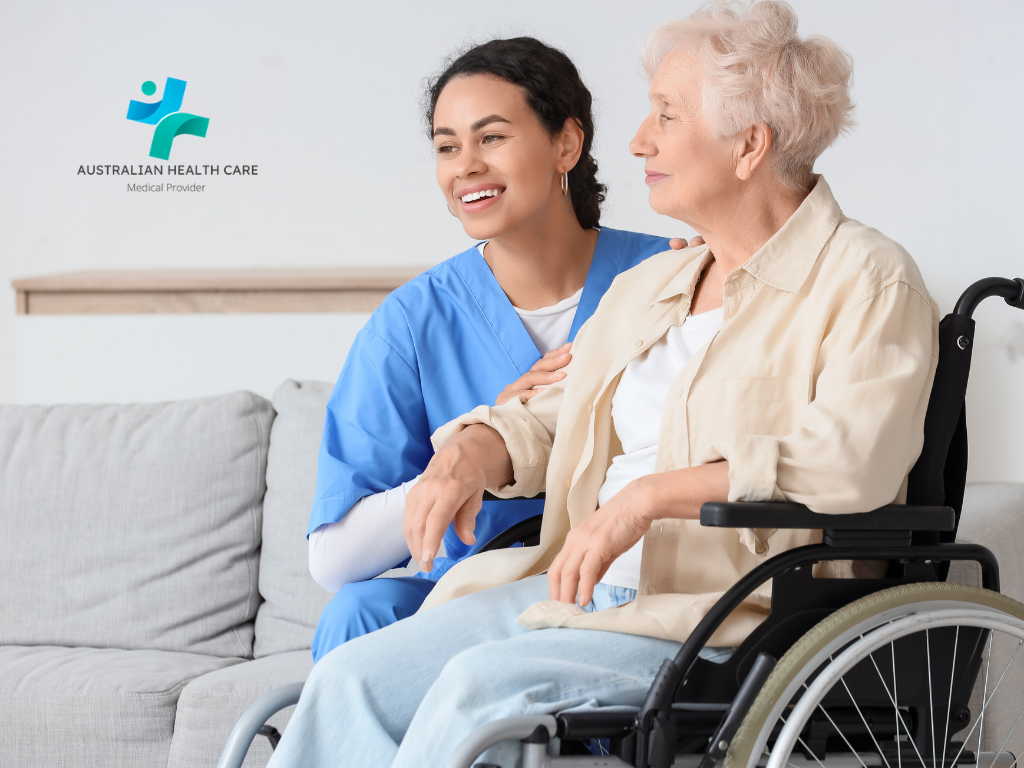
The design of your home can affect how well a wireless caregiver pager operates.
A product may advertise a particular signal range, but its actual performance can vary depending on walls, floors, building materials and the position of the receiver.
For this reason, choosing a caregiver pager Australia customers can use reliably involves checking both the published specifications and how the device performs inside the home.
Check Wireless Range, Alerts and Battery Requirements
Wireless range is one of the first features to examine.
A nominal operating distance may be measured under favourable conditions and should not be assumed to apply through multiple walls or between different levels of a house.
For example, a caregiver working downstairs may not receive the same signal performance as someone in the next room.
Before relying on the device, test it from the locations where your parent is most likely to request assistance.
Alert settings are another consideration.
Some pagers provide different sounds or volume options, while others may offer visual or vibration alerts. These features vary between models.
If the caregiver has hearing difficulties or regularly works in a noisy area, confirm that the receiver’s alert can be noticed reliably.
Battery requirements should also be reviewed before purchasing.
Find out whether the system uses replaceable batteries, rechargeable components or mains power, and check how users are notified when batteries need attention.
A pager that is not powered or functioning correctly cannot provide reliable communication.
Selecting a Caregiver Pager Australia for Home Use
The most suitable call-button arrangement depends on where your parent spends time and how they prefer to use the device.
A wearable pendant may be appropriate for someone who moves between rooms and can comfortably activate the button.
A bedside button may be convenient for a parent who needs occasional assistance while resting.
Some households may benefit from having more than one button so the person does not need to carry a single device everywhere.
For example, one button could be kept beside the bed while another is worn during the day.
A portable receiver can also be useful when a family member moves between rooms, provided it remains within range.
Before deciding, discuss the arrangement with your parent and consider their preferences.
The device should be simple enough to use without creating confusion or discomfort.
It is also important to establish who will carry the receiver and what happens when that person leaves the home.
Even a suitable pager cannot help if there is nobody available to receive or respond to the alert.
Plan for Bedroom, Bathroom and Personal Care Needs
Bedrooms and bathrooms are common places where older parents may need assistance during everyday activities.
Getting out of bed, moving towards the bathroom or completing personal care tasks can become difficult when someone experiences reduced mobility or balance.
A caregiver pager Australia families select for home use should therefore be considered alongside the person’s daily routines and the places where assistance is most likely to be needed.
Position Call Buttons Near Beds and Bathrooms
A call button should be positioned where the person can reach it without unnecessary stretching or movement.
For bedside use, this may mean placing the button within comfortable reach while the person is lying down or sitting on the edge of the bed.
If the button is worn on a lanyard, consider whether the person can access and operate it safely and whether the wearing arrangement is appropriate for their circumstances.
Bathroom use requires additional care.
Water resistance varies between products, and a pager described as wireless should not automatically be considered waterproof.
Before placing a call button inside a bathroom or shower, check the manufacturer’s instructions and any stated water-resistance rating.
A device that is suitable near a bathroom may not be appropriate for direct exposure to shower water or immersion.
The caregiver should also be able to receive the alert from their usual location.
If the bathroom is some distance from the receiver or separated by several walls, test the device under normal household conditions.
A properly positioned call button can make communication easier, but it does not remove the need for suitable bathroom equipment, supervision or assistance when required.
Consider Bathroom Medical Equipment and Daily Living Aids
Caregiver pagers are communication devices. Other home care products may be needed to support the activities for which assistance is requested.
For example, bathroom medical equipment such as shower chairs, toilet support frames and suitable shower or transfer benches may assist with specific personal care routines.
Some products described as medical bench seats are designed to support seated bathing or transfers. Their suitability depends on dimensions, stability, bathroom layout and the person’s physical abilities.
Families may also consider personal care products such as a urinary bottle when a person has difficulty reaching the toilet. These products should be selected according to individual needs, hygiene requirements and any professional recommendations.
Urology supplies and toileting accessories serve different purposes from caregiver alert systems, so they should not be purchased simply because someone uses a pager.
For older parents experiencing difficulty with bathing, toileting or transfers, an occupational therapist may be able to assess whether equipment or changes to the home would be helpful.
The Australian Government also identifies bathroom modifications, mobility equipment and toileting supports as examples of assistive technology or home modifications that may be considered under assessed aged care needs.
A practical home care arrangement brings these different supports together without expecting one device to solve every difficulty.
Understand the Difference Between Pagers and Medical Alarms
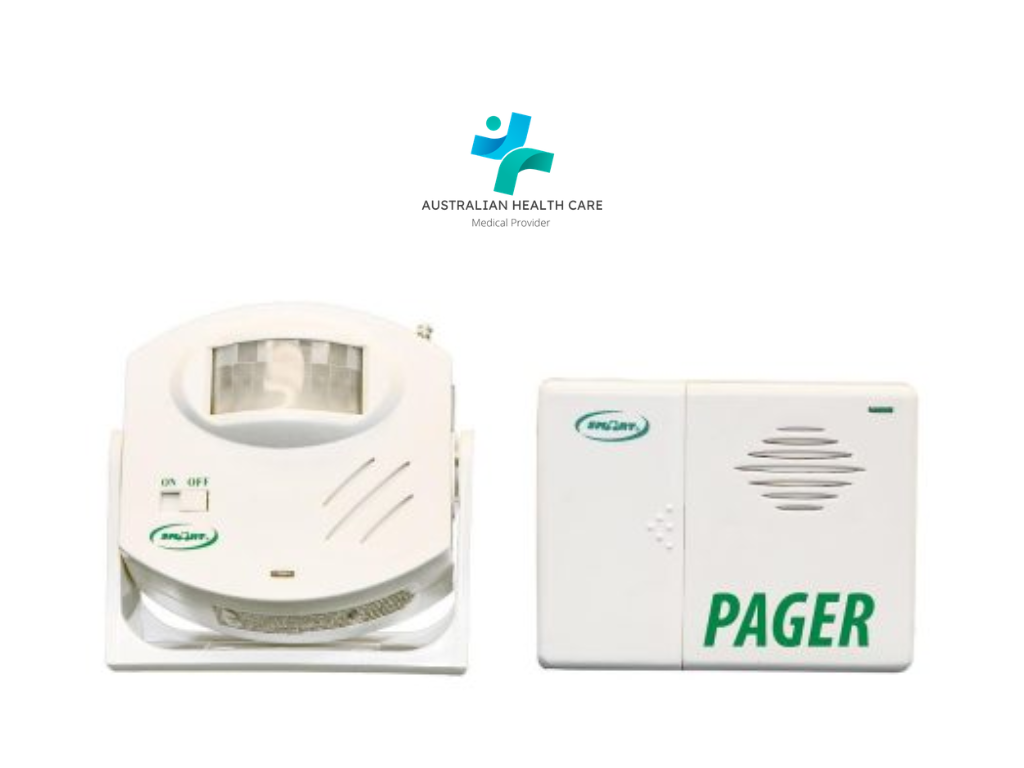
One of the most important purchasing decisions is understanding what a caregiver pager can and cannot do.
Basic wireless pagers are generally designed to notify a nearby caregiver that someone has pressed a call button.
Other personal alarm systems may use mobile networks, telephone connections or external monitoring services.
When comparing a caregiver pager Australia product with a personal medical alarm, families should carefully review how each system communicates and who is responsible for responding.
Compare Wireless Caregiver Pagers and Monitored Alarms
A standard wireless caregiver pager typically operates through a call button and compatible receiver.
When the person activates the button, the receiver produces an alert. Someone who can hear or notice that alert must then respond.
This arrangement may be appropriate in a household where a family member or caregiver is regularly nearby.
A monitored personal alarm operates differently.
Depending on the product and service, it may connect the person to an external monitoring centre or designated contacts through a mobile or telephone network.
Some personal alarms include features such as two-way communication, location services or automatic fall detection, although these are not universal.
A monitored service may also involve ongoing subscription fees, network requirements and particular response arrangements.
The Australian Government’s Carer Gateway explains that alarms and monitors can support different caring needs, including requesting help, detecting certain movements and communicating information to carers.
Before purchasing, confirm whether the product is intended only for communication within the home or can contact someone outside the household.
A basic wireless caregiver pager should never be assumed to contact emergency services automatically.
When a Caregiver Pager Australia May Not Be Enough
A basic pager may be unsuitable when an older parent lives alone and does not have someone nearby to receive alerts.
It may also be inadequate when the person cannot reliably press the button or when assistance is required beyond the receiver’s operating range.
For example, if an older parent falls and cannot reach or activate the call button, an ordinary push-button pager may not send any alert.
Some monitored personal alarms offer fall detection, but no detection system should be assumed to identify every fall.
People with significant medical risks, frequent falls, cognitive difficulties or substantial mobility limitations may need a broader assessment of their care arrangements.
Families should discuss these concerns with an appropriate healthcare professional instead of relying solely on a consumer communication device.
A separate emergency response plan is also essential. In Australia, call Triple Zero (000) for a medical emergency.
Choosing between a pager and a monitored alarm should depend on the person’s living situation, abilities and the type of assistance they may need.
Compare Products and Suppliers Before Purchasing
Once you understand your parent’s communication needs, you can compare caregiver pager products more meaningfully.
Price matters, but it should not be the only deciding factor. A less expensive device may lack a feature your household needs, while a more elaborate system may include functions that are unnecessary for your circumstances.
When reviewing a caregiver pager Australia supplier, look for clear product information, straightforward operating instructions and transparent purchasing conditions.
What to Check at a Medical Equipment Store
A reliable medical equipment store should provide enough information to understand how a product works and what is included.
For caregiver pagers, check whether the package contains one or more call buttons, a receiver, lanyards, batteries or other accessories.
The published operating range and alert settings are also important.
If the person needs a button suitable for a bathroom, confirm whether the particular model meets the relevant moisture or water-resistance requirements.
Review battery and power requirements, as well as the availability of instructions for setup and testing.
Warranty information, delivery arrangements and return conditions should also be considered before purchasing.
Australian Health Care offers a wireless caregiver pager kit with two call buttons intended to notify a nearby caregiver when assistance is requested.
Its published product information describes a portable pager, lanyards, simple button operation and two alert sounds. These specifications provide a useful starting point for comparing the system against household requirements.
The important question is whether the actual product features suit the person who will use it.
Compare Caregiver Pager Australia Prices and Features
Caregiver pager prices can vary depending on the number of call buttons, receiver design, additional features and included accessories.
Before comparing prices, establish whether each product offers the same basic functions.
A system containing two buttons may be more practical for some households than one containing only a single wearable device.
However, additional buttons have little value if the person cannot activate them or if the receiver does not operate reliably throughout the home.
Check whether the product requires ongoing fees. Many basic in-home wireless pagers operate without a monitored service subscription, although individual product conditions should always be confirmed.
Some alternatives use movement detection rather than manual activation.
For example, Australian Health Care also lists a Smart Caregiver Motion Sensor Pager, designed to alert a caregiver when movement is detected within the sensor’s monitored area.
This type of device may be useful for a different communication need, but movement detection should not be confused with automatic fall detection or medical emergency monitoring.
Families should also consider whether other equipment is needed for a separate care requirement.
Products such as a medical TENS machine, for example, are intended for particular pain management applications and do not perform the same role as a caregiver pager. Anyone considering such equipment should check its intended use and obtain appropriate clinical advice, particularly where medical conditions or implanted devices may affect suitability.
Keeping different equipment needs separate makes purchasing decisions clearer and avoids unnecessary spending.
Set Up a Reliable Caregiver Response Routine
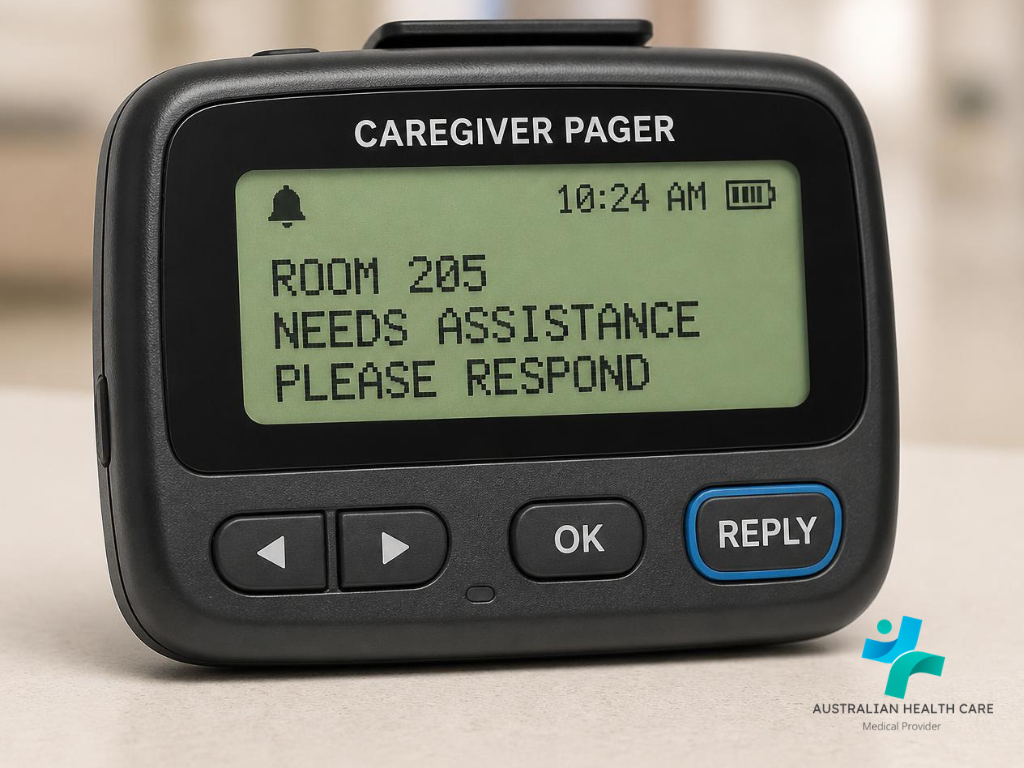
Understanding an older parent’s mobility, hand strength and communication abilities can help families choose appropriate caregiver alert equipment.Purchasing a caregiver pager is only the beginning. The system also needs to be introduced into the household in a way that everyone understands.
Your parent should know how and when to activate the call button, while the caregiver should understand what the alert means and how to respond.
For families using a caregiver pager Australia system, establishing a simple routine can improve communication and help identify problems before they affect everyday use.
Test the Pager and Agree on a Response Plan
Once the caregiver pager has been installed or configured according to the manufacturer’s instructions, test it from the places where your parent is likely to need assistance.
This may include the bedroom, living room and other suitable areas within the home.
Check whether the caregiver can hear or notice the alert while carrying out normal household activities.
If the receiver is portable, test it from different positions and confirm that it continues operating within the required range.
It is also helpful to practise using the button with your parent.
Explain what the alert is for and ask them to activate it while you demonstrate how you will respond.
If several family members provide care, agree on who will carry the receiver and how responsibilities will change during the day.
The pager should also be checked regularly for battery condition, damage and reliable operation.
If your parent cannot reach the button, the receiver is out of range or the device is not working, the household needs an alternative way to request assistance.
For people who require emergency support, this may involve another communication system or a professionally assessed monitoring arrangement.
An effective response routine should be realistic about when caregivers are available and what assistance they can provide.
Choosing a Caregiver Pager Australia With Confidence
Choosing a caregiver pager for an older parent starts with understanding how they communicate and what assistance they need throughout the day.
A suitable system should have accessible controls, adequate operating range and alerts that the caregiver can reliably notice.
The person’s comfort, physical abilities and living arrangements are just as important as the technical specifications.
For families comparing caregiver communication devices, Australian Health Care provides wireless pager and motion sensor options that can be reviewed alongside other home care equipment.
However, the most appropriate choice will depend on whether your parent can activate the device and whether someone is available to respond.
If your parent has significant mobility difficulties, a history of falls or complex care requirements, consider discussing their needs with an occupational therapist or another suitable healthcare professional.
Eligible older Australians may also be able to access certain assistive technology through the Australian Government’s Support at Home Assistive Technology and Home Modifications scheme. Funding depends on assessed needs, approved support arrangements and whether the particular item meets the scheme’s requirements.
A carefully chosen pager, combined with clear communication and a dependable response arrangement, can help make everyday requests for assistance easier for older parents and the people supporting them.
