

Dementia aged care facilities should support more than clinical needs. For people living with dementia, everyday routines, familiar interests, relationships and opportunities to participate can all influence whether residential care feels comfortable, meaningful and recognisable. A good daily experience is not necessarily about filling every hour with organised activities. It is about understanding the person and helping them remain involved in life in ways that suit their interests, abilities and preferences.
Australia’s strengthened Aged Care Quality Standards require residential providers to support older people to do the things they want to do, take part in meaningful activities, maintain relationships and participate in daily life. The standards also emphasise choice, independence and quality of life rather than expecting every resident to follow the same program.
This is especially important when families are comparing dementia and memory care facilities. Dementia affects people differently, so an activity or routine that works well for one resident may not suit another.
Dementia Aged Care Facilities: Build Familiarity Into the Day
Dementia aged care facilities can use familiar routines to make everyday life easier to understand and navigate.
A person’s usual pattern of waking, eating, showering, resting and going to bed may have developed over decades. Moving into residential care does not mean those preferences automatically disappear.
Dementia Australia recommends maintaining familiar personal-care routines where possible and encouraging people living with dementia to continue doing as much as they can themselves, with appropriate support.
Consistency can also help reduce unnecessary confusion.
A resident who has always preferred breakfast early may find a very different routine uncomfortable. Someone who usually rests after lunch may benefit from having that preference recognised rather than being expected to join an activity at that time.
The aim should not be rigid scheduling.
A predictable structure can be helpful, but dementia aged care facilities also need enough flexibility to respond to how the person is feeling on a particular day.
Some days a resident may want company and activity. On another day, rest or quiet conversation may be more appropriate.
Dementia Aged Care Facilities: Adapt Routines to the Individual
Dementia aged care facilities should avoid assuming that everyone living with dementia needs the same routine.
Personal history matters.
Someone who worked night shifts for much of their life may have different sleep habits from someone who spent decades waking before sunrise. A person who always showered at night may not feel comfortable being routinely encouraged to shower first thing in the morning.
The strengthened Quality Standards require providers to tailor daily living support around each person’s assessed needs, goals and preferences.
This is one of the most useful things families can ask about when comparing dementia specific aged care facilities.
Find out how staff learn about a new resident’s previous routines.
Ask whether those preferences are recorded in the person’s care plan and reviewed as their needs change.
Dementia can affect memory and communication, but that does not erase individuality.
A thoughtful daily routine should continue to reflect the person behind the diagnosis.
Choose Activities That Feel Meaningful
Dementia Aged Care Facilities: Focus on Personal Interests
Dementia aged care facilities should consider what the resident actually enjoys rather than relying entirely on a standard activities calendar.
Dementia Australia recommends choosing activities connected to a person’s interests, previous work, hobbies, culture, spirituality, important memories and existing abilities. Activities can include art, music, nature, gardening, games, reading, exercise or time with friends and family.
The value comes from meaning rather than complexity.
Someone who spent years gardening may enjoy watering plants or sitting outdoors among familiar scents. A former musician may respond more positively to favourite songs than to a group quiz. Someone who enjoyed cooking may find pleasure in simple food-related activities.
This is why dementia aged care facilities should ideally know more about a resident than their medical history.
Information about hobbies, work, family, travel, culture and personal interests can help staff create opportunities that feel familiar and worthwhile.
When families compare aged care for dementia patients, asking how activities are personalised can reveal much more than simply requesting a copy of the weekly program.
Dementia Aged Care Facilities: Match Activities to Ability
Dementia aged care facilities should also adapt activities as a person’s abilities change.
An activity should not become a test of memory or performance.
If a resident finds a task difficult, the activity can often be simplified so they can still take part without feeling pressured or corrected.
Dementia Australia recommends choosing activities that build on a person’s strengths and abilities, help them feel confident and provide enjoyment or connection.
The same hobby may also be adapted over time.
A person who once completed complex gardening tasks may later enjoy planting seedlings, touching herbs or simply spending time outdoors. Someone who once played an instrument may still enjoy listening to music or singing familiar songs.
This strengths-based approach can be particularly useful in nursing home dementia care because it focuses on what the person can still enjoy and participate in.
The goal is meaningful involvement, not completing the activity perfectly.
Support Memory Through Familiar Experiences
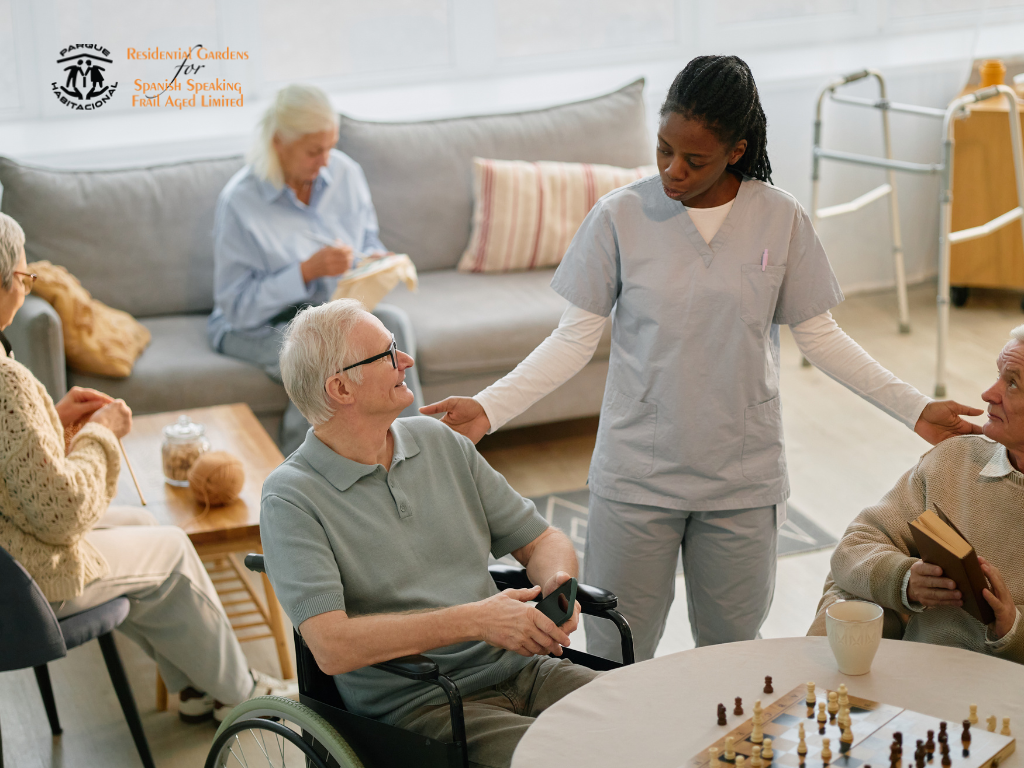
Dementia Aged Care Facilities: Use Familiar Objects and Memories
Dementia aged care facilities can make daily life more personal by incorporating familiar objects and experiences.
Photographs, favourite books, blankets, artwork, music and other personal belongings can help a room feel more recognisable.
Dementia Australia specifically recommends familiar objects such as family photographs, cushions or blankets to help people living with dementia feel more comfortable and oriented when staying in care environments.
Families may also bring valuable knowledge about what those objects mean.
A photograph may prompt a story. A particular song may connect with an important time in the person’s life. Familiar possessions can provide conversation without requiring the resident to remember specific facts on demand.
For dementia aged care facilities, this can support connection without turning reminiscence into a memory test.
Dementia Australia also suggests using photographs, memorabilia, favourite books and familiar songs as ways of encouraging positive feelings and engagement.
The most useful items are those that have personal meaning for the resident.
Dementia Aged Care Facilities: Keep Activities Recognisable
Dementia aged care facilities do not always need elaborate programs to create meaningful engagement.
Simple and recognisable experiences can be just as valuable.
Listening to familiar music, walking in a garden, looking through photographs, helping to fold towels or sharing a cup of tea can provide opportunities for participation without placing unnecessary cognitive demands on the person.
Dementia Australia’s guidance on visiting people in residential care similarly suggests focusing on connection through activities such as short walks, photographs, simple games or familiar treats rather than expecting sustained conversation.
For families comparing dementia and memory care facilities or memory care residential homes, this is worth observing during a visit.
Are residents simply being entertained, or are they being offered opportunities that reflect their individual interests and abilities?
A recognisable activity can sometimes provide more enjoyment than a highly structured group event.
Balance Social Activity With Quiet Time
Dementia Aged Care Facilities: Encourage Social Connection
Dementia aged care facilities should create opportunities for relationships and social contact without making participation compulsory.
Shared meals, music, small-group activities, family visits and conversations with staff can all provide connection.
Australia’s Residential Community quality standard specifically requires providers to help residents maintain social and personal relationships and take part in meaningful activities inside and outside the residential community.
Social contact may also take different forms as dementia progresses.
A person who no longer follows a long group conversation may still enjoy sitting with others while music plays or participating in a familiar activity alongside another resident.
Communication needs can change as well.
Dementia Australia emphasises person-centred communication and warns against assuming what someone can or cannot understand simply because their speech has changed.
For dementia aged care facilities, social inclusion should therefore be based on the person’s abilities and comfort rather than the expectation that everyone participates in the same way.
Dementia Aged Care Facilities: Respect the Need for Rest
Dementia aged care facilities should also recognise that constant activity is not the goal.
People living with dementia may become tired, overwhelmed or uncomfortable in noisy environments or large groups.
Dementia-friendly design guidance recommends reducing unhelpful stimulation while creating opportunities for both social interaction and time alone.
That balance is important.
A resident may enjoy a morning activity but prefer a quiet afternoon. Another may participate more comfortably in a one-to-one conversation than in a crowded lounge.
This is where personalised aged care for dementia patients differs from simply maintaining a busy activity calendar.
Families can ask whether residents have access to quieter areas and whether staff recognise when someone wants to leave an activity or rest.
Choice matters.
An organised activity should be an opportunity, not an obligation.
Include Movement and Everyday Participation
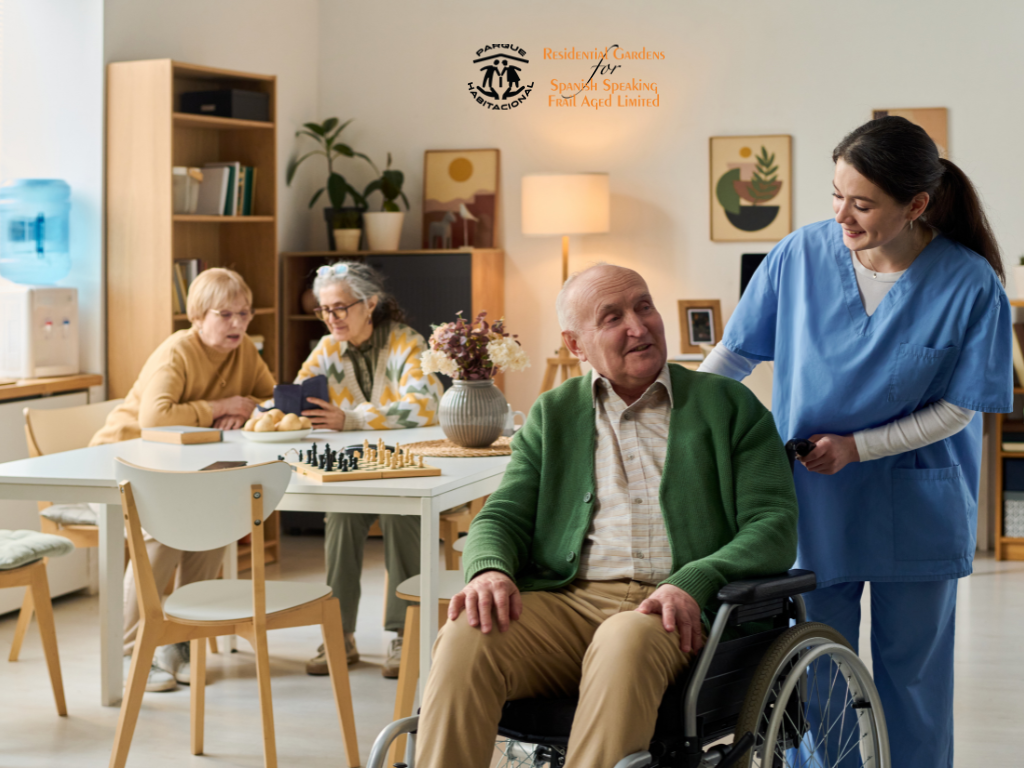
Dementia Aged Care Facilities: Encourage Safe Daily Movement
Dementia aged care facilities can support residents to remain physically involved in daily life according to their abilities and care needs.
Movement does not have to mean formal exercise.
Walking, gardening, dancing or taking part in appropriate group movement can all provide opportunities to remain active.
Dementia Australia recommends including physical activity when it suits the individual, while the Aged Care Quality and Safety Commission identifies walking groups, exercise, dancing and gardening among examples of meaningful residential activities.
Safety and individual health needs still need to be considered.
A person’s mobility, falls risk and clinical circumstances may influence which activities are suitable.
That is why dementia aged care facilities should adapt participation rather than applying one exercise routine to every resident.
Families can ask how the facility supports people whose mobility changes and whether allied health or clinical staff contribute where appropriate.
The aim is to support participation while respecting the person’s capabilities and preferences.
Dementia Aged Care Facilities: Make Everyday Tasks Meaningful
Dementia aged care facilities can also recognise that ordinary daily tasks may provide a sense of familiarity and purpose.
Meaningful activity does not have to be recreational.
Setting a table, sorting familiar objects, watering plants or helping with a simple household task may feel more natural to someone than attending a scheduled group session.
The Aged Care Quality and Safety Commission specifically recognises activities of daily living as potential meaningful activities that can support independence, confidence and participation in normal life.
This is particularly relevant when comparing alzheimers nursing homes or dementia specific aged care facilities.
Families can ask whether residents are encouraged to participate in everyday life where appropriate, rather than having every ordinary task done for them automatically.
Support should still be based on safety, consent and ability.
The important point is that residents remain participants in their lives rather than simply recipients of care.
Involve Families in Daily Life
Dementia Aged Care Facilities: Learn From Family Knowledge
Dementia aged care facilities can learn a great deal from families and other people who know the resident well.
Relatives may understand which songs the person enjoys, how they preferred to spend their mornings, what foods they disliked, which cultural traditions matter and which situations tend to make them uncomfortable.
Dementia Australia recommends that care-home staff work with families to understand the resident’s background, employment, culture, religion, hobbies, activities, likes, dislikes and daily routines.
This information can make activity planning much more personal.
It can also become particularly useful when the resident has difficulty explaining those preferences themselves.
Families comparing dementia aged care facilities should therefore ask how this information is collected and used.
Residential Gardens in Rooty Hill says its residential care is tailored to individual needs and that it encourages participation from residents and families. Its published services currently include residential high, low and respite care, together with 24-hour nursing support.
Those are the types of practical details families can compare when considering local aged care nursing homes in Western Sydney.
Dementia Aged Care Facilities: Keep Important Relationships Connected
Dementia aged care facilities should support relationships rather than treating the move into residential care as the end of family involvement.
Dementia Australia says families can continue to play an important role after a person enters residential care and recommends a partnership between relatives and care-home staff.
Visits do not need to revolve around conversation.
Dementia Australia suggests that regular visits, even brief ones, can be meaningful and that familiar activities or places can help people relax and engage.
Family members might listen to music together, go for a short walk, look at photographs or simply sit together.
For families searching alzheimers nursing homes or memory care residential homes, visiting arrangements and family participation are therefore useful areas to explore.
Ask how easy it is to visit, whether relatives can join activities or outings where appropriate and how the facility communicates with families about changes in the resident’s needs.
Good dementia care should recognise that relationships remain important even when memory and communication change.
Compare Daily Life When Choosing a Facility
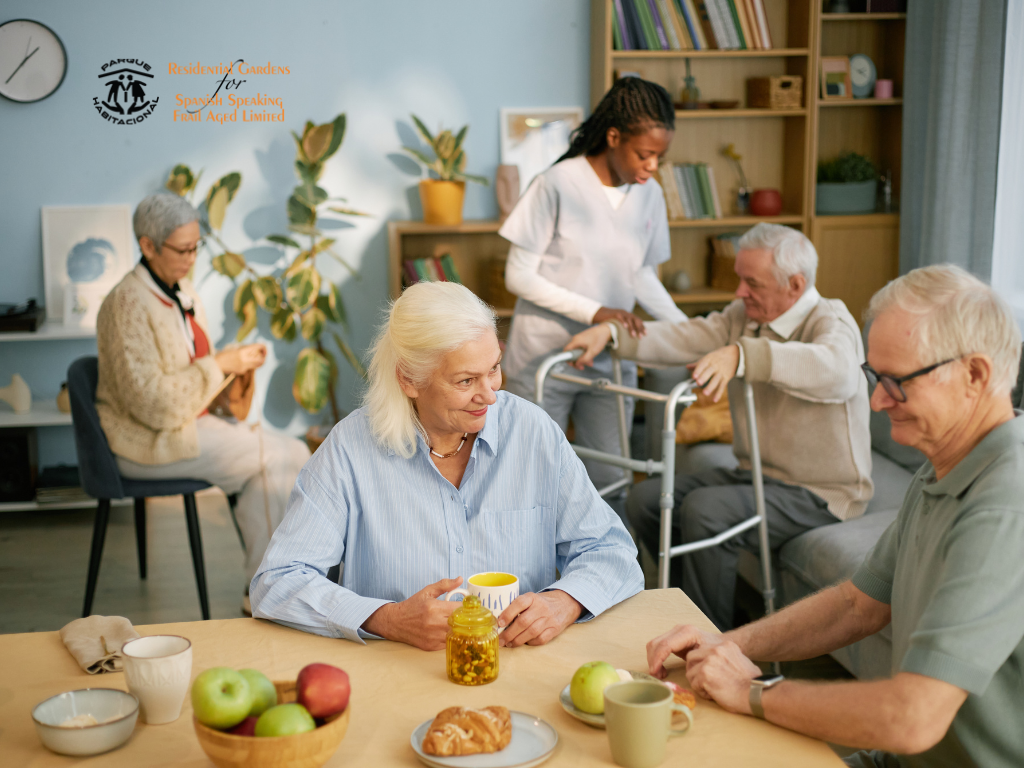
Dementia Aged Care Facilities: Ask About Activity Planning
Dementia aged care facilities should be able to explain how activities are selected and personalised.
Families can ask how staff learn about a new resident’s interests and routines, how participation is adapted when abilities change and whether residents can choose not to join organised activities.
Dementia Australia’s residential-care guidance recommends checking whether available activities and outings reflect the person’s hobbies and interests. It also suggests observing whether residents appear comfortable, whether outdoor spaces are accessible and whether quieter private spaces are available.
Staff capability matters as well.
Dementia Australia currently provides specialist training for aged-care workers focused on communication, person-centred care and meaningful engagement for people living with dementia.
Families do not necessarily need to ask whether a home uses a particular training provider.
The more useful question is how staff are prepared to support people living with dementia and how meaningful engagement is built into everyday care.
Dementia Aged Care Facilities: Look Beyond the Activity Calendar
Dementia aged care facilities should ultimately be assessed by what everyday life feels like, not by how many activities appear on a brochure.
A colourful weekly calendar can be useful, but it does not show whether activities are meaningful to individual residents.
When visiting dementia specific aged care facilities, observe what is happening between scheduled activities.
Are staff talking with residents respectfully?
Can people move between social and quiet spaces?
Are personal belongings visible?
Do residents have access to outdoor areas?
Are people supported to participate at their own level rather than expected to perform?
Dementia Australia’s guidance for choosing residential care encourages families to look at the general atmosphere, staff interactions, activities, outdoor spaces, dementia-friendly design and family involvement when assessing a home.
The strengthened Australian quality standards also require residential providers to support meaningful daily living, choice, relationships and participation.
For families comparing dementia aged care facilities, the most useful next step is to visit suitable homes and ask how daily routines and activities would be adapted for the specific person.
Whether the search involves aged care nursing homes, dementia and memory care facilities or what families may describe online as alzheimers nursing homes, the underlying question is the same: will this person have opportunities to continue experiencing familiarity, choice, connection and purpose?
A facility should be able to explain not only how it cares for someone living with dementia, but how it helps that person continue living a meaningful daily life.
