

Sustainable veneer can help architects, designers, joiners and homeowners achieve the natural appearance of timber while using thin layers of real wood over a suitable substrate. However, the word “sustainable” should not be treated as a guarantee by itself. Responsible sourcing, recognised certification, chain-of-custody documentation, substrate selection and the expected life of the finished product all matter when assessing a veneer specification.
Certification is particularly useful because it provides more specific information than broad environmental claims. In Australia, Green Star recognises responsible-product initiatives and uses supporting certification and product documentation when assessing materials. FSC and PEFC chain-of-custody systems are established ways of tracing eligible forest-based products through the supply chain.
For anyone specifying sustainable veneers, the practical approach is to confirm exactly what product is being supplied, whether certification applies to that product, and whether the veneer, substrate and manufacturing details suit the project.
Sustainable Veneer Is More Than Choosing a Timber Species
Choosing sustainable veneer involves more than selecting a species that sounds natural or environmentally responsible.
A timber species can have an attractive appearance and still require careful consideration of where the material came from, how it entered the supply chain and whether the product carries recognised certification.
Veneer itself uses a thin layer of real timber rather than requiring a thick section of solid wood for every visible surface. This can allow the visual qualities of a log to be used across a larger surface area. However, that material efficiency should not automatically be interpreted as proof that every veneer product is sustainably sourced.
The substrate also matters. Veneer may be pressed onto MDF, plywood, particleboard or another board, so the finished panel includes more than the decorative surface.
When comparing sustainable veneers, consider the entire panel construction rather than assessing only the face veneer.
Sustainable Veneer Should Have Traceable Sourcing
A stronger sustainable veneer specification starts with traceability.
Chain-of-custody certification is designed to provide a documented connection between certified forest-based material and the products moving through processing and supply chains. PEFC’s current chain-of-custody standard sets requirements that certified companies must meet for forest and tree-based products.
For project teams, this means it is reasonable to ask a supplier what certification applies, whether the business holds a valid chain-of-custody certificate and whether the specific material being quoted can be supplied with the required certified claim.
That last point is important.
A supplier being certified does not necessarily mean that every species, sheet or finished panel in its warehouse automatically carries the same certification claim. Availability should be confirmed for the actual product being ordered.
This is especially relevant where certified timber has been written into an architectural specification or Green Star documentation.
Sustainable Veneer and Timber Certification
Sustainable Veneer: Understanding FSC-Certified Products
An FSC certified veneer is one way a project may demonstrate responsible timber sourcing, provided the specific product and transaction meet the relevant FSC requirements.
For designers and buyers, the useful question is not simply whether the letters “FSC” appear somewhere in a supplier’s marketing. The documentation should relate to the supplied product and should be appropriate for the claim being made.
The Green Building Council of Australia recognises FSC-certified timber within relevant Green Star frameworks, and its published guidance confirms that FSC Mix certified products can be used for applicable Green Star compliance where the product is certified by the Forest Stewardship Council.
This makes certified timber particularly relevant to commercial interiors where responsible-product requirements are part of the brief.
For residential projects without a formal rating target, certification can still give buyers a clearer basis for assessing sourcing than broad terms such as “green” or “eco-friendly”.
Sustainable Veneer: Check What the Certificate Covers
A sustainable veneer specification should identify what certification is required before the material is ordered.
For example, the veneer face may be certified, while the substrate may have different certification status. In another project, the requirement may apply to the complete supplied panel.
The project team should therefore confirm the exact scope.
Green Star’s current Responsible Products Framework uses recognised initiatives and supporting product information when project teams document responsible materials. It also requires evidence appropriate to the products being claimed.
This is why specifications should avoid vague wording such as “use sustainable timber where possible”.
A clearer requirement might identify the required certification scheme, whether chain-of-custody documentation is needed and whether the veneer, substrate or complete finished panel needs to carry the claim.
Clear documentation at the start can reduce confusion later when the joiner or supplier begins ordering material.
Sustainable Veneer Species Still Need Design Consideration
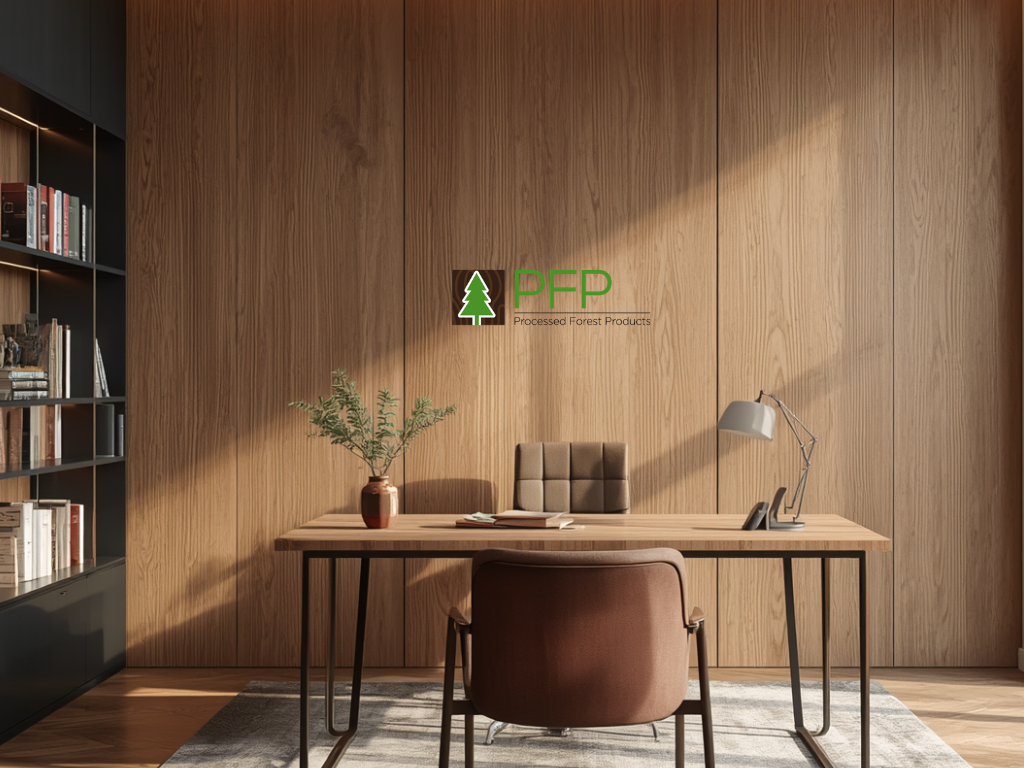
Sustainable Veneer Using American Oak Veneer
American oak veneer, particularly American White Oak, is widely used in contemporary interiors because of its recognisable grain and relatively light appearance.
It can suit reception counters, cabinetry, feature walls, doors and furniture where the design calls for a natural timber finish without the visual weight of darker species.
Forest Products currently lists American White Oak in both crown-cut and rift-cut options within its timber veneer range. Its commercial fit-out guidance also describes American oak veneer as a popular option for offices, retail spaces and customer-facing interiors.
When specifying American oak as a sustainable veneer, however, appearance and certification should still be treated separately.
A sample tells you how the timber looks. Certification documentation tells you something about sourcing.
Both may be important, but they answer different questions.
Sustainable Veneer With Wenge, Burl and Anegre Timber
Sustainable veneer can also be selected for stronger visual character.
Wenge veneer offers a darker appearance and pronounced linear grain, making it useful where designers want contrast against lighter finishes. Burl veneer creates a very different effect, with irregular figuring that is often used for statement furniture, feature panels or smaller decorative areas.
Forest Products currently lists burl products including Walnut Burl within its veneer range and describes these unusual veneers as suitable for dry, low-wear vertical interior applications where character is required.
Anegre timber provides another design direction, generally offering a lighter, more even visual character that can suit refined interior schemes.
With Wenge, burl or Anegre, responsible sourcing should still be checked for the actual product being supplied.
Unusual or less commonly stocked species may also have different availability, lead times and certified options compared with more widely specified veneers.
The most sustainable specification is not useful if the required material cannot actually be supplied in the quantity, certification status or timeframe the project requires.
Sustainable Veneer Should Match the Application
Sustainable Veneer for Walls, Joinery and Furniture
Sustainable veneer can be used across feature walls, cabinetry, doors, reception counters, furniture and other interior elements, but the same construction will not necessarily suit every application.
A dry vertical wall panel generally experiences less wear than a work surface, retail counter or tabletop.
The veneer species, finish and substrate should therefore be matched to the expected use.
Forest Products describes some of its decorative veneer products as appropriate for low-wear, dry vertical interior applications. That distinction is useful because it reminds designers that appearance alone should not determine whether a veneer is suitable for a particular location.
For high-contact areas, ask about surface finishing, cleaning requirements and whether another construction would provide better durability.
A sustainable veneer should ideally remain useful for the intended service life of the interior rather than being selected only for its initial appearance.
Sustainable Veneer Depends on the Substrate Too
The substrate underneath sustainable veneer is a major part of the finished panel.
Common options include MDF, plywood and particleboard. Each behaves differently during machining, installation and everyday use.
A wood veneer design intended for cabinetry may therefore use a different core from a feature-wall panel or architectural door.
This is also where certification can become more detailed. If the project requires responsibly sourced timber products, the project team may need to consider the certification status of both veneer and board.
Forest Products currently states that most of the boards and veneers it offers may be available with FSC or PEFC certification and publishes its FSC and PEFC certification numbers on its website.
Availability should still be checked for the actual substrate and veneer combination before it is written into the final order.
Sustainable Veneer Can Support Efficient Wood Veneer Design
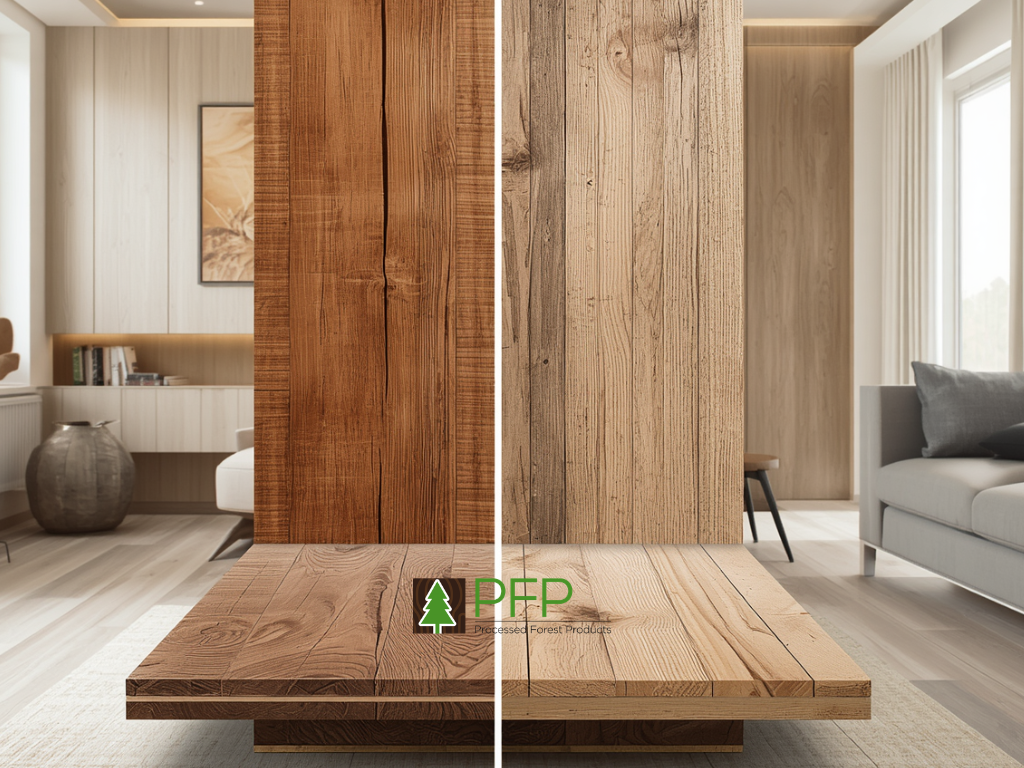
Sustainable Veneer: Plan Grain and Matching Before Cutting
A thoughtful sustainable veneer specification considers how sheets will be cut and arranged before manufacturing begins.
Poor planning can create unnecessary offcuts, disrupt grain continuity and sometimes require additional veneer purely to correct an avoidable visual problem.
Panel dimensions should therefore be coordinated with the available veneer leaf size and finished sheet size.
Grain direction matters too. A designer may want vertical grain on wall panels, horizontal grain on cabinetry or continuous veneer across several adjoining doors.
Forest Products’ current veneer catalogue identifies different veneer cuts, matching methods, leaf sizes and finished panel dimensions for available species.
Providing elevations and panel schedules early can help the supplier understand which surfaces need sequence matching and where normal natural variation is acceptable.
This approach can support both visual consistency and more efficient material planning.
Sustainable Veneer: Use the Natural Timber Surface Intentionally
One of the practical advantages of sustainable veneer is that a thin decorative timber surface can be used across a comparatively large area.
This makes veneer useful for wood veneer design where the visual goal is the warmth and grain of natural timber without constructing the entire element from thick solid wood.
That does not mean veneer is always environmentally preferable in every situation. The total environmental impact still depends on forestry practices, substrate, adhesives, manufacturing, transport, finishing and service life.
The sensible approach is therefore to avoid oversimplified claims.
Where environmental performance is important, combine efficient veneer use with certified sourcing, appropriate substrates and documented products.
A well-designed feature wall or joinery package can also limit decorative timber to the surfaces where it has the strongest visual effect instead of using the same material indiscriminately throughout the room.
Sustainable Veneer Needs Clear Documentation
Sustainable Veneer: Ask for Certification and Product Details
Before approving sustainable veneer, ask for information that can be checked.
For certified material, that may include the certification scheme, supplier certificate details, product claim and documentation relevant to the order.
For the veneer itself, useful information includes species, cut, matching method, approximate leaf size and finished panel size.
The substrate should also be identified, particularly where board type, thickness or certification is part of the specification.
Green Star’s current Responsible Products Framework demonstrates why documentation matters in more formal projects: responsible-product claims rely on recognised initiatives and evidence rather than general environmental descriptions.
For projects pursuing certification, requirements should be confirmed against the applicable Green Star tool and current project documentation rather than assuming every certified timber product earns the same outcome.
Sustainable Veneer: Avoid Vague Environmental Claims
Words such as sustainable, natural, green and environmentally friendly are easy to use but can mean different things.
A sustainable veneer description is more useful when it explains what can actually be verified.
For example, saying that a specific product is available with FSC or PEFC certification is more precise than simply saying it is environmentally friendly. Similarly, identifying a certified substrate provides clearer information than describing the board as “eco”.
Certification should also not be used to imply that every other environmental characteristic has been assessed.
A chain-of-custody certification primarily addresses sourcing and traceability within the relevant scheme. Other issues such as emissions from finishes, embodied impacts or manufacturing processes may require separate information.
This distinction helps architects and buyers compare products on evidence rather than marketing language.
Sustainable Veneer: Choose a Supplier That Supports the Specification
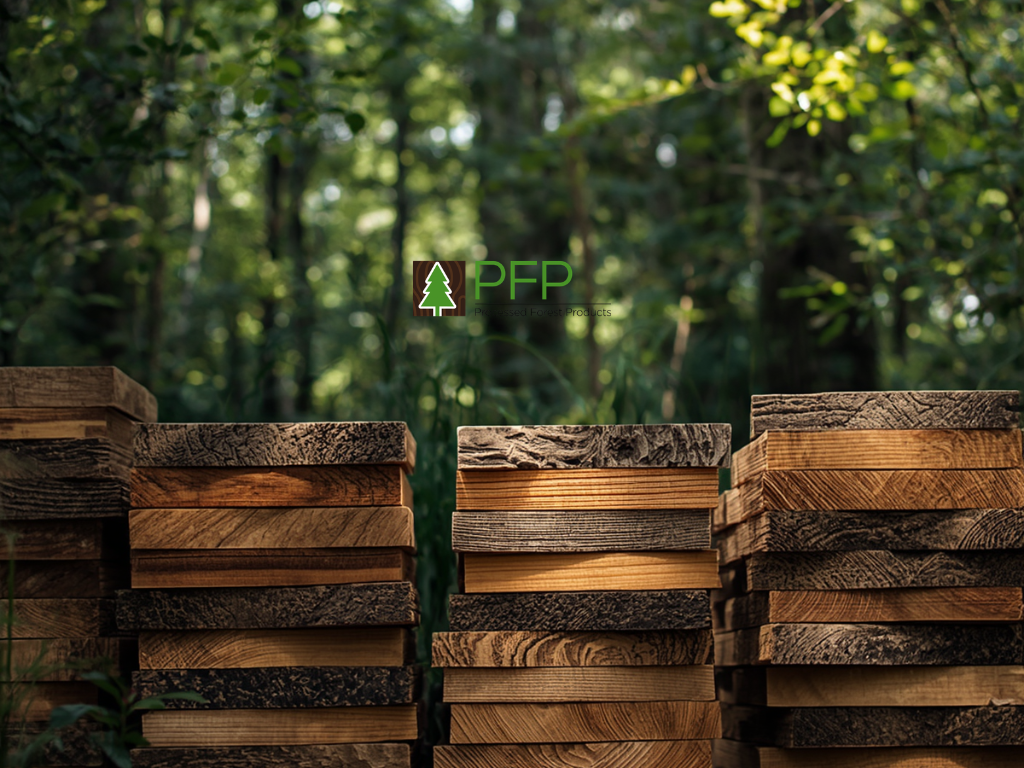
Sustainable Veneer: Confirm Species, Certification and Availability
A supplier can play an important role in turning a sustainable veneer specification into something that can actually be manufactured.
Before finalising drawings, confirm whether the selected species is available, whether the required certification can be supplied and whether the sheet dimensions suit the project.
Forest Products is based in Milperra, Sydney, and currently supplies natural and reconstituted timber veneers along with MDF, particleboard, plywood and other panel products. Its website states that the company is FSC-certified under FSC-C007737 and PEFC-certified under PEFC-21-31-147, with many of its boards and veneers potentially available as certified products.
The word “available” matters. Certification should be confirmed for the exact product before ordering rather than assumed across the entire range.
For Sydney and Western Sydney projects, discussing species, panel sizes and certification requirements early can also help identify alternatives if the first-choice veneer is unavailable.
Sustainable Veneer: Confirm the Finished Product Before Ordering
The final sustainable veneer decision should bring together appearance, sourcing and construction.
Confirm the veneer species, cut, match, substrate, panel dimensions, grain direction, finish and certification requirements before manufacturing begins.
If American oak veneer is being considered, ask whether the required cut and certified option are available. If the project uses wenge veneer, burl veneer or anegre timber, check lead time and whether the particular material can satisfy the sourcing requirements written into the specification.
Forest Products also offers custom manufacturing and veneer-laying services, which can be useful where veneer needs to be coordinated across panels, doors or joinery rather than purchased as loose decorative material alone.
For a project seeking responsible material choices, the strongest approach is not to select a product simply because the word “sustainable” appears in its description. Start with the design requirement, confirm the sourcing and certification, review the substrate, and make sure the supplier can provide the documentation needed for the actual order.
That process creates a clearer basis for choosing sustainable veneer while still allowing designers to work with the grain, colour and natural character that make timber veneer appealing in the first place.
