

A soft toilet seat cushion can make a standard toilet more comfortable for someone who finds a hard seat unpleasant or difficult to sit on for extended periods. However, choosing the right cushion involves more than simply looking for the thickest or softest option. Fit, stability, attachment, cleaning and the reason extra cushioning is needed all matter. If the main difficulty is sitting down, standing up or transferring safely, a different type of bathroom support may be more appropriate.
Australian aged-care guidance recognises several types of toileting equipment, including toilet-seat padding, raised toilet seats and toilet supports. Under the current Support at Home Assistive Technology and Home Modifications list, these products are treated differently according to their function and level of support required.
How a Soft Toilet Seat Cushion Can Improve Sitting Comfort
A soft toilet seat cushion adds a padded layer between the user and a standard toilet seat.
For someone who finds a hard toilet uncomfortable, this can make everyday toileting more pleasant. The added cushioning may be particularly relevant for older adults, people with temporary tenderness or people recovering from a period of reduced mobility.
Australian Health Care’s current padded toilet seat cushion, for example, uses high-density memory foam and a water-resistant surface. The product is designed to fit most standard toilet seats and includes attachment features intended to keep it in position during use.
Products in this category may also be described as a toilet seat pillow, soft toilet seat, cushioned toilet seat or cushion toilet seat. Although the terminology varies, the main purpose is generally the same: to make the sitting surface softer.
Comfort is highly individual, however.
A cushion that feels supportive to one person may feel too soft, too thick or unstable to another. That is why buyers should consider how the seat feels during normal use rather than assuming that more padding automatically means greater comfort.
When a Soft Toilet Seat Cushion May Not Solve the Main Problem
A soft toilet seat cushion is primarily a comfort product. It should not automatically be treated as the solution to every toileting difficulty.
If the main problem is that the toilet is too low, adding a soft cushion may not provide the amount of height or stability needed to make sitting and standing easier.
A raised toilet seat is designed specifically to increase the height of the sitting surface. An over-toilet frame can provide both additional height and arm supports for someone who needs greater assistance during transfers.
Current Australian aged-care guidance recognises raised toilet seats, toilet arm supports and toilet-seat padding as separate types of assistive products.
My Aged Care also gives examples of occupational therapists recommending equipment such as raised toilet seats, over-toilet frames and grab rails where a person has difficulty standing from the toilet or has experienced falls.
If someone is struggling to lower themselves onto the toilet, stand afterwards or remain balanced, the issue is therefore broader than surface comfort.
In that situation, an occupational therapist or other appropriate healthcare professional can help identify whether a raised seat, frame, grab rail or other bathroom medical equipment would be safer.
Choose the Right Thickness and Level of Padding
How Thick Should a Soft Toilet Seat Cushion Be?
The right soft toilet seat cushion thickness depends on both comfort and stability.
A thicker cushion may feel softer, but it also changes the effective height of the toilet seat.
For some users, a small increase in height may feel helpful. For others, excessive thickness can change foot position or make the seat feel less stable.
This is particularly important for shorter users who need to keep their feet comfortably supported on the floor.
When comparing products, check whether the manufacturer provides the cushion thickness and consider how much the material compresses when someone sits on it.
Do not assume that a thick cushion provides the same function as a purpose-designed raised toilet seat.
A raiser is designed around increasing toilet height, while a soft toilet seat cushion is generally intended primarily to improve sitting comfort.
If extra height is an important part of the requirement, compare both options rather than trying to make a comfort cushion perform the role of dedicated mobility equipment.
Comparing Soft Toilet Seat Cushion Padding Materials
Material affects how a soft toilet seat cushion feels and how easy it is to maintain.
Foam is common because it can provide cushioning while remaining relatively lightweight.
Australian Health Care’s current padded model uses high-density memory foam beneath a water-resistant surface.
When comparing materials, think about firmness as well as softness.
A very soft toilet seat may compress significantly under body weight. Some users may prefer this, while others may feel more secure on firmer cushioning.
The outer material matters too.
A bathroom product will regularly be exposed to moisture and cleaning, so the surface should be suitable for routine hygiene.
Look for manufacturer instructions about cleaning, drying and the products that can safely be used on the cover.
The best cushion is not necessarily the softest. It is the one that provides enough comfort while remaining stable, practical and easy to maintain.
Make Sure the Cushion Fits Your Toilet
How to Measure for a Soft Toilet Seat Cushion
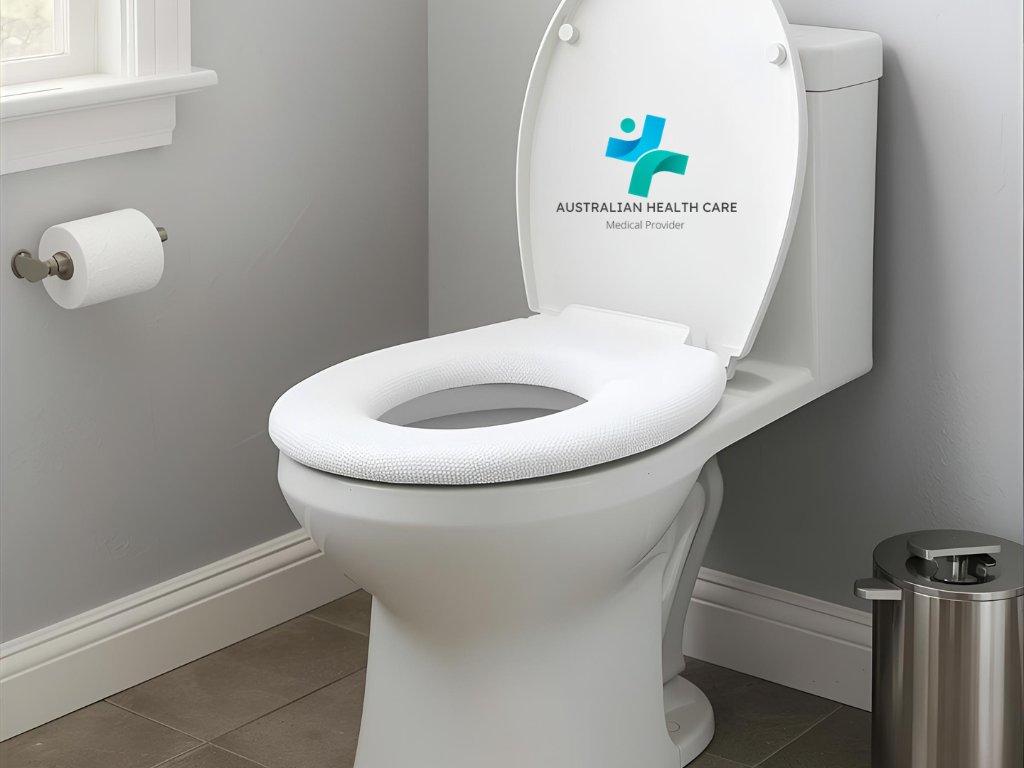
Before ordering a soft toilet seat cushion, check the size and shape of the existing toilet seat.
Not every toilet is identical.
Some seats are more rounded, while others are longer or more oval. A cushion that is too large may hang over the edges, while one that is too small may not provide support where it is needed.
Measure the approximate length and width of the toilet seat and compare those dimensions with the manufacturer’s specifications.
Also check the attachment system.
Some cushions are designed to fit most standard toilet seats, but “universal” or “standard” fit should still be checked against the actual toilet before purchase.
Australian Health Care describes its padded toilet seat cushion as designed for most standard toilet seats, but buyers should still confirm compatibility with their own bathroom setup.
A few minutes spent measuring can prevent the inconvenience of ordering a cushion that does not sit correctly.
Why a Soft Toilet Seat Cushion Needs a Secure Fit
A soft toilet seat cushion should remain stable during normal sitting and standing.
Movement is more than an inconvenience. If the cushion shifts unexpectedly while someone is transferring their weight, it can make the toilet feel insecure.
This matters especially for people with reduced balance or strength.
Check how the cushion attaches to the toilet seat and whether the fastening system can be adjusted.
Once installed, test it before relying on it for regular use.
The cushion should not slide substantially from side to side or lift away from the seat during normal movement.
Australian Health Care’s padded toilet seat cushion includes attachment mechanisms intended to keep the cushion securely positioned.
Even so, the user should inspect the attachment periodically because bathroom products can move, stretch or wear over time.
If a person requires substantial support when sitting down or standing up, a stable soft toilet seat cushion alone may not be enough. That is where an over-toilet frame, raised seat or properly positioned grab rail may need to be considered.
Check Attachment and Stability Before Buying
How a Soft Toilet Seat Cushion Stays in Place
Different soft toilet seat cushion products may use straps, fastening systems or shaped designs to stay positioned on the existing seat.
The attachment should be simple enough to remove when cleaning is required but secure enough that normal use does not cause the cushion to move unexpectedly.
Before buying, look at product photographs and instructions rather than assuming all cushions attach in the same way.
If the product is being purchased for an older person or someone with limited hand strength, consider who will install, remove and clean it.
A fastening method that works well for one household may be frustrating in another.
The cushion should also sit flat rather than rocking or creating an uneven surface.
If it cannot be attached properly to the toilet, choose another product rather than improvising a fixing method that the manufacturer has not recommended.
Testing a Soft Toilet Seat Cushion for Safe Transfers
After installing a soft toilet seat cushion, check the complete movement of sitting down and standing up.
The user should feel secure throughout the transfer.
If the cushion moves, compresses excessively or changes the toilet height in a way that makes standing more difficult, it may not be the right product.
This is also the point where other bathroom medical equipment may need to be considered.
Healthdirect notes that raised toilet seats and grab bars can help make toilet access easier for some people, while My Aged Care identifies raised toilet seats and home adjustments such as handrails among common forms of support provided at home.
A handicap safety grab bar supplier can provide something stable to hold, but its position and installation are important.
For people with significant mobility limitations or a history of falls, professional assessment is preferable to simply choosing a rail based on appearance or convenience.
The cushion should therefore be considered as one part of the bathroom setup rather than the only safety feature.
Choose Materials That Are Easy to Keep Clean
What to Look for in a Soft Toilet Seat Cushion Cover
Bathroom hygiene should be part of the buying decision from the beginning.
A soft toilet seat cushion needs a surface that can be cleaned regularly without the padding becoming difficult to dry or deteriorating quickly.
Water-resistant or non-absorbent coverings can make routine cleaning easier.
Australian Health Care describes its current padded toilet seat cushion as using durable, water-resistant materials intended to be wiped clean.
When comparing products, check whether the outer layer is sealed and whether there are seams, fasteners or other areas where moisture can collect.
Also look for clear care instructions.
A product intended for regular bathroom use should explain how it should be cleaned and which cleaning products are suitable.
If no useful care information is available, ask the supplier before purchase.
A cushioned toilet seat may provide additional comfort, but that benefit should not come at the expense of a cleaning routine that is difficult to maintain.
How to Clean a Soft Toilet Seat Cushion Properly
A soft toilet seat cushion should be cleaned according to the manufacturer’s instructions.
Avoid assuming that any household disinfectant is suitable because some chemicals can damage vinyl, foam or protective coatings.
Where the manufacturer permits routine wiping, clean the surface regularly and pay attention to the areas around straps, edges and attachment points.
The cushion should also be inspected for cracks, tears or deterioration.
Damage to the outer covering may allow moisture to reach the padding beneath and make cleaning more difficult.
If the cushion has become damaged to the point where it can no longer be cleaned effectively or attached securely, replacement may be the more practical option.
The cleaning routine should also be realistic for the person or carer responsible for the bathroom.
A cushion toilet seat that is comfortable but awkward to remove and maintain may not be the best choice for everyday use.
Compare Cushions With Other Bathroom Support Options
Soft Toilet Seat Cushion vs Raised Toilet Seat
A soft toilet seat cushion and a raised toilet seat can appear similar because both sit around the toilet, but their primary purposes are different.
The soft toilet seat cushion is mainly intended to change the comfort of the sitting surface.
A raised toilet seat is designed to increase sitting height, reducing how far the user needs to lower themselves.
The Australian Government’s current assistive technology list distinguishes between toilet-seat padding and several forms of raised toilet seats.
That distinction is important when deciding what to buy.
If the problem is discomfort from sitting on a hard surface, cushioning may be enough.
If the person struggles to stand from the toilet because of reduced leg strength, joint limitations or mobility difficulties, extra height may be more relevant.
Some users need both comfort and additional height. In those situations, choose a product specifically designed for that combination rather than stacking unrelated cushions or adapting equipment in a way the manufacturer has not intended.
Australian Health Care currently carries both padded toilet seat cushions and several types of toilet seat risers, providing a useful comparison between the two product categories.
Soft Toilet Seat Cushion With Other Bathroom Equipment
A soft toilet seat cushion may form part of a broader bathroom setup.
Someone who experiences difficulty with toileting may also need a shower chair, over-toilet frame, medical bench seat or grab rail depending on their mobility and bathroom layout.
These products solve different problems.
A shower or medical bench seat can provide seated support during washing. An over-toilet frame can provide arm supports around the toilet. A properly installed grab rail can provide a stable handhold during transfers.
My Aged Care describes equipment such as raised toilet seats, shower chairs and grab rails as examples of supports that occupational therapists may recommend after assessing a person’s needs.
This is why it is better to think about the complete bathroom routine.
Ask whether the person has trouble reaching the toilet, lowering themselves, remaining comfortable while seated, standing afterwards or moving into the shower.
The answer will determine whether a soft toilet seat cushion is enough or whether other equipment should be considered.
Check Suitability Before You Purchase
What to Ask Before Buying a Soft Toilet Seat Cushion
Before ordering a soft toilet seat cushion, confirm the practical details.
Check the cushion dimensions against the toilet seat and find out how thick the padding is.
Review the attachment method and make sure the cushion is intended to remain secure during normal use.
Look at the material and cleaning instructions and confirm whether the product has any stated user-weight guidance or other restrictions.
If you are buying online, read the manufacturer’s specifications rather than relying only on photographs.
Also check returns and warranty conditions, particularly if fit cannot be confirmed before purchase.
Australian Health Care currently lists padded toilet cushions, soft toilet seat risers, raised toilet seats and other bathroom medical equipment, making it possible to compare different approaches according to whether the priority is comfort, height or additional support.
Internal links from this article to those categories can also help readers compare products without assuming that one type of seat solves every toileting difficulty.
When to Seek Advice About a Soft Toilet Seat Cushion
A soft toilet seat cushion can be straightforward to buy when the only concern is improving comfort on an otherwise suitable toilet.
Professional advice becomes more important when mobility or safety is also involved.
Consider speaking with an occupational therapist, physiotherapist or other appropriate healthcare professional if the person has experienced falls, struggles to transfer on or off the toilet, has significant weakness or needs assistance from a carer.
Current My Aged Care information shows occupational therapists commonly assess difficulties such as standing from the toilet and can recommend equipment including toilet raisers, shower chairs and rails according to the person’s needs.
The same applies if a bathroom modification is being considered.
A supplier of safety grab bars can explain product specifications, but rail position and installation should be based on the user’s needs and the bathroom structure rather than guesswork.
Australian Health Care can be useful when comparing a soft toilet seat cushion with other toileting and bathroom medical equipment. The aim should be to choose the simplest product that appropriately addresses the actual problem.
If the standard toilet is comfortable to use except for the hardness of the seat, a well-fitting cushioned toilet seat may be enough. If standing, balance or transfers are also difficult, look beyond cushioning and seek advice about a more supportive bathroom setup before purchasing.
