

Choosing a sustainable veneer involves more than deciding which timber pattern looks best. Buyers also need to consider where the timber came from, how it was processed, how much material the project may waste and whether the supplier can provide credible certification.
Natural veneer and reconstituted veneer both use real wood, but they create very different design outcomes. Natural veneer preserves the grain and variation of an individual log. Reconstituted veneer uses processed timber layers to create a more controlled pattern and colour.
Neither option is automatically the more sustainable choice for every project. A responsibly sourced natural veneer may be suitable for distinctive furniture or feature joinery, while a traceable reconstituted product may reduce matching difficulties across a large commercial fit-out.
The strongest decision comes from comparing the complete product, including the decorative face, substrate, adhesive, finish, expected lifespan and supporting documentation.
How natural wood veneers are produced
Natural veneer is a thin layer sliced or peeled directly from a timber log. The Timber Veneer Association of Australia describes it as pure sliced timber without artificial material incorporated into the decorative face. Its grain, colour and natural features reflect the species and the individual log from which it was produced.
Different cutting methods create different visual results. Crown cutting generally produces broader, curved grain patterns, while quarter or rift cutting can create a straighter and more even appearance.
Because natural wood veneers come from individual logs, variation is expected. Two leaves from the same bundle may show related grain movement, but they will not be identical. Colour and figure can also vary between logs of the same species.
This natural variation is often part of the design appeal. It can give a reception desk, cabinet door, wall panel or furniture piece an individual character that cannot be reproduced exactly.
However, the project team must decide how much variation is acceptable before production begins. A physical sample should be reviewed, but buyers should remember that a small sample cannot show every feature that may appear across a larger panel installation.
How reconstituted veneer creates a consistent appearance
Reconstituted veneer is also made from wood, but it goes through additional processing.
Common manufacturing methods begin with readily available timber, including plantation-grown species. The timber may be rotary peeled into veneer, coloured through its thickness, laminated into blocks and sliced again to create a planned grain pattern.
This process can create consistent colours and repeating patterns across many sheets. It may also allow manufacturers to produce visual effects inspired by familiar species or create colours and patterns that do not normally occur in natural timber.
The term covers more than one type of product. Reconstructed natural veneer may be made from undyed natural veneer, including lower-grade or waste material that is laminated and resliced into a decorative surface. Other reconstituted products may use dyed veneer layers to create their appearance.
Buyers should therefore avoid assuming that every reconstituted product has the same composition or environmental profile.
Look Beyond Appearance When Defining a Sustainable Veneer
Responsible sourcing is one of the most important parts of selecting sustainable veneers.
A product may have an attractive natural appearance without providing clear evidence about the origin of its timber. Likewise, a highly consistent reconstituted veneer should not be considered sustainable solely because it uses plantation-grown or lower-grade wood.
Ask whether the timber comes from certified forests, controlled sources, plantations or responsibly managed regrowth forests. The answer should be supported by valid documentation rather than a general statement on a brochure.
Chain-of-custody systems are designed to protect certified claims as timber passes through harvesting, processing, manufacturing and sale. In Australia, relevant schemes include FSC, PEFC and Responsible Wood.
The certification should apply to the material being supplied. A company holding a certificate does not necessarily mean every veneer, substrate or panel in its range is sold with a certified claim.
This distinction is especially important when an architect, builder or client has specified certified material for a commercial or government project.
Review the complete manufacturing process
The decorative veneer face represents only one part of the finished product.
Most veneer projects also involve a substrate, adhesive, balancing material, edging and protective coating. Each part can affect the product’s environmental profile, durability and suitability for the application.
Natural veneer requires slicing, drying, jointing, pressing and finishing. Reconstituted veneer generally involves additional stages such as rotary peeling, colouring, laminating and reslicing.
Additional processing does not automatically make a product environmentally unsuitable. It may produce greater consistency, use readily available timber or turn lower-grade material into a useful decorative product. However, energy, water, chemicals, adhesives and factory waste should be considered where reliable information is available.
Ask wood veneer suppliers whether they can provide technical information, environmental declarations, certification or other product-specific evidence. Where no supporting information is available, avoid presenting broad environmental claims as confirmed facts.
A sustainable veneer decision should be based on evidence, expected performance and appropriate use rather than on the word “natural” or “reconstituted” alone.
Compare Material Efficiency and Project Waste
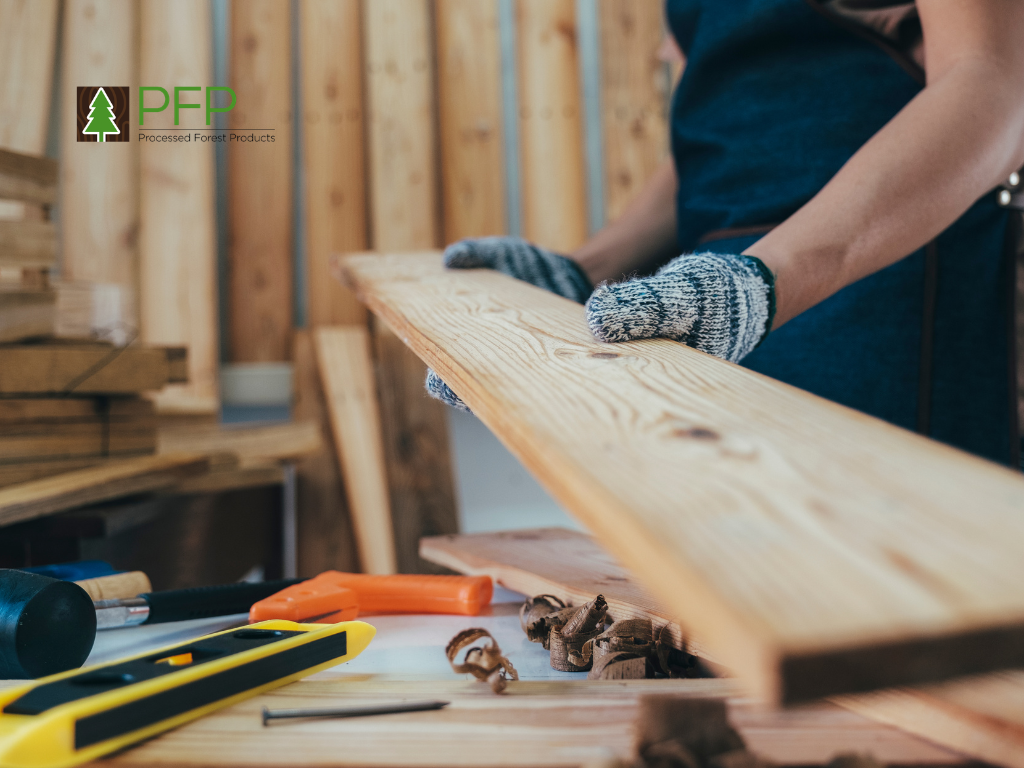
Natural character may require careful selection and matching
Veneer is an efficient way to use decorative timber because a thin slice can provide a genuine wood surface across a much larger panel.
Natural veneer can be particularly effective when the project accepts the normal variation of the species. The manufacturer can arrange consecutive leaves using book matching, slip matching, random matching or another pattern suited to the design.
Waste may increase when a project requires extremely tight colour control or the removal of every knot, mineral mark and natural feature. Additional leaves may need to be rejected to achieve an appearance that is more uniform than the timber naturally provides.
Large sequence-matched walls and adjoining cabinet doors also require careful planning. Dimensions, grain direction and panel order should be confirmed before production so that usable material is not lost through late design changes.
The most responsible approach is not necessarily to remove all variation. It may be better to establish an acceptable visual range and use the characteristics of the log as part of the wood veneer design.
Clients should review representative samples and discuss how natural features will be distributed across the project before ordering.
Consistent patterns can simplify large-scale production
Reconstituted veneer can provide practical material advantages when many panels need a closely matched appearance.
The Timber Veneer Association of Australia identifies colour consistency, repeated grain patterns and easier future matching among the advantages of reconstructed veneer.
This consistency can simplify manufacturing for hotels, offices, retail locations and other projects with repeated cabinetry or wall panels. It may also reduce the need to sort through numerous natural leaves to find closely matched colours.
Reconstituted veneer can be useful in multi-site projects where the same visual identity is required across locations built at different times. Replacement panels may also be easier to coordinate when the selected pattern remains available.
However, consistency does not prove sustainability. Buyers still need to check the source timber, colouring, adhesives, production process and certification.
Check Certification and Product Documentation
FSC chain-of-custody certification helps organisations demonstrate that eligible timber products have been tracked through the supply chain under the scheme’s requirements.
When requesting fsc certified veneer, ask for the supplier’s current licence or certificate information and confirmation that the selected product can be supplied with an appropriate FSC claim.
Check whether the requirement applies only to the decorative veneer or to the complete panel. A project may need certification for the veneer face, MDF or plywood substrate, or the finished product as supplied.
PEFC and Responsible Wood products may also be relevant. The suitable certification system depends on the client brief, procurement policy and any building rating requirements.
For Green Star projects, certification and proof of purchase can form part of the documentation used to support responsible-product claims. The Green Building Council of Australia’s Responsible Products process requires project teams to provide information about compliant products and proof of purchase.
Ask wood veneer suppliers for project-specific evidence
Certification questions should be raised before the product is ordered.
Begin by giving the supplier the exact wording from the architect’s specification or sustainability brief. Avoid simply asking whether the company is “environmentally certified,” because that may not establish whether the chosen veneer and substrate are eligible.
Ask for the certificate number, current status, certification scheme and product scope. The organisation name on the certificate should correspond with the business supplying or manufacturing the product.
The sales documents should also be checked. A quote describing a product as oak veneer does not establish that it is fsc certified veneer, even when the supplier holds an FSC certificate.
For larger jobs, retain the approved sample, quotation, purchase order, invoice and certification documents in the project records. This helps the builder, architect, client and certifier trace the product decision later.
Match the Veneer Type to the Design and Application
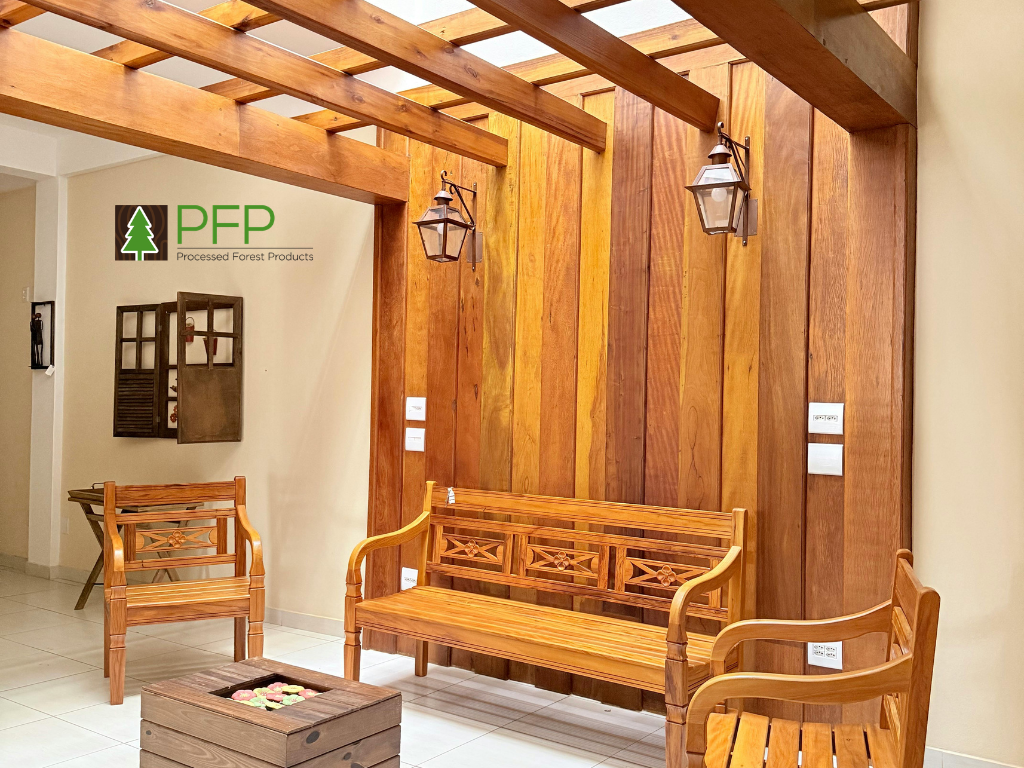
Choose natural veneer when variation is part of the design
Natural veneer may be the better option when authentic timber character is central to the project.
It can suit bespoke furniture, feature walls, reception counters, residential cabinetry and doors where natural grain movement contributes to the visual result.
The selected species and cutting method should support the intended style. A crown-cut veneer can create expressive cathedral grain, while quarter-cut material may provide a quieter and more linear appearance.
Natural veneer also gives designers access to distinctive figures, burls and species characteristics. These features can make a project feel less manufactured and more individual.
The trade-off is that the finished panels will not look identical. Buyers need to accept reasonable variation and approve a matching method that works across the project.
Natural veneer is not automatically the more sustainable choice. Its sourcing, certification, yield and suitability for the application still need to be checked.
Choose reconstituted veneer when consistency matters
Reconstituted veneer may be more practical when the design requires repeated colour and grain.
It can suit office workstations, hotel rooms, retail displays, apartment joinery and multi-site fit-outs where many components need a closely coordinated appearance.
Reconstituted products can also provide a wider choice of colours. Some designs reproduce a timber-inspired look, while others create more contemporary lines and tones.
The final selection should still be approved from a physical sample. A repeated grain can become visually obvious across a large wall if the panel orientation and layout are not planned carefully.
Good wood veneer design considers where repeated patterns will meet, how doors will align and whether the grain should run vertically or horizontally.
Choose the Right Panel Construction and Supplier
The term veneer laminate can create confusion because it may refer to different products.
Some prefinished timber veneers are supplied in a laminate-type form with a factory-applied coating and backing. Other decorative laminates use printed or manufactured surfaces that imitate timber without containing a natural veneer face.
The Timber Veneer Association of Australia explains that prefinished veneer may use natural, dyed or reconstructed timber and can include finishes such as melamine film, acrylic coatings or polyurethane. The chosen finish affects factors such as scratch resistance, fading and moisture resistance.
Ask the supplier to identify the decorative surface clearly. The specification should state whether it is natural timber veneer, reconstituted timber veneer or a non-wood decorative laminate.
The substrate also needs to be selected. MDF can provide a smooth surface and suit detailed machining. Particleboard may offer a practical base for general joinery, while plywood can suit applications requiring a different structural or edge character.
Evaluate wood veneer supplies as a complete system
The best veneer face can perform poorly when it is combined with an unsuitable substrate or finish.
Consider where the panel will be installed. Dry vertical wall panelling has different requirements from a table, door, shelf, reception counter or area exposed to frequent cleaning. The coating should suit the expected wear and cleaning process.
Edging should be specified at the same time as the face veneer. Visible edges may use matching veneer, laminated veneer edging or another material chosen for durability.
Review dimensions and grain direction before manufacturing. Also identify holes, curved sections, cut-outs and adjoining panels that may affect material yield.
When comparing wood veneer supplies, request quotes based on the same construction. Each quote should state the veneer, matching method, substrate, thickness, panel size, edging, finish and certification.
This allows buyers to compare complete products instead of choosing between prices that cover different levels of manufacturing.
Know When to Contact Forest Products
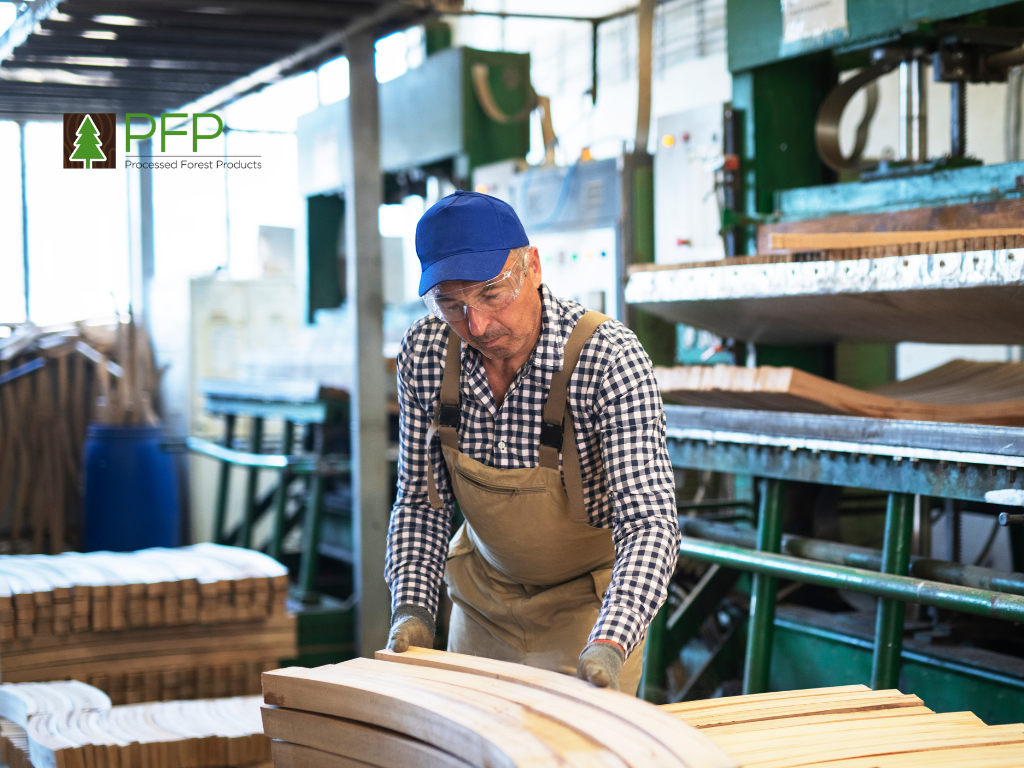
Request help comparing natural and reconstituted options
Forest Products may be contacted when a Sydney or NSW project needs help comparing natural veneer, reconstituted veneer, substrates and customised panel production.
The company’s current website, under the Processed Forest Products name, lists natural and reconstituted veneers, veneer layons, edging, decorative veneer work and panels manufactured on MDF, particleboard and plywood substrates. Current species, panel sizes and production services should be confirmed for the specific order.
Responsible Wood currently lists Processed Forest Products as holding PEFC chain-of-custody certification covering the purchase of certified veneer sheets and boards, as well as manufacturing processes including cutting, joining and pressing. The listed certification remains current until September 2030.
The Forest Products website also states that FSC and PEFC boards and veneers may be available.
Contact is useful when a project requires sequence matching, specialised patterns, short manufacturing runs or help determining whether a natural or reconstituted product better suits the design.
Prepare a clear specification before requesting a quote
Begin by explaining what the panels will be used for.
Provide drawings, dimensions, approximate quantities and the proposed installation location. State whether the panels are intended for cabinetry, furniture, doors, wall linings or a commercial fit-out.
Describe the preferred appearance. Explain whether natural variation is welcome or whether the project requires a highly consistent grain and colour.
Include the preferred veneer species or pattern, matching method, substrate, panel thickness, grain direction, edging and finish. Identify any panels that need sequence matching or special fabrication.
Where certified material is required, provide the exact certification and documentation requirements.
Natural and reconstituted options can both support a responsible project when they are sourced carefully and used appropriately. The more sustainable choice is the one supported by credible documentation, efficient design, suitable construction and a realistic service life.
