

A car that turns over slowly, clicks without starting or loses electrical settings may have a battery problem. However, the battery is not always the true cause.
Loose terminals, corrosion, an alternator fault, a starter problem or an electrical component drawing power while the car is parked can create similar symptoms. Replacing the battery without testing these areas may provide only a temporary solution.
People searching for car battery repair near me are usually looking for quick help, but speed should not replace diagnosis. The useful question is not simply whether the battery is flat. It is why the battery became flat and whether it can still provide reliable starting power.
A professional battery service may include testing the battery, inspecting its terminals and connections, checking the alternator’s charging output and identifying the correct replacement where necessary.
Separate battery faults from connection and charging problems
The phrase car battery repair can describe several different workshop tasks.
The battery may simply be discharged because the headlights or another accessory remained on. The terminals may be dirty, loose or corroded. A cable may have a poor connection, or the alternator may not be returning enough charge to the battery while the engine is running.
In these situations, the service may involve charging the battery, cleaning or tightening connections, repairing a cable or diagnosing the charging system.
A battery test should therefore be combined with an inspection of the terminals and alternator output. Nu-Tech Car Care’s current battery page states that its service includes battery checks, alternator charge-rate testing and terminal inspections during battery changes.
The starting system also deserves attention. A failing starter motor may cause slow cranking even when the battery is capable of supplying power. Testing the complete circuit helps avoid replacing the wrong component.
Know when the battery itself is unlikely to be repairable
Most modern sealed starting batteries are not repaired internally by an ordinary mechanical workshop.
Where the battery has lost capacity, developed an internal fault, become physically damaged or reached the end of its usable life, replacement is generally more practical than attempting to rebuild it.
The surrounding problem may still be repairable. Corroded terminals can be cleaned, damaged connectors may be replaced and charging faults can be corrected. This is why the service should begin with testing rather than an automatic battery sale.
A swollen, leaking, cracked or unusually hot battery should not be handled casually. Avoid attempting to open it or add substances unless the manufacturer specifically permits that procedure.
The battery must also be matched correctly to the vehicle. Installing an unsuitable type or capacity can affect starting performance, charging and warranty coverage.
Recognise the Early Signs of Battery Trouble
A weakening battery often gives some warning before the car stops starting completely.
The engine may turn more slowly than normal, particularly after the vehicle has remained parked overnight. The starter may make a clicking sound, or the dashboard lights may dim noticeably while the engine is cranking.
Low voltage can also affect electronic systems. Warning lights may appear, and clocks or radio settings may reset. RACQ identifies sluggish starting, low-voltage warning lights and lost settings as possible indications of a weakening battery.
These signs do not prove that the battery requires replacement. They show that the starting and charging system should be tested.
A battery that repeatedly needs a jump-start is especially important to investigate. The underlying problem could be an ageing battery, charging fault, loose connection or parasitic electrical drain.
Respond safely when the car will not start
When the car will not start, first consider where it is parked and whether attempting roadside work is safe.
Do not stand between vehicles in traffic or work near moving cars. Where the location is unsafe, contact roadside assistance or arrange towing.
A jump-start may provide temporary power, but it does not explain why the battery became discharged. Incorrect jump-starting can also damage electrical components or cause injury. Follow the vehicle manufacturer’s procedure and use suitable equipment.
After a successful jump-start, do not assume that a short drive will fully restore the battery. A deeply discharged or failing battery may not recover adequately, and an alternator fault may leave the vehicle unable to restart.
When the car displays smoke, a strong chemical smell, severe overheating or visible battery damage, stop attempting to start it and seek professional assistance.
Test the Complete Starting and Charging System
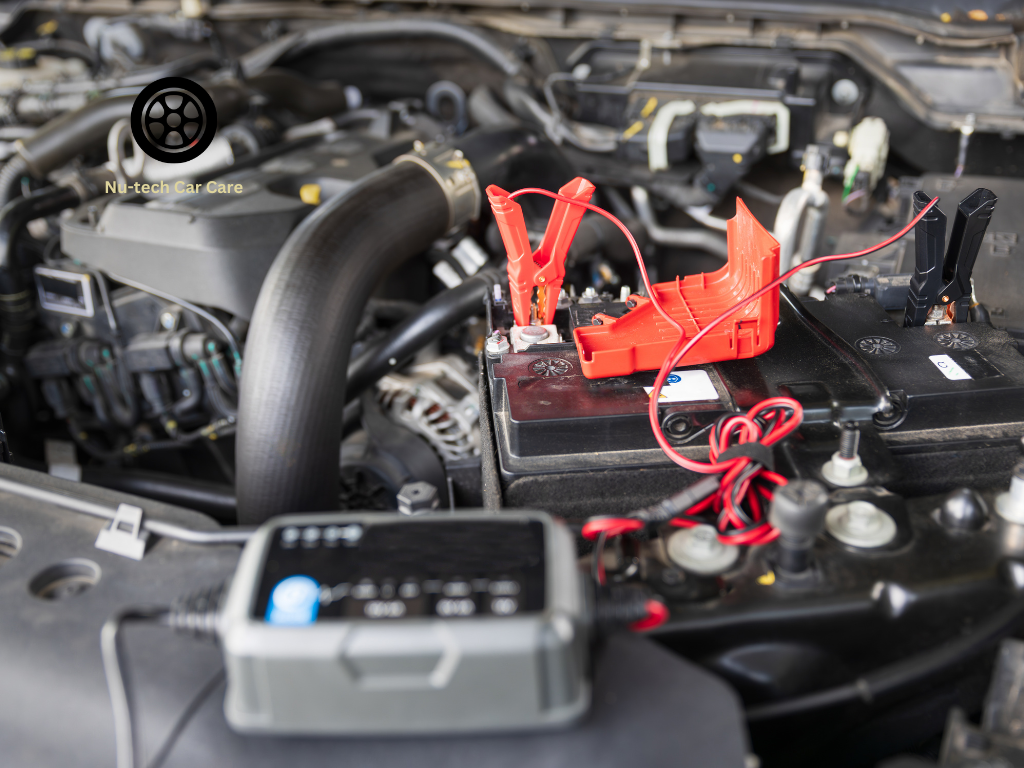
Check battery condition and starting capacity
A useful battery inspection involves more than checking whether the headlights turn on.
A technician may measure the battery’s resting voltage and assess how it performs under starting load. The result can indicate whether the battery is charged, discharged or unable to provide sufficient starting power.
The age and recent use of the vehicle provide important context. A battery may test poorly after the car has been left unused or driven only on short trips. In other cases, charging it may reveal that it no longer retains enough energy for reliable use.
Drivers should ask whether the service includes a written or explained result rather than a simple statement that the battery is “good” or “bad.”
The workshop should also inspect the case, hold-down, terminals and cables. A suitable battery still depends on secure connections and correct installation.
Investigate the alternator, starter and electrical drain
The alternator replenishes the battery while the engine is operating. When its output is inadequate, a replacement battery may also become discharged.
A charging-system test can help determine whether the alternator is supplying an appropriate output for the vehicle. Belt condition, wiring and electrical connections may also require inspection.
The starter motor can create similar symptoms when it draws excessive power or operates inconsistently. Further testing may be needed when the battery passes but the engine still cranks slowly.
A parasitic drain occurs when an electrical circuit continues drawing excessive power after the vehicle has been switched off. Investigating this problem may require current measurement after the vehicle’s electronic modules have entered their normal sleep state.
This type of diagnosis is different from a simple battery test. It can involve checking circuits, accessories, control modules and recently installed electrical equipment.
Decide Whether to Recharge, Repair or Replace
A battery does not necessarily need replacement simply because it is flat.
It may have discharged because the vehicle was left unused, a light remained on or the car completed repeated short trips without enough running time to restore the energy used during starting.
Where the battery is otherwise healthy, controlled charging may restore it. The charger must be suitable for the battery type, and the manufacturer’s instructions should be followed.
The system should still be checked when the cause is not obvious. Recharging a battery without fixing a current drain or alternator problem may only delay the next breakdown.
A technician can assess whether charging and retesting are sensible or whether the battery’s capacity has deteriorated too far for dependable use.
Choose the correct replacement for the vehicle
Replacement batteries are not interchangeable simply because they fit in the available space.
The technician should consider case size, terminal position, mounting method, capacity and starting performance. Vehicles with stop-start systems may require a particular battery technology and compatible installation procedure.
Some modern vehicles may also require battery registration, reset or configuration after installation. Confirm whether this applies to the specific make, model and year.
Ask what warranty is included, which conditions apply and what proof of purchase should be retained. Nu-Tech Car Care currently states that its batteries include a 24-month warranty, but the applicable brand, vehicle coverage and terms should be checked before purchase.
The old battery should be handled through an appropriate recycling or disposal process. Service NSW advises that lead-acid car batteries should not be placed in household bins and can be taken to suitable chemical collection services.
Compare Local Battery Services Carefully
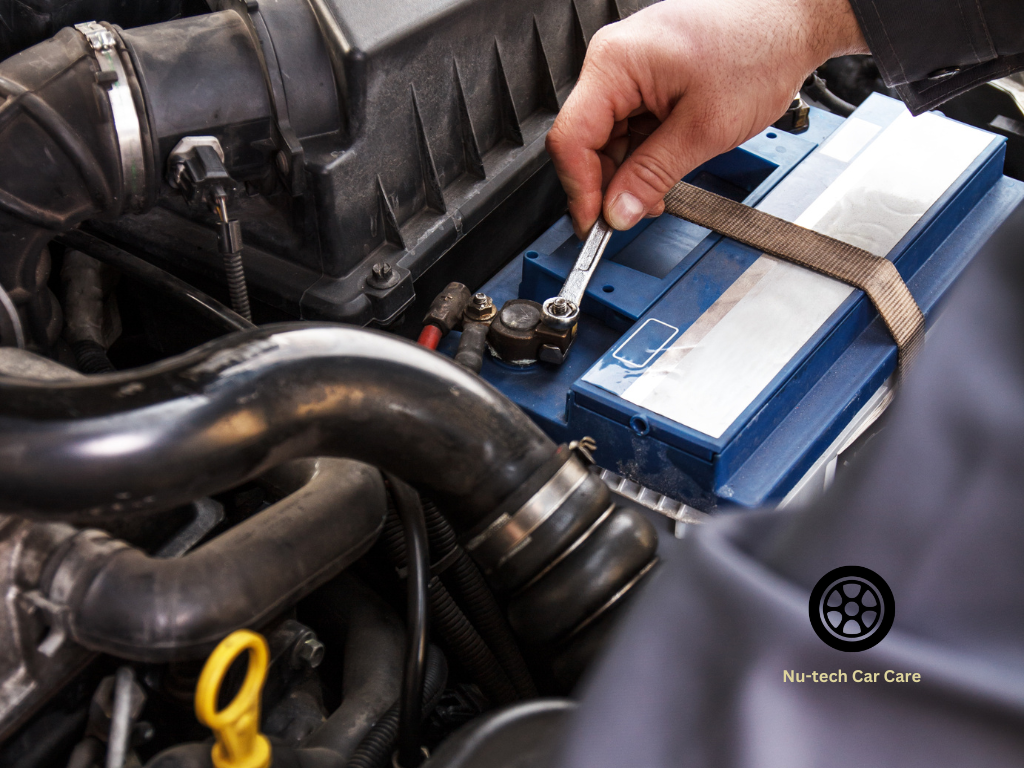
Review availability, testing, pricing and warranties
When comparing car services nearby, ask what the advertised battery service actually includes.
One provider may perform only a battery test. Another may inspect terminals, check alternator output, install a replacement and dispose of the old battery.
Ask whether diagnostic time is included in the quoted price and whether additional work requires approval. NSW guidance recommends agreeing on the work and price before repairs begin, as that agreement generally forms part of the repair contract. Vehicle repair services must also be provided with acceptable care and skill.
Check whether the battery is in stock, whether installation is included and whether the vehicle requires a specialised battery or electronic reset.
A clear quote should distinguish testing, parts, labour and any additional diagnostic work.
Confirm Sunday hours and emergency arrangements
Drivers frequently search for mechanics open on sundays after discovering a flat battery before work, travel or a family commitment.
Do not assume that a workshop offers Sunday or after-hours assistance simply because its website allows online bookings at any time.
Check current trading hours by phone or through the workshop’s official contact information. Nu-Tech Car Care’s current location pages list its Hoxton Park, Minto, Narellan, Liverpool and Camden centres as closed on Sundays.
When the workshop is closed, roadside assistance or towing may be the practical option. Ask whether the roadside provider can test and replace the battery or will only perform a jump-start.
For non-urgent symptoms, booking during normal workshop hours may allow more complete testing of the battery, alternator, starter and electrical system.
Connect Battery Care With Wider Car Maintenance
Battery testing is one part of Car Maintenance, but it does not replace a complete vehicle service.
A battery test cannot assess brake wear, fluid condition, tyre tread, suspension movement or every cooling-system problem.
Cooling system services focus on components such as coolant, hoses, the radiator, water pump and temperature control. These services become important when the vehicle overheats, loses coolant or is due for scheduled maintenance.
Tyre tech services address tyre condition, pressure, punctures, balance and related road-contact issues. A healthy battery does not confirm that the tyres are safe.
For people comparing car care sydney providers, the useful question is whether each service has a clear scope. Battery testing, scheduled servicing and fault diagnosis may be separate charges or included within a broader package.
Plan cooling, tyre and registration-related checks
A rego check is also separate from diagnosing a flat or weak battery.
In NSW, vehicles requiring a safety inspection receive a report from an authorised inspection provider, which submits the result electronically to Transport for NSW.
A vehicle may start correctly yet still require repairs in another safety-related area. Likewise, a vehicle booked for registration inspection may develop a battery problem that requires separate testing or replacement.
Before a long trip or registration appointment, consider whether the car has shown slow starting, warning lights or repeated electrical issues. Addressing the problem early can reduce the risk of being unable to start the vehicle on the day.
A workshop offering batteries, cooling system services, tyres and rego inspections may make scheduling more convenient, but each requested service should still be confirmed when booking.
Know When to Contact Nu-Tech Car Care
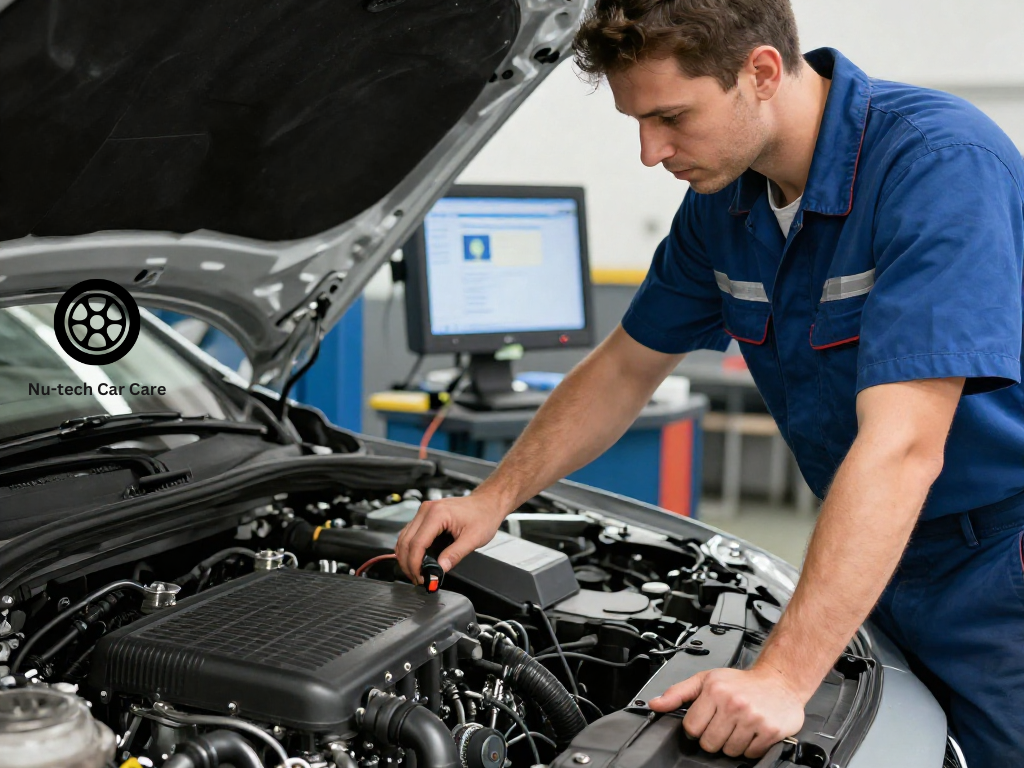
Book an inspection when the cause remains uncertain
Nu-Tech Car Care may be contacted when a driver needs a battery test, charging-system check or help choosing a replacement.
Its current website lists batteries alongside cooling-system service, logbook servicing, rego checks, tyre services and vehicle scanning. It currently lists workshops in Hoxton Park, Minto, Narellan, Liverpool and Camden. Service availability, opening hours and battery stock should be confirmed for the chosen location.
Contact is particularly useful when the battery repeatedly becomes flat, the engine cranks slowly or a recently replaced battery has developed similar symptoms.
These situations may require alternator, starter, connection or current-draw testing rather than another battery replacement.
Prepare useful vehicle and symptom information
When booking, provide the vehicle’s make, model, year and engine type where known.
Explain whether the engine turns slowly, clicks, starts after a jump or does not respond. Mention how long the vehicle was parked and whether any lights or accessories may have remained on.
Advise the workshop about recent battery replacement, jump-starting, electrical accessories, warning lights or repair work. This information can help guide the first tests.
Also confirm the battery brand, warranty, total price, disposal arrangements and whether authorisation will be requested before any additional repairs begin.
Searching for car battery repair near me should lead to more than the nearest available battery. A careful service checks why the car is not starting, tests the surrounding electrical system and recommends charging, connection work or replacement according to evidence.
