

For Australian builders, contractors and property owners, choosing between buying machinery and using construction equipment rental services can have a major impact on project costs. While purchasing equipment gives you long-term ownership, hiring may provide greater flexibility when machinery is only needed for particular jobs.
The decision is not always straightforward. Owning an excavator, compactor or other construction machine involves more than paying the purchase price. Maintenance, insurance, storage, transport and depreciation can all increase the overall expense.
On the other hand, equipment hire can become costly when machines are needed frequently or projects extend beyond their original schedule.
Understanding these differences helps businesses decide which option fits their workload, budget and future plans.
This guide explains the financial and practical considerations involved in hiring versus purchasing construction equipment, with useful advice for Australian contractors and customers working across Sydney and the Macarthur region.
Construction Equipment Rental vs Buying: Which Costs Less?
Why Construction Equipment Rental Can Be More Practical
Construction equipment rental is often worth considering when machinery is required for a temporary project or occasional work.
Instead of purchasing a machine outright, customers pay to use suitable equipment for an agreed period.
For example, a landscaping contractor may need an excavator to prepare a property for drainage installation. Once the excavation is complete, the contractor may not require that machine for several weeks.
Hiring allows the business to access the equipment without committing to long-term ownership.
This can be particularly useful when projects require different types of machinery.
A construction company might use an excavator for earthmoving, a compactor for ground preparation and access equipment for building maintenance.
Rather than purchasing each machine, the business can select equipment according to individual project requirements.
However, hiring is not automatically the cheapest option. The total expense depends on rental duration, transport costs and how frequently the equipment is needed.
When Purchasing Machinery May Be Worthwhile
Buying construction equipment may make financial sense for businesses with consistent workloads.
A contractor performing excavation work throughout the year might benefit from owning a machine that is regularly used.
Ownership provides greater control over equipment availability and maintenance scheduling.
It may also reduce the need to arrange separate rental bookings for every project.
However, purchasing introduces ongoing responsibilities.
The business must consider servicing, repairs, insurance, storage and the eventual resale value of the equipment.
The most important factor is utilisation.
If machinery remains unused for long periods, ownership expenses can outweigh the benefits.
Businesses should therefore compare the total cost of ownership with the expected cost of hiring over the same period.
Understanding the Upfront Expenses of Hiring and Buying
Equipment Hire Fees and Additional Rental Charges
When comparing equipment hire options, the advertised daily rate is only one part of the total cost.
Rental charges may depend on the equipment type, booking duration and supplier’s conditions.
Some providers offer daily, weekend or weekly arrangements, while longer-term hire may be available for extended projects.
Additional expenses can include delivery, collection, fuel, cleaning, attachments and damage liability arrangements.
For example, a contractor hiring an excavator may require a particular bucket or ripper attachment.
Whether these items are included depends on the supplier and the equipment package.
Customers should also understand how additional rental days are calculated.
If a project is delayed by weather or unexpected site conditions, the total hire cost may increase.
Before confirming a booking, ask for a complete quotation showing the rental period, included equipment and relevant charges.
Purchase Costs, Financing and Business Cash Flow
Buying machinery generally requires a substantial upfront investment.
A business may purchase equipment outright or arrange financing.
Financing can reduce the initial cash payment, but repayments, interest and fees may increase the overall purchase cost.
Other initial expenses can include insurance, attachments, transport and any registration or compliance requirements that apply.
For smaller construction businesses, purchasing expensive machinery can also affect working capital.
Money committed to equipment may no longer be available for materials, employee wages or other operating expenses.
This is one reason hiring can appeal to businesses managing changing project demands.
However, ownership may still provide good long-term value when the machine is used frequently.
The appropriate decision depends on available capital, expected workloads and the complete cost of operating the machinery.
What Hidden Costs Come With Owning Construction Machinery?
Maintenance, Servicing and Unexpected Repairs
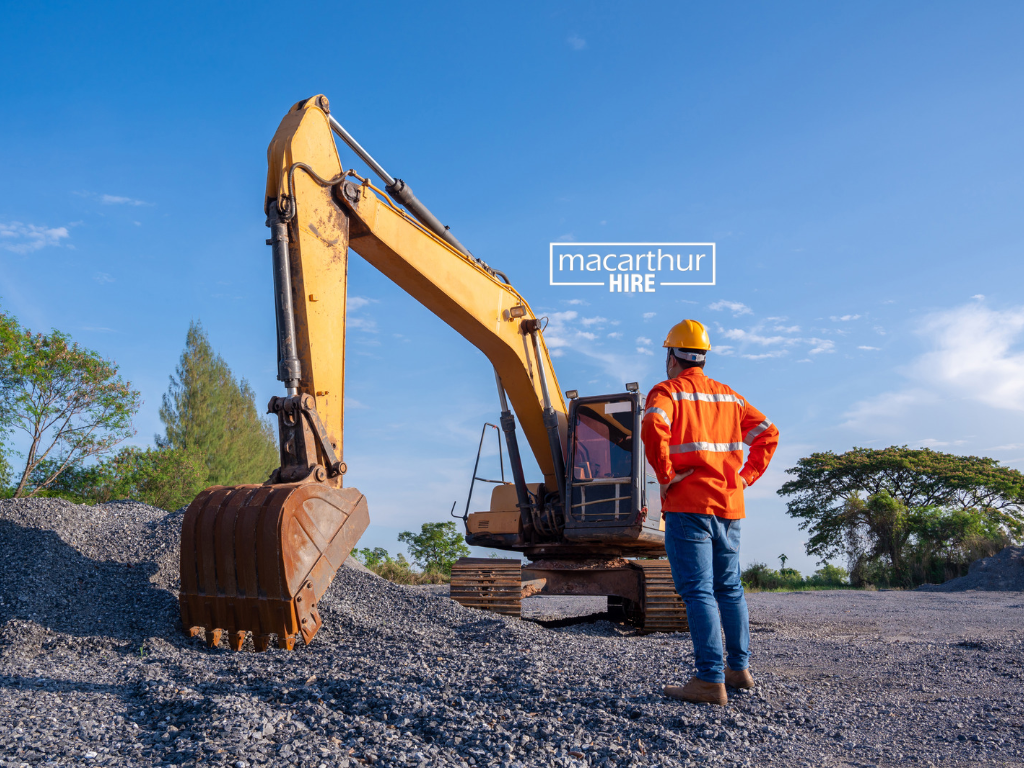
One advantage of construction equipment rental is that customers generally do not take responsibility for the machine’s long-term routine servicing.
Owners, by contrast, must manage maintenance throughout the equipment’s working life.
Depending on the machinery, regular servicing may involve checking hydraulic systems, replacing filters, changing fluids and inspecting worn components.
Unexpected repairs can also create additional expenses.
For example, an excavator experiencing mechanical problems may need replacement parts or professional servicing before it can return to work.
These issues can affect construction schedules, particularly when the machine is essential to completing a particular task.
With rental equipment, maintenance responsibilities are determined by the hire agreement.
The supplier generally manages routine servicing, but customers may remain responsible for misuse, damage or other specified conditions.
Before hiring, confirm what happens if equipment develops a mechanical fault and what assistance is available.
Storage, Transport, Insurance and Depreciation
Construction machinery continues to generate expenses even when it is not being used.
Owners may need secure storage to protect equipment against theft, weather damage and unauthorised access.
Transport is another consideration.
Moving an excavator between worksites may require a suitable trailer, tilt tray or specialised transport arrangement.
Equipment insurance can add to annual operating expenses.
Depreciation also affects the financial value of ownership.
As machinery becomes older and accumulates operating hours, its resale value may decline.
Although selling a machine can recover some of the original investment, the final amount depends on its condition, age and market demand.
These costs should be considered when comparing ownership with equipment rental.
A machine that appears affordable based on its purchase price may be significantly more expensive over its working life.
How Project Duration Influences the Hire vs Buy Decision
Construction Equipment Rental for Short-Term Work
Construction equipment rental can provide flexibility when machinery is only required for a particular stage of a project.
Examples include residential excavation, landscaping, drainage installation and site preparation.
A contractor may need an excavator for several days but have no further use for it once the work is completed.
Hiring avoids purchasing machinery that could remain unused between projects.
It also allows businesses to choose different equipment as their requirements change.
For example, a building contractor may require earthmoving equipment during site preparation and access machinery during later stages of construction.
However, project scheduling is important.
If equipment arrives before the site is ready, valuable rental time may be wasted.
Coordinating hire dates with actual work requirements can help reduce unnecessary costs.
When Frequent Equipment Use Makes Buying More Attractive
Businesses that use the same machinery regularly may find ownership more economical.
For example, an excavation contractor working on multiple projects every week may benefit from having a dedicated excavator.
The purchase cost can be spread across more productive working hours.
However, the business must still consider servicing, repairs, transport, storage and financing.
A useful measure is equipment utilisation, which looks at how often a machine is actually working.
A machine that is available all year but used only occasionally may represent a poor investment.
Before purchasing, businesses should review previous projects and realistic future workloads.
Rather than relying on expected business growth, use actual equipment requirements to estimate how frequently the machine will be needed.
How to Compare Construction Equipment Rental and Buying Costs
Calculating the Total Cost of Renting
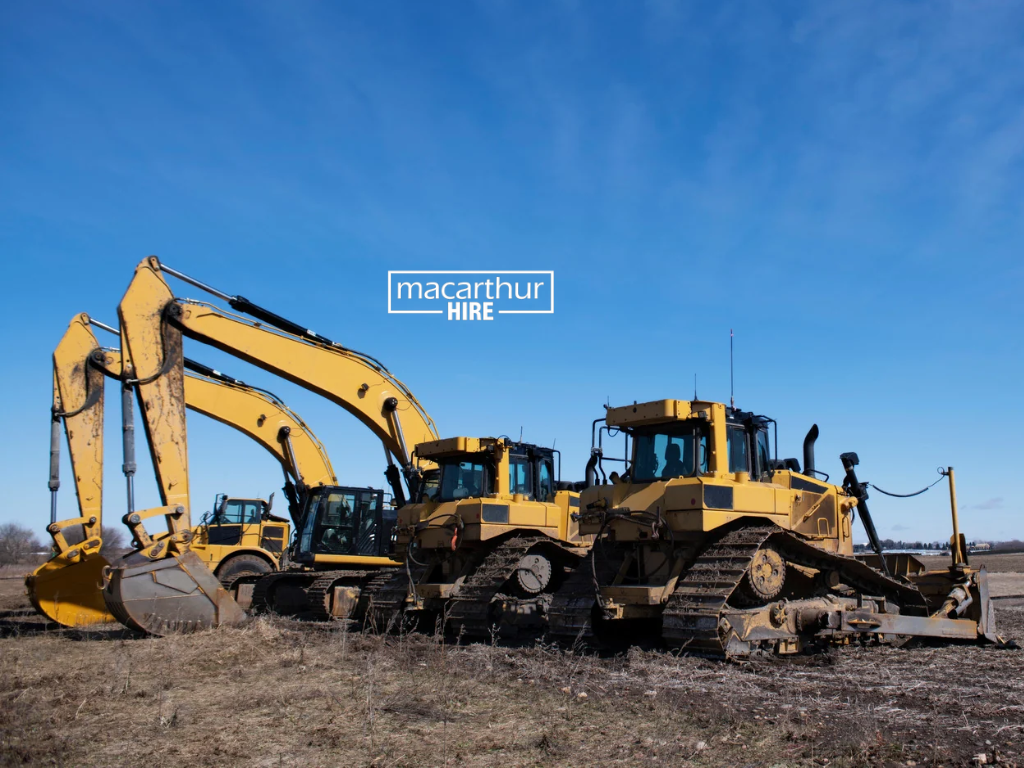
An accurate comparison starts with estimating the total cost of hiring equipment over a defined period.
Consider a hypothetical contractor who needs an excavator for 20 days throughout the year.
If the illustrative rental rate is $300 per day, the base hire cost would be:
20 days × $300 = $6,000
This example is hypothetical and does not represent an actual quoted rate from Macarthur Hire or another provider.
The contractor would need to add delivery, collection, fuel, attachments and other applicable charges.
It is also important to compare available rental periods.
A weekly rate may offer different value from several separate daily bookings, depending on how the equipment will be used.
When calculating construction equipment rental costs, the objective is to estimate the complete expense rather than relying only on the advertised rate.
Working Out Ownership Costs and the Break-Even Point
Buying equipment requires a different calculation because the machine may retain resale value.
A simplified formula is:
Total Ownership Cost = Purchase Price − Estimated Resale Value + Ownership Expenses
Ownership expenses can include finance charges, insurance, maintenance, repairs, storage and transport.
Consider a hypothetical machine purchased for $40,000.
If it is later sold for $25,000, the difference between purchase price and resale value is $15,000.
Assume the owner also spends $8,000 on operating and ownership expenses during the same period.
The estimated total ownership cost would be:
$15,000 + $8,000 = $23,000
These figures are illustrative and should not be interpreted as actual equipment prices.
The business can compare this amount with the total cost of hiring equivalent machinery over the same period.
The break-even point occurs when the costs of renting and buying become comparable.
However, financial decisions should also account for downtime, equipment availability and future project requirements.
Businesses considering a substantial purchase may benefit from professional accounting advice, particularly regarding financing and tax treatment.
Choosing Construction Equipment That Matches Your Project
Comparing Equipment for Rent Based on Site Requirements
Selecting suitable machinery is just as important as deciding whether to hire or purchase.
Before looking for equipment for rent, identify the work that needs to be completed.
Excavators are commonly used for digging, trenching and earthmoving.
Compactors can help prepare suitable ground surfaces, while access equipment may be required for certain tasks at height.
However, machines within the same category can vary considerably.
For example, a larger excavator may offer greater digging capacity but might not fit through narrow residential access points.
A smaller machine may be easier to position, although it could require more time to complete extensive excavation work.
Customers should consider operating weight, dimensions, site access, ground conditions and attachment requirements.
Equipment must also be operated by appropriately competent people, with suitable safety arrangements in place.
Choosing a machine that matches the actual work can help avoid unnecessary expenses and project delays.
Excavator Hire Macarthur: Choosing a Suitable Model
For customers comparing excavator hire Macarthur options, machine specifications should guide the decision.
A Kubota excavator may be suitable for excavation, landscaping or trenching work, depending on its model and operating capabilities.
However, the brand alone does not determine whether the machine is appropriate.
Customers should review digging depth, reach, machine width, operating weight and attachment compatibility.
For example, a residential drainage project may require different equipment from a larger commercial earthmoving job.
Site conditions also matter.
Access gates, overhead obstructions, underground services and ground stability can all influence machinery selection.
Macarthur Hire lists the Kubota U55-4 excavator among its available equipment information.
Customers in Camden, Narellan, Leppington and surrounding areas can review the published specifications before discussing their project requirements.
Actual availability, transport arrangements, attachments and hire conditions should be confirmed directly with the supplier.
Making a Better Equipment Hire or Purchase Decision
Questions to Ask Before Renting Construction Equipment
Before arranging construction equipment rental, customers should understand the full hire agreement.
Start by confirming that the machine is suitable for the intended work.
Ask about dimensions, operating requirements, attachments and any relevant site limitations.
Next, confirm the total hire cost.
This includes understanding whether delivery, collection, fuel, cleaning and other charges are included or billed separately.
Customers should also ask how booking extensions are handled.
Construction projects can be delayed by weather, ground conditions or changes to the work schedule.
Knowing the relevant conditions helps customers plan for these situations.
Safety responsibilities should also be discussed.
The operator must be appropriately competent, and the worksite should be assessed for relevant hazards.
For excavation projects, this may include underground services, site stability and safe working clearances.
A suitable equipment rental provider should be able to explain its hire conditions and help customers understand the machinery being supplied.
When to Hire, When to Buy and Where to Start
The decision between renting and purchasing machinery should be based on long-term value rather than the initial price alone.
Hiring may be more practical for occasional projects, temporary workloads or specialised equipment used infrequently.
Buying may be appropriate when a business uses the same machine consistently and has the resources to manage maintenance, transport and storage.
Contractors should also consider whether their future projects will require different equipment.
A business regularly switching between excavation, landscaping and access work may benefit from hiring machinery according to each job.
Another business completing similar work throughout the year may find ownership more suitable.
For contractors, landscapers and property owners in the Macarthur region, Macarthur Hire provides equipment rental options worth considering when planning construction and site work.
Customers can review the company’s rental information and frequently asked questions before discussing specific equipment requirements.
Before making a decision, compare total costs, expected utilisation, project duration and the responsibilities associated with each option.
Construction equipment rental can help businesses access suitable machinery without taking on unnecessary ownership commitments, while purchasing may deliver better value when equipment is used regularly.
The most economical choice is the one that supports your actual workload, financial position and long-term operational needs.
