

Free online advertising gives Australian businesses opportunities to make their products and services more visible without paying for every advertisement or customer click. From search engine results and online business directories to social media profiles, customers have several ways to discover a business before deciding whether to make an enquiry.
However, simply creating an online listing does not guarantee that people will find your company.
Customers search in different ways depending on what they need, where they live and how quickly they want to make a decision. Someone looking for an emergency plumber may search for a nearby provider immediately, while a person considering a renovation may compare several businesses over a longer period.
For Australian small businesses, understanding how this discovery process works can help make free promotional activities more useful.
The aim is not just to appear on more websites. It is to provide accurate, relevant information wherever potential customers are likely to look.
How Free Online Advertising Helps Customers Discover Businesses
Free online advertising can create additional opportunities for customers to encounter your business information.
An eligible Google Business Profile, for example, allows businesses to manage their appearance on Google Search and Maps without paying a listing fee.
Independent business directories provide another way for customers to find company descriptions, business categories and contact information.
Organic social media posts can also introduce a business to people who follow its account or encounter its content.
These channels work differently, but they share an important purpose: making useful information available to potential customers.
For example, a person researching local gardening services might discover a business through a search result, visit its website and then review its contact details before making an enquiry.
Another customer might find the same business through an online directory or a social media recommendation.
However, visibility is not the same as conversion.
A listing may be published without receiving significant traffic. Someone may view a profile without contacting the business, and an enquiry may not lead to a sale.
Free promotion should therefore be viewed as one part of a wider process that helps customers discover, evaluate and contact a business.
Understanding How Customers Search for Local Services
Customers often search using a combination of service names, locations and specific needs.
Someone in Western Sydney might search for an electrician in Parramatta, while another person may look for commercial cleaning services in Penrith.
A customer seeking equipment could search for the product category, followed by their preferred location or supplier requirements.
These searches reveal different intentions.
Some people want immediate assistance. Others are comparing providers, checking prices or learning more about available services.
Business information should help customers understand whether the company matches their search.
For local service providers, this means explaining what they offer and where they operate.
A business that services Parramatta, Blacktown and surrounding suburbs can describe those service areas accurately.
However, it should not claim to have physical offices in locations where it does not operate from an actual premises.
Relevant descriptions, clear business categories and accurate location information can help customers evaluate whether a provider is suitable.
Understanding these search habits also helps businesses choose which free advertising channels deserve their attention.
Understanding Where Your Business Can Appear Online
There are several places where customers may encounter business information without the company purchasing conventional paid advertisements.
For Australian businesses researching free online advertising, understanding the differences between these platforms is important.
Google Search, Google Maps and independent business directories do not provide identical visibility or features.
Google Search, Maps and Free Business Listings
Google Search displays information from websites and other online sources that may be relevant to a user’s search.
Some businesses may appear in organic search results, while eligible local businesses can manage their information through Google Business Profile.
A Google Business Profile allows qualifying businesses to display relevant details such as their name, opening hours, contact information and location or service area.
Customers may encounter these profiles through Google Search or Maps.
Google does not charge businesses to create or manage an eligible profile, although verification and compliance with its guidelines are required.
Not every business qualifies.
Google generally requires eligible businesses to make in-person contact with customers during their stated hours, subject to specific exceptions.
A business operating entirely online without qualifying in-person customer contact may not be eligible.
It is also important to understand that having a profile does not guarantee a particular local search position.
Google determines local visibility using its own systems and considers several factors.
Independent business directory listings operate separately.
Publishing a company profile on a directory does not automatically create a Google Business Profile or guarantee that the directory page will appear prominently in search results.
Both options may be useful, but businesses should understand their different purposes before relying on them.
How a Free Online Directory Supports Business Discovery
A free online directory provides a place where companies can publish information about their businesses.
Directories may organise listings according to location, industry or service category.
For customers, this can provide another way to research available providers.
Someone looking for a particular service might browse a relevant category and compare business descriptions.
The information displayed depends on the directory and the type of listing.
Some platforms allow a business name, short description and basic contact information.
Others may include website links, photographs, maps or additional profile features.
However, not every free listing provides the same level of detail.
Some directories offer basic listings at no cost while reserving additional features for paid packages.
Others limit the duration of free publication.
Businesses should therefore check the listing conditions before submitting their information.
A directory can provide another potential discovery point, but its usefulness depends on the audience, the information displayed and whether customers actually use the platform to find services.
Making Your Business Information Easier to Find

Creating an online profile is only the beginning.
The information published must help customers recognise the business and understand what it offers.
For small businesses using free online advertising, accurate details and clear descriptions can be more useful than adding large amounts of promotional text.
Why Accurate Details Matter for Free Online Advertising
Customers need reliable information when deciding whether to contact a business.
A correct business name, telephone number, website address and relevant location details can make that process easier.
Problems arise when information becomes outdated.
A company may change its phone number but forget to update an old directory listing.
Another business might relocate while older online profiles continue displaying its previous address.
Customers encountering those details may become confused or contact the wrong location.
Businesses should review their published information whenever important details change.
For service-area companies, location descriptions should be especially clear.
A mobile repair provider may travel to customers without operating a public shopfront.
Its profiles should accurately describe this arrangement rather than implying that customers can visit a physical location.
Opening hours should also reflect the business’s actual availability.
If appointment arrangements vary, explain them rather than publishing potentially misleading hours.
Maintaining accurate information does not guarantee better rankings or enquiries, but it helps customers evaluate and contact the correct business.
Choosing Categories and Descriptions Customers Understand
Business categories help people understand what a company provides.
For example, a commercial cleaning business should use a relevant category rather than one so broad that its services are difficult to identify.
The company description should then explain what work it performs, who it serves and where appropriate, its service area.
Customers benefit from straightforward language.
A description such as “Commercial office cleaning and scheduled workplace cleaning services across selected Western Sydney suburbs” communicates more useful information than a paragraph filled with repeated advertising phrases.
Businesses should also consider the terminology customers commonly use.
A company may describe a service using an industry-specific term, while prospective customers search using simpler language.
Including clear explanations can help bridge that difference.
However, keyword repetition should not replace meaningful content.
A business profile should read naturally and avoid listing suburb names or service phrases simply to influence search rankings.
Accurate categories and descriptions help customers decide whether the company is relevant to their requirements.
The goal is to make the listing understandable, not to force every possible search term into it.
Comparing Free Advertising Platforms for Local Businesses
Australian businesses have several options for promoting their services without purchasing a conventional advertising campaign.
However, different free channels reach customers in different ways.
When comparing free local advertising online, businesses should consider audience relevance, available features and the work required to maintain each platform.
Free Local Advertising Online Through Different Channels
Google Business Profile may be useful for eligible businesses that serve customers in person or operate qualifying service areas.
Its main purpose is to help customers find and evaluate business information through Google Search and Maps.
Independent business directories provide another form of online discovery.
They allow customers to browse available providers or encounter company listings through relevant pages.
Organic social media content serves a different purpose.
Businesses can publish updates, photographs and useful information through supported social platforms without paying to promote each post.
However, organic reach depends on the platform and its distribution systems.
A business’s content is not guaranteed to reach all its followers.
Community groups and local platforms may also provide promotional opportunities, but their rules differ.
Some permit business posts, while others restrict or prohibit advertising.
Australian Government guidance recommends selecting social media platforms based on where the intended audience is active.
This principle is useful across all free promotional channels.
A professional services company may find certain platforms more relevant than a local retailer or home maintenance provider.
The best option depends on the customers the business wants to reach and the information they need.
Free promotion still requires time to prepare content, maintain profiles and respond to enquiries.
The absence of a platform fee does not mean there is no business effort involved.
What to Check on Free Advertising Sites in Australia
Not every website described as a free advertising platform provides the same conditions.
When comparing free advertising sites in Australia, businesses should check exactly what is included.
The publication period is particularly important.
Some platforms allow a free listing to remain active without a stated expiry period, subject to their policies.
Others provide a temporary free package that expires after a defined period.
Businesses should also check whether the basic listing includes contact information, a website link, business categories or other features important to their goals.
Approval requirements and content policies can differ.
A submitted listing may need to be reviewed before publication.
Optional paid upgrades should also be understood.
A free basic listing may be appropriate for a company that only wants to publish essential details.
However, a business seeking a website link, image gallery or longer publication period may need to compare the available packages.
The most useful approach is to read the current terms rather than assume that every free business directory in Australia operates identically.
Transparency about inclusions and expiry conditions helps businesses make better decisions about where to spend their time.
Helping Customers Trust the Business They Discover
Customers often compare more than one provider before making contact.
The information they find can influence whether they consider a business relevant and credible.
Free online advertising should therefore support accurate communication rather than simply increase the number of places where a company appears.
How Reviews and Clear Information Support Online Visibility
Genuine customer reviews can help prospective customers understand other people’s experiences with a business.
However, reviews should be authentic and presented without misleading manipulation.
Businesses should not invent testimonials, publish fabricated ratings or imply endorsements they have not received.
The Australian Competition and Consumer Commission advises that advertising claims must be accurate and supported by reasonable grounds.
This applies to business websites, social media, directory listings and other promotional material.
Clear service descriptions are equally important.
Customers should understand what a company offers without having to interpret exaggerated claims.
Relevant qualifications, product information or business credentials can provide helpful context when they are genuine and applicable.
Photographs may also help customers understand a service or product.
However, images should accurately represent what is being offered.
A stock photograph should not be presented as an actual completed project unless that claim is true.
Trust is built through relevant, consistent and accurate information.
A well-written listing cannot guarantee an enquiry, but it can help customers make a more informed decision.
Why a Local Business Directory Listing Needs Regular Updates
An online listing should not be forgotten after publication.
Businesses change over time.
They may introduce new services, update their contact information, move premises or adjust operating hours.
If old profiles remain unchanged, customers may encounter inaccurate details.
For example, someone might call a disconnected number listed in an outdated directory.
Another customer may visit an old address because the listing was never updated after a relocation.
Reviewing a local business directory profile periodically can help identify these problems.
When a service is no longer offered, the description should be updated.
If a business changes its website address, relevant profiles should be reviewed.
The same applies to seasonal operating hours and changes in service areas.
It is also useful to know how each platform handles profile management.
Some directories allow owners to edit their information directly.
Others require a claim process, administrative approval or a support request.
Businesses should understand these arrangements before relying on a directory listing as an ongoing source of company information.
Accurate maintenance helps ensure that any customer who discovers the profile receives information that reflects the current business.
Measuring Whether Free Advertising Is Helping
One of the challenges with free online advertising is determining whether it produces meaningful business results.
Some platforms offer useful performance information, while others provide limited reporting.
The aim should be to understand whether free promotional activities help relevant customers discover and contact the business.
How to Tell if Free Online Advertising Attracts Enquiries
A business can begin by identifying the actions it wants customers to take.
These might include telephone calls, website enquiries, appointment bookings or requests for quotations.
Where a platform provides reporting, business owners may be able to review profile views, website visits or other interactions.
However, these measurements do not necessarily represent completed enquiries.
Someone may view a business profile without making contact.
A website visit may come from a person researching services rather than someone ready to purchase.
Businesses with website analytics may be able to examine visitor activity from identifiable referral sources.
However, not all customer journeys can be traced accurately.
A customer might discover a business through a directory and contact it later by telephone.
Another person may see a social media post, remember the business name and search for it separately.
Asking new customers how they found the business can provide additional information.
Although these answers are not always precise, they can help identify which channels appear to be useful.
For small businesses, the important distinction is between online activity and genuine business outcomes.
A free listing that produces meaningful customer interest may be more useful than one attracting visits from people outside the intended market.
What to Improve When Customers Still Cannot Find You
If free promotional activities appear to produce little interest, begin by reviewing the information already published.
Check whether business details are complete and accurate.
Consider whether the selected categories reflect the services customers are searching for.
Review the company description and ask whether someone unfamiliar with the business would understand what it offers.
The platform itself also matters.
A directory with limited relevance to the target audience may not generate much useful exposure.
Likewise, publishing organic social media content on a platform rarely used by prospective customers may provide limited value.
Businesses should avoid assuming that more listings will automatically solve the problem.
Instead, focus on relevant platforms and useful information.
It may also be worth reviewing the business website.
If potential customers reach the site but cannot easily understand the services or find contact details, improvements to the listing alone may not address the issue.
Organic search visibility depends on many factors beyond directory publication.
A newly submitted listing does not guarantee that search engines will index it immediately or rank it prominently.
Improving free advertising is therefore an ongoing process of selecting suitable channels, maintaining accurate information and assessing the results realistically.
Building a Practical Free Advertising Strategy in Australia
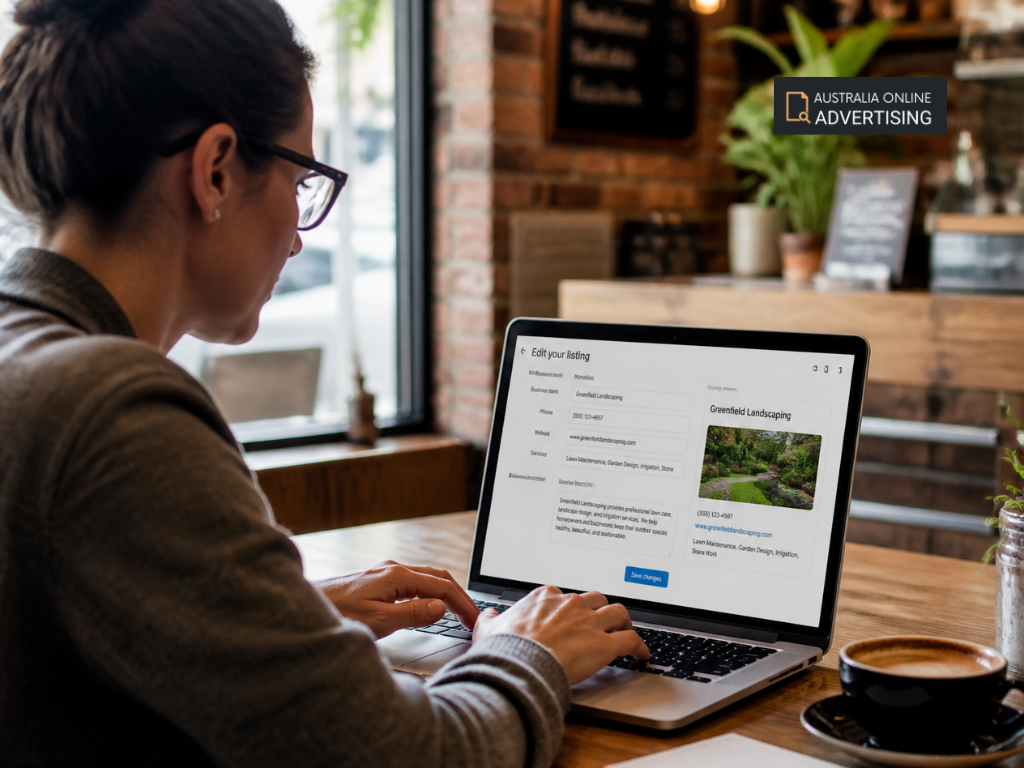
Free online advertising can be useful when it supports a clear business goal.
For Australian small businesses, the priority should be choosing relevant platforms and keeping information accurate rather than trying to appear on every available website.
A practical strategy considers how customers search, where they compare providers and what information encourages them to make contact.
Choosing the Right Free Online Advertising Options
Begin by considering where potential customers are most likely to look.
A business with an eligible local service presence may benefit from maintaining an accurate Google Business Profile.
A company seeking additional online discovery opportunities may also consider relevant business directory listings.
Organic social media content can support communication with existing and prospective customers.
However, businesses should choose these platforms based on audience relevance and the resources available to maintain them.
A free online directory may provide a straightforward way to publish essential company information.
Before submitting, check the permitted details, listing period and whether the platform suits the business category.
It is also useful to distinguish between short-term and ongoing visibility goals.
A temporary listing may suit a business exploring a particular directory.
A company seeking a lasting profile should examine whether the platform offers a longer-term option and what conditions apply.
The same thinking applies to other channels.
Rather than creating several incomplete profiles, businesses may gain more practical value from maintaining a smaller number of accurate, useful listings.
The goal is to make relevant information available where customers have a realistic opportunity to discover it.
Using Australia Online Advertising to Support Local Discovery
For businesses exploring online directory listings, Australia Online Advertising provides a platform where Australian companies can publish business information.
The directory offers a basic free listing option alongside paid packages with different inclusions.
According to its published terms, the free business listing includes basic company information and a short business description.
The free listing expires after 10 days.
This makes it a short-term option rather than a permanent business profile.
Customers looking for longer publication periods or additional listing features can review the available plans and pricing.
The paid plans offer different inclusions, which should be compared against the business’s actual requirements.
Before submitting a listing, prepare an accurate company name and a clear description of the products or services offered.
Review the current package conditions and check what information can be published.
A directory listing may provide another location where customers can learn about a company, but it should not be treated as a guarantee of search rankings, website traffic or sales.
Businesses can explore Australia Online Advertising to compare available listing options and determine whether a basic profile suits their visibility goals.
Ultimately, free online advertising works best when it helps genuine customers understand what a business offers and how to contact it.
Search engines, business directories and social media can all contribute to that process, but each serves a different purpose.
By choosing relevant platforms, maintaining accurate business information and reviewing meaningful customer activity, Australian businesses can make more informed decisions about their online presence without relying solely on paid advertising.
