

A soft toilet seat cushion can make everyday bathroom routines more comfortable by providing additional padding over a standard toilet seat. However, like other regularly used bathroom accessories, the cushioning material, protective covering and attachment components can gradually deteriorate. Knowing when to replace a worn cushion is important for maintaining comfort, hygiene and suitable seating conditions.
For Australian households, older adults and people receiving assistance with daily living activities, bathroom equipment needs to remain appropriate for regular use.
A cushion that once felt comfortable may become flattened, develop surface damage or stop fitting securely. In other situations, the product itself may remain in reasonable condition, but the user’s needs may have changed.
Understanding these differences can help you decide whether the existing cushion needs cleaning, minor maintenance or complete replacement.
How to Tell if Your Soft Toilet Seat Cushion Is Worn Out
Visible deterioration is often the first sign that a cushion needs attention.
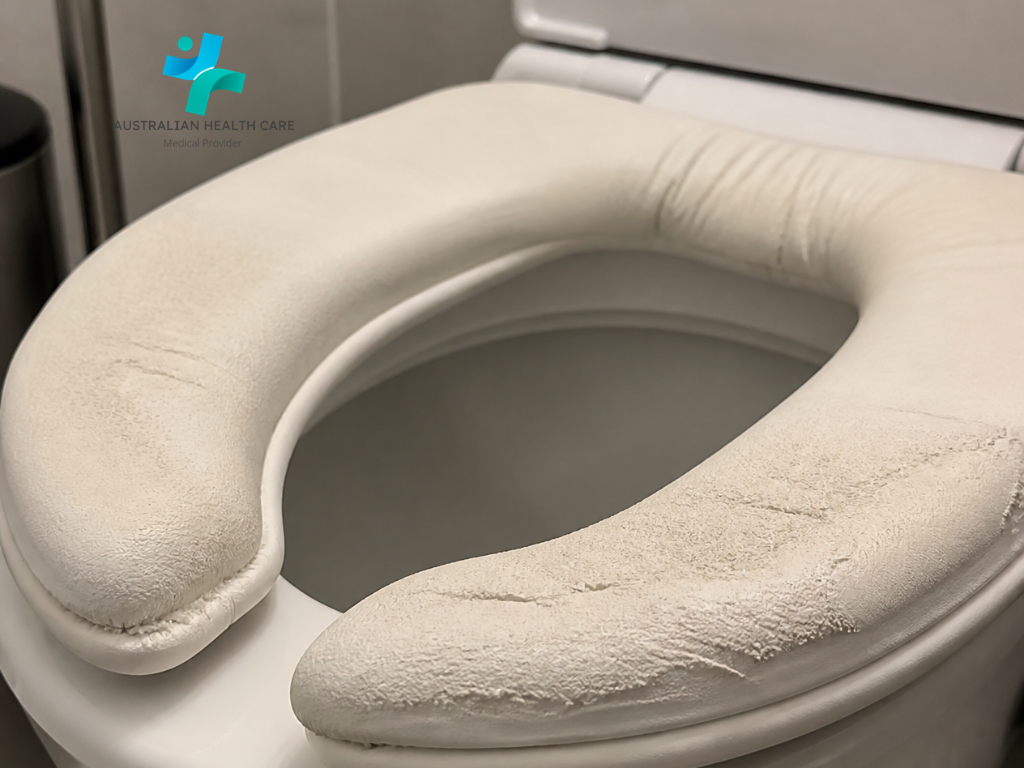
The padding may become uneven, develop permanent indentations or lose its original shape.
The outer covering may also begin cracking, peeling or splitting, particularly in areas that experience repeated contact and cleaning.
Other warning signs include damaged fastening straps, loose attachments and a cushion that moves unexpectedly during use.
Changes in comfort can also indicate that something needs checking.
For example, a cushion that previously provided even padding may begin feeling noticeably harder in certain areas.
However, discomfort does not always mean the cushion itself is responsible. Changes in skin condition, posture or mobility can also affect sitting comfort.
If the cushion is damaged, unstable or no longer functions as intended, stop using it until you can determine whether it needs replacement.
For users who depend on bathroom support equipment, professional assessment may be appropriate before choosing another product.
Why Replacement Depends on Condition, Not Just Age
There is no single replacement schedule that applies to every soft toilet seat cushion.
Different models use different padding materials, coverings and attachment systems.
The frequency of use also matters.
A cushion used several times a day may experience different wear from one installed in a guest bathroom.
Cleaning practices, moisture exposure and the user’s seating requirements can also affect the product’s condition.
Some cushions have removable covers or components that can be maintained according to the manufacturer’s instructions.
Others may require complete replacement once the padding or surface deteriorates.
Rather than relying on an assumed lifespan, check the cushion regularly and follow the manufacturer’s care and replacement recommendations.
A cushion does not need to reach a certain age before replacement becomes appropriate.
If its materials or attachments have deteriorated significantly, the condition of the product should guide the decision.
Recognising Changes in Cushioning and Comfort
The main purpose of a soft toilet seat cushion is to provide an additional layer of padding.
When that padding changes through regular use, the cushion may no longer feel or function as intended.
Understanding what normal wear looks like can help homeowners and carers recognise when replacement may be necessary.
When Flattened Padding No Longer Provides Support
Foam and other cushioning materials can change shape after repeated compression.
Initially, the cushion may return close to its original form after use.
Over time, some materials may develop permanent flattened areas.
These changes can be noticeable around the most frequently used seating sections.
Uneven cushioning may also make the surface feel less consistent.
However, greater softness is not automatically better.
A very soft cushion may compress considerably, while a firmer design may behave differently.
The appropriate choice depends on the product’s intended purpose and the user’s needs.
If the padding has become permanently distorted or no longer provides its intended level of comfort, replacement may be worth considering.
It is important not to assume that an ordinary toilet seat pillow is designed to prevent pressure injuries or treat medical conditions.
Anyone experiencing persistent pain, skin redness or pressure-related concerns should seek appropriate healthcare advice rather than relying on a different cushion alone.
Checking the Shape and Stability of a Cushioned Toilet Seat
Padding condition is only one part of assessing a cushioned toilet seat.
The cushion must also remain correctly positioned during use.
If it shifts, folds or moves away from the underlying seat, it may become uncomfortable or interfere with sitting and standing.
A removable toilet seat pillow may use straps or another attachment system to hold it in place.
These components can become stretched or damaged over time.
An integrated padded toilet seat may have different fittings and maintenance requirements.
Inspect the cushion’s shape and check whether its opening remains correctly aligned with the toilet.
A distorted opening or uneven edge may affect how the product sits.
It is also important to consider the condition of the toilet seat itself.
A damaged hinge or unstable underlying seat cannot necessarily be corrected by adding a cushion.
If the seat or cushion moves unexpectedly, the cause should be addressed before further use.
For people who need assistance with transfers, professional advice may be necessary to confirm that the seating arrangement remains suitable.
Knowing When Hygiene Becomes a Replacement Concern
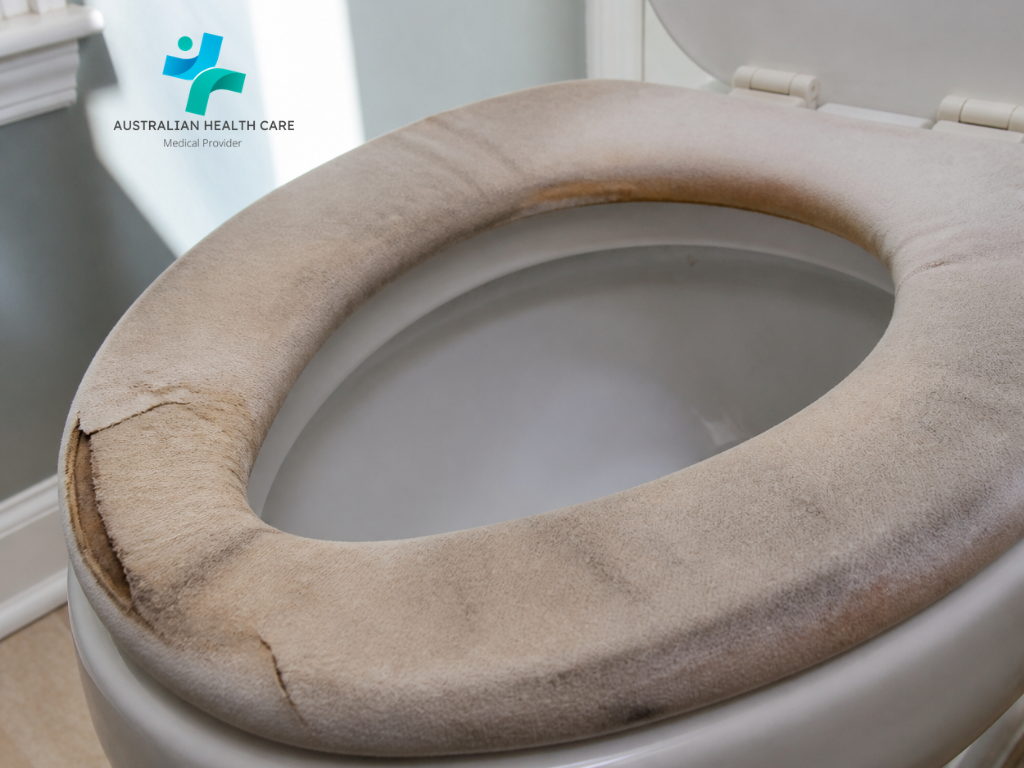
Bathroom accessories require appropriate cleaning because they are regularly exposed to moisture and everyday hygiene needs.
A soft toilet seat cushion should have surfaces that can be maintained according to the manufacturer’s care instructions.
When those surfaces become damaged, routine cleaning may no longer be sufficient.
Tears, Damaged Covers and Moisture Build-Up
The outer covering of a toilet seat cushion helps separate its internal padding from the surrounding environment.
If the covering becomes torn, cracked or split, the exposed material may be more difficult to clean.
Moisture can also become trapped in damaged sections.
This may lead to persistent odours or deterioration of the underlying material.
If a cushion remains damp after appropriate cleaning and drying, it may need closer inspection.
Visible contamination that cannot be removed using approved cleaning methods is another reason to consider replacement.
For products with removable covers, check whether a compatible replacement cover is available.
However, replacing the cover may not be sufficient if the underlying foam is damaged or contaminated.
Do not assume that every cushion is waterproof, machine washable or resistant to disinfectants.
These properties depend on the product.
Where the cushion is used by someone with additional infection control requirements, seek guidance from an appropriate healthcare professional.
Cleaning Your Soft Toilet Seat Cushion Correctly
Regular cleaning can help maintain a cushion’s condition, but the correct method depends on its construction.
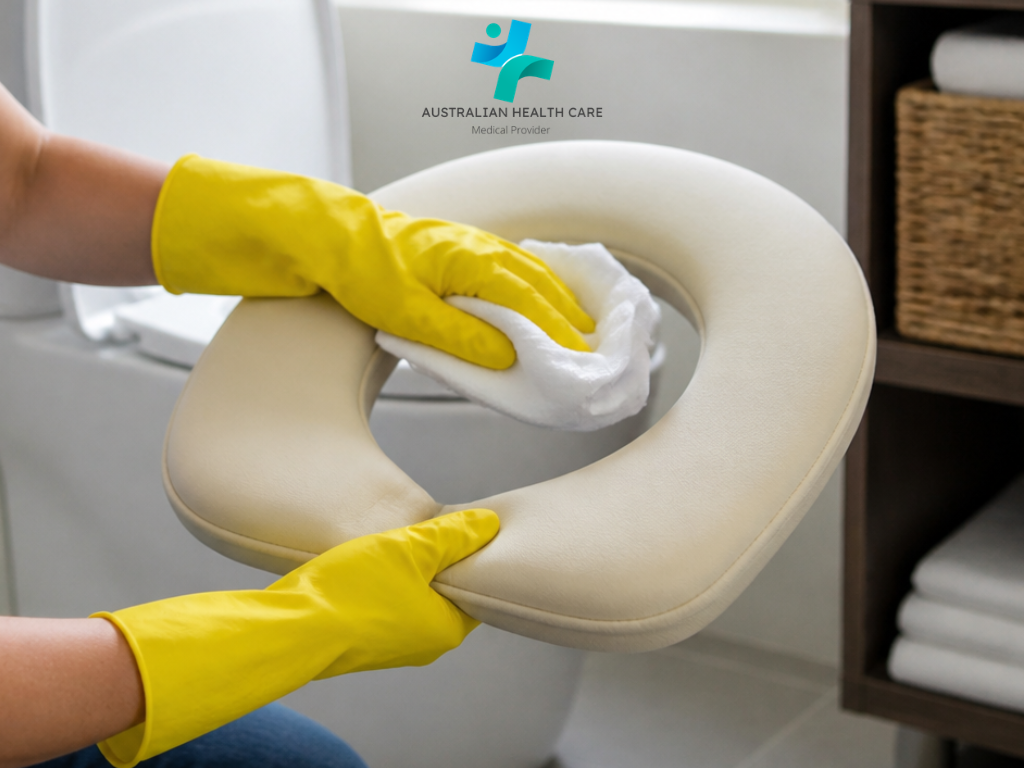
Some products may have surfaces designed for wiping with suitable cleaning products.
Others may include removable covers with separate washing instructions.
Before cleaning, read the manufacturer’s recommendations.
Avoid soaking foam, applying strong chemicals or using abrasive materials unless the instructions specifically permit those methods.
Certain cleaning products can damage coverings, adhesives or cushioning materials.
After cleaning, allow the product to dry as directed before returning it to use.
During cleaning, inspect the surface for deterioration.
Cracks, peeling, loose seams and damaged fasteners may be easier to notice when the cushion is removed from the toilet.
If the cushion is becoming difficult to clean because of permanent damage, replacing it may be more appropriate than repeatedly attempting to restore the surface.
Good hygiene involves maintaining a product that remains suitable for cleaning, not simply cleaning it more frequently.
Checking Fit, Attachments and Bathroom Safety
A soft toilet seat cushion needs to fit the existing toilet correctly.
Even a cushion in good material condition may be unsuitable if its size, shape or attachment system does not match the seat.
For Australian homeowners replacing bathroom accessories, checking compatibility is an important part of selecting a new product.
When a Soft Toilet Seat Cushion Stops Fitting Securely
A cushion that no longer stays in place should be investigated.
Loose fastening straps, damaged attachments or changes in the cushion’s shape may affect its position.
A poorly fitted cushion can also move when someone sits down, stands up or adjusts their position.
This is particularly important for people with reduced balance or mobility.
Before purchasing a replacement, examine the existing toilet seat and identify why the cushion has become unstable.
The problem may involve the cushion’s attachments, its dimensions or the underlying toilet seat.
Where the manufacturer provides approved replacement components, they may offer a suitable solution.
However, damaged attachments should not be repaired using improvised methods that could affect stability.
If the cushion cannot be fitted securely according to its instructions, it should not continue to be used.
For individuals who need assistance getting on or off the toilet, a soft cushion may not provide the support required.
A purpose-designed raised toilet seat or over-toilet aid may be more appropriate following suitable assessment.
How Toilet Seat Shape and Thickness Affect Suitability
Toilet seats vary in shape and dimensions.
Some have a more rounded design, while others have an elongated opening.
A replacement cushion must suit the actual toilet seat rather than simply appearing similar to the old product.
Check the manufacturer’s measurements and fitting instructions before ordering.
The cushion’s thickness also matters.
Additional padding can change the effective sitting height and the position of the person using the toilet.
For some individuals, a change in seating height may affect how they sit or stand.
A thicker cushion is not necessarily a safer or more suitable option.
Someone who has difficulty rising from the toilet may require a properly assessed raised toilet seat or another support aid.
These products have different purposes and features from ordinary padding.
It is also worth checking whether the cushion affects access to the toilet opening or interferes with the seat’s normal operation.
Choosing the correct dimensions and attachment method helps ensure the replacement is appropriate for its intended use.
Understanding Different Cushion Designs and Materials
Not all toilet seat cushions are constructed in the same way.
Some products use foam padding, while others incorporate different cushioning materials or integrated seat designs.
Understanding these differences can help you compare replacement options based on comfort, cleaning requirements and compatibility.
Comparing Foam, Gel and Other Toilet Seat Cushions
Foam cushions are available in different densities and constructions.
A memory foam design may respond differently to body pressure than a conventional foam cushion.
Some products incorporate gel layers or combinations of materials.
However, the presence of foam or gel does not establish that a cushion provides medical pressure management.
Suitability depends on the product’s documented purpose and the individual user’s requirements.
When comparing options, consider the cushion’s overall dimensions, material covering, attachment method and cleaning instructions.
A removable cushion toilet seat accessory may offer a different fitting arrangement from an integrated padded toilet seat.
The ease of cleaning can also vary.
Some designs have smooth protective coverings, while others use fabric or removable components.
Before choosing, consider the setting in which the product will be used and how frequently it will need cleaning.
The best replacement is not necessarily the thickest or softest cushion.
It is the one that fits correctly, can be maintained appropriately and meets the user’s comfort requirements.
Why a Toilet Seat Pillow Differs From Other Support Pillows
Customers researching cushions may come across other products with specialised shapes or openings.
However, similar-looking designs do not necessarily serve the same purpose.
A butterfly cervical pillow is generally designed around head and neck positioning.
An ear positioning pillow may include a recessed section or opening intended to accommodate the ear.
Another product described as a pillow with holes in it could have an entirely different intended use depending on its design.
These products should not be confused with a toilet seat cushion.
A toilet seat cushion is designed to fit appropriate toilet seating, while head, neck and ear positioning pillow have different fitting and support requirements.
Their materials, shapes and cleaning instructions may also differ.
Even if two products use memory foam or have an opening in the centre, that does not make them interchangeable.
For bathroom use, choose a product specifically designed and documented for compatible toilet seating.
If specialised pressure relief or positioning is required, seek healthcare advice about an appropriate product rather than substituting an unrelated cushion.
Deciding Whether to Clean, Repair or Replace
When a soft toilet seat cushion starts showing signs of wear, the next question is whether the problem can be resolved through maintenance.
Some issues may involve removable components or cleaning.
Others indicate that replacing the cushion is the more suitable option.
The decision should be based on the condition of the product and whether it can continue functioning as intended.
When Your Soft Toilet Seat Cushion Needs Replacing
A cushion may need replacement when its padding becomes permanently flattened, its covering develops significant damage or its attachment system no longer holds it securely.
Persistent contamination or moisture damage can also make replacement appropriate.
Cleaning may remove ordinary surface dirt, but it cannot necessarily restore damaged foam or repair a split protective covering.
Similarly, tightening a fastening strap will not resolve deterioration if the attachment itself is damaged.
Some manufacturers may offer compatible replacement components.
If those components are available and the repair is permitted, it may be possible to maintain the existing product.
However, do not modify load-bearing or attachment components using unsuitable materials.
If damage affects the cushion’s stability, stop using it until the issue has been addressed.
There is no benefit in keeping a deteriorated cushion simply because it is relatively new.
Equally, a cushion does not automatically require replacement because it has been used for a certain period.
The condition, manufacturer’s instructions and current suitability should guide the decision.
When to Seek Advice About Bathroom Support Equipment
Sometimes replacing a worn cushion does not address the underlying difficulty.
For example, a person may find it increasingly difficult to sit down or stand up from the toilet.
They may also experience changes in balance, strength or mobility.
In these circumstances, extra padding may not provide the assistance required.
An occupational therapist can assess the person’s toileting needs and the bathroom environment.
Depending on the assessment, suitable options may include a raised toilet seat, over-toilet frame or another bathroom support product.
These aids are designed for different purposes and should not be selected solely according to appearance.
Professional guidance is particularly important when someone has fallen or nearly fallen, requires physical assistance during transfers or has complex support requirements.
People experiencing ongoing skin problems or pressure-related discomfort should also seek appropriate healthcare advice.
A standard cushioned toilet seat should not be assumed to prevent pressure injuries or replace clinically prescribed equipment.
The goal is to identify whether the existing cushion needs replacement or whether a different type of bathroom aid would better meet the person’s needs.
Choosing a Suitable Replacement Toilet Seat Cushion
Once replacement becomes necessary, choosing another soft toilet seat cushion involves more than selecting a similar-looking product.
The new cushion should be compatible with the toilet, appropriate for the user and practical to maintain.
For Australian households and home care environments, reliable product information can help make the decision easier.
What to Check Before Buying a Soft Toilet Seat Cushion
Start by measuring the existing toilet seat and checking its shape.
Compare those measurements with the replacement cushion’s product specifications.
Check how the cushion attaches to the seat and whether the fitting method is suitable for the bathroom setup.
Cushion thickness, material construction and covering type are also worth reviewing.
A product that provides generous padding may still be unsuitable if it changes the sitting height too much or does not remain properly positioned.
Cleaning instructions are another important consideration.
A cushion used frequently should be practical to maintain according to its manufacturer’s recommendations.
Check whether the covering is removable, what cleaning methods are permitted and whether compatible parts are available.
It is also sensible to review any stated user restrictions or other product limitations.
If the cushion is intended for someone with reduced mobility, recent surgery or additional care requirements, seek appropriate professional advice before purchasing.
Choosing a replacement should be based on the user’s needs and the actual product specifications rather than general comfort claims.
Finding a Replacement That Suits Everyday Bathroom Needs
A reliable supplier should make it easier to compare product information.
Clear descriptions, dimensions, materials and care instructions help customers understand what they are purchasing.
For Australians researching bathroom comfort products, Australian Health Care offers relevant home care and bathroom medical equipment.
Its published range includes a Padded Toilet Seat Cushion made with memory foam, alongside other toileting support products.
Customers can also explore the available toilet seat risers and related bathroom products when comparing seating options.
These products have different functions, so they should not be treated as interchangeable.
Someone primarily seeking additional cushioning may have different needs from a person requiring a raised seat or support during transfers.
Before purchasing, confirm the product’s dimensions, attachment requirements, cleaning instructions and current availability.
If you are unsure about compatibility or need more information, review the relevant product details or contact the supplier for clarification.
Where the issue involves mobility, balance or specialised clinical support, professional assessment remains important.
Replacing a worn toilet seat cushion is ultimately about maintaining suitable comfort, hygiene and everyday usability.
By checking the padding, covering, attachments and overall fit, you can recognise when an existing cushion needs attention and make a more informed decision about replacing it.
A suitable replacement should fit the toilet correctly, remain secure during normal use and meet the individual’s needs without creating unnecessary complications in their bathroom routine.
