

Dementia aged care facilities should do more than provide accommodation and basic support. A dementia-friendly environment considers how a person experiences their surroundings, communicates with others, follows familiar routines and maintains as much independence and choice as possible.
For families comparing aged care for dementia patients, the most useful questions often relate to everyday life. Is the environment easy to navigate? Can residents move around safely? Are routines personalised? Do staff understand dementia and know how to respond when a person becomes confused, anxious or distressed?
Australia’s strengthened Aged Care Quality Standards place greater emphasis on person-centred care, dementia support, safe environments, meaningful activity and the rights of older people.
Dementia aged care facilities can feel easier to understand when residents are surrounded by familiar objects, routines and visual cues.
For a person living with dementia, an unfamiliar environment can sometimes make orientation more difficult. A thoughtful care setting should therefore consider more than appearance alone.
How dementia aged care facilities can support familiarity
Dementia aged care facilities can support familiarity by allowing residents to maintain elements of their previous life where practical.
Personal photographs, familiar furniture, meaningful possessions and recognisable room features can help make a new environment feel more personal.
Consistency also matters. If a person’s room and daily surroundings remain reasonably predictable, it may be easier for them to recognise where they are and understand what happens next.
Person-centred care under Australia’s current aged care standards also requires providers to understand each person’s needs, goals, preferences, culture and beliefs rather than treating everyone in the same way.
Why dementia aged care facilities should avoid unnecessary confusion
Dementia aged care facilities should be designed and organised in ways that reduce avoidable confusion.
Busy patterns, cluttered corridors, unclear room identification and frequent environmental changes may make navigation more difficult for some people living with cognitive impairment.
A simpler environment does not mean an empty or clinical one.
The aim is to make important spaces easier to recognise while still creating a comfortable and welcoming home.
Australia’s strengthened Quality Standard 4 requires residential aged care environments to be safe, supportive and suited to the needs of older people.
Make Navigation Clear and Easy to Understand
Dementia aged care facilities should help residents understand where they are and where they are going.
Clear wayfinding can support independence by making everyday destinations such as bedrooms, dining areas, lounges and outdoor spaces easier to recognise.
How dementia aged care facilities can improve wayfinding
Dementia aged care facilities may use recognisable signs, colour contrasts, familiar landmarks and clearly differentiated areas to support navigation.
For example, a resident’s bedroom may be easier to identify when it has a distinctive feature or personal item near the entrance.
Important destinations should also be reasonably visible where possible.
The purpose is not to rely on signs alone. A good layout should make movement intuitive enough that residents are not constantly dependent on staff simply to find common areas.
Why dementia aged care facilities should reduce visual complexity
Dementia aged care facilities can also consider how much visual information residents need to process.
Long identical corridors or highly complex layouts may be harder to understand than environments with clear destinations and recognisable features.
Dementia and memory care facilities should therefore be assessed by looking at how the space actually works for residents, not only whether the building looks modern.
A visually impressive home can still be difficult to navigate if residents cannot easily recognise important areas.
Support Safe Access to Outdoor Areas
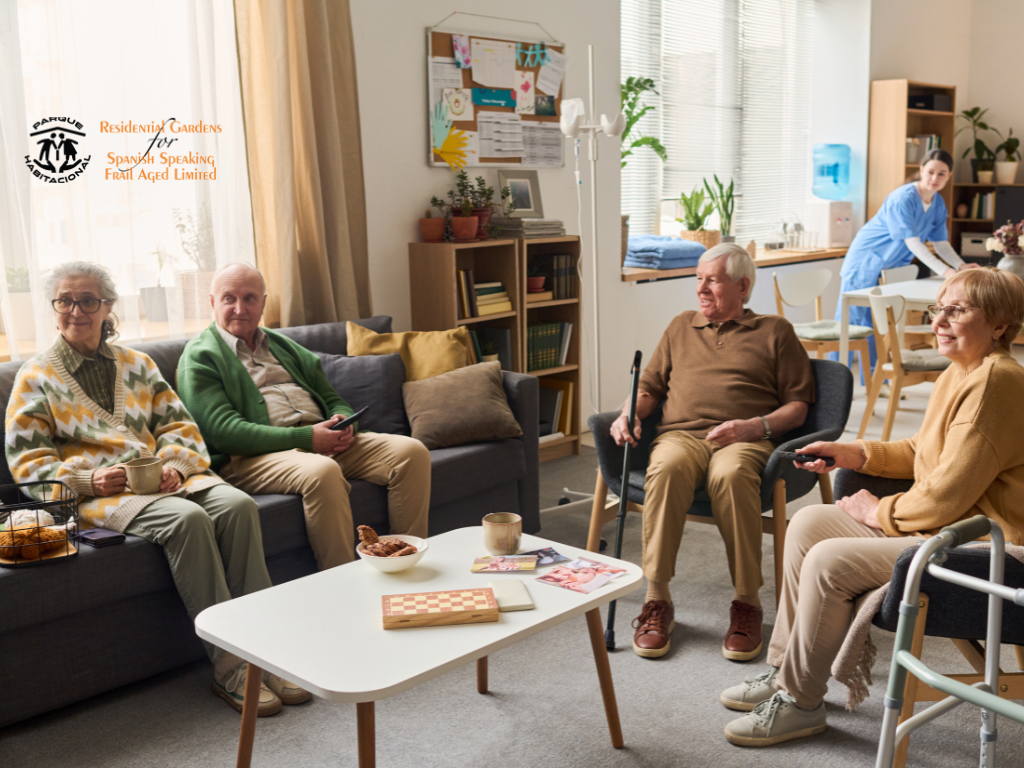
Dementia aged care facilities should consider how residents can spend time outdoors safely.
Fresh air, gardens, walking areas and comfortable outdoor spaces can provide opportunities for movement, relaxation and meaningful activity.
How dementia aged care facilities can provide outdoor freedom
Dementia aged care facilities may include secure gardens, courtyards, walking paths, seating and shaded areas where residents can spend time outside.
Outdoor spaces should be easy to reach and should suit the mobility needs of residents who use them.
A garden can also provide familiar sensory experiences through plants, sunlight, seasonal changes and everyday outdoor sounds.
For some residents, walking or spending time outside may form part of their normal routine, so access to an appropriate outdoor area can contribute to continuity in daily life.
Why dementia aged care facilities should balance safety and independence
Dementia aged care facilities need to consider safety without removing independence unnecessarily.
Australia’s strengthened aged care standards recognise choice, control, independence and dignity of risk as important rights for older people.
The strengthened standards also require providers to minimise restrictive practices. Where restrictions are used, they must be a last resort and applied in the least restrictive form for the shortest appropriate period.
This means families should ask how a home supports movement and independence rather than assuming that dementia care automatically means restricting where a resident can go.
Build Care Around Personal Routines
Dementia aged care facilities should recognise that people do not lose their individual preferences simply because they are living with dementia.
Daily habits, cultural background, food preferences, sleeping patterns, interests and relationships can remain important parts of identity.
How dementia aged care facilities can personalise daily care
Dementia aged care facilities should learn about the person’s usual routine rather than forcing every resident into exactly the same schedule.
One person may prefer an early breakfast, while another may have always started the day slowly.
Some residents may enjoy social activities, while others may prefer time alone or one-to-one interaction.
Aged care for dementia patients should therefore consider what is familiar and meaningful to the individual.
Current Australian aged care standards place the older person at the centre of care and emphasise dignity, individuality, independence, choice and control.
Why dementia aged care facilities should respect individual preferences
Dementia aged care facilities should not assume that everyone with the same diagnosis needs the same routine.
Dementia and memory care facilities should take into account the person’s history, communication style, abilities, preferences and current needs.
The strengthened standards specifically require providers caring for people living with dementia to identify and review individual strengths and skills and encourage their use in everyday activities.
This approach can help care remain centred on what a person can do, rather than focusing only on what they find difficult.
Provide Staff Who Understand Dementia Care

Dementia aged care facilities depend heavily on the people providing everyday support.
A well-designed building cannot replace staff who understand dementia, communicate patiently and recognise that changes in behaviour may have an underlying reason.
How dementia aged care facilities benefit from trained staff
Dementia aged care facilities should have staff who understand how cognitive changes can affect communication, memory, orientation and behaviour.
If a resident becomes distressed, repeatedly asks the same question or refuses assistance, an appropriate response is not simply to treat the behaviour as difficult.
Staff need to consider what the person may be communicating and whether factors such as discomfort, confusion, fear, fatigue or an unfamiliar routine may be contributing.
Australia’s strengthened standards include specific expectations for evidence-based dementia care and require providers to have systems that support people living with dementia.
Why dementia aged care facilities need consistent communication
Dementia aged care facilities also benefit from consistent communication between staff, residents, health professionals and families.
A family may know that a particular song is reassuring, that a resident prefers a certain morning routine or that a particular situation commonly causes distress.
That information can be useful when care is planned and reviewed.
The strengthened Australian standards specifically recognise supporters, health practitioners and others involved in care as potential partners in planning dementia care, in line with the older person’s wishes.
Consistency can be especially important when a person’s communication abilities change over time.
Offer Meaningful Activities and Social Connection
A dementia-friendly home combines familiar surroundings, clear navigation, personalised care and meaningful daily support.Dementia aged care facilities should provide opportunities for residents to participate in activities that have meaning to them.
Activities do not need to be complicated to be worthwhile.
How dementia aged care facilities can support engagement
Dementia aged care facilities can support engagement through activities such as music, gardening, conversation, simple household tasks, crafts, walking or other familiar interests.
What matters is whether the activity is suitable for the individual.
Some residents may enjoy organised groups, while others may respond better to quieter activities or individual interaction.
The strengthened Aged Care Quality Standards state that residents should have opportunities to do meaningful things and maintain connections with other people while living in a residential community.
Why dementia aged care facilities should adapt activities to the person
Dementia aged care facilities should avoid treating activities as a standard timetable that every resident is expected to follow.
Dementia specific aged care facilities, memory care residential homes and alzheimers nursing homes may all describe their activity programs differently, but families should look at how activities are actually adapted to the person.
Someone who enjoyed gardening throughout their life may find greater meaning in watering plants than attending a large entertainment session.
Someone who enjoyed music may respond strongly to familiar songs.
Meaningful engagement is therefore less about the number of activities advertised and more about whether residents are supported to participate in ways that suit their interests and abilities.
Look Beyond the Label When Comparing Care Homes

Dementia aged care facilities can differ considerably in environment, staff approach, routines and available support.
Families should therefore look beyond terms such as memory care or dementia-specific care and ask what those descriptions mean in practice.
How dementia aged care facilities should be assessed in person
Dementia aged care facilities are best assessed by looking at how everyday care actually feels.
When visiting aged care nursing homes, pay attention to whether residents appear to be treated respectfully, whether staff communicate calmly and whether the environment seems easy to understand.
It is also useful to ask how personalised routines are developed, how families are involved, how staff respond to distress and how the home supports residents whose needs change.
Residential Gardens may be one option to speak with when comparing local dementia care, but families should assess any provider against the individual person’s needs rather than choosing based on a service label alone.
Why dementia aged care facilities should match individual needs
Dementia aged care facilities should ultimately be chosen according to the person who will live there.
Nursing home dementia support may differ between providers, and a home that suits one resident may not be the best environment for another.
Families comparing dementia specific aged care facilities or other residential options should ask how the provider supports independence, communication, personal routines, outdoor access, meaningful activity and changing clinical needs.
Current Australian standards require clinical care to be evidence-based, person-centred, safe and coordinated, including for people with cognitive impairment.
The strongest dementia-friendly care is therefore not defined by one feature.
It comes from the combination of a supportive environment, clear navigation, personalised routines, meaningful activity, skilled staff and respect for the person’s identity and rights.
When comparing dementia aged care facilities, looking closely at these everyday details can help families understand how the home is likely to support the person now and as their needs change.
