

Sustainable veneer is increasingly relevant to Australian interior projects where designers, architects, cabinetmakers and homeowners want the warmth of real timber while also paying closer attention to sourcing, material efficiency and product documentation. From cabinetry and fitted furniture to feature walls and architectural linings, veneer can introduce natural grain and timber character without requiring every surface to be made from solid timber.
Modern interiors are also moving beyond one standard timber look. Warmer tones, visible grain, contrasting species and carefully matched veneer layouts can all influence the character of a space. The key is to choose sustainable veneer for both its appearance and its suitability for the intended application, while checking the supporting information behind any sustainability claims.
Warm timber colours can help soften contemporary interiors that contain concrete, stone, metal, glass and painted surfaces. Sustainable veneer gives designers a way to introduce this natural warmth across larger surfaces while maintaining a consistent architectural finish.
Colour selection should still be considered in context. The surrounding flooring, cabinetry, wall colours, lighting and furniture can all affect how a veneer looks once installed.
How sustainable veneer supports warmer, more natural interiors
Sustainable veneer can bring natural colour and grain into an interior without requiring every component to be made from thick solid timber.
This makes veneer useful across cabinet doors, wall panels, shelving, furniture and other joinery where a timber appearance is desired.
Warmer brown, honey and oak-inspired finishes can create a softer visual contrast with neutral materials. Because veneer is a real timber surface, natural variations in grain and tone can also give the finished project more character.
That variation should be considered part of the design rather than treated as a defect.
Why American oak veneer and similar tones remain popular choices
American oak veneer is often considered where a light-to-medium timber tone and recognisable grain pattern suit the interior concept.
It can work with neutral palettes, stone surfaces and darker contrasting finishes, making it adaptable across residential and commercial projects.
When selecting sustainable veneer, however, species and colour should not be the only considerations. Buyers should also review sourcing information, substrate options, finish requirements and whether the veneer has the documentation needed for the project.
Physical samples are particularly useful because timber colour and grain can appear different under changing light conditions.
Let Natural Grain Become Part of the Design
Natural grain is one of the qualities that separates timber veneer from many uniform decorative surfaces.
Sustainable veneer allows designers to use grain direction, pattern and variation as deliberate design elements rather than simply choosing a timber colour.
How sustainable veneer highlights visible grain and timber character
Sustainable veneer can be selected and laid out so that the grain becomes an important part of the finished surface.
Vertical grain may create a sense of height on cabinetry or wall linings, while horizontal grain can visually lengthen a surface. Matching neighbouring sheets can also influence whether the finished result appears highly consistent or intentionally varied.
This is particularly important across large joinery runs, reception counters and feature walls where several veneer leaves may be visible at once.
Planning the grain before fabrication can help create a more coherent finished appearance.
Why burl veneer and distinctive grain patterns create visual interest
Burl veneer can offer a much more expressive appearance than straight-grained timber because of its irregular figure and detailed natural pattern.
It may be used on smaller feature areas, furniture or statement joinery where a stronger decorative effect is appropriate.
When burl veneer is considered as part of a sustainable veneer specification, the same sourcing and documentation questions still apply.
Distinctive grain does not automatically make one product more sustainable than another. Its environmental credentials should be supported by relevant product and sourcing information rather than inferred from its natural appearance.
Use Veneer to Add Texture Without Overwhelming a Space
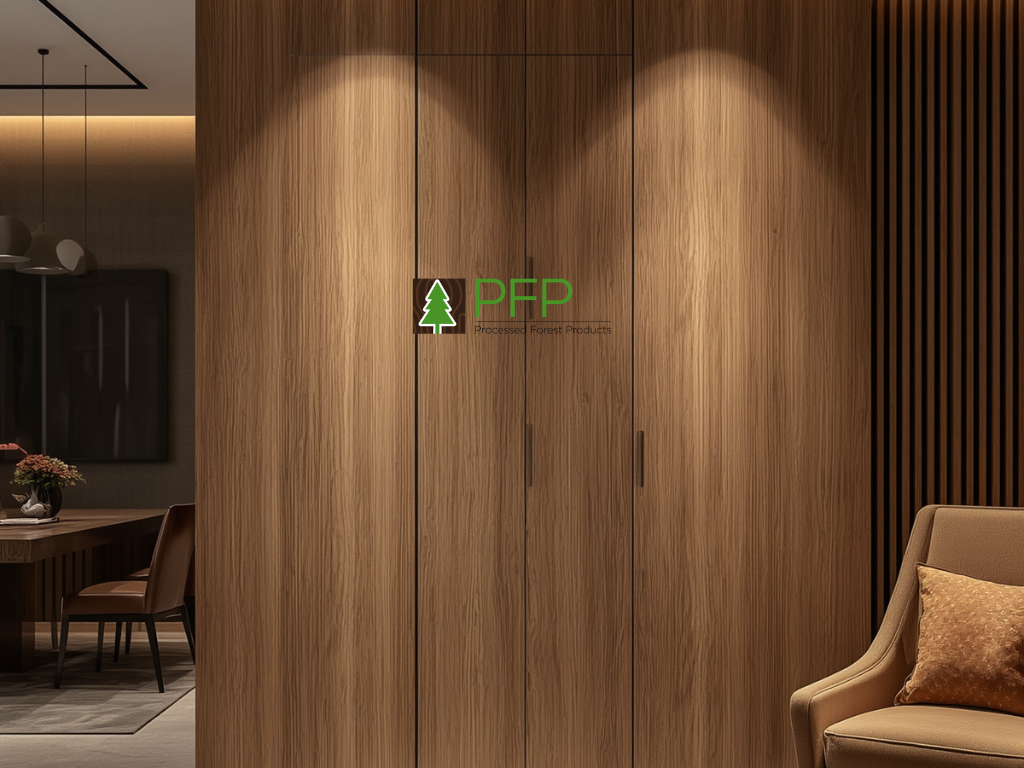
Not every interior needs large areas of timber.
Sustainable veneer can be used selectively to introduce texture and visual depth while leaving other materials to provide contrast.
This approach can be particularly effective in contemporary spaces where a restrained palette is preferred.
How sustainable veneer can introduce texture across modern interiors
Sustainable veneer adds texture primarily through grain, colour variation and the way light interacts with the timber surface.
A smooth veneer can still have strong visual depth because the grain creates subtle movement across doors, panels and furniture.
This allows timber to become part of the material palette without requiring heavily textured surfaces.
For larger areas, designers may choose quieter grain patterns. For smaller features, stronger figure or contrast can be used to create a focal point.
Where wenge veneer and anegre timber can suit contrasting finishes
Wenge veneer is known for its darker appearance and can provide strong contrast against lighter stone, pale cabinetry or neutral walls.
Anegre timber, by comparison, can offer a lighter or warmer appearance depending on the veneer and finish selected.
These species can be useful when a wood veneer design requires contrast rather than a single timber tone throughout the project.
When selecting sustainable veneer, it is important to consider whether the chosen species is available with appropriate sourcing information and whether the colour will remain balanced with the rest of the material palette.
Bring Timber Finishes Into Contemporary Cabinetry
Cabinetry is one of the most practical applications for sustainable veneer because it allows real timber character to be introduced across doors, drawer fronts, panels and integrated joinery.
The final result depends not only on the veneer species but also on how the sheets are matched, edged and finished.
How sustainable veneer works across kitchens and built-in joinery
Sustainable veneer can be applied to suitable panel substrates to create cabinetry with a natural timber face.
It may be used across kitchen cabinetry, wardrobes, entertainment units, office joinery and built-in storage.
The substrate, panel thickness and finishing system should be selected to suit the intended application.
Areas exposed to frequent handling, cleaning or changing moisture levels may require different finishing considerations from low-touch decorative panels.
A well-planned specification should therefore consider the complete panel rather than focusing only on the veneer surface.
Using wood veneer design to create cleaner, more cohesive cabinetry
Wood veneer design can make cabinetry feel more integrated when grain direction and sheet matching are planned before fabrication.
For example, continuous grain across adjacent doors can create a more unified appearance, while deliberately changing the grain direction can help define separate areas.
Sustainable veneer can also be coordinated with solid timber edging, painted joinery or laminate surfaces depending on the project.
The best results usually come from deciding these details before cutting begins so the fabricator can plan how each panel will be used.
Extend Veneer Across Furniture and Feature Pieces
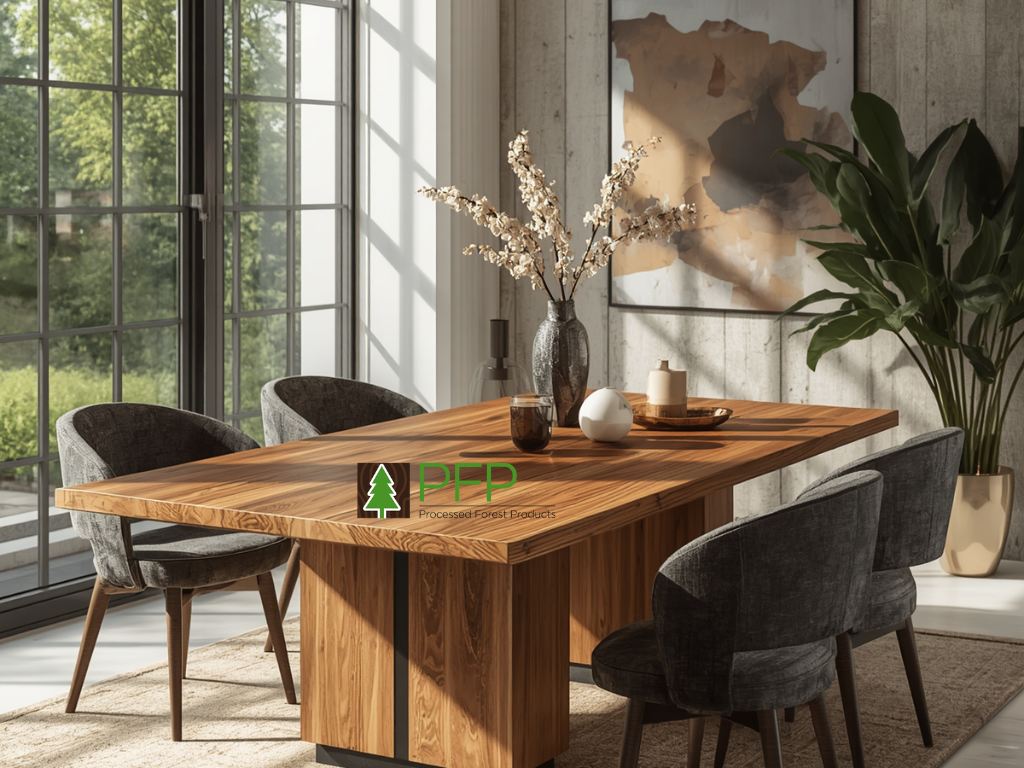
Sustainable veneer is not limited to fixed joinery.
It can also be incorporated into furniture and smaller interior elements where a consistent timber appearance is desired without using solid timber throughout every component.
How sustainable veneer can shape custom furniture and interior details
Sustainable veneer can be used on tables, desks, shelving, storage units and feature furniture where designers want to coordinate the timber finish with surrounding cabinetry or wall panels.
This can help create visual continuity across a room without making every element identical.
The suitability of the veneer should still be considered alongside the substrate and the way the furniture will be used.
A decorative wall panel and a frequently used tabletop may require different surface finishes even if they use the same veneer species.
Choosing sustainable veneers for tables, shelving and fitted furniture
Sustainable veneers should be selected according to both appearance and practical requirements.
For furniture, the finish needs to suit the level of handling, cleaning and wear expected in daily use.
For shelving or fitted units, edge treatment and panel construction may be just as important as the face veneer.
Matching the same sustainable veneer across furniture and joinery can create a cohesive look, but variation can also be effective when the design deliberately combines different timber tones.
The choice should be driven by the overall interior concept rather than by using one species everywhere.
Create Feature Walls and Architectural Linings
Large wall surfaces provide an opportunity to make timber a stronger architectural element.
Sustainable veneer can be used across wall linings and panels to introduce warmth, grain and continuity across spaces that may otherwise feel dominated by harder finishes.
How sustainable veneer can be used across wall linings and panels
Sustainable veneer can be applied to wall panels used in reception areas, meeting rooms, hospitality interiors, corridors and residential living spaces.
Large-scale applications require careful attention to panel joints, grain direction and sheet matching because inconsistencies become more visible over a broader surface.
Panel dimensions and access requirements should also be considered before installation.
Where walls incorporate doors, lighting, services or other architectural elements, the veneer layout should be coordinated so that the finished surface remains visually balanced.
Balancing timber colour, grain direction and surrounding materials
The success of a sustainable veneer wall depends on how it interacts with the rest of the room.
A highly figured veneer may become the dominant feature, while a quieter grain can act as a warm background material.
Designers should consider how the veneer works with flooring, furniture, stone, paint and metal finishes.
Lighting also matters because natural and artificial light can change the perceived colour and contrast of timber.
Reviewing samples within the intended space can therefore be more useful than choosing a veneer from an isolated image.
Check Sourcing and Specification Before Choosing
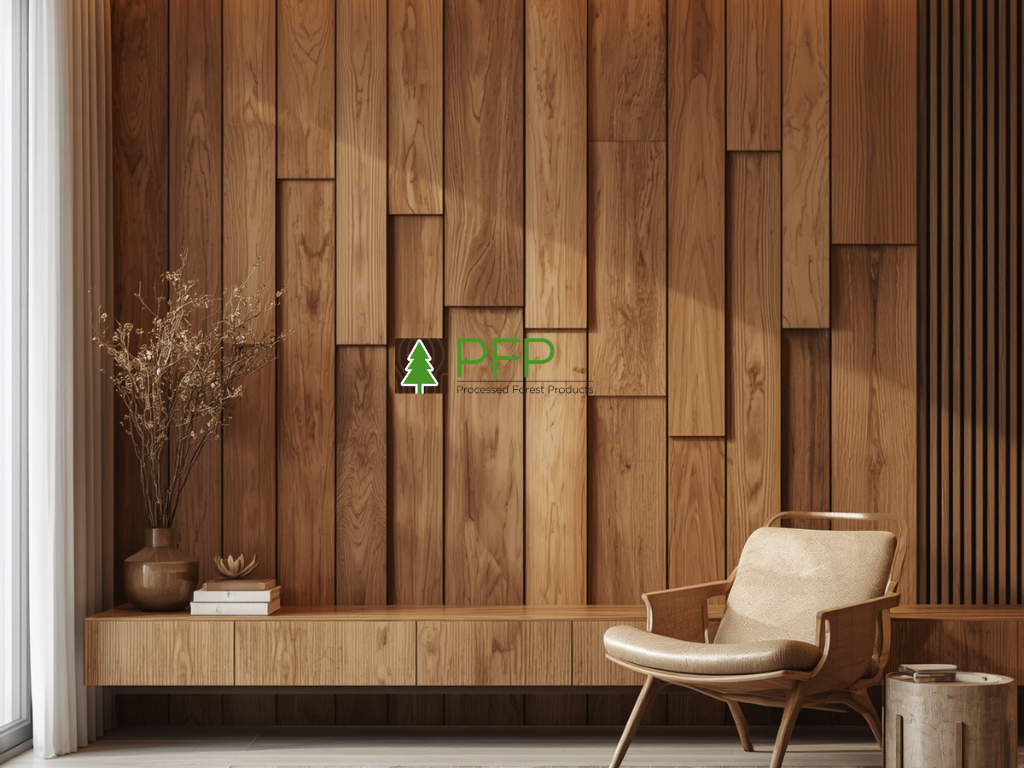
Appearance is important, but a sustainable veneer specification should also consider where the timber comes from, what supporting documentation is available and how the complete panel is constructed.
This is the stage where working with a knowledgeable supplier can help prevent assumptions being made based only on product names or visual appeal.
How sustainable veneer should be assessed beyond appearance alone
Sustainable veneer should not be described as environmentally responsible simply because it uses a thin layer of real timber.
Buyers should ask about the timber source, relevant certification, substrate, adhesives, finishes and available product documentation.
The intended application also matters. A product that performs well and remains suitable for a long period may be preferable to one that needs early replacement, but durability claims should still be based on the actual product specification.
Forest Products can assist customers comparing veneer and panel options by helping them review available species, finishes, panel construction and supporting product information for the intended project.
Why FSC certified veneer and supporting product information matter
FSC certified veneer can provide documented information about responsible sourcing where the certification applies to the specific product and supply chain.
However, certification should always be checked rather than assumed from a general product description.
When comparing sustainable veneers, ask whether certification documentation is available for the exact material being supplied and whether the substrate or other components have separate environmental information.
A complete specification should bring together appearance, sourcing, construction and suitability for use.
For Australian interior projects, sustainable veneer can provide a flexible way to introduce natural timber character across cabinetry, furniture and architectural linings. The best choice is one that suits the design, performs appropriately for the application and is supported by clear product information.
Forest Products can help customers compare veneer species, decorative finishes and panel options for commercial and residential interiors, making it easier to select materials that align with both the visual direction and practical requirements of the project.
