

Sustainable veneer can be an efficient way to achieve the appearance and character of natural timber while using a comparatively thin layer of decorative wood over a suitable substrate. Instead of making an entire panel, door or piece of joinery from the decorative species, timber veneer allows the visible grain and colour of that timber to be spread across a larger surface area.
That does not mean veneer is automatically the more sustainable choice in every project. Where the timber comes from, how it is processed, the substrate it is bonded to, how efficiently panels are designed and fabricated, and how long the finished product remains in service all contribute to the overall environmental picture.
For architects, interior designers, joiners and builders, the useful question is therefore not simply whether veneer uses less wood than solid timber. It is how sustainable veneer can use valuable decorative timber efficiently while still meeting the appearance, performance and sourcing requirements of the project.
One of the main material advantages of sustainable veneer is that the decorative timber is used as a thin surface rather than as the full thickness of the finished component.
This means a log selected for its grain, colour or figure can potentially provide decorative surfaces across a much larger area than if the same timber were cut entirely into solid boards.
Thin Timber Leaves Can Cover a Larger Surface
Timber veneer is produced by cutting or slicing timber into thin leaves. These leaves can then be joined and pressed onto a suitable substrate to create panels for cabinetry, furniture, wall linings and other interior applications.
Because only the visible face requires the selected decorative species, considerably less of that species is required per square metre of finished surface than would be needed for an equivalent solid timber panel.
This can be particularly useful where a project calls for a consistent timber appearance across a large area.
For example, a wood veneer design might extend the same species across wall panels, doors, cabinetry and furniture without requiring all of those elements to be manufactured from solid sections of the decorative timber.
This is one reason sustainable veneer can be attractive when the objective is to make efficient use of natural timber while retaining a genuine timber surface.
Resource Efficiency Involves More Than Using a Thin Face
Thickness alone does not determine whether a material is sustainable.
A veneer may use less decorative timber, but the finished panel also includes a substrate, adhesive, finishing system and manufacturing process.
For sustainable veneer, those elements should be considered together.
The origin of the timber is particularly important. A thin veneer produced from poorly documented timber should not automatically be considered a responsible choice simply because less wood was used.
Likewise, poorly planned fabrication can create unnecessary offcuts even when veneer is being used.
The strongest sustainability argument therefore comes from combining efficient timber use with responsible sourcing, appropriate substrates, careful manufacturing and a design intended to remain useful for a long time.
Sustainable Veneer and Solid Timber Use Wood Differently
Comparing sustainable veneer with solid timber is not simply a question of deciding which material is better.
They use timber in fundamentally different ways and can suit different types of construction.
Solid Timber Uses More of the Species Through the Component
A solid timber component uses the selected timber through its full thickness.
This can be valuable where structural strength, exposed edges, deep profiling or the ability to repeatedly sand and refinish the surface is important.
However, it also means more of the particular timber species is required to manufacture each component.
If a large wall panel, cabinet door or decorative surface were manufactured entirely from solid timber, significantly more of the feature species would be required than when that species is used only as the decorative veneer face.
Sustainable veneer provides another way to use natural timber where the main requirement is its visual character rather than solid construction throughout the component.
The choice should therefore relate to the purpose of the element, not simply to appearance.
Veneer Creates a Natural Timber Surface With Less Feature Timber
A veneered panel normally combines a natural timber surface with another material underneath.
People sometimes use the term veneer laminate when describing these products, although natural timber veneer should not automatically be confused with decorative plastic laminate. A genuine timber veneer surface is made from real timber.
Using a substrate allows the decorative species to be concentrated where it is visible.
This can make veneer particularly practical for large areas of cabinetry, commercial joinery, furniture and architectural panelling.
A sustainable veneer approach can therefore help designers achieve an authentic timber finish without using solid sections of the same species throughout every panel.
The benefit becomes especially relevant when many square metres of matching timber appearance are required.
Timber Species Influence How Sustainable Veneer Uses Resources
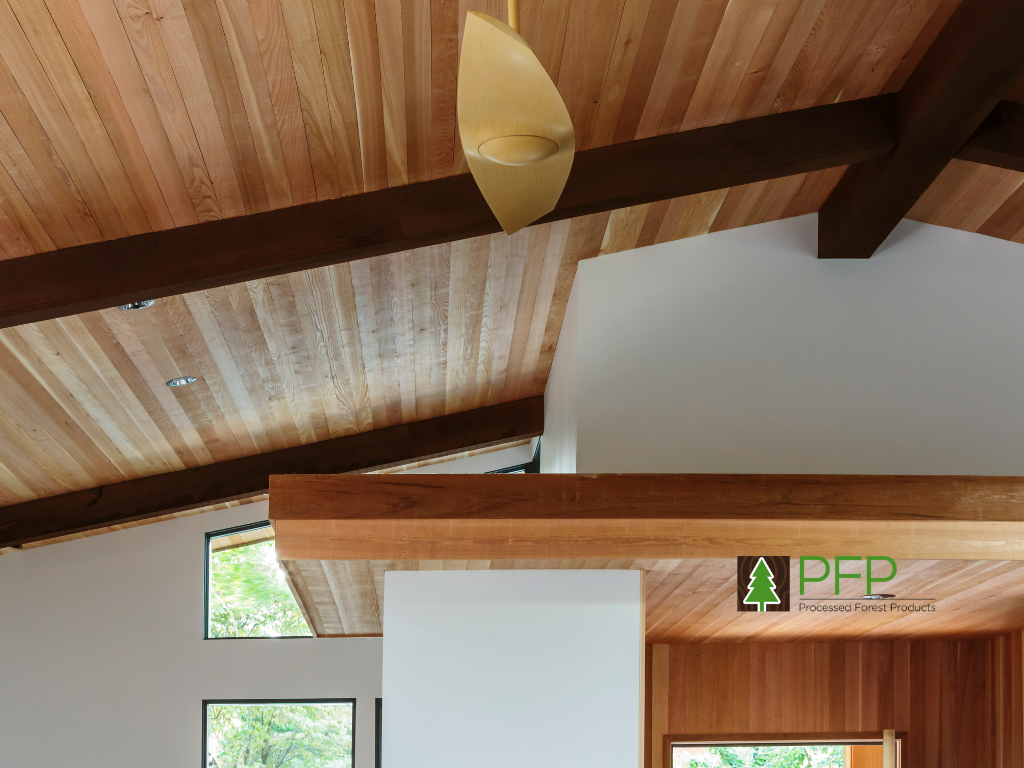
The material-efficiency advantage of sustainable veneer becomes particularly easy to understand when considering individual timber species.
Some projects use relatively consistent straight-grained species, while others call for highly figured or visually distinctive timber.
American Oak Veneer Can Extend One Timber Look Across a Project
American oak veneer is commonly specified where designers want a recognisable natural grain that can be carried across cabinetry, panels, doors or furniture.
Using veneer allows that visual language to appear across numerous surfaces without making each element entirely from solid American oak.
It can also provide more control over grain direction and matching.
A designer may want adjacent panels to follow a coordinated grain pattern rather than simply accepting the random variation that can occur when separate solid boards are assembled.
When sustainable veneer is properly planned, the decorative timber becomes part of both the material strategy and the design strategy.
That can help a project use timber where it provides the greatest visible impact instead of using the same species throughout portions of a panel that will never be seen.
Burl and Wenge Veneer Can Be Used Selectively for Visual Impact
Highly distinctive timbers can make the resource-efficiency argument even more relevant.
A burl veneer is selected primarily for its unusual figure and visual character. Wenge veneer may be chosen for its darker colouring and recognisable grain.
When these materials are being used for their appearance, veneer allows them to be applied selectively to feature surfaces.
A reception desk, wall panel, joinery face or furniture element can gain the visual character of the timber without requiring the entire object to be made from that species.
This does not mean every rare or distinctive species automatically becomes sustainable when converted into veneer.
Responsible sourcing still matters.
However, sustainable veneer can provide a way to use a selected decorative timber more efficiently once its source and suitability have been established.
Certification Strengthens the Case for Sustainable Veneer
Using less decorative wood is only one part of selecting sustainable veneer.
For Australian commercial interiors and specification projects, documentation can be just as important as the physical amount of material used.
Sustainable Veneer Should Be Supported by Sourcing Information
Terms such as sustainable, responsible and environmentally friendly should not be accepted without evidence.
Project teams should ask where the timber was sourced, whether certification is available and whether the supplier can provide relevant Chain of Custody documentation for the product being specified.
This becomes especially important on projects with formal environmental requirements.
Sustainable veneers sourced through recognised certification systems can give architects, designers and procurement teams a clearer basis for assessing responsible forest sourcing.
Certification does not make every design decision sustainable on its own, but it provides useful evidence about the timber supply chain.
FSC Certified Veneer Can Support Responsible Sourcing Requirements
FSC certified veneer may be specified where a project requires timber sourced through the Forest Stewardship Council certification system.
The important point is to verify that the supplier’s current certification and product scope apply to the veneer being purchased.
A certification logo alone should not replace checking the actual documentation.
For sustainable veneer projects, designers may need to record supplier details, certification information, species and other product data as part of the project specification or environmental submission.
This is one reason discussions about timber efficiency should not stop at how many veneer leaves can be obtained from a log.
Using timber efficiently is valuable, but being able to demonstrate where that timber came from strengthens the specification considerably.
The Substrate Is Part of a Sustainable Veneer Panel
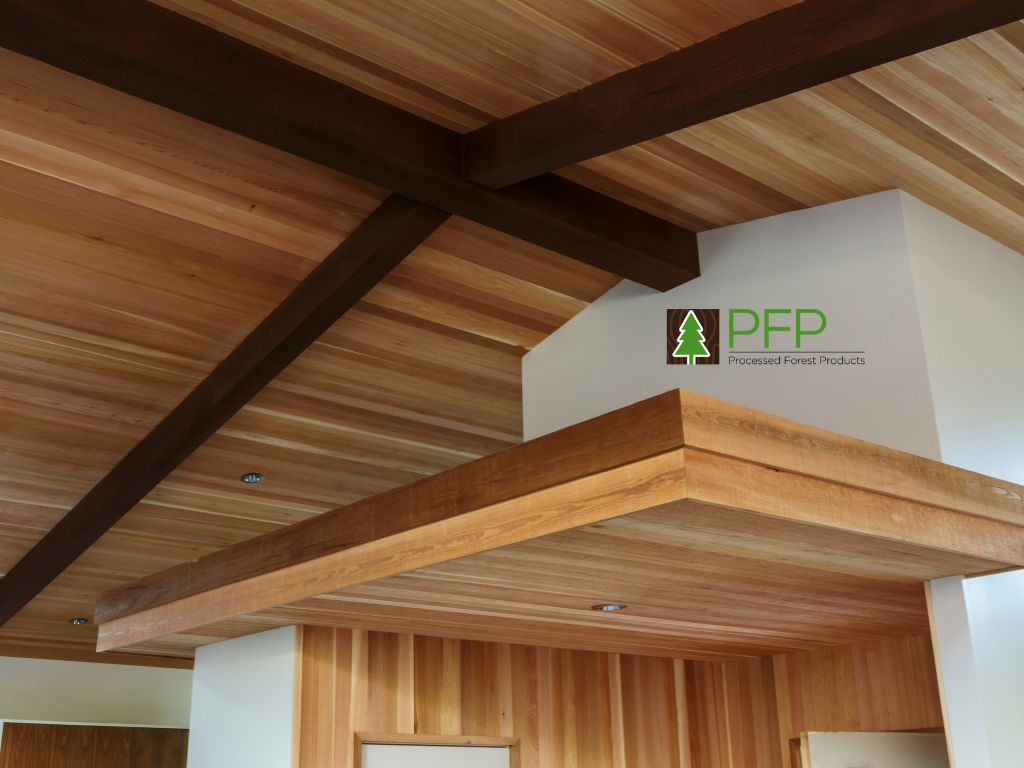
Sustainable veneer does not normally function as a finished architectural panel by itself.
The timber leaf is typically pressed onto a substrate that provides the thickness, dimensional form and physical properties required for the application.
That substrate should therefore be considered when comparing veneer with solid timber.
Veneer Can Be Applied to Different Panel Materials
Depending on the application and manufacturing requirements, timber veneer may be applied to substrates such as MDF, particleboard or plywood.
Each substrate has different properties.
The appropriate choice can depend on panel dimensions, edge treatments, machining, installation conditions, structural requirements and the relevant project specification.
This means describing a veneered panel simply as sustainable veneer does not provide enough information to understand the whole product.
Two panels using the same decorative veneer could have different substrates and therefore different technical and environmental characteristics.
The complete construction needs to be assessed.
Assess the Whole Panel Rather Than Only the Timber Face
A useful sustainable veneer specification should identify more than the visible species.
The substrate, adhesives, veneer matching method, panel thickness, finish and intended environment may all be relevant.
For projects with formal sustainability requirements, supporting environmental or certification documentation for the substrate may also need to be considered.
This whole-product approach prevents the sustainability discussion from becoming overly simplistic.
Veneer can use the decorative timber efficiently, but that advantage should be assessed alongside the materials required to create the finished panel.
It also helps architects and joiners choose a construction that is appropriate for the application rather than choosing materials based only on appearance.
Good Wood Veneer Design Can Reduce Avoidable Material Waste
The efficiency of sustainable veneer is influenced by design decisions long before the finished panels reach the site.
Panel dimensions, grain direction, matching style and veneer leaf availability can all affect how efficiently material is used.
Plan Panel Sizes and Matching Before Fabrication
Wood veneer design often relies on controlling how adjacent leaves relate to one another.
Depending on the intended appearance, veneer leaves can be arranged to create different matching effects across a panel or group of panels.
This means designers should ideally consider final panel dimensions, orientation and grain direction early in the project.
If these decisions are delayed until fabrication, opportunities to use available leaves efficiently may be reduced.
Planning can also help identify whether the chosen species and veneer format are appropriate for the size of the installation.
For sustainable veneer, this connection between design and fabrication matters because resource efficiency is not achieved simply by specifying veneer. The material still needs to be planned carefully.
Use Decorative Timber Where It Creates the Most Value
Not every surface of an interior element needs the same decorative treatment.
A feature wall, cabinet face or reception desk may deserve a premium veneer, while hidden or secondary surfaces may have completely different requirements.
This allows timber to be concentrated in areas where its natural grain and colour contribute most strongly to the design.
Forest Products can be considered when discussing veneer species, matching, panel requirements and fabrication planning for architectural or joinery projects. Providing panel dimensions, intended grain direction, substrate requirements and the desired visual result early in the process can help determine how the veneer should be prepared.
For projects seeking sustainable veneer, it is also worth discussing the available certification and sourcing documentation at the specification stage rather than trying to obtain it after materials have already been selected.
Sustainable Veneer and Solid Timber Should Be Chosen for the Right Application
Sustainable veneer can use decorative timber very efficiently, but that does not make solid timber unnecessary.
Both materials have legitimate uses, and the better choice depends on the performance, construction and appearance required.
Compare Performance and Material Use Together
Solid timber may be preferable where the design depends on thick exposed edges, deep shaping, structural timber sections or repeated refinishing.
Veneer can be more practical where the main objective is to create a consistent natural timber surface across panels and joinery.
A sustainable veneer specification therefore starts by asking what the material needs to do.
If the visible timber surface provides the required appearance while an appropriate substrate provides the panel structure, veneer can reduce the amount of feature timber needed.
If the design genuinely requires solid material throughout the component, replacing it with veneer simply to reduce timber use may not provide the right technical result.
Material efficiency is most useful when it supports rather than compromises the intended application.
Choose Sustainable Veneer Using Evidence, Not Assumptions
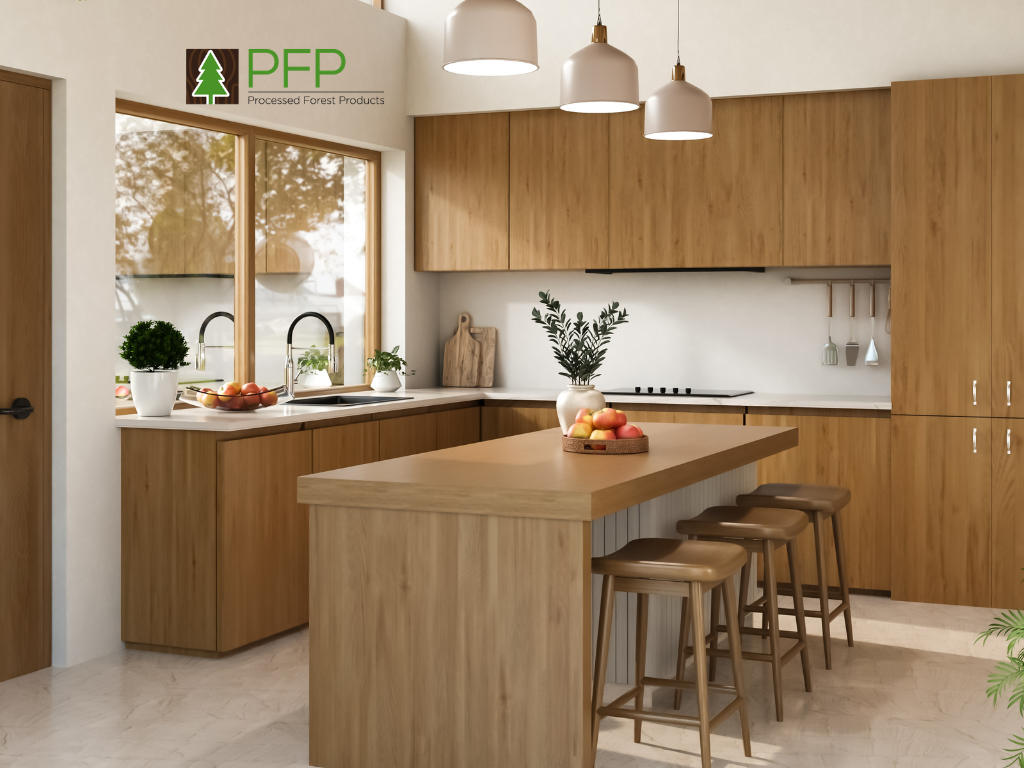
So, does timber veneer use less wood than solid timber?
When comparing the quantity of decorative timber required to cover the same visible surface area, veneer generally allows a log to be spread across substantially more surface because it is used in thin leaves rather than full-thickness sections.
That gives sustainable veneer an important resource-efficiency advantage.
However, the complete sustainability decision still depends on the source of the timber, certification where required, substrate selection, adhesives, manufacturing, material yield and how long the finished product remains useful.
American oak veneer, burl veneer, wenge veneer and other species can all be used efficiently through veneer construction, but the environmental case should be supported by appropriate sourcing information rather than assumed from the product format alone.
For Australian architects, designers and joiners, the strongest approach is to assess the whole panel system and the whole project.
When responsibly sourced timber, appropriate substrates and careful wood veneer design are considered together, sustainable veneer can provide a practical way to achieve the character of natural timber while making more efficient use of the decorative resource.
