

A tradesman trailer should make tools easier to organise, protect valuable equipment and reduce the time spent loading and unloading at every job. However, those benefits depend on choosing a layout that reflects the way the trailer will actually be used.
An open flat-top trailer can provide flexible loading and clear access to machinery or materials. An enclosed trailer can offer more secure and weather-protected storage. A hybrid design may combine open carrying space with lockable compartments, but every added feature affects weight, payload, price and towing requirements.
The current Australian construction market keeps these decisions relevant. Total construction work reached $83.4 billion in the March 2026 quarter, including $44.7 billion in building work and $38.7 billion in engineering construction. This active environment creates an ongoing need for practical ways to transport tools, machinery and materials between worksites.
For anyone comparing custom tradesman trailers, the best starting point is not a photograph or a list of accessories. It is a clear understanding of the load, daily workflow and tow vehicle.
List the tools, machinery and materials you carry
Begin by recording everything the trailer must transport on an ordinary working day.
A carpenter may need secure storage for power tools, saws, levels, fixings and long materials. An electrician may carry cable, ladders, test equipment and small components that require organised compartments. A landscaper may need space for mowers, blowers, fuel containers and loose materials.
Measure the largest items and estimate their weight. Include permanent equipment, toolboxes, shelving, spare wheels, ramps and anything that may be added later. These items all contribute to the trailer’s tare and reduce the available payload.
The design should also reflect how the load changes from one job to another. A trailer built only around the current tool collection may become unsuitable when the business adds a larger machine or takes on different work.
Separate equipment into items that need weather protection, items requiring secure compartments and materials that are easier to load from an open side or rear. This will help determine whether a custom flat top trailer, enclosed body or combined layout is more practical.
Map how equipment moves in and out each day
The trailer should support the order in which tools are used.
Frequently used equipment should be accessible without unloading several other items. If a toolbox is needed at every job, it should not be positioned behind machinery that is only removed occasionally.
Consider where the operator will stand when opening doors, pulling out drawers or moving equipment down a ramp. A door that appears convenient on a drawing may become difficult to use when the trailer is parked beside another vehicle, fence or building.
Side access can improve organisation in a long enclosed trailer. Rear access may be more practical for machinery, while front compartments can hold smaller items that need regular access.
Loading and unloading should also be considered together. Equipment that can be loaded easily may still be difficult to remove if other tools block the exit.
Tailored trailers provide the greatest value when the layout follows this real working sequence rather than simply filling every available wall with shelves.
Compare Flat-Top and Enclosed Trailer Designs
A flat-top trailer provides an open deck without the fixed sides and roof of an enclosed body.
This can be useful for carrying machinery, pallets, building materials, fabricated components and loads that vary in size. Open side access may allow equipment to be loaded by forklift or crane where suitable lifting arrangements are available.
A custom flat top trailer may also suit businesses that need several restraint positions rather than permanent internal compartments. Removable racks, headboards, toolboxes or side structures can sometimes be added according to the load.
However, an open trailer provides less protection from weather and unauthorised access. Tools and materials normally need suitable covers, restraint and removal when the trailer is left unattended.
The open design can also expose the load to dust, rain, sunlight and road debris. This may be acceptable for durable equipment but unsuitable for electrical tools, sensitive instruments or materials that must remain dry.
A flat-top design works best when loading flexibility matters more than enclosed storage and when the operator has a clear plan for securing and protecting every load.
When an enclosed trailer offers better protection
Custom enclosed trailers can provide lockable, weather-protected storage for tools and equipment.
An enclosed body allows the interior to be organised with shelving, drawers, racks and compartments. It may also let a tradesperson keep commonly used tools in the trailer between jobs rather than unloading them every evening.
Security is an important advantage, but an enclosed body should not be treated as completely theft-proof. Door construction, hinges, locks, internal barriers, parking location and monitoring all affect the level of protection.
The enclosed structure also adds weight. Roof framing, walls, doors, shelves and internal fittings reduce the payload available for tools and materials. The design therefore needs enough capacity without exceeding the tow vehicle or trailer limits.
Internal height should be considered carefully. More headroom can improve access, but it increases surface area, weight and wind resistance.
An enclosed design may suit tradespeople who carry valuable equipment, work in changing weather or need a consistent mobile storage system. It may be less suitable when the work regularly involves oversized materials or forklift loading from several sides.
A hybrid design can provide an alternative by combining an open deck with one or more secure tool compartments. The balance should be based on the actual load rather than appearance alone.
Match Trailer Size and Payload to the Tow Vehicle
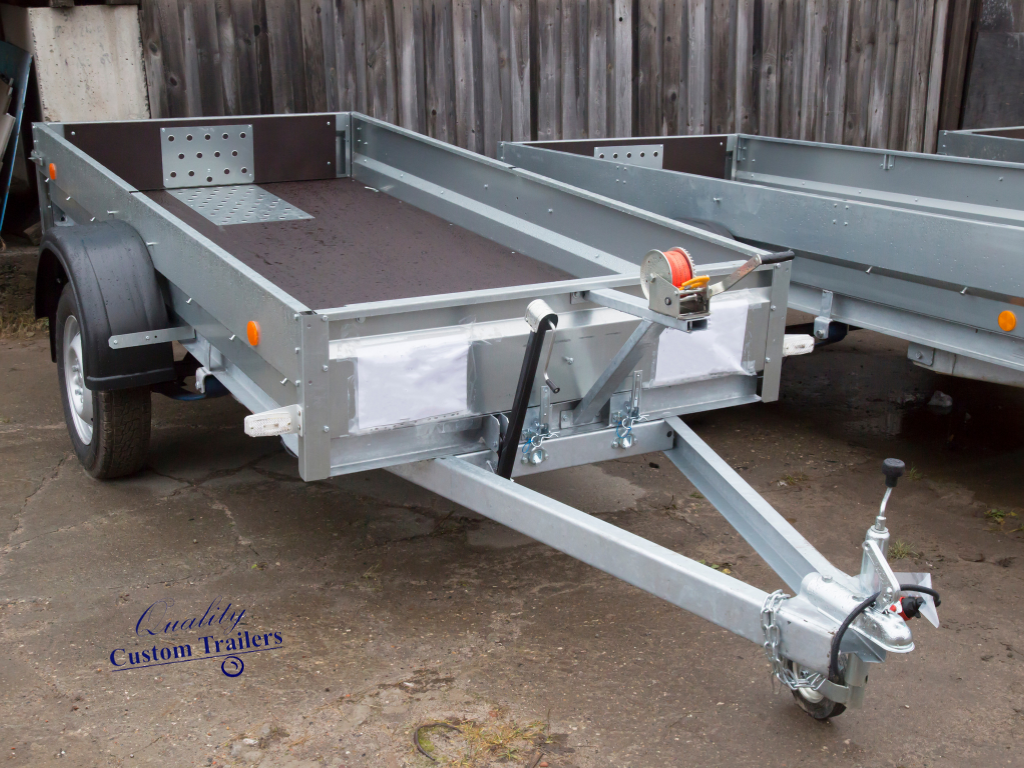
Understand tare, payload, ATM and GTM
Trailer weight terms need to be understood before approving the build.
Tare is the trailer’s unloaded mass in its specified condition. Payload is the additional weight that can be carried without exceeding the approved maximum.
Aggregate Trailer Mass, or ATM, is the trailer’s maximum permitted mass when it is not connected to the towing vehicle. Gross Trailer Mass, or GTM, refers to the permitted mass carried through the trailer wheels while it is connected.
The difference between ATM and GTM reflects the load transferred through the coupling to the tow vehicle.
Every shelf, door, toolbox, ramp, battery and electrical system increases tare. A heavily fitted trailer may therefore have less usable payload than a simpler model with the same ATM.
Ask the builder to provide the expected tare and planned payload before production. The final completed weight may still need to be confirmed where required.
Do not select the highest possible ATM simply because it appears stronger. Higher capacities can require different axles, brakes, suspension, tyres and couplings, while the tow vehicle may still limit how much can be carried.
Check towing, towbar, tyre and braking limits
The loaded trailer must remain within every relevant limit.
NSW towing guidance states that the loaded trailer mass must not exceed the lowest applicable rating among the towbar and coupling, the vehicle’s maximum towing capacity, the trailer’s carrying capacity and the tyres’ rated carrying capacity.
The tow vehicle handbook should be checked for braked towing capacity, unbraked towing capacity, Gross Combination Mass and maximum towball load.
The towbar and coupling must also have suitable ratings. Installing a stronger coupling does not increase the permitted capacity of the vehicle, trailer chassis or other components.
Braking requirements change according to trailer mass. In NSW, trailers up to 750 kilograms GTM are generally exempt from mandatory brakes. Trailers from 751 to 2,000 kilograms GTM require brakes on both wheels of at least one axle, while trailers over 2,000 kilograms GTM and up to 4,500 kilograms ATM require brakes on all wheels and an automatic breakaway system.
If the phrase custom truck trailers is being used to describe heavy commercial or semi-trailers rather than light trailers, different design, approval and operating requirements may apply. Confirm the trailer category before approaching a manufacturer.
Plan Storage, Access and Security
Position doors, shelves and compartments around the workflow
Storage should make tools easier to find without creating unnecessary weight.
Begin with the cases, containers and equipment already used by the business. Measure them rather than estimating shelf sizes. A compartment that is slightly too small may remain unused, while an oversized compartment wastes space and allows items to move.
Heavy tools should generally be stored low and positioned with overall load balance in mind. Frequently used equipment should be located near practical access points.
Drawers can organise small tools and fixings, while vertical compartments may suit levels, conduit or long-handled equipment. Ladder racks and roof storage can free internal space but add height, wind exposure and load above the trailer’s centre of gravity.
Door direction also matters. Barn doors, lift-up doors and side-access doors each require different operating space. Gas struts, stays, locks and seals should suit the size and intended use of the opening.
Quality Custom Trailers currently advertises custom and stock tradesman and enclosed trailers with different door, access and upgrade options. The suitability and availability of any particular configuration should be confirmed for the proposed build.
Protect equipment from theft, movement and weather
Security should be designed into the trailer rather than added after completion.
Consider the door frame, locking points, hinges and access to internal compartments. An expensive lock provides limited value when the surrounding structure can be forced easily.
Separate internal lockers can provide another barrier around high-value tools. Tracking devices, alarms and suitable parking practices may also support security, but their installation and ongoing service costs should be considered.
Weather protection depends on more than having a roof. Door seals, joins, vents and openings can affect dust and water entry. Sensitive tools may still need internal cases or raised storage.
Equipment also needs protection while the trailer is moving. Shelves, drawers and loose containers should have suitable latches or restraints.
Tools that repeatedly strike walls or one another can become damaged even when the trailer itself remains secure. Internal padding, dividers and purpose-built holders may improve organisation without adding excessive complexity.
The goal is not to create as many compartments as possible. It is to prevent the equipment from being stolen, exposed or damaged while keeping it easy to use.
Add Features That Improve Everyday Site Use
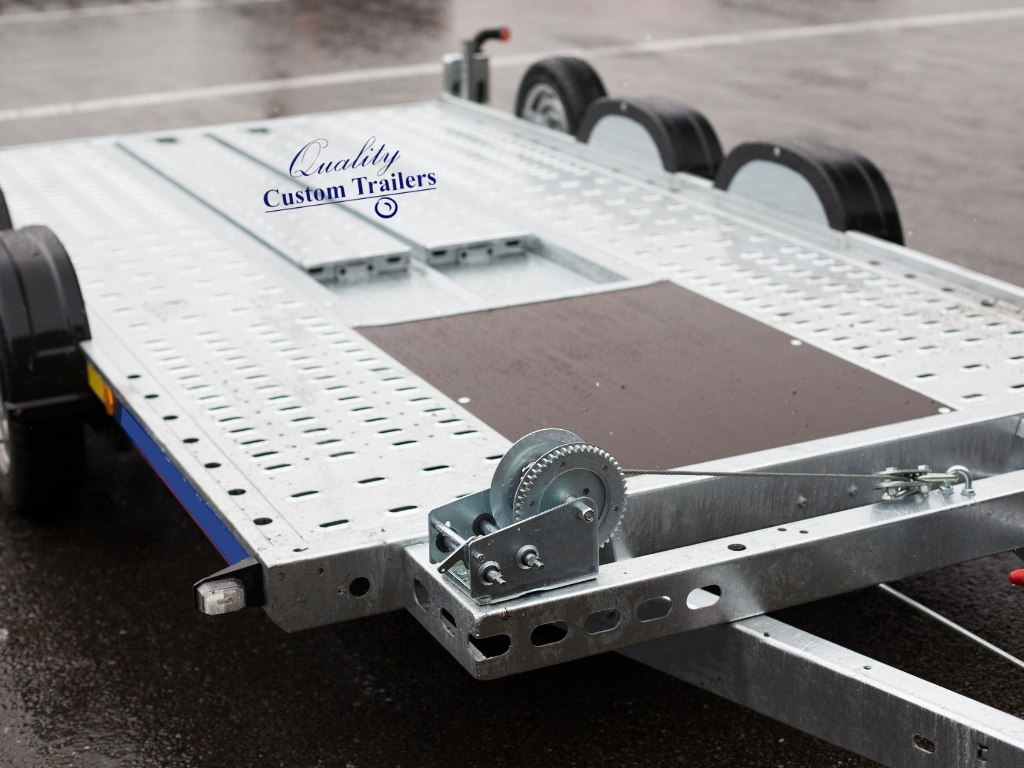
Plan ramps, tie-downs, lighting and power
Loading equipment safely requires the correct access.
A ramp should suit the weight, wheel spacing and ground clearance of the equipment being loaded. Its angle should also be practical for the available site and trailer height.
The ramp itself adds weight and needs secure storage during travel. Hinged rear ramps can provide convenient access but may be unnecessary for a trailer mainly carrying hand tools and materials.
Tie-down points should be positioned around the equipment rather than spaced evenly for appearance. Their strength, angle and connection to the trailer structure need to suit the intended restraint method.
NSW rules require loads to be secured and covered where necessary so they do not overhang unsafely or become dislodged. Towing guidance also recommends checking doors, hatches, covers and equipment regularly during a trip.
Internal lighting can improve access before sunrise, after dark or within an enclosed body. A battery, charging system, inverter or external power connection may also support tools and site equipment, but electrical features need suitable protection, ventilation and installation. Each upgrade should solve a real operational problem. Decorative or rarely used additions can increase cost and tare without improving the trailer’s everyday value.
Allow for future tools without overbuilding the trailer
A custom trailer should accommodate reasonable business growth.
This may mean leaving space for a larger saw, additional battery tools or another storage module. It does not mean designing around every machine the business might purchase one day.
Future capacity should be specific. Identify the likely next equipment purchase and determine its dimensions and weight. This gives the builder useful information without creating a trailer that is unnecessarily large.
An oversized trailer can be harder to store, park and tow. It may also increase fuel use and require a different tow vehicle.
A smaller trailer that becomes overloaded is equally unsuitable. The design should preserve enough payload for normal variations in tools and materials without depending on the operator to carry exactly the same load every day.
A modular layout can sometimes provide flexibility. Removable shelves, adjustable dividers or clear mounting points may allow the interior to change as the business grows.
The most useful custom made trailers balance present needs with realistic future requirements rather than trying to anticipate every possible change.
Choose the Right Trailer Builder and Service
A stock trailer can be suitable when an existing size and layout already fit the work.
This may offer a simpler selection process and potentially shorter availability. However, customers should still confirm payload, dimensions, towing compatibility and included features.
Tailored trailers become more useful when the tools, equipment or workflow cannot fit an existing configuration. Customisation may involve door placement, internal height, shelving, loading access, axle selection or external storage.
The decision should compare the finished trailer rather than only the starting price. Modifying a standard design with several additions can reduce the original cost advantage.
People searching for custom built trailers near me should assess more than distance. Local access can make design meetings, inspections and after-sales support easier, but the builder must still provide suitable design, compliance and manufacturing capability.
The misspelling custom trailors does not need to be forced into customer-facing content. Clear, correctly written information is more helpful to readers and supports a more professional page.
Review drawings, quotations and compliance details
A quotation should describe exactly what will be supplied.
It should identify the trailer dimensions, expected ATM, estimated tare, axles, suspension, brakes, coupling, wheels, tyres and body construction. Doors, racks, shelving, toolboxes, lighting, electrical systems, finish and delivery should also be shown where included.
Ask for a drawing or documented layout before manufacturing begins. Check internal clearances, door operation, equipment positions and loading access.
Any revision should be recorded in writing. Verbal changes can be misunderstood, particularly when they affect weight, cost or connected parts of the design.
Australian low-ATM trailers generally require an approval pathway and entry on the Register of Approved Vehicles before first supply to the market. VSB 1 Revision 6 provides guidance on common Australian Design Rule requirements for trailers with an ATM of 4.5 tonnes or less.
For NSW road use, the completed trailer must also be registered. Registration requirements can include proof of entitlement, an inspection report and, in some circumstances, a weighbridge ticket or compliance certificate.
Ask the builder to explain how the proposed trailer will be approved, identified and prepared for registration.
Know When to Contact Quality Custom Trailers
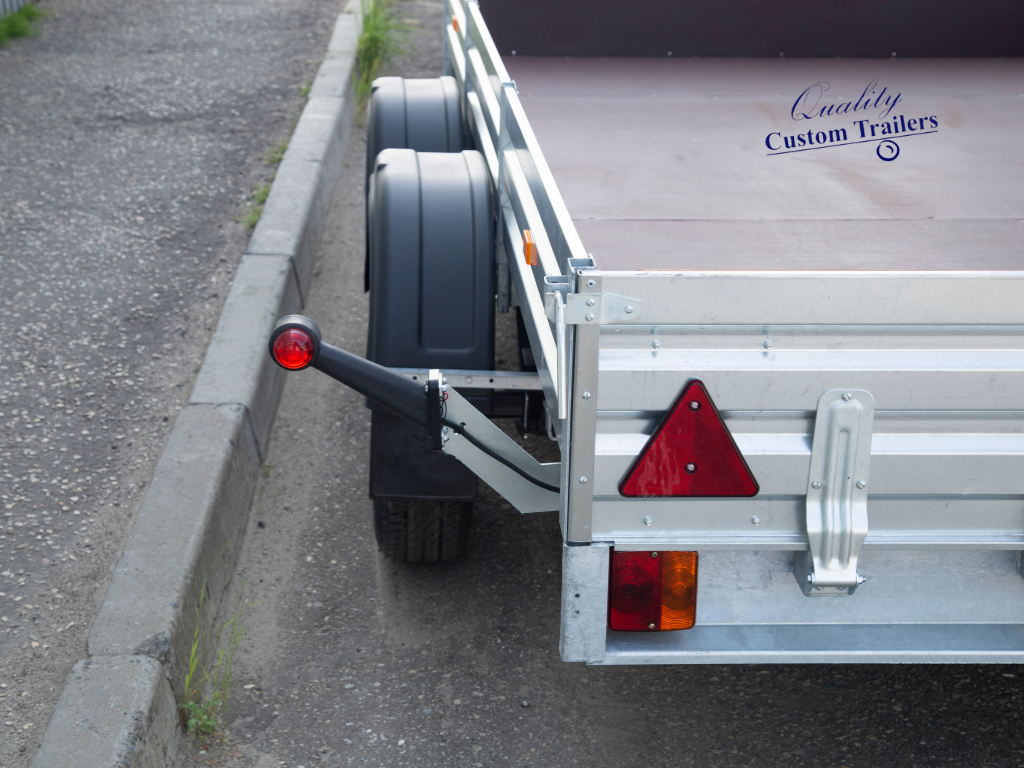
Seek advice before dimensions and features are finalised
Quality Custom Trailers may be contacted when a tradesperson needs a trailer planned around particular tools, machinery or working routines.
The company currently advertises custom and stock tradesman or enclosed trailers, with options relating to size, colour, doors, access and other upgrades. Its published range also includes mower, bike, box and other trailer types. Exact specifications, capacities, prices and production availability should be confirmed directly.
Early contact is useful when the buyer is deciding between a flat-top, enclosed or hybrid layout. A builder can review whether the proposed dimensions, doors and storage arrangements are practical before the design becomes difficult to change.
It is also worth seeking advice when the planned equipment is heavy, unusually shaped or likely to affect load distribution.
The discussion should happen before purchasing a tow vehicle where possible. Trailer capacity and tow vehicle limits need to work together.
Prepare the information required for an accurate quote
Begin with the trade or service the trailer will support.
Provide the tow vehicle’s make, model, year, towing capacity and towball-load limit. Include handbook information where the figures are unclear.
List the main tools, equipment and materials to be carried. Give the approximate dimensions and weight of larger items.
Explain how equipment will be loaded and which items require side, rear or open-deck access. Describe the storage needed for tools, fixings, fuel, batteries, ladders and personal protective equipment.
State whether an open flat-top, enclosed body or combined design is being considered. Include preferred external dimensions only when they have already been checked against storage, access and towing limitations.
Ask Quality Custom Trailers to confirm the proposed layout, ATM, estimated tare, expected payload, brakes, axles, compliance pathway, inclusions and current production time in writing.
Custom tradesman trailers work best when they are built around the job rather than a generic accessory list. By planning the load, access, security, towing and future requirements together, a tradesperson can choose a trailer that supports everyday work without carrying unnecessary weight or complexity.
