

Choosing equipment should begin with the job rather than the machine. Many people searching for equipment hire macarthur already know they need help completing a project, but they may not yet know whether they require an excavator, compactor, trailer, pressure washer, lawn tool, scissor lift or another type of equipment.
The right choice depends on what must be moved, dug, lifted, compacted, cleaned, cut or transported. It also depends on the amount of material involved, the available space and the conditions at the property or worksite.
Taking a few minutes to define the work can prevent you from hiring equipment that lacks the required capacity or cannot be used comfortably at the site.
Define the Task Before Choosing a Machine
Begin by describing the result you need to achieve. For example, digging a shallow garden trench is different from preparing a larger construction area. Moving green waste is different from transporting building materials, while cleaning a driveway requires different equipment from removing compacted soil.
Earthmoving equipment may suit trenching, drainage, landscaping, grading and site preparation. Lawn and landscaping equipment can support soil preparation, lawn care and property maintenance. Access equipment may be required when the work is above ground level, while trailers and hire vehicles can assist with moving tools, waste, machinery or materials.
Macarthur Hire currently presents equipment categories covering earthmoving, lawn and landscaping, scissor lifts, site services, trailers and hire vehicles. Its displayed range includes excavators, a mini dumper, a plate compactor, tillers, trailers, scaffolding, temporary fencing and cleaning equipment. Availability should still be confirmed for the required dates.
Estimate the Size and Difficulty of the Project
Next, consider how much work must be completed. Estimate the volume of soil, waste or material involved, the distance it must be moved and the amount of time available.
A smaller machine may suit a restricted residential property, but it may take longer to complete a demanding job. Larger equipment may provide greater capacity, although it can require wider access, more operating room and specialised transport.
Ground conditions also matter. Loose garden soil, compacted clay, gravel and wet ground can affect how equipment performs. If the project involves heavy materials, deep excavation or difficult terrain, discuss the conditions with the provider before booking.
This initial assessment will make your equipment rental macarthur enquiry more useful because the supplier can respond to the actual project rather than simply quoting the first available machine.
Check Whether the Equipment Will Fit the Site
Equipment suitability is not only about power or capacity. The machine must also be delivered, unloaded, positioned and operated at the site.
Restricted access is common around homes, renovation projects, landscaped properties and established commercial sites. A machine that is suitable for the task may still be unsuitable when it cannot pass through the available entrance or turn safely within the work area.
For this reason, site measurements should be completed before confirming equipment for hire in Macarthur.
Measure Gates, Driveways and Operating Areas
Measure the narrowest point along the complete access route. This may be a gate, driveway, side path, carport, doorway or space between existing structures.
Do not measure only the final work area. The equipment must travel from the delivery point to the location where it will be used. Check width, height and turning space throughout that route.
You should also identify where the delivery vehicle can stop and where the equipment can be unloaded. Consider parked vehicles, traffic, street access, low branches and any surface that may not support the delivery vehicle or machine.
Product dimensions can help with early planning. For example, Macarthur Hire lists its Kubota U55-4 excavator as approximately 1,960 millimetres wide, 2,550 millimetres high and 5,500 millimetres long. Those specifications show why actual access measurements matter before booking a larger excavator.
Identify Ground and Overhead Hazards
Walk through the site and note slopes, soft ground, retaining walls, garden beds, drainage areas and surfaces that could be damaged by heavy equipment.
Look above the operating area for powerlines, awnings, branches, roofs and other obstructions. You should also consider fences, neighbouring properties, pedestrians and nearby vehicles.
Underground services require particular attention before excavation. Water, electricity, gas, drainage and communications services may be present even when they are not visible. Their location and the required excavation precautions must be confirmed before digging.
Where site conditions are uncertain, explain them to the hire company. Photographs may help the provider understand the access route and operating area, but they should not replace accurate measurements or required safety checks.
Compare the Main Equipment Categories
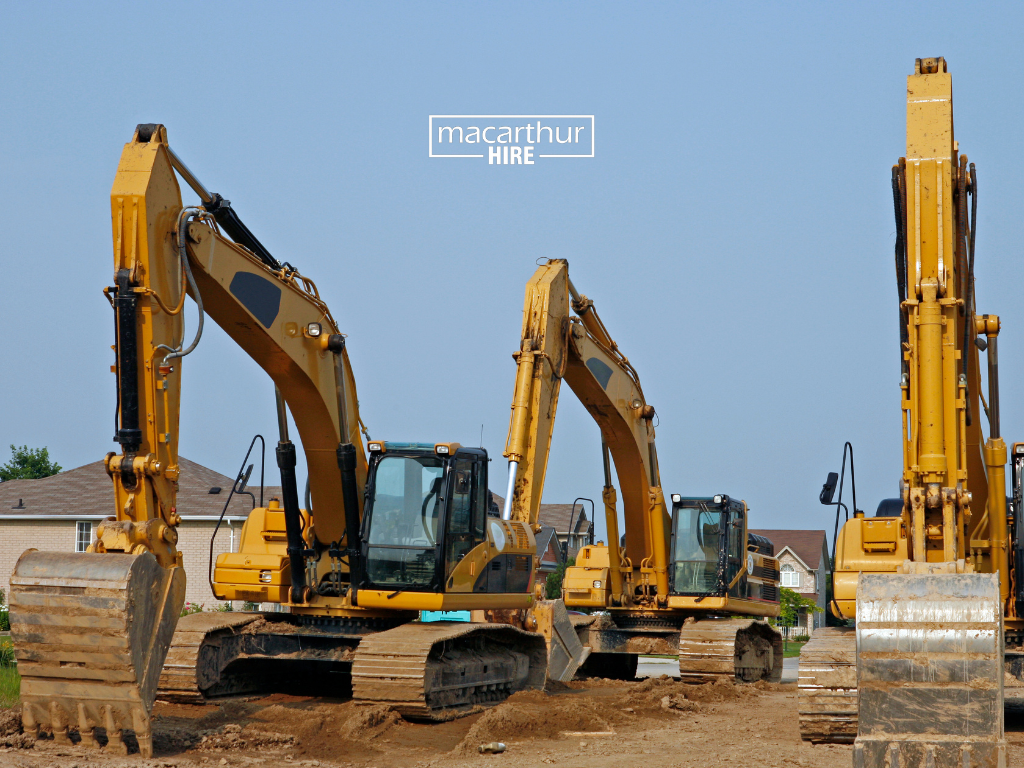
The equipment hire in Macarthur region that suits one project may be completely unsuitable for another. Comparing categories by their intended use can make the decision easier.
Rather than selecting a familiar machine, consider the equipment that can complete each stage of the project. Some jobs may require more than one item, such as an excavator for digging, a compactor for preparing a base and a trailer for removing waste.
Earthmoving, Landscaping and Access Equipment
Earthmoving equipment is commonly considered for excavation, trenching, site preparation, soil movement, landscaping and drainage work. Available options may include excavators, mini dumpers, compact loaders, tillers and plate compactors.
Excavator Hire Macarthur enquiries should include the expected digging depth, ground type, access width and material being handled. The required bucket or attachment should also be discussed because not every attachment is automatically included with every machine.
Macarthur Hire’s earthmoving category currently displays equipment such as Takeuchi and Kubota excavators, a Kato mini dumper, a Toyota Huski loader, a cultivator and a plate compactor. The exact model and attachment availability should be confirmed directly.
Landscaping equipment may be useful for lawn preparation, aeration, mowing, cultivation, vegetation management and outdoor cleaning. Access equipment such as scaffolding or a scissor lift may suit appropriate elevated tasks, although the required working height, ground surface, available space and operating requirements should be discussed before hire.
Trailers, Vehicles and Temporary Site Equipment
Trailers can support rubbish removal, landscape projects, equipment transport, vehicle transport and general material movement. The correct trailer depends on the load dimensions, total weight, towing vehicle and how the item will be loaded.
Before hiring a trailer, confirm its capacity, coupling, braking requirements and compatibility with the towing vehicle. The customer should also check applicable licence, towing and load-restraint requirements.
Hire vehicles may assist with deliveries, moving materials or completing temporary business work. The selected vehicle must have enough payload and space for the load without exceeding legal or manufacturer limits.
Temporary site equipment may include fencing, site sheds, portable amenities or other items required for a limited project period. Macarthur Hire currently displays site sheds and temporary fence panels among its equipment range.
Choose the Right Size and Capacity
Equipment size is one of the most important parts of the hire decision. Choosing only by the lowest price can create problems when the machine does not have enough capacity or cannot enter the site.
The best option is usually the smallest practical machine that can safely and efficiently complete the work. However, that decision depends on the site and task, so it should not be based on size alone.
Avoid Equipment That Is Too Small for the Job
Equipment that is too small may still complete the work, but it could require more passes, more manual effort and a longer hire period.
For example, a compact excavator can be useful where access is restricted, but a demanding earthmoving project may take considerably longer when the machine lacks the required digging capacity. A trailer with insufficient space may require several trips, while a pressure washer without suitable output may struggle with a large or heavily soiled surface.
Ask the provider what workload the equipment is designed to handle. Explain the project scale honestly instead of reducing the details to obtain a cheaper recommendation.
The lowest rental rate does not automatically produce the lowest project cost. A suitable machine may cost more per day but complete the work in less time.
Avoid Equipment That Is Too Large for the Site
Larger equipment may provide more power, but it can also create access, transport and operating problems.
A large excavator may not fit through a residential entrance or may require more space than the site provides. Its weight may also affect lawns, paving, soft ground or finished surfaces. Similarly, a larger trailer or vehicle may be difficult to position at a narrow property.
Macarthur Hire’s displayed Kubota U55-4 is described as a four-tonne excavator transported by tilt tray or float. The company also lists smaller excavation equipment, including a Takeuchi TB210R, which gives customers different categories to discuss according to the job and access conditions.
When uncertain, provide measurements and ask the hire company to compare suitable options rather than guessing from photographs.
Compare Hire Periods, Delivery and Rental Conditions
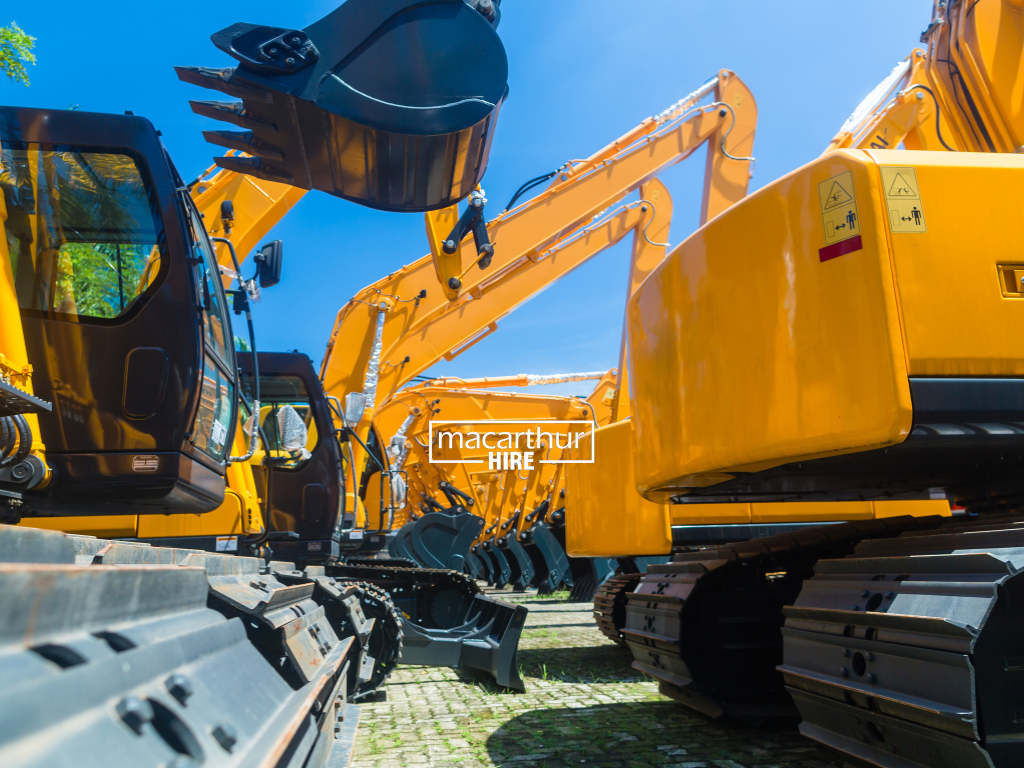
After choosing an equipment category, consider how long it will be needed and how it will reach the site. These details can change the overall value of the booking.
A clear comparison should include the complete hire arrangement rather than only the advertised machine rate.
Decide How Long the Equipment Will Be Needed
Daily hire may suit a prepared project that can be completed within a known timeframe. Weekend hire may be more practical for a homeowner completing work outside normal business hours, while weekly hire may suit a larger or multi-stage project.
Before choosing a period, account for delivery, setup, operating time, cleaning and return. Consider whether other work must be completed before the equipment can be used.
Materials, labour and approvals should be ready before the hire starts. Weather can also affect outdoor projects, so the provider’s cancellation, rescheduling and extension conditions should be confirmed.
Macarthur Hire displays daily, weekend and weekly pricing options on some product pages. For example, its Kubota U55-4 page shows separate rates for those periods and states that displayed prices include GST, may change and do not show delivery or other fees. Current pricing must therefore be checked at the time of booking.
Review the Complete Hire Arrangement
Ask what the quote includes. Important areas may include delivery, collection, attachments, fuel, cleaning, deposits, damage conditions and late returns.
Delivery may depend on the machine, site location and transport required. Larger equipment may need a tilt tray, float or other suitable vehicle. Confirm whether delivery and collection are quoted separately.
Ask which attachments and accessories are included. Buckets, ramps, leads, hoses, safety equipment and load restraints should never be assumed to be part of the booking.
Fuel and cleaning arrangements can also differ. Confirm the required fuel level at return and whether cleaning charges can apply when equipment is returned with excessive soil, concrete or waste. Finally, review the bond, identification, payment and damage conditions. The company’s FAQ states that rental rates vary by equipment type and hire duration, while detailed pricing can be checked online or by contacting the business.
Know When to Contact the Hire Company
Online information can help you compare equipment, but some projects require direct advice before a booking is made.
Contacting the company is especially useful when there are restricted access conditions, several possible machine sizes or uncertainty about attachments and transport.
Ask for Advice When the Equipment Choice Is Unclear
Speak with the hire provider when the project involves narrow gates, soft ground, steep slopes, heavy materials or limited unloading space.
Advice is also useful when you are uncertain whether an excavator, mini dumper, loader, compactor or combination of equipment is appropriate. Explain the final result you need rather than asking only for a particular model.
Customers seeking equipment hire Blairmount or equipment rental Blairmount should also confirm whether delivery is available for the site, what transport charges may apply and whether the required item is available for the preferred period.
Macarthur Hire states that customers can discuss their needs in person or submit an online rental request and that its staff can help guide equipment selection. These statements come from the company’s own website and should be assessed alongside current availability and written hire terms.
Provide Enough Information for an Accurate Recommendation
When contacting the company, provide the project location, required dates and expected hire period. Describe what needs to be completed and the approximate amount of work involved.
Include the narrowest access width, available height and unloading space. Mention slopes, soft ground, underground services, finished surfaces and other site restrictions.
For excavation, explain the required depth, material type and whether soil must be loaded or moved. For a trailer or vehicle, provide the load dimensions, estimated weight and towing or loading arrangements.
Photographs of the work area and access route may be useful when combined with measurements. Providing detailed information allows the company to give a more relevant recommendation and identify questions that need to be resolved before delivery.
Make a Confident Local Hire Decision
A suitable hire decision balances equipment capability, site access, rental conditions, availability and support.
Price remains important, but it should be compared alongside everything required to complete the project. A lower rate may offer limited value when delivery, attachments or extra hire time make the final arrangement more expensive.
Compare Suppliers on Suitability and Support
Compare equivalent equipment over the same hire period. Confirm whether each quote covers GST, delivery, collection and required attachments.
Ask how equipment is checked before hire and what process applies if a fault occurs. Review the extension procedure in case the project takes longer than expected, and confirm the required return time.
Clear communication is also a useful trust signal. A supplier should be willing to explain the equipment specifications and rental conditions without making unsupported promises.
Macarthur Hire describes itself as a family-run business with more than a decade of industry experience. The company lists equipment rental and vehicle hire services and presents a broad range of machinery, landscaping equipment, trailers and site products. Readers should still verify current stock, rates, service coverage and contract terms for their individual project.
